




 View Count:57
 Date:2026-09-29
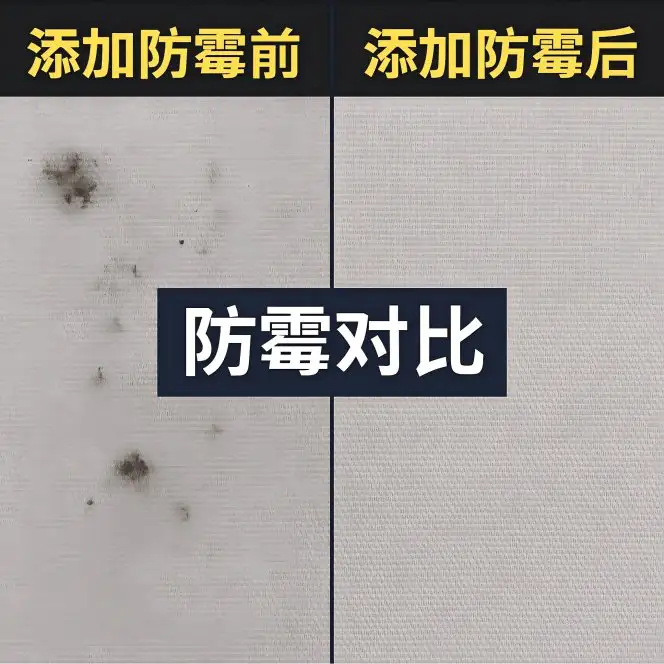
How do you keep plush fabric mould off both the pile and the filling? On plush fabric and on filling cotton alike, growth starts at the pile root and between the layers of wadding, and one rejected batch can downgrade a whole export order. Pad iHeir-BJ at 2-3% o.w.f. at the mill, treat the filling by spray, and hold the bag climate with iHeir-D gas-phase paper at 0.1-0.2 g per sheet and Power Pak tablets. This article covers the three stages, the line points and the figures.
1. Why plush fabric and filling go mouldy first
Plush is the hardest fabric in the chain to dry. The pile stands up and traps air, and it traps vapour with it; behind the pile sits a base cloth and a back coating, so on the dryer the pile face reads dry while the base cloth is still above the target moisture. Roll it before the core has dried and the vapour is sealed in the middle of the roll. Filling cotton is more direct still: the open, lofty structure takes up moisture quickly and gives it up slowly, so a bale opened in humid weather starts to sweat between the wadding layers within a short time.
Three causes carry most of it. First, the setting temperature and the line speed at the finishing stage do not match, so the pile looks dry while the base cloth is still wet. Second, the filling is not dried before it goes into the filling station, and in a humid shop the bale already carries moisture when it arrives. Third, packing relies on the outer bag alone with no vapour-phase product inside, so once the container warms up the bag becomes a closed, warm, damp micro-climate. The first two are process and shop-floor discipline; the third is a packing scheme to agree when the order is placed.
2. The three control points at a glance
The table lists the stage, what is treated, the product, the figures and the points to watch, so quality and purchasing can work down an existing supply chain against it.
| Stage | Treated part | Product | Figures | Points to watch |
|---|---|---|---|---|
| Mill finishing (the mould line) | Plush, pile fabric, base cloth | iHeir-BJ textile mildew inhibitor | Padding at 2-3% o.w.f. | Bath 21-50 degrees, pH 4.5-8.5; cationic, never with an anionic auxiliary |
| Filling treatment | Wadding and filling cotton | Spray or short immersion | Calculated separately by o.w.f. | Wadding is lofty, so no padding; spray in two passes and turn the layers |
| Shop and semi-finished holding | Bales and pile panels awaiting filling | Humidity and drying control | Shop below 60% relative humidity | More dehumidification in the wet season; keep bales off the floor |
| Packing | Finished units and the space inside | iHeir-D gas-phase paper | 0.1-0.2 g per sheet | In the bag with the goods, bag closed |
| Pack reinforcement | Bulky finished units | Power Pak tablets | Working in 72 hours, replaced every 15 days | Placed by pack volume and piece count |
| Export and long-haul | Full container load | T-1000 desiccant sticks | 8-10 sticks for 20 ft, 10-12 for 40 ft | Hung from the roof rails with the air path left clear |
Six rows, one conclusion: plush protection is a relay. Build it into the fibre at the mill, hold the moisture down through the filling stage, and control the packing climate — if one stage slackens, the other two have to carry it.
3. At the mill: how to run the anti-mould finish
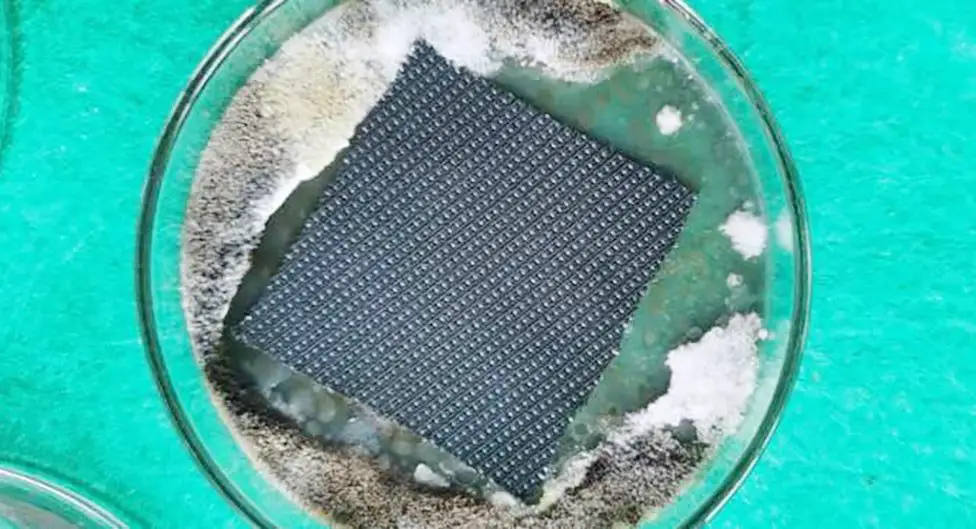
The finishing stage is the only point in the chain where protection can be built into the fibre. Treat with iHeir-BJ at 2-3% o.w.f. by padding, with the bath at 21-50 degrees Celsius, the working liquor at pH 4.5-8.5 (ideally near 6), soft water throughout, and pre-mixing with 9-13 parts water before the bath. Hold pickup at 70% and dry as usual. The rate sets the service life: 2% corresponds to roughly a year or more, 3% to two to three years, so export orders and goods that travel by sea are simpler at the 3% tier.
One rule matters on the line: BJ is cationic and must not run in the same bath as an anionic softener or fixing agent, so the mould finish goes ahead of softening with a clear rinse in between. Pile fabric may feel a little firmer after the finish, in which case a non-ionic softener can be run in a separate pass afterwards, still never in the same bath as BJ. The buying side is covered in choosing a textile anti-mould agent.
4. Filling and setting: spray or immersion
Filling cotton is treated differently from fabric. Fabric runs through padding; filling runs by spray or short immersion, because wadding is lofty and padding crushes the structure and costs it its loft, so the practical route is to spray the liquor ahead of the filling station, turn the material and dry at low temperature, or to immerse it briefly by o.w.f. and spin the excess out.
Either way, the point is to spread the agent evenly across the fibre surface rather than leave it heaped on the outside of the bale. Spray in two passes and turn the layers, so the outer layer is not over-dosed while the inner layer is missed; hold the liquor ratio and the time in immersion, so the liquor reaches inside the wadding. Drying then has to follow, with the moisture content back to specification before the filling station, or the moisture is simply sealed into the finished piece.
5. Packing: placing the gas-phase paper and the tablets
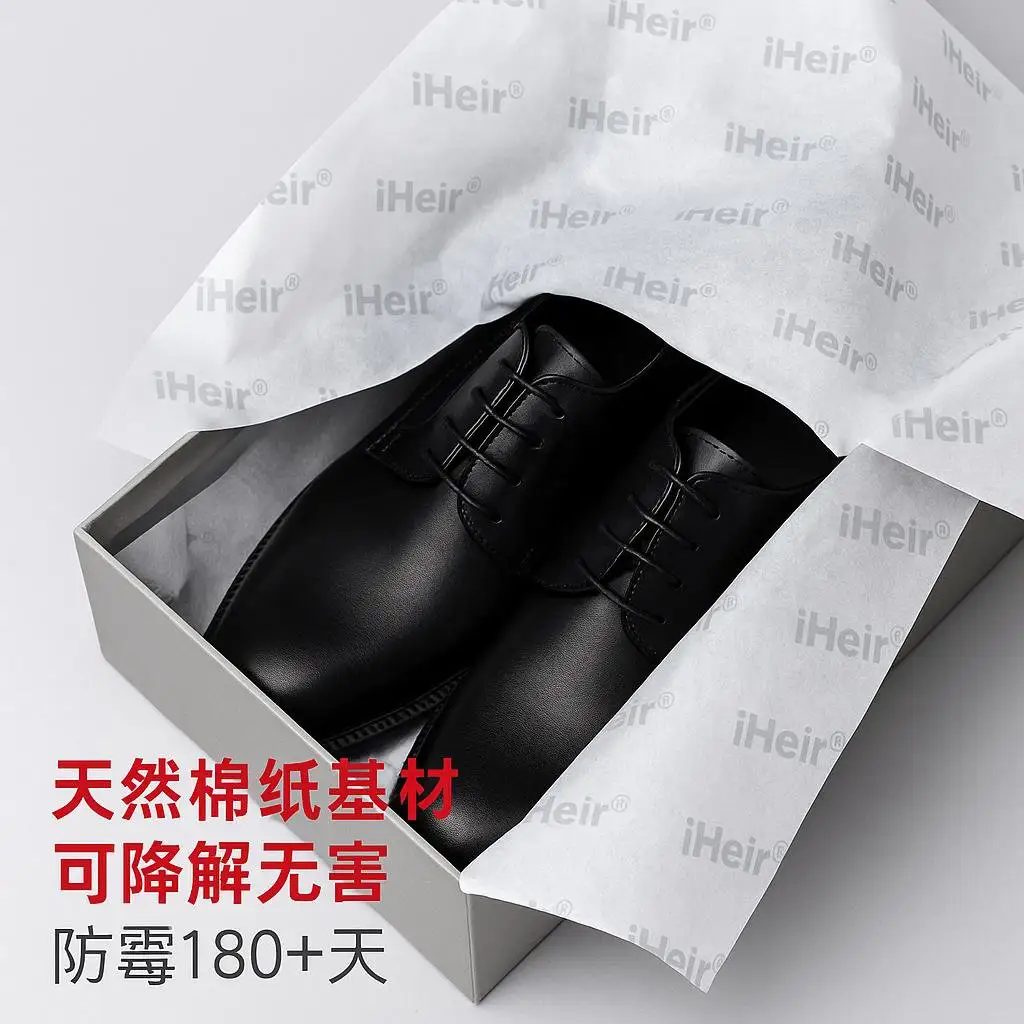
Packing is the last line and the cheapest one. Put iHeir-D gas-phase paper in the bag by piece count, at 0.1-0.2 g per sheet, in the bag with the goods rather than outside it, because vapour-phase protection depends on distribution in a closed space and outside the bag it does nothing. For bulky packs, add Power Pak tablets: they work within 72 hours and are replaced every 15 days, placed by pack volume and piece count.
For container export or long-haul runs, hang T-1000 desiccant sticks to match the unit: 8-10 for 20 ft and 10-12 for 40 ft, hung from the roof rails with the air path left clear. Plush packs are bulky and stack tight, so container air movement is poor to begin with and roof condensation drips onto the upper packs first, which is why the sticks go in before the container is filled rather than afterwards.
6. Common questions
Q: The plush was finished at the mill, so why does it still go mouldy after packing? Usually the packing stage failed to carry it. Building the finish into the fibre only delays the onset; if the goods leave the line above the moisture target and the bag carries no vapour-phase product, growth returns once the container warms up. Agree the finishing and the packing scheme together rather than comparing the agent on unit price alone.
Q: Can the filling use the same treatment as the fabric? No. Wadding is lofty and padding crushes the loft, so the filling is better sprayed or briefly immersed and dried at low temperature, dosed separately by o.w.f., not run with the fabric’s padding figures.
Q: Does gas-phase paper work outside the bag? No. Vapour-phase protection relies on concentration in a closed space, so it goes in the bag with the goods and the bag is closed; outside the bag or outside the carton, the vapour never reaches the goods. For how a rating is read, see the anti-mould growth rating explained.
Plush fabric mould control comes down to three points: build protection into the fibre with iHeir-BJ, hold moisture content and shop humidity through the filling stage, and control the bag with iHeir-D and Power Pak, adding T-1000 for container export. Samples and minimum order details are available on request.


