




 View Count:34
 Date:2026-10-15
Shower curtain mould begins at the hem and the folds, which is why the PVC film and the fabric are treated apart. A PVC curtain takes iHeir-ECO plastic antimicrobial agent in the mixing stage at 0.5%-1.0% on PVC weight, and a fabric curtain takes iHeir-BJ textile mildew inhibitor at 2%-3% o.w.f. on dry fabric weight in a bath at 21-50 degrees and pH 4.5-8.5. This article explains why the two stages are kept apart, how each is dosed, and what to watch at the finished-goods and packing stages.
1. Why a shower curtain starts moulding at the hem and the folds
A curtain hangs in the dampest place in the building. After one hot shower the humidity in the room climbs sharply, a film of water sits on the curtain and is still there next morning, and because the curtain lives in that wet zone it never gets a chance to dry out the way other textiles do. Long spells without drying are exactly what mould prefers.
The first spots almost always appear at the hem and the folds. The hem hangs down against the wet edge of the bath or the floor, so the bottom band is almost permanently in moisture; the folds are creased again and again, water cannot drain out of the crease and dries far more slowly than the flat face, so mould grows along the crease as a line. To judge whether a curtain has gone, look at the hem and the crease first.
PVC film and fabric are also two entirely different materials. PVC is a plastic, so the protection has to be built into the film, blended evenly as a masterbatch at the mixing stage. A fabric curtain is cloth, so the protection comes from finishing, where the fibre takes the inhibitor up. The two are dosed in different places on different bases, and mixing them up never works.
2. PVC film and fabric at a glance
The table lines up the material, the operation where the agent goes in, the figure and the points to watch, as a first draft of a process instruction.
| Stage | Material | Where it is dosed | Figure or criterion | Points to watch |
|---|---|---|---|---|
| PVC film | PVC film or sheet | Into the mix, blended with the granules | iHeir-ECO at 0.5%-1.0% on PVC weight | Keep processing temperature below 320 degrees; add before plastification and stir evenly |
| Fabric curtain | Polyester or blended curtain cloth | Padding process through the finishing bath | iHeir-BJ at 2%-3% o.w.f. on dry fabric weight | Bath at 21-50 degrees and pH 4.5-8.5; cationic, never in the same bath as anionic auxiliaries |
| Finished goods and storage | Finished curtains | Humidity, stacking and packing | Relative humidity below 60% | Finished goods never on the floor or against a wall; carton and container handled separately for exports |
Three rows make the division of work clear: the first two are two different dosing lines, and the third is the humidity control that holds the result. Miss any row and the problem shows when the customer opens the carton or puts the curtain up.
3. The PVC film: ECO on total PVC weight
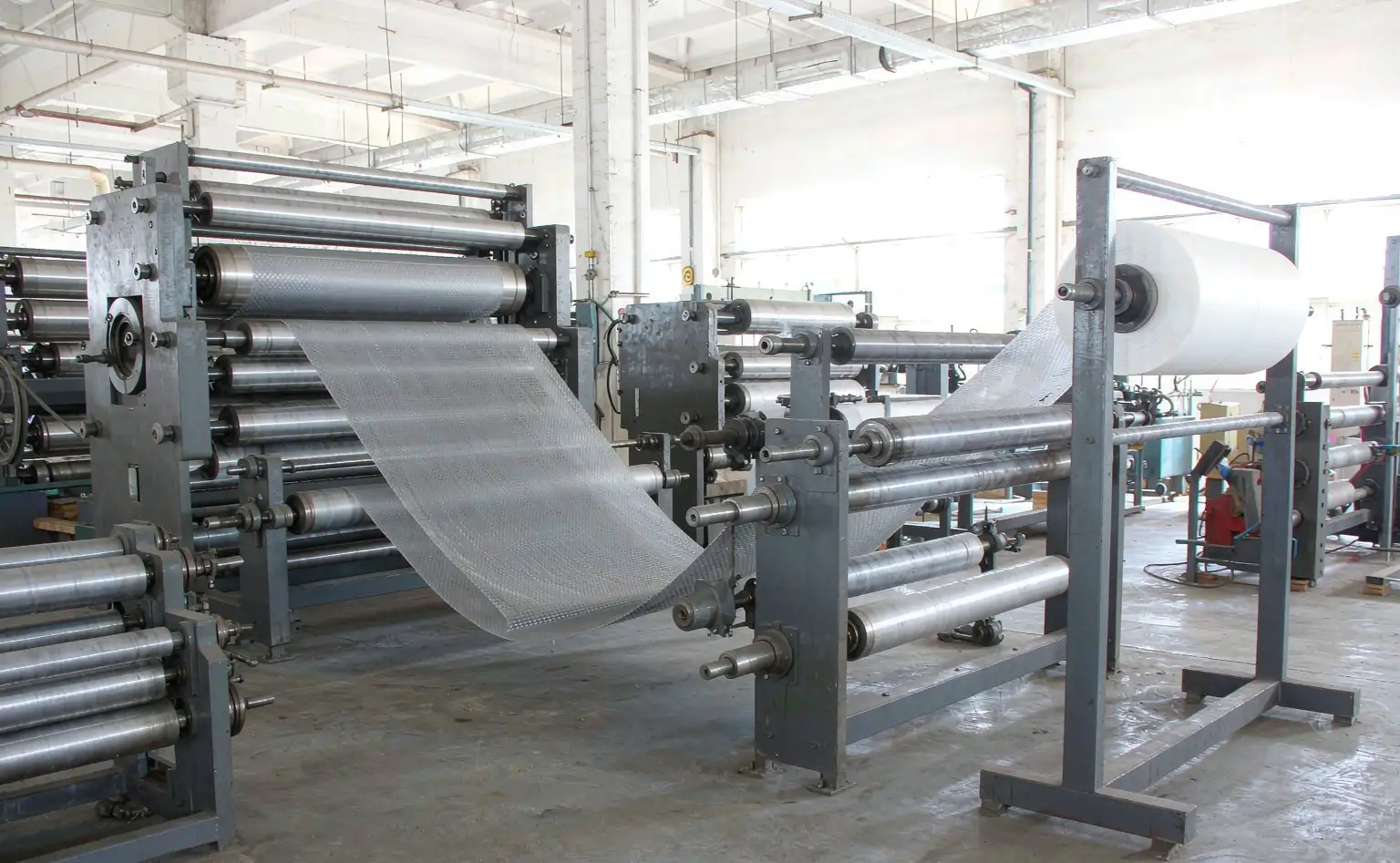
The PVC film takes iHeir-ECO plastic antimicrobial agent at 0.5%-1.0%, calculated on the weight of the PVC compound rather than on the finished curtain. It is a grey-white powder, supplied as an internal masterbatch, blended with the granules in the mixing stage and compatible with ordinary calendering and extrusion, so no extra equipment is needed.
Its advantage is that the active ingredient runs through the whole film rather than sitting on the surface, so the curtain keeps its protection after being wiped and after being wetted repeatedly. Add it before plastification; mix it badly and one roll comes out good on one side and poor on the other. Watch the processing temperature above all: thermal stability reaches 240 degrees, and the melt should be kept below 320 degrees, because an excessive temperature drives the active off and the addition is wasted.
4. The fabric curtain: BJ by padding, on dry fabric weight
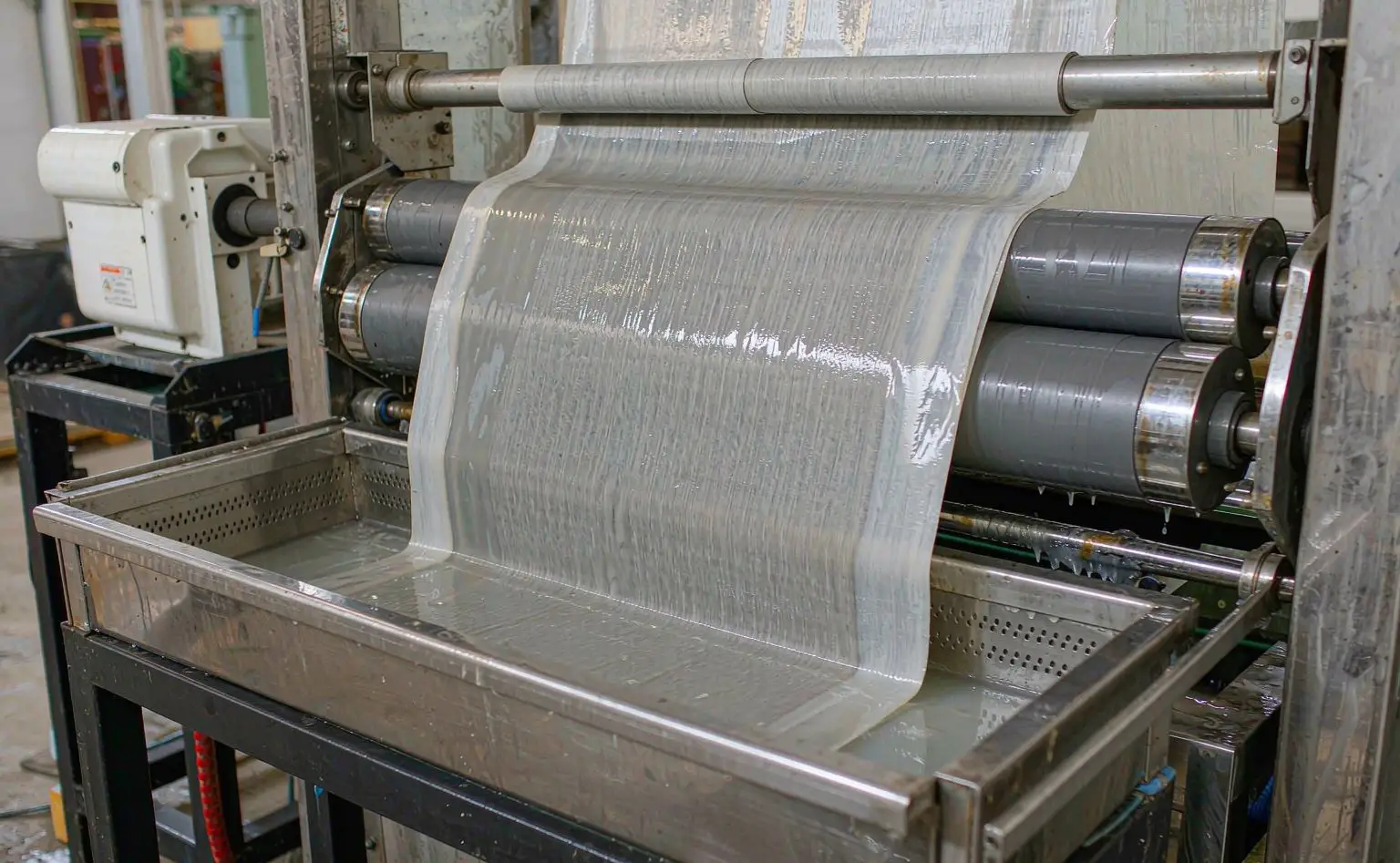
The fabric curtain takes iHeir-BJ textile mildew inhibitor at 2%-3% o.w.f., calculated on dry fabric weight rather than bath weight. The active content is 8.0% or more, the bath runs between 21 and 50 degrees at pH 4.5 to 8.5, and the recommended route is the padding process, where a pick-up of 70% means 3 kg of the inhibitor treats 100 kg of curtain cloth.
How it is diluted matters particularly here. The product works by adsorption onto the fibre, so tipping a whole drum into the bath at once leaves local concentrations high, the fibre takes it up unevenly, and a single roll comes out with differences in shade or handle. Premix it with 9 to 13 times its weight of water and add it in portions, so the cloth runs through evenly and the squeeze rolls leave an even pick-up.
Check the ionic character of anything sharing the bath. BJ is a cationic system and must not run in the same bath as anionic auxiliaries; where two passes are needed, run BJ first, dry, then apply the anionic auxiliary. Check the ionic character of the other auxiliaries before preparing the bath, and where necessary add 0.1% cationic wetting agent to avoid uneven take-up or a stiff handle.
5. Finished goods, packing and storage: keeping the protection in place
Once both stages are done, a few later operations can waste the earlier work. The hem fold and the eyelet punching stage needs its ironing temperature and time controlled, because over-ironing can damage the film face or affect the active in the fabric; the eyelet holes are open points that hold water, so wipe them dry with a cloth before the curtain is hung. Hold relative humidity in the packing area below 60%, keep rolled curtains off the floor and off the wall, and stack them off the ground with an air gap and ship first-in first-out.
Export lots need one more look. Once the carton is sealed and loaded into the container, the day-night temperature swing makes condensation run down the inside of the walls, and humidity control at that point matters as much as it does in the warehouse. The way the stages are separated follows the note on mould prevention in PVC profiles, hoses and flooring, and it runs alongside the two dosing stages rather than replacing them.
6. Questions that come up: surface treatment only, and washing spots out
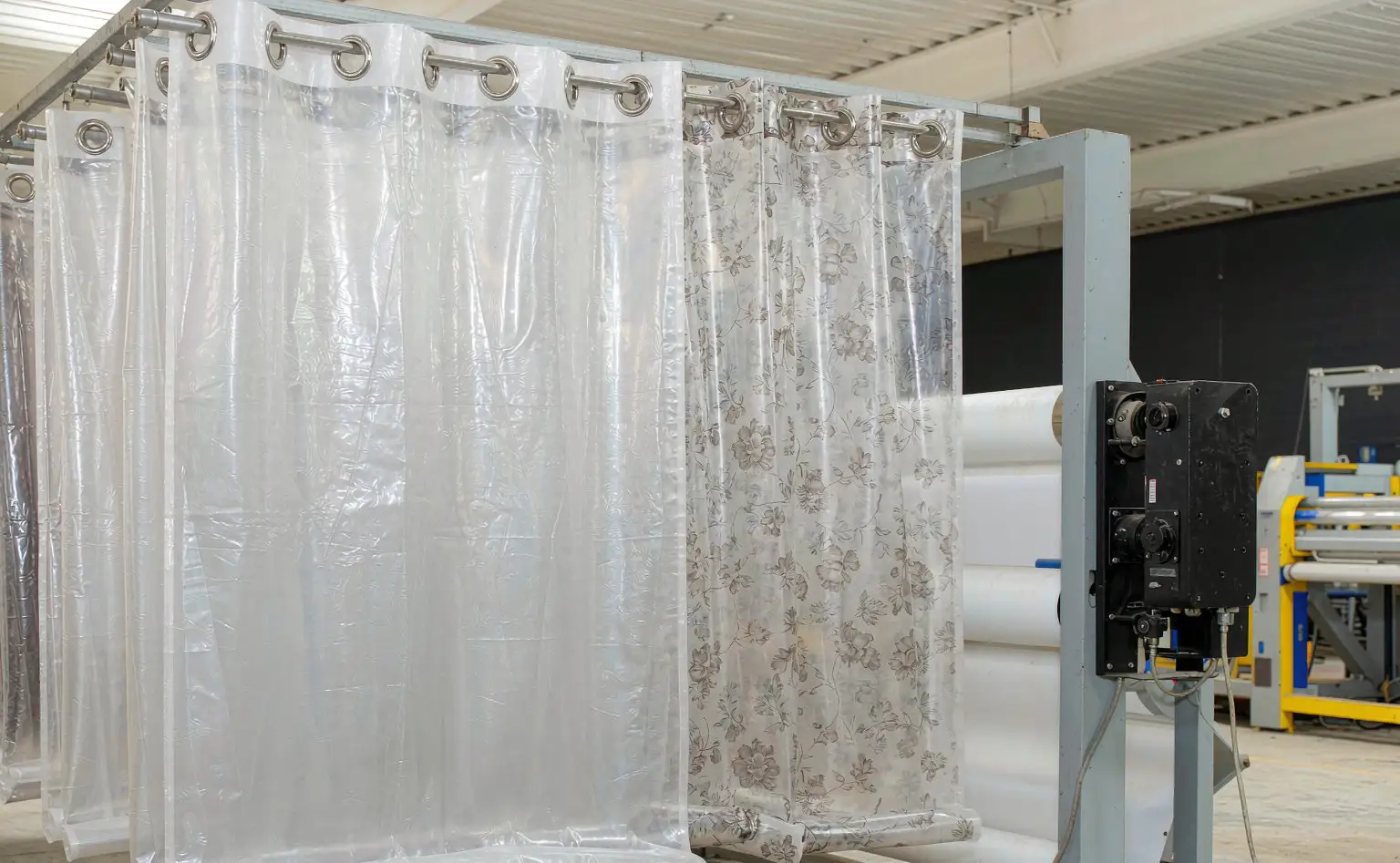
Is a sprayed treatment on the surface enough? Not advisable. A spray stays on the outermost layer, and the water of a shower, the friction of hanging and the wipe-down take it off quickly, while the film inside and the fibres of the cloth stay bare. The protection belongs in the material: in the PVC by masterbatch, in the fabric by finishing.
Can a curtain that has already spotted be washed and reworked? It depends where the mould is. Where it sits on the surface, clean it, re-run the matching treatment and dry it thoroughly, and it can still be used. Where it has reached the film or the fibre, cleaning only addresses the surface and the growth returns, so those lots are better isolated and downgraded. Reworked goods must be dried right through, or rolling them up damp seals the water back in.
Two points carry the work. The PVC film takes iHeir-ECO plastic antimicrobial agent at 0.5%-1.0% on PVC weight in the mixing stage. The fabric curtain takes iHeir-BJ textile mildew inhibitor at 2%-3% o.w.f. on dry fabric weight in a bath at 21-50 degrees and pH 4.5-8.5, premixed and added in portions. Packing and storage then hold relative humidity below 60%, so the work done at both stages stays in the goods. Samples and TDS are available to check the configuration.


