




 View Count:25
 Date:2026-10-16
Where does mould strike a plastic storage stool first? The seat top is a thin-wall cosmetic part and the inside cavity is a closed storage space, so the two dry at very different rates and one shared dose leaves the closed one behind. The seat top takes iHeir-ECO plastic antimicrobial agent at 0.3%-0.5% of PP weight, while the body and the cavity take iHeir-JS117 plastic anti-mildew powder at 0.5%-1% of finished weight. This article explains the choice for each zone, where the agent is dosed, and the stacking and storage rules.
1. Where mould starts on a plastic storage stool
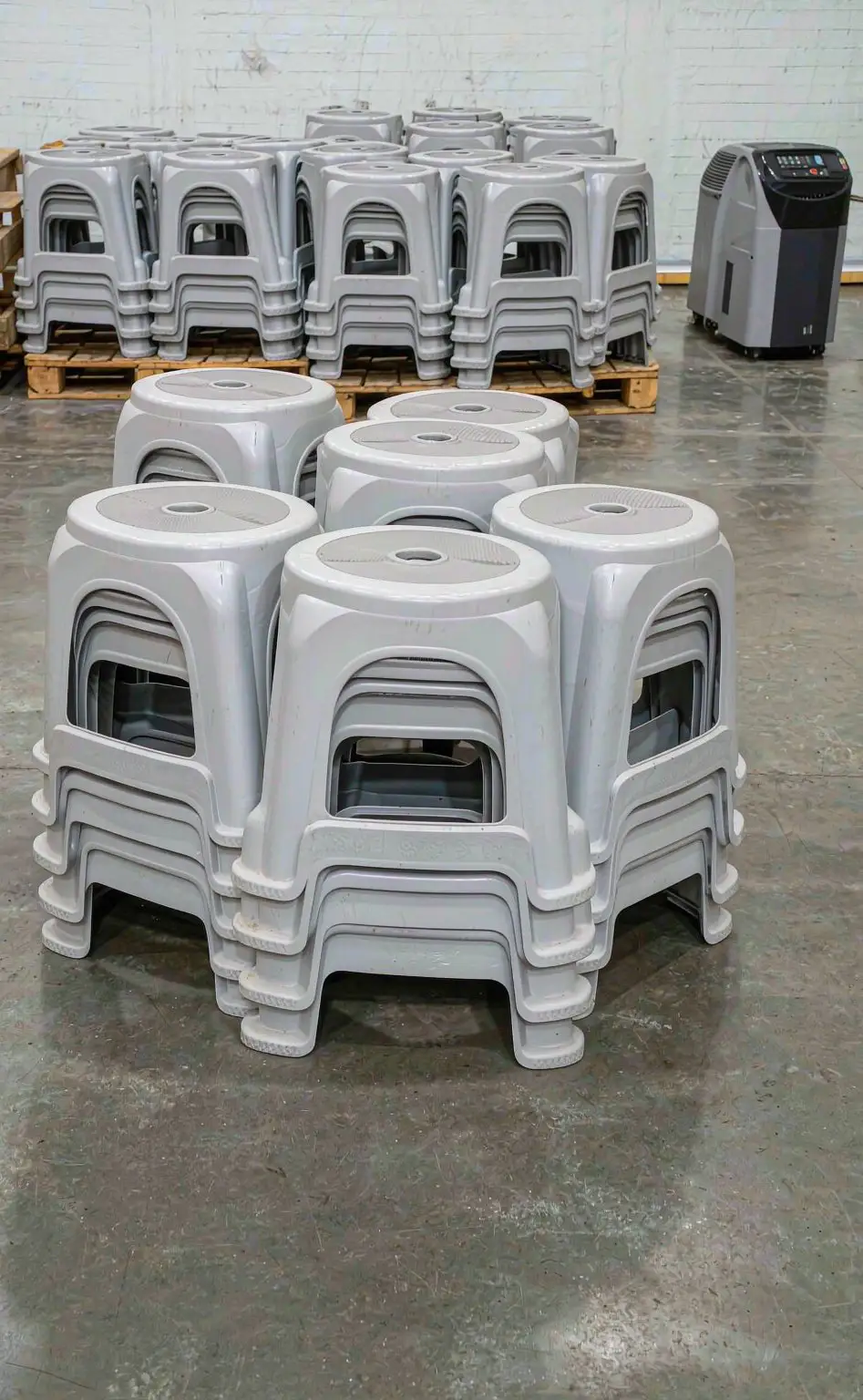
A storage stool is simple in construction: a seat top, usually a lid or a sitting board, over a body that forms the storage space, sometimes with a loose inner bucket. Most of it is PP, and when stools ship nested one inside another the cavity barely ventilates. That is where the trouble starts — as soon as shop or warehouse humidity rises, the air inside the cavity saturates first, condensation settles on the walls, and micro-organisms have the condition they need.
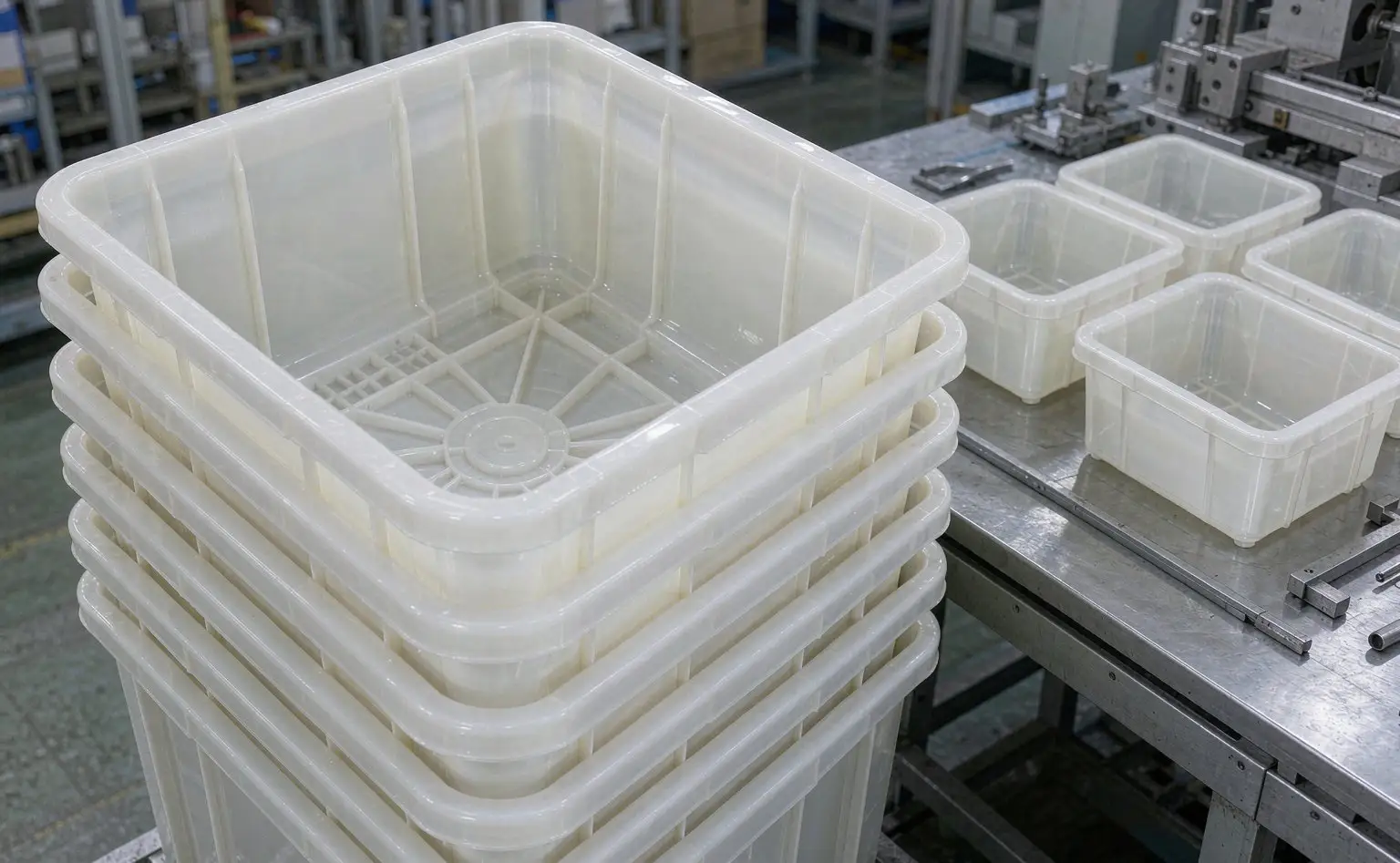
The back of the seat top is the other easy thing to miss. The visible face is flat and glossy, but the reverse carries a grid of ribs, and the shallow channels between them hold run-off, dust and moisture; once the goods are in a container, the day-night temperature swing makes those channels the first place condensation stops.
So the two zones do not want the same thing. The seat top is a cosmetic part, the first thing a buyer looks at, and a light-coloured one must not shift in shade, so the choice has to protect the colour. The body and the cavity are load-bearing and hidden, thick-walled and slow to dry, so the choice has to keep mould out for the long haul. One shared dose usually leaves one zone short and overspends on the other.
2. The seat top and the inside cavity compared
The table lines up the material, the operation where the agent goes in, the figure and the points to watch for each zone, as a first draft of a process instruction.
| Zone | Material | Where it is dosed | Figure or criterion | Points to watch |
|---|---|---|---|---|
| Seat top | PP moulded part | Into the mix, blended with the granules before moulding | iHeir-ECO at 0.3%-0.5% of PP weight | Keeps light colours from shifting; keep the melt below 320 degrees |
| Body and cavity | PP or ABS | Powder blended into the mix, then moulded | iHeir-JS117 at 0.5%-1% of finished weight | Active content above 97%; mix well, never spray the finished part |
| Stacking and store | Finished stool | Humidity control, off wall and floor, a gap left in the cavity | Relative humidity below 60% | The cavity spoils first; add desiccant to export cartons |
Three rows make the split clear: the seat top runs on antimicrobial performance and colour, the body and the cavity run on mould resistance and durability, and the last row is the humidity control that backs both up. Miss one and the problem only shows when the customer opens the carton or the container.
3. The seat top: ECO at 0.3%-0.5% of PP weight
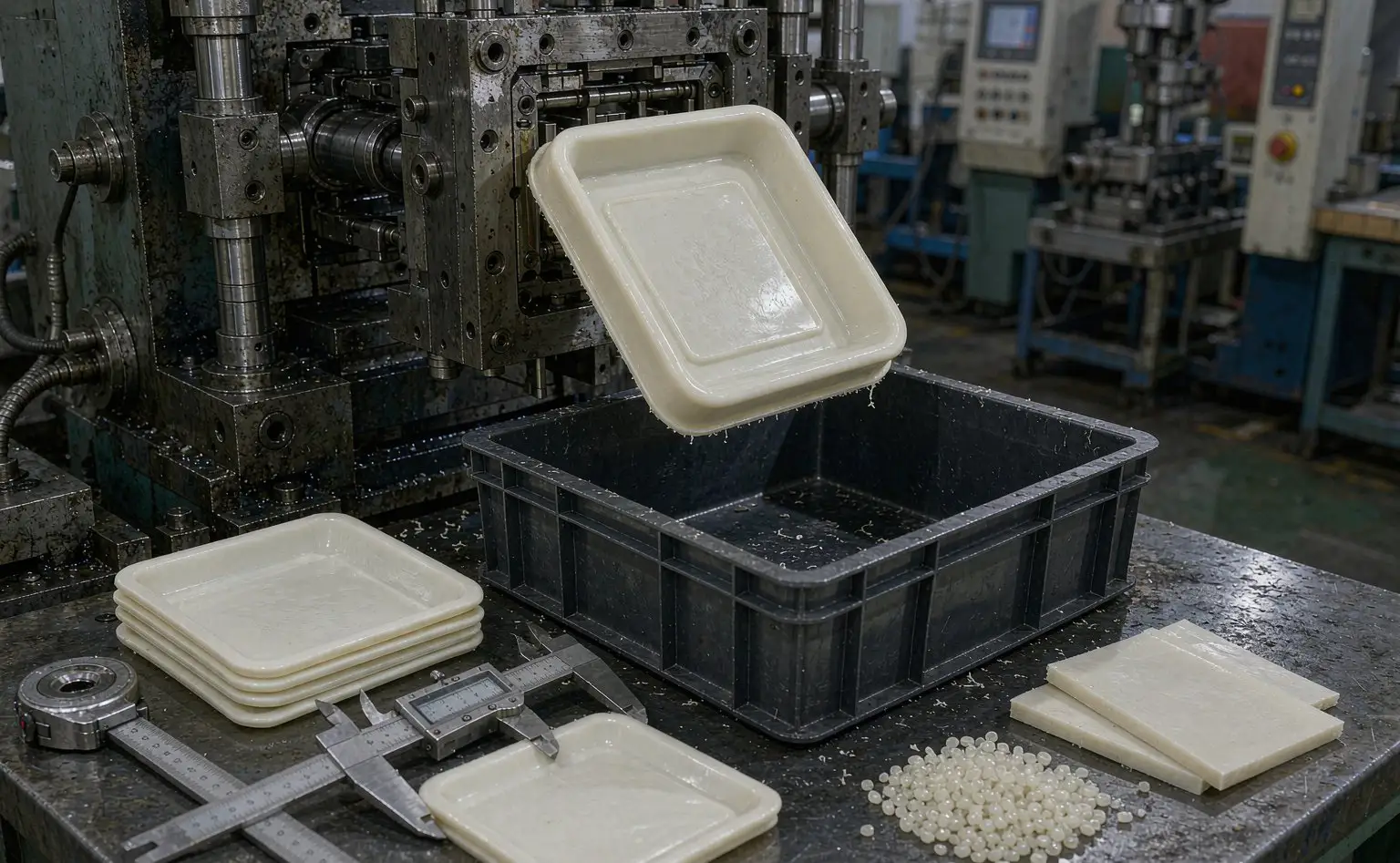
The seat top takes iHeir-ECO plastic antimicrobial agent at 0.3%-0.5% in a PE or PP system, counted on the weight of the compound rather than the finished stool. It is a grey-white powder of 100% purity, supplied as a masterbatch and added at the plasticising or mixing stage, compatible with ordinary injection moulding and needing no extra equipment.
Its advantage is that the active runs through the whole part rather than sitting on the surface, so the seat top keeps its protection after being wiped and after being moved about, and it has little effect on light colours, so pale stools are less likely to show a shade difference. Watch the processing temperature: thermal stability reaches 240 degrees, the melt should stay below 320 degrees, and an excessive temperature drives the active off and wastes the dose. Where colour is no longer a constraint, the choice between masterbatch and powder follows plastic anti-mould masterbatch or powder.
4. The body and the cavity: JS117 at 0.5%-1% of finished weight
The body and the cavity take iHeir-JS117 plastic anti-mildew powder at 0.5%-1%, counted on the weight of the finished part. Its active content is above 97% and its bulk density 380 kg/m³, and it works with polyethylene, polypropylene, polyester, TPE and rubber; the powder is blended with the resin at the mixing stage and then moulded as usual, again with no extra equipment.
The argument for an internal additive is even distribution. It travels with the melt into every corner of the part, so the cavity walls and the roots of the ribs are protected even though no spray could reach them; applied after moulding, on the other hand, a coating sits on the surface, rubs off as nested stools slide against each other, and never reaches the cavity at all.
Two workshop points. First, mixing: the density difference between powder and resin causes segregation, and a short mixing time leaves one part of a batch protected and another not. Second, melt temperature: keep to the base resin’s own window rather than raising it for other reasons. Granules or dry blending both work. Storage and export handling for plastic parts follow the practice set out for plastic products anti-mould and antibacterial solutions.
5. Moulding, stacking and storage: keeping the protection in place
Once both zones are dosed, later operations can still waste the work. Control demoulding and cooling at the press, because parts stacked while still warm carry heat and moisture between them, and blow the dust off after trimming, since dust takes up water too and holds dirt in a damp shop.
Storage runs on three rules: hold the store below 60% relative humidity; do not press nested stools airtight against each other, but leave a strip of board or a small gap so the cavity air can exchange; and add desiccant inside the carton for export lots. Condensation in the container itself is a separate job, set out for container moisture and mould in shipping.
6. Questions: a final spray, and stacking without humidity control
Can a spray on the finished stool replace internal dosing? No. A spray stays on the surface and misses the cavity walls and the roots of the ribs, and nesting friction and everyday wiping take it off. Internal dosing puts the protection into the material, so a freshly scratched cross-section is protected too, which a spray cannot do.
If warehouse humidity cannot be held down, will the additive alone be enough? No. The additive keeps the material itself from growing mould; it does not deal with the water that collects inside the cavity. Above 60% relative humidity, condensation keeps forming and spots and smell still appear on the surface. The additive and humidity control are two legs, and one without the other will not hold. Samples and TDS are available for both products.
Two points carry the work. The seat top takes iHeir-ECO plastic antimicrobial agent at 0.3%-0.5% of PP weight, and light colours stay true. The body and the cavity take iHeir-JS117 plastic anti-mildew powder at 0.5%-1% of finished weight for longer mould resistance. Cool the parts before stacking, leave the cavity air a gap, and hold the store below 60% relative humidity, so the work done at both zones stays in the goods.


