




 View Count:31
 Date:2026-10-24
Where does skylight wooden frame mould start on a window that faces rain all year? At the end grain and at the glass joint, which is why a frame that looks sound at handover is back on the bench in three or four years. Frame stock is soaked in iHeir-MA at 1:20 to 15%-20% weight gain, and the joints and cut ends are sprayed with iHeir-M8 at 1:20 after framing. This article covers soak depth, spray order and the sealing sequence.
1. Frame mould starts at the end grain and the glass joint
A skylight differs from a wall window in its angle. A vertical window sheds rain off the glass; a roof window is pitched or even flat, so water stays on the frame before it goes. The lower rail, the glazing bead and the drainage channel are the three places where it sits, and once timber wets and dries by turns, mould and blue stain find it.
The first location is the end grain. A sawn end cuts across the vessels and takes up water several times faster than a side face, so a frame whose ends were never treated wets from the end first, goes black at the tip and carries water along the grain. The second is the glass-to-frame joint, sealed with a gasket or a bead of sealant. A gasket hardens, a bead misses a spot, and water enters the seam; water in a seam does not drain, so mould grows along the bottom of it and shows indoors as a dark line around the glass.
The third is the frame-to-roof junction. A skylight needs flashing outside, and poor flashing lets water round the back of the frame, where the timber is out of the light, out of the air and slowest to dry. All three share one condition: water enters at a cut or a seam, so the work splits into the factory soak and the touch-up on site.
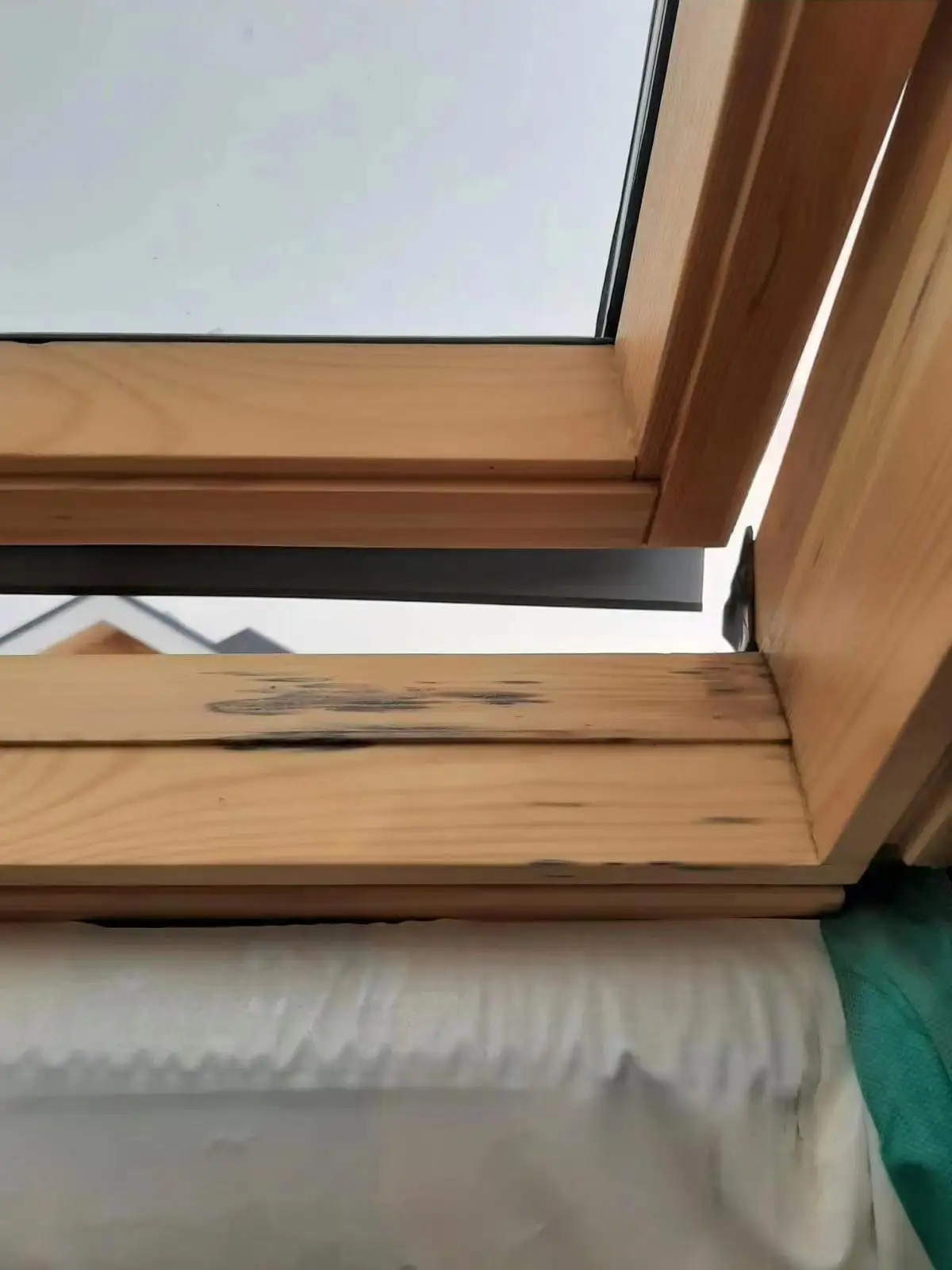
2. Soaking stage and post-framing stage, side by side
The table sets out material, product, ratio and acceptance for both stages. One happens in a plant and one on site, and a soak is judged by weight gain while a spray is judged by coverage.
| Stage | Parts | Product and ratio | Acceptance | Watch out for |
|---|---|---|---|---|
| Factory soak | Frame stock, beads | iHeir-MA 1:20 | 15%-20% weight gain, about 5-10 minutes | Hold the timber fully under the liquor |
| Factory spray | Long lengths that will not fit a tank | MA diluted 1:10 | Full coverage, no missed faces | Extra pass on the ends |
| After framing | Joints, ends, fresh cuts | iHeir-M8 1:20 | Mixed liquor used within a month | Dry before sealing |
| Sealing and flashing | Glass joint, roof junction | Sealant plus flashing | Continuous bead, no gaps | Treatment before sealant |
| Export and stacking | Finished windows | Desiccant and humidity control | Moisture content below 25% | No tight shrink film |
Two boundaries. A soak and a spray are not the same thing: a soak is judged by how much went in, a spray only by what is covered, and one does not replace the other, so long lengths take extra passes instead. And the order cannot be reversed: treatment first, sealing second. Seal first and the sealant closes the seam, the liquor never reaches the bottom, and the water that is already in there stays.
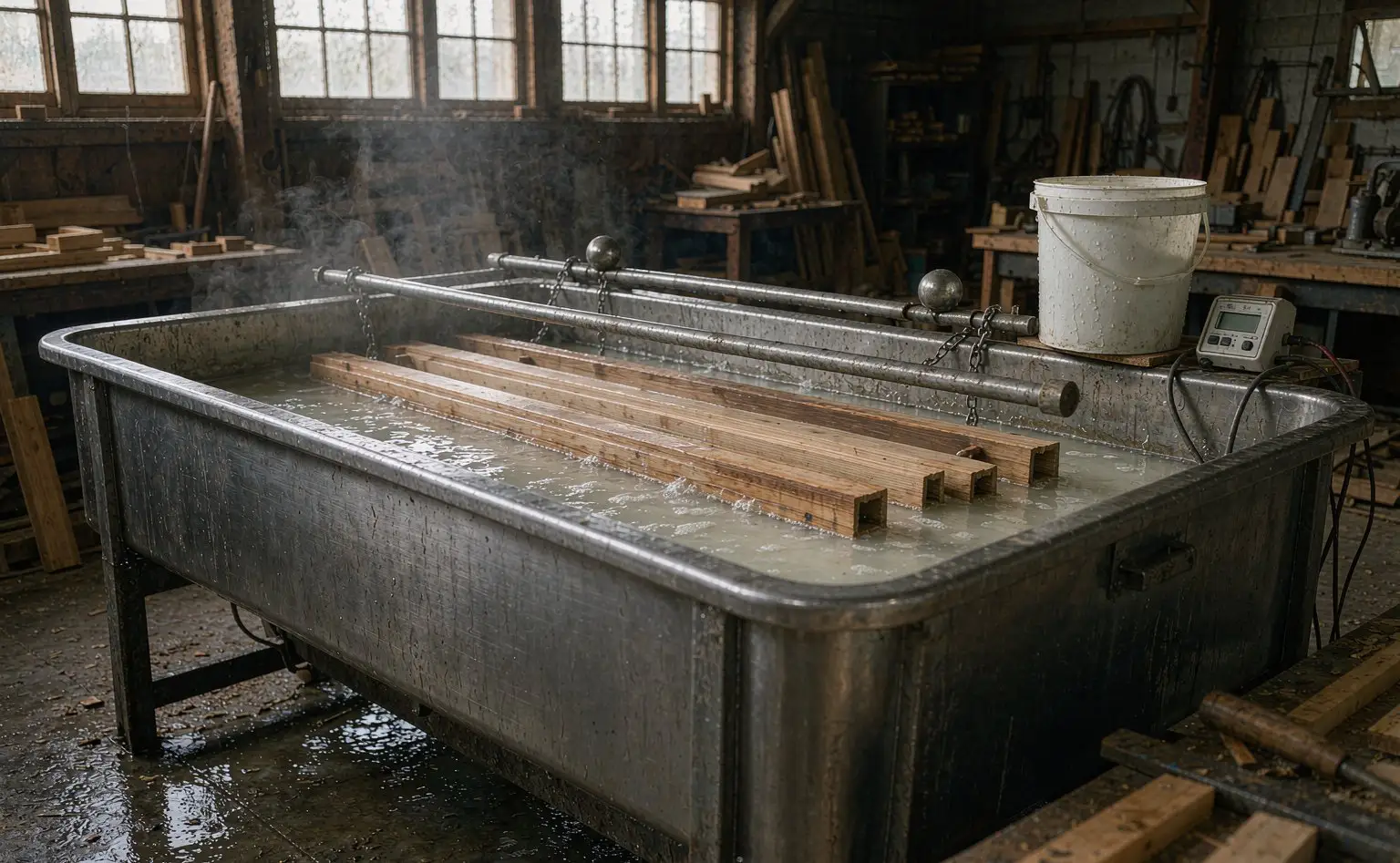
3. Frame stock in the tank: iHeir-MA at 1:20, 15%-20% weight gain
The tank dosing for iHeir-MA soaking type bamboo and wood preservative is 1:20, 5kg of the agent to 100kg of water. Hold the stock fully under the surface, soak to a 15%-20% weight gain, which takes about 5-10 minutes, then lift and drain. It has high solids, resists wash-out, penetrates strongly and tolerates high humidity, which suits outdoor timber buildings, decking, fencing and a skylight frame.
Four details decide the result. Moisture content: stock goes in dry enough for the liquor to enter, because wet timber only takes a surface coat. Ends: dip the cut ends first, since the end face is the fastest path in and the easiest to forget. Time and gain: species and density change the uptake rate, so judge on weight rather than a fixed clock, pulling pieces at 15%-20%. And draining: drain after the tank and dry to the specified moisture content.
Long lengths that will not fit a tank are sprayed at 1:10 by spray or brush until covered, with a second pass on ends and cuts. A sprayed part is judged on coverage, not weight gain, and left to dry before the next step. The broader practice for bamboo and wood is set out in using wood anti-mould agents.
4. After framing: iHeir-M8 at 1:20 on joints and cut ends
Once the stock has been soaked there is still a stage on site: the fresh cuts from trimming, drilling and hardware fitting, and the seams behind the glazing bead. That stage uses iHeir-M8 bamboo and wood fungicide, sprayed at 1:20, applied to joints, ends and new cuts until fully covered, then left to dry. Mixed liquor is used within a month; it throws a surface film on standing, so shake first.
The value of this stage is making good: however well the factory soak was done, every cut on site exposes new end grain, and an untreated cut is a doorway. Spray in the order cut, end, seam, let it dry, then seal and fit the bead.
The acceptance is moisture content. The M8 data is specific: with the timber below 25% moisture content after treatment, protection lasts more than a year; where moisture cannot be held down, no number of treatments will stay. So the sprayed frame needs drying time rather than sealing the same day. Measure moisture to GB/T 1931, at the same position and depth at every check.
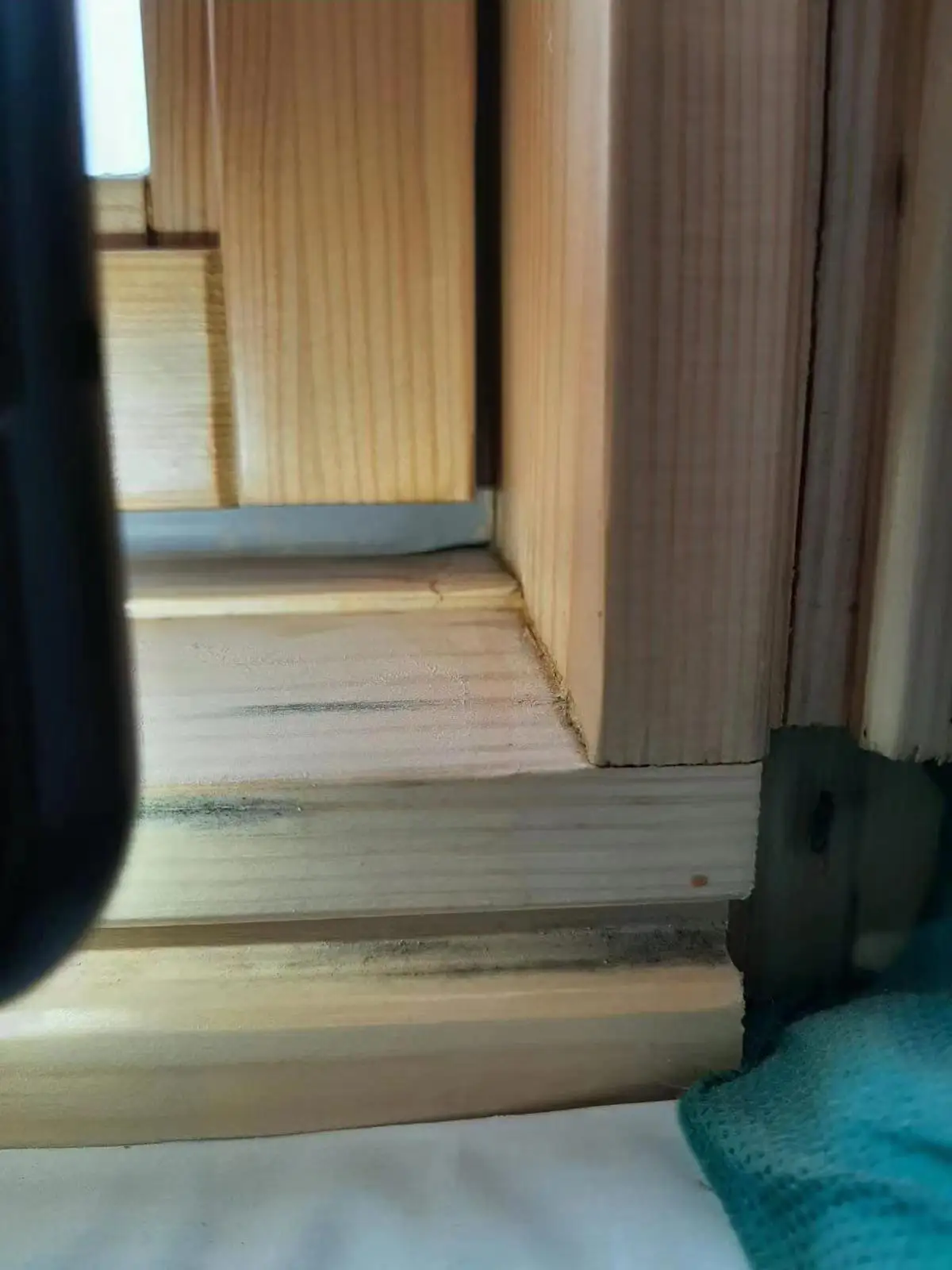
5. Sealing, flashing and export: the wrong order wastes the work
Sealing is treatment first, sealant second: treat the glass-to-frame joint, let it dry, then fit the gasket or gun the bead, continuously, with no gaps and laps at the corners. At the roof junction, flash first, with the top edge tucked into the roof and the lower edge formed into a drip so water runs away from the frame. Once those two are done, the soak and the spray are protected.
Export and stacking close two more. Test moisture before bagging and only bag below 25%; do not wrap in tight film, which seals water against the frame and is worse than no film; palletise the cartons, dunnage under the stack, a gap to the wall, and hold the store humidity down. A five-week voyage condenses water inside the container as a matter of course, so add absorbent material and leave an air path between cargo and wall. The wider picture is in mouldy crates and pallets.
6. Questions we get: will a soaked frame still mould, and does it change colour
Once the stock is soaked in MA, can it still mould on the roof? The soak looks after the timber itself, and mould also needs water and food. If the ends, cuts and seams are not touched up on site, water still enters there, so the factory soak and the site spray are one system.
Does soaking darken the timber and affect the finish? A soaked part darkens slightly, depending on species, moisture content and soak time. Trial first: soak three pieces from the same batch, dry them, put the customer’s coating system on and compare colour before fixing the process; for a clear natural finish, soak at the lower end of the range and stop at 15% gain.
How is it verified? Mould resistance follows GB/T 18261, reading growth on inoculated specimens; retention and penetration are sampled to GB/T 22102; moisture is measured to GB/T 1931. On the floor the check is quicker: weigh three frame lengths before and after the tank, read the moisture at the ends, and release the batch only when both are inside range.
Four points: soak stock at 1:20 in iHeir-MA to a 15%-20% gain, spray long lengths at 1:10, dip the ends first; spray cuts and seams with iHeir-M8 at 1:20 after framing and dry before sealing; treat before sealing and flashing; and ship below 25% moisture without tight film.


