




 View Count:33
 Date:2026-09-17
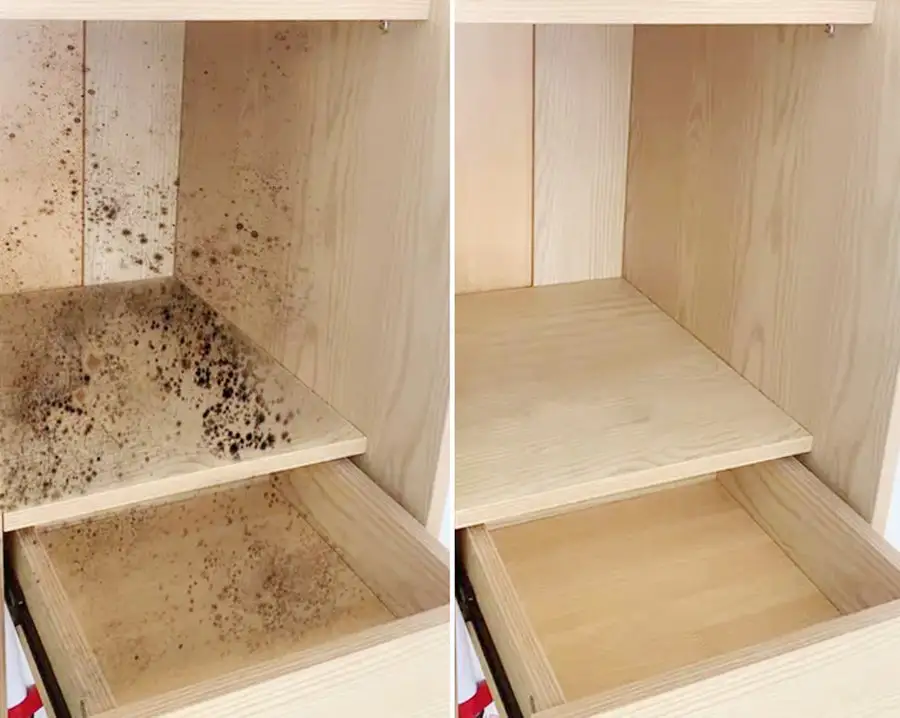
What do you do about mouldy furniture and a buyer claim? The container opens, the mould is all over the panels, and the claim lands the same week; the argument always comes down to which weak point failed: moisture content, packaging or condensation. Dip the panels in iHeir-JP to a 10 to 20 percent weight gain, spray the white body with MA, and put a Power Pak tablet in every packaging unit. This article covers the three failure points, the pre-shipment window and the evidence file, with mould resistance tested to GB/T 18261.
1. Where the claim comes from: three failure points
Most of the mould a buyer finds at opening did not grow during the thirty days at sea; the conditions left the factory inside the cargo. Point one: panels packed above the moisture limit. Above 25 percent moisture content the fungus has water to work with, and the humid container climate keeps it alive. Point two: no anti-mould item in the packaging unit. However tightly the carton and foam are sealed, the inside is a closed space, and without a killing source the spores breed as usual. Point three: condensation in the container. Day-night temperature swings drop water from the ceiling back onto the cargo, and wooden frames and cartons soak it up first. Keep a record at all three points and you have something to argue with; keep none and the responsibility lands entirely on the shipper.
2. The pre-shipment window: moisture first, then the anti-mould pass
The order cannot be reversed: bring the moisture down first, then protect. Measure panel moisture to GB/T 1931 and get it below 25 percent before the anti-mould stage; treated bamboo and wood below that level stays protected for over a year.
Dip line: prepare the bath with iHeir-JP bamboo and wood anti-mould agent at 1 part to 15 parts water, submerge the parts completely until they gain 10 to 20 percent in weight, then drain and air dry or sun dry before packing. Spraying at 1:10 to 1:20 with water or alcohol also works. Spray line: for assembled units and large panels, use iHeir-MA soaking-type preservative diluted 1:10 for spraying, or dip at 1:20, 5 kg of agent to 100 kg of water, submerged 5 to 10 minutes to a 15 to 20 percent weight gain. MA is acidic, keep it away from metal and alkaline materials, shake before use, and wear rubber gloves. For panels that will be topcoated, add iHeir-YQ to the lacquer so both the coating and the substrate carry protection.
For orders already past the line with no time for a full dip, remediate by batch: measure moisture first and re-dry the panels that read high, then spray MA on the dry panels as a backstop, recording batch and mix ratio on the treatment sheet.
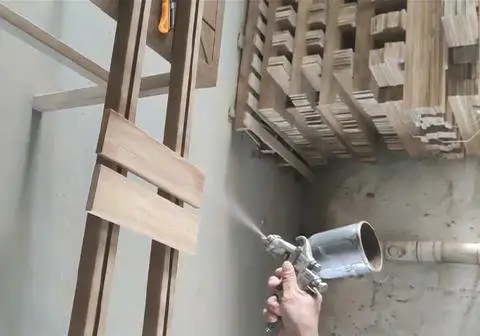
The two routes divide the work as follows.
| Route | Target | Mix and operation | Uptake or coverage | Reference dosing |
|---|---|---|---|---|
| JP dip | Loose parts, white bodies | 1:15 in water, full submersion, drain and dry | 10-20% weight gain | Bath mixed per batch |
| MA spray | Assembled units, large panels | 1:10 in water, even coverage | Full coverage, no missed spots | Dosed by surface area |
| MA dip | Bulk loose parts | 1:20 bath, 5-10 minutes | 15-20% weight gain | 5 kg agent plus 100 kg water |
3. Packaging unit and container: where the tablet and desiccant go
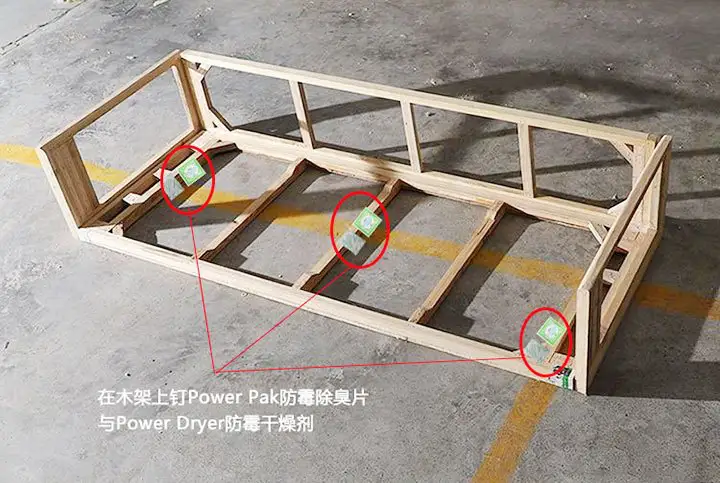
The packaging unit is the last line. Power Pak anti-mould tablets carry an active ingredient extracted from natural horseradish and mustard that sublimates at room temperature, fills the packaging space as a gas and kills Penicillium, Aspergillus and other moulds on the way, reaching the gaps that foam and pearl wool seal over. Fix the tablet to the wooden frame or the inner lining as the product goes into the box, close the box immediately, and expect action within 72 hours; if a sealed unit is opened for inspection after more than 15 days, replace the tablet before resealing. The tablets have a strong irritant odour, so wear rubber gloves and ventilate the work area.
At the container level, add container desiccant sticks to absorb condensation moisture during the voyage. The tablet inside the unit controls fungus, the desiccant in the container controls humidity. Photograph both placements before the doors close; that photo is the cheapest insurance policy in the evidence file described next.
3bis. The evidence file: four records to bring to the claim table
What weakens your position is not the mould itself, it is having no records. Keep four documents starting before shipment. Moisture records: measured values per batch before packing, with the GB/T 1931 method and batch numbers. Treatment sheet: JP or MA batch, mix ratio, weight gain or spray coverage. Pre-loading photos: tablet positions in the packaging units and desiccant placement in the container. Opening report: photos of where the mould sits, re-measured moisture and container conditions, confirmed within 48 hours of arrival. With all four, the cause, raw material, storage or transport, can be traced to the right party; with none, the negotiation table offers only a full settlement.
Mould resistance itself is tested to GB/T 18261, the standard for evaluating anti-mould agents against wood-inhabiting mould and blue-stain fungi, and the report travels with the batch. For a quick line check, we recommend the agar plate method: treated and untreated samples held together at 90 percent relative humidity and 28 degrees, read after 3 to 7 days.
As the supplier we send samples first: furniture category, panel process and destination port are enough for a dip or spray plan with dosing, confirmed before drum quantities. For the full export control line on solid-wood furniture, see our Nankang solid-wood furniture anti-mould programme.
5. FAQ
Q: How do JP and MA divide the work?
Loose parts and white bodies go through the JP dip, 1:15 to a 10 to 20 percent weight gain; assembled units and large panels take MA spray at 1:10 with water. MA is acidic, so keep it off metal fittings and alkaline materials, and wear gloves.
Q: How many tablets, and where?
One set per packaging unit, fixed to the frame or lining and sealed in the same box as the product. Load and seal together, expect action within 72 hours, and replace tablets after any opening beyond 15 days.
Q: Mould is found on arrival, what comes first?
Document within 48 hours: photos of where the mould sits, re-measured panel moisture and container condition records, sent back the same week. Past the inspection window, responsibility tilts toward the shipper.
Q: The buyer asks for a test report, what do we provide?
The GB/T 18261 report travels with the batch, with retained samples for both dip and spray lots. For panel furniture selection and dosing, see our panel furniture anti-mould plan, test first and scale after.
Send us the furniture category, the panel process and the destination port, and we will come back with an anti-mould plan and an evidence checklist. Contact us.