




 View Count:44
 Date:2026-09-17
Mouldy crates and pallets raise the question of whether they can still be declared for export, and the real exposure is not port quarantine but the destination inspection, where a failed incoming check brings a claim or a full-container return. What can be done depends on the days left to loading. Treat the wood with iHeir-M8 in the notch and iHeir-PT on site, then place iHeir-T-1000 desiccant in the container, 8-10 sticks for a 20ft box. This article covers the rescue timeline by days remaining and the claim evidence file.
1. Three real risks of mouldy wood packaging: quarantine, rejection, cross-contamination
Quarantine: fumigation and heat treatment target insects and nematodes, not fungus, so a second round of fumigation will not remove mildew. Most destination ports do not detain for mildew, but EU and similar markets restrict chemicals in wood packaging, and any anti-mould treatment must stay free of dimethyl fumarate (DMF), which triggers delisting on detection. Customer rejection: brand buyers open boxes against an inspection standard, and mould on the crate drags down the whole batch score, at best a discount, at worst a rejection. Cross-contamination: spores settle on products and cartons, the container sits for weeks, and clean goods pick up mould spots too. Of the three, only the last one can be fixed in the container; the first two must be settled before loading.
2. The fix by days to shipment: a three-level timeline
| Time left | Route | Product and dosage | Notes |
|---|---|---|---|
| 7 days or more | Rework the batch: scrape or replace mouldy boards, re-treat timber in the bath, dry, then pack | iHeir-M8, 1 part to 20 parts water, soak 1-10 minutes to 10-20 percent weight gain | Most solid; cost includes labour and drying space |
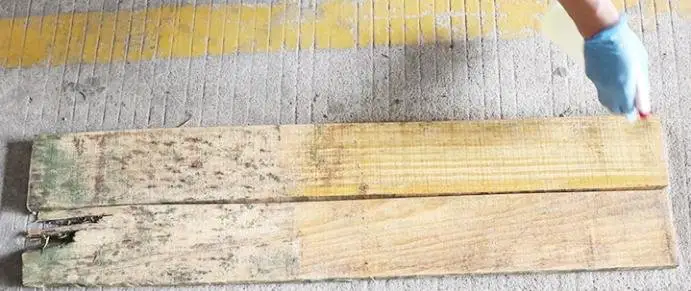
| 3-7 days | Surface treatment: scrape mildew clean, brush a full coat of agent, dry 24 hours, then pack | iHeir-PT brush-on, neat or diluted as needed | No structural changes; the first choice when appearance and odour must pass |
| Under 3 days | Emergency clean plus moisture control: wipe mildew off with diluted cleaner, dry, load desiccant, photograph everything | T-1000 sticks, 8-10 per 20-ft container | No time to soak; shift the fight to in-container humidity and evidence |
Down the timeline, cost falls and risk rises. The emergency route does ship, but write the treatment into the packing documents, confirm it with the customer in writing before loading, and never leave the argument for the destination port. For the systematic view of export pallets, see our export pallet anti-mould and fumigation-free plan.
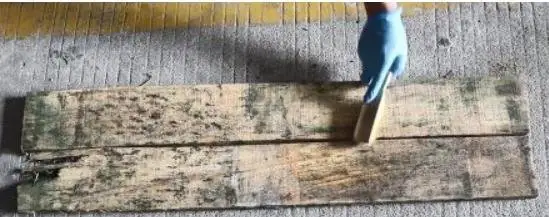
3. Before loading: M8 in the bath, PT on site
Two product lines, two scenarios. Batch treatment runs on M8 dipping: 1 part agent to 20 parts water, timber fully submerged for 1 to 10 minutes to a 10-20 percent weight gain, then drained and air dried. Where a bath is impossible, spray or brush at 1:20 with water. The liquor is reusable and should be used up within a month. Treat new timber below 20 percent moisture content, or the agent will not absorb. Assembled crates and on-site rescue run on PT, a silicone quaternary ammonium system: brush the neat or diluted liquid over the whole surface and let it air dry, liquor stays stable for reuse. Where the crate gets a topcoat, add iHeir-YQ paint anti-mould agent at 1 to 1.5 percent into the varnish so the film itself resists mould.
4. Container humidity and arrival checks: do not waste the treatment
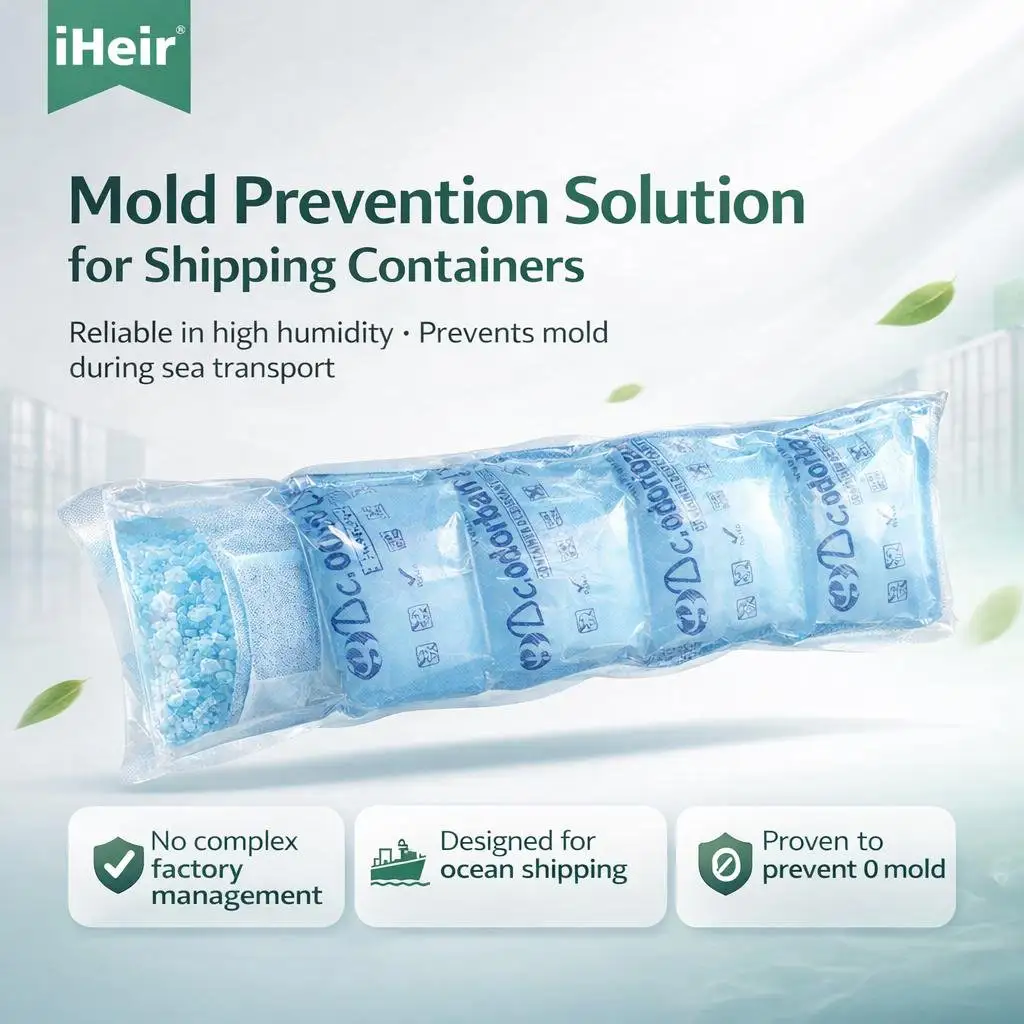
Good wood packaging is only half the job. Thirty to forty-five days at sea with day-night temperature swings means condensation on the container skin, and what the trade calls container rain lands on your goods. Fit the container with T-1000 desiccant sticks: superabsorbent cross-linked sodium polyacrylate that holds water without re-releasing it, pH around 6.9, non-corrosive to metals. The recommendation is 8 to 10 sticks per 20-ft container and 10 to 12 per 40-ft, more on long routes with big temperature swings. On routes over thirty days we recommend two extra sticks as margin rather than risk a claim on arrival. Hang them evenly along the walls, clear of the air outlets. On arrival: open and check the wood packaging for mould and musty smell first, then photograph the container humidity record. Keep the per-batch log of treatment date, mix ratio and stick count, and any claim gets answered with one file instead of explanations.
5. FAQ
Q: Can we just wipe the mildew off and ship?
For a sailing deadline, yes, but three things are mandatory: clean and dry the surface, load desiccant, and photograph the treatment into the packing documents confirmed in writing with the customer. Miss one and the destination argument is unwinnable.
Q: Does re-fumigation kill the mould too?
No. Fumigation and heat treatment target live insects and nematodes. Mildew only responds to cleaning plus an anti-mould agent.
Q: How often can M8 liquor be reused?
The liquor circulates; top up with fresh agent as concentration drops, and use each batch within about a month, since potency falls in storage.
Q: What does treating a batch cost?
Chemical cost follows weight gain and mix ratio, usually under 1 percent of the wooden packaging ex-works price, an order of magnitude below one rejection claim. For samples, dosage and pricing, see our container rain prevention plan and talk to us.
Send us the crate spec, the shipping schedule and photos of the mildew, and we will come back with a timeline plan before you touch a board. Contact us.