




 View Count:14
 Date:2026-10-29
Can mould be prevented on a trolley case? The shell is an ABS or PC sheet, the lining is polyester, and the mould grows on the cloth; one rejected export lot is a whole container back. The sheet compound takes iHeir-PSZ104 at 0.5%-1.0% of sheet weight, the lining takes iHeir-BJ at 2%-3% o.w.f. in one dip. This article covers both stages, the bath incompatibility and the pre-loading check.
1. The mould is almost all on the lining
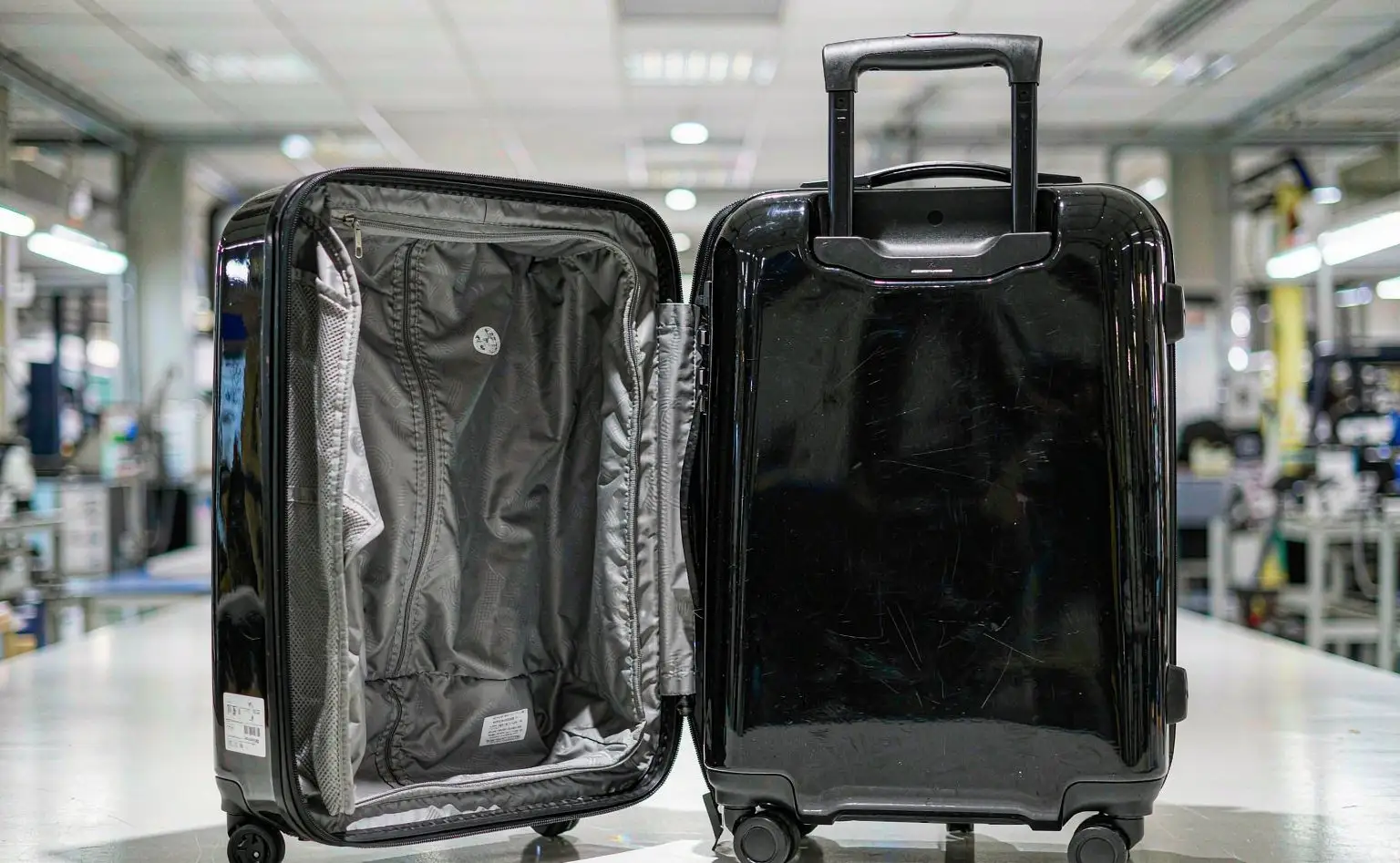
A trolley case is three parts: an ABS or PC shell vacuum-formed from sheet, a polyester or nylon lining, and the metal of handle and wheels. The shell is smooth and holds almost no water, so mould cannot establish on it. The lining is a woven or knitted synthetic with air between the fibres that takes up moisture and dries slowly, and the bloom starts on the face, the seams and the zip tape.
The lining fails in the process: rolls stored, cut, sewn, then assembled, passing through several hands. A sewing room is humid, the cloth lies against the bench, and the finished lining is turned into the shell — which seals the moisture inside. Open the case and there is a ring of grey-green on the cloth that will not wipe off, and the case is reworked whole.
The second location is condensation on the inside of the shell. A vacuum-formed case is a half-closed box: once the lid is shut the cavity does not breathe, and the day-night swing on a sea leg condenses water on the inner wall. The drops land on the lining, the lining lies against that wall, and the water stays. That is why the cases packed against the container wall fail first.
The third is the handle and wheel-bracket joints. Where the handle sleeve meets the shell and where the wheel bracket sits against the base, water collects; if the adhesive is not dry at assembly, it is sealed in and creeps through to the lining. Blowing those joints dry before loading costs far less than a rework.
2. Shell and lining are treated separately
The table sets out the sheet, the lining, assembly and export. The sheet is dosed on sheet weight and finished before assembly; the lining is dosed on dry cloth weight and finished before cutting and sewing. The two figures are not convertible.
| Part | Material and process | Product and level | Where it goes | Basis |
|---|---|---|---|---|
| Shell sheet | ABS/PC sheet, vacuum forming | iHeir-PSZ104 0.5%-1.0% | Sheet compound mixing | Sheet weight |
| Lining | Polyester cloth, cut and sewn | iHeir-BJ 2%-3% o.w.f. | Finishing bath, before sewing | Dry cloth weight |
| Handle and bracket joints | Assembly, adhesive | No additive, drying and humidity control | After assembly | Station cycle |
| Export and storage | Bagging, carton, container | Humidity control only | Packing and loading | Container type, store volume |
Two boundaries. First, a treated shell does not clean the lining: the mould is on the cloth, and no dose in the sheet reaches it. Second, finishing cannot come after sewing: a sewn lining is attached to zip, stiffener and shell, so it cannot enter a bath, and a spray only sits on the surface — the seams fail first.
3. Shell sheet: the antimicrobial goes in at the mixing stage
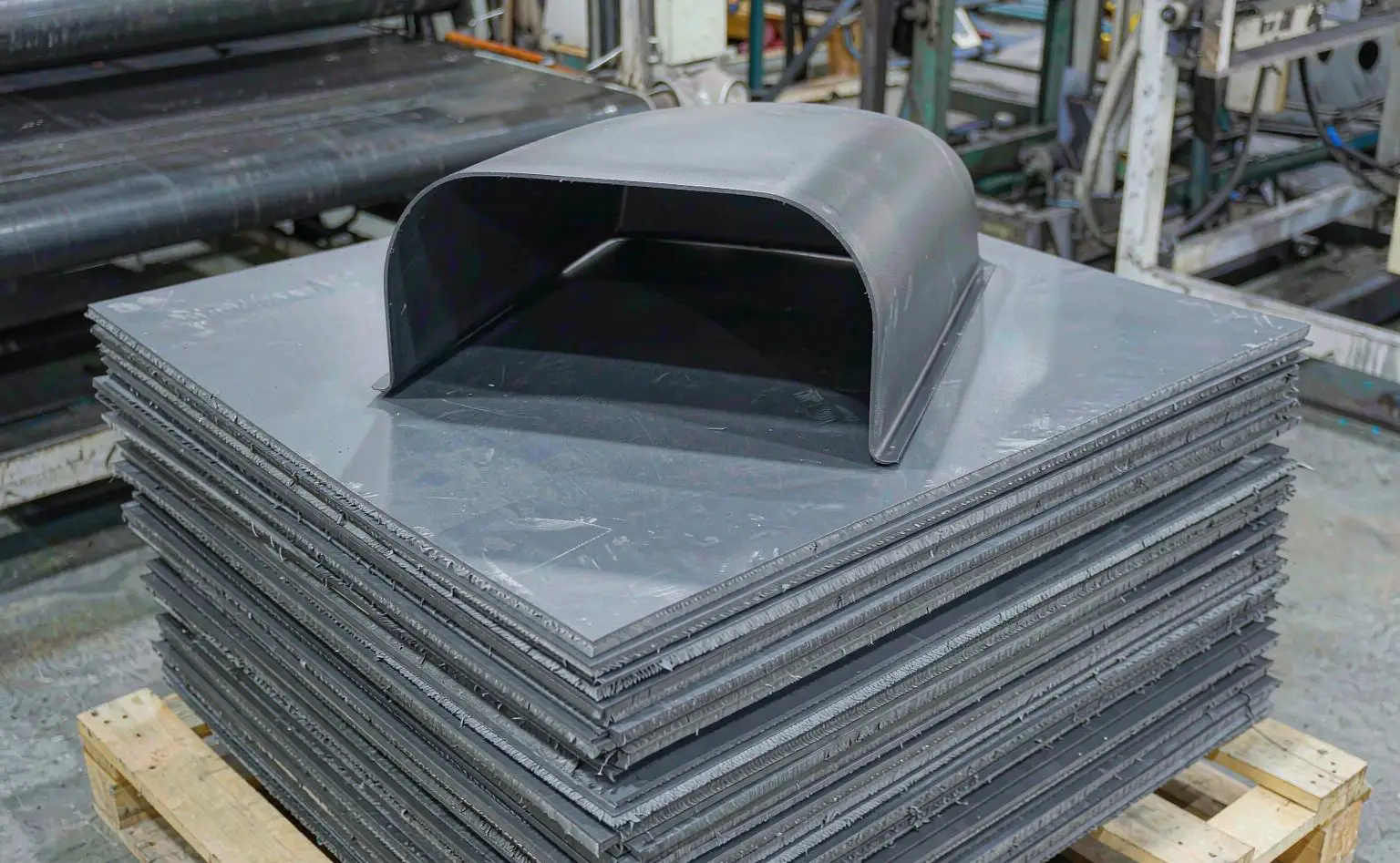
The shell uses iHeir-PSZ104 inorganic plastic antimicrobial at 0.5%-1.0% of sheet weight. It is a white powder, whiteness above 90, mean particle size 1-2μm, heat stable to 300℃, in 25kg fibre drums with a 12-month shelf life. It can go straight into the resin or be made into a masterbatch or dispersion, depending on what your weighing line can handle.
The stage is sheet compounding: with ABS/PC pellets and colour masterbatch into the high-speed mixer for 5-8 minutes, then to sheet extrusion or straight to vacuum forming. Plants that run masterbatch let it in by ratio, which weighs more accurately and suits short runs with many colours. Do not plan to add it before forming — by then the sheet is finished and the additive will not go in.
Three points. Dispersion: a 1-2μm inorganic powder clusters easily, so pre-blend with a scoop of pellets or use a dispersion, otherwise white specks and colour drift appear in the sheet. Temperature: ABS runs 200-230℃ and PSZ104 is stable to 300℃, so the window needs no adjustment. Dose: start at 0.5%, and go to 1.0% for hot and humid destinations or where the shell is laminated or printed afterwards, since later steps take some of the surface with them.
4. Lining: one dip, before cutting and sewing
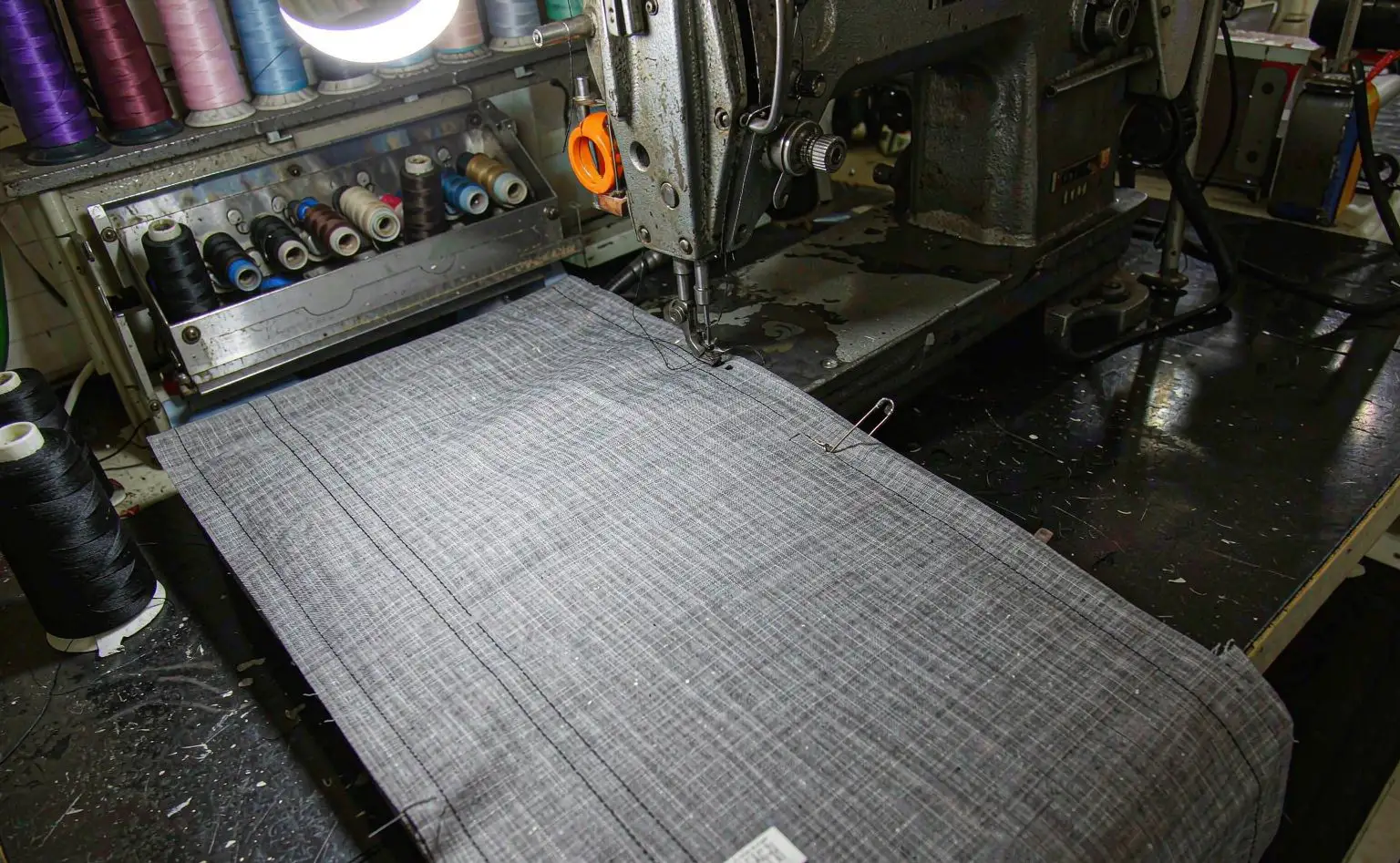
The lining uses iHeir-BJ textile mildew inhibitor at 2%-3% o.w.f. on dry cloth weight. Bath temperature 21-50℃, pH 4.5-8.5 with 6 as the target, soft water only. Pre-mix the BJ with 9-13 times its weight of water, add 0.1% hydrophilic agent, then top up — pouring neat product into the bath gives a local over-concentration and leaves marks on the cloth.
The order is: roll finishing, drying, cutting, sewing, assembly. Finishing must precede cutting, with the wet pick-up held at 70% and the cloth dried below 8% moisture before it is cut. Cut pieces left on a bench for two days undo the work, because a humid shop puts the moisture straight back.
The one that catches people out: BJ is cationic and cannot share a bath with an anionic auxiliary. Lining finishing often runs a softener or antistatic at the same time; if those are anionic the bath flocculates, scum floats, the cloth stops picking up the agent and the protection is zero. Run them as separate batches, or trial the combination first. Dose by storage life: 2% holds about a year, 3% holds two to three, and export orders are usually run at 3%.
5. Assembly, finished-goods store and export
Three things at assembly: blow the handle and bracket joints dry, because closing the case on wet adhesive pushes water through to the lining; bring the lining in below 8% moisture, since damp cloth turned into the shell seals the water in; and hold the shop at 60% RH or below, with the sewing benches away from doors and windows.
In the store: cartons on pallets, 10cm off the wall, 60% RH or below, first in first out. Before bagging, open each lid and let the cavity air out, then close and bag — the cheapest step in the whole line.
Leave an air path in the container: no carton against the wall or under the ceiling. The day-night swing condenses water on the ceiling and the cartons at the wall come back damp first; a case is a thick part, so nothing shows outside until the lining is lifted. The mechanism is the one described in condensation in sea freight containers.
6. Questions on lining bloom, sheet specks and wet-season orders
Q: Can the bloom be wiped off a lining? Not from a synthetic cloth — a wet wipe only spreads the mycelium and pushes water into the weave. A light case can be dabbed with a soft cloth and a little cleaner and dried, but the colour does not come back; where the bloom is in patches, the lining is replaced, which costs less than reworking the case.
Q: The sheet shows white specks after dosing — is the powder too coarse? It is dispersion, not particle size: clustered powder shows as specks in the sheet. Check the pre-blend and whether the masterbatch carrier suits ABS first; PSZ104 sits at 1-2μm D50 and properly dispersed leaves nothing visible.
Q: Should a wet-season order go to the top of the range? 3% o.w.f. on the lining and 1.0% in the sheet is the normal practice for the wet season and long routes. Hold the roll store and the finished-goods store below 60% RH at the same time, because extra dose suppresses growth in the material and does nothing about water in the building.
Four points to take away: dose the shell sheet with iHeir-PSZ104 0.5%-1.0% of sheet weight at compounding, pre-blended or through masterbatch, before forming; finish the lining with iHeir-BJ 2%-3% o.w.f. at 21-50℃ and pH 4.5-8.5, pre-mixed in 9-13 times water with a 70% wet pick-up, before cutting and sewing; run the cationic agent on its own batch; blow the handle and bracket joints dry, hold the store below 60% RH and leave an air path in the container.


