




 View Count:35
 Date:2026-09-18
Antimicrobial cable sheathing and appliance housings: how do you set the dosage and the processing temperature? Sheathing grows mould and cracks in damp cable trays, housings pick up mould spots in humid southern warehouses, and re-inspection, returns and brand complaints all start there. The stable route is to dose at the mixing stage: iHeir-ECO for sheathing at 0.5-1.0% in PVC, iHeir-IPL at 0.8-1.0% for light or transparent housings, and iHeir-PSZ104 at 0.5-1.0% for appearance parts. This article covers how the two part types divide the work, the heat ceilings and the verification scope, tested to ISO 22196.
1. Two part types, two ways of adding
Cable sheathing is extruded: the melt spends little time in the barrel at high temperature, so the antimicrobial agent has to be dispersed into the pellets at the compound or pelletising stage to come out evenly. Appliance housings are injection moulded and dosed the same way, but appearance matters more here, since flow marks, shade drift and discolouration show far more on a housing than on a sheath.
Finished goods already in the warehouse can only be surface treated, which gives limited kill and limited life; we do not recommend it as a production answer. For series parts, dosing at the mixing stage is the honest route, and per kilo of compound it is also the cheapest. With that settled, the selection below makes sense.
2. Dosing at the mixing stage: iHeir-ECO by polymer
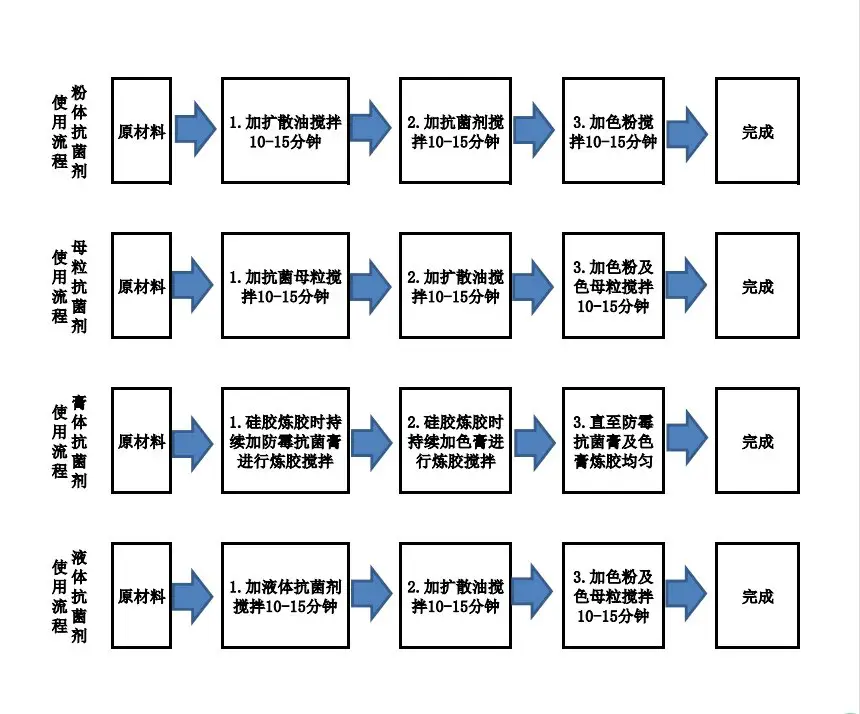
iHeir-ECO plastic antimicrobial agent is an internal-additive type that blends into the matrix as a masterbatch, so the active ingredient distributes through the body and the surface alike, and the part keeps its activity even when the surface wears. Dosing is set per polymer, not with one table:
| Polymer | Recommended dosage (wt%) | Notes |
|---|---|---|
| PE / PP (polyolefins) | 0.3-0.5 | Common for low-voltage sheathing and turnover parts |
| PVC | 0.5-1.0 | Main sheathing line; run the upper range in plasticised systems |
| PU / TPU | 0.3-1.0 / 0.3-0.5 | Cable wraps and soft parts |
| Unsaturated polyester / PMMA | 0.3-1.0 | Panels and transparent structural parts |
Two process rules: ECO’s heat stability tops out at 240 degrees C (TGA shows 35.2% weight loss at 240 C), so keep processing temperatures below 320 degrees C; and because the product is somewhat volatile, tune the actual dosage to your process and equipment, adding after any vacuum degassing step. For PVC blends with ABS, run a compatibility sample before scaling up.
3. Heat and appearance: when the inorganic agents step in
Above 240 degrees C, or whenever appearance is critical, hand over to the inorganic agents. iHeir-IPL inorganic plastic antimicrobial agent is built on silver ions, dosed at 0.8-1.0% of part weight, and withstands 300-320 degrees C of processing without discolouration; with a 1-2 micron particle size it disperses evenly and is the first choice for light-coloured and transparent plastics.
iHeir-PSZ104 inorganic plastic antimicrobial agent is also a silver-ion system, dosed at 0.5-1.0% of part weight, tolerant of 300-320 degrees C, with a 99.99% antibacterial rate against bacteria and fungi including Aspergillus niger and Candida albicans; the product page lists appliance housings explicitly in its application range. The selection rule between them: PSZ104 for pellet compounds and dark parts, IPL for light and transparent parts.
Appearance acceptance runs in three steps: place the dosed plaque next to an undosed standard and check the colour difference against the customer’s tolerance, hold it to the light for agent specks and flow marks, then run a finger over the gloss. Light and transparent parts carry the strictest gate; once the first article passes, later batches only need a colour-difference spot check. What the agent should change is the colony count, never the look, and that sentence is worth writing into the acceptance sheet for both purchasing and the shop floor.
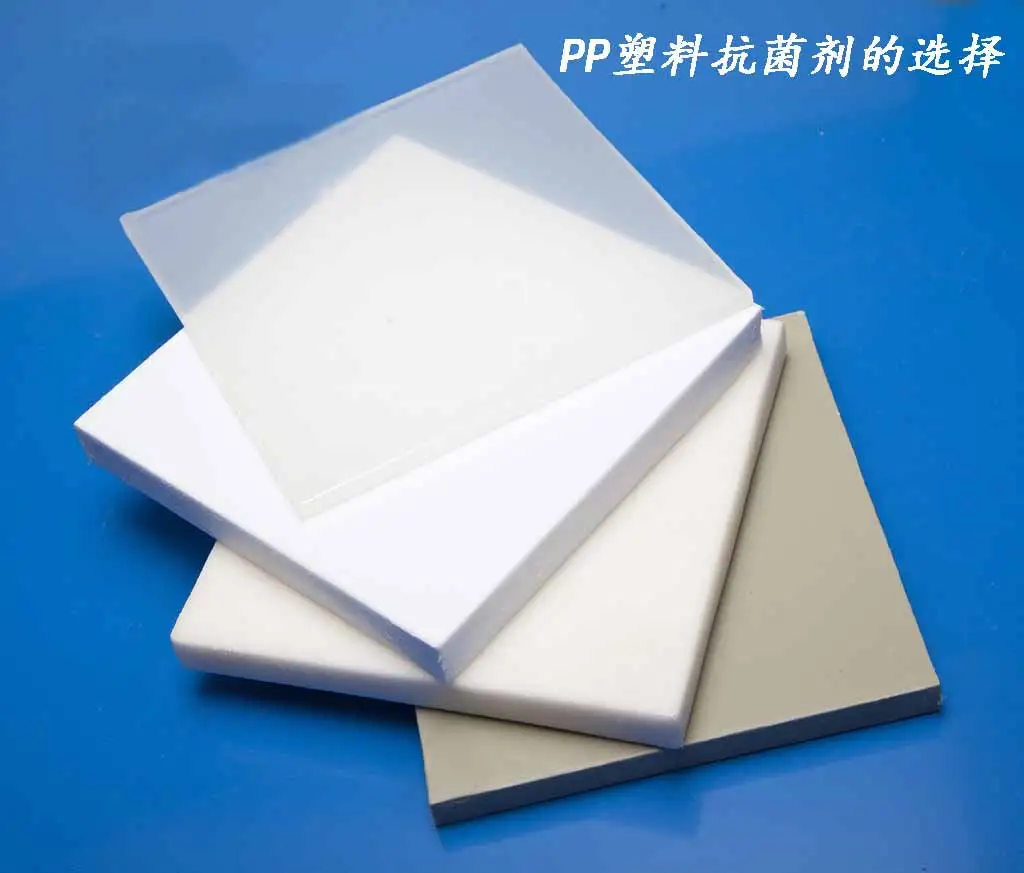
Before running a batch, check three things: the agent goes in at the compounding stage, not at the die; the drying temperature stays under the agent’s heat ceiling; and the first article gets a quick antibacterial check. Get these right and rework rarely comes back. The broader agent landscape is covered in our guide to types of plastic antimicrobial agents.
4. Two red lines: electrical performance and odour
After dosing a cable compound, insulation resistance and ageing tests must be rerun, because electrical performance never trades against the antibacterial rate. With 0.5-1.0% of powder in a PVC sheath, re-measure insulation resistance plus tensile strength and elongation at break after ageing, and the change only counts when the numbers hold in tolerance. Appliance makers often add odour and VOC checks for housings; the inorganic agents are inherently low-odour, while ECO, being somewhat volatile, deserves an odour confirmation after moulding.
For a complete appliance programme, remember that housing antimicrobial covers the plastic itself; humidity inside the packaging needs desiccant and anti-mould items in a second layer. Our export guide for small appliances from Cixi lays out the split from plastic parts to packaging in detail.
5. Verification: ISO 22196 and retain samples
Verify to ISO 22196 (antibacterial activity on plastics), sending treated and untreated control parts side by side, and issue the report at a 99% or higher rate. European and American buyers often close against JIS Z 2801 or their own corporate standard, so align the method before you book the lab. Reports travel with the batch, and retain samples are kept until the customer signs off acceptance.
As a supplier, here is how we work: we send ECO, IPL and PSZ104 samples with a dosing proposal matched to your polymer and processing temperature; once the trial confirms dispersion and appearance, we fix the grade and the order quantity. Welcome to contact us.
6. FAQ
Q: Can ECO and an inorganic agent be combined?
Split them by part, not by formula: ECO for sheathing and dark parts, IPL or PSZ104 for high-heat or light transparent parts. If a single formula really needs both, run a compatibility sample first and watch for flocculation and shade change.
Q: My processing temperature sits between 240 and 300 degrees C. What then?
That is the border band. Short residence times (thin-wall parts, small mouldings) can trial ECO with a heat check; long residence or hot extrusion goes straight to IPL or PSZ104. Do not gamble on it.
Q: With the agent dosed in, can the sheath still grow mould?
The agent protects the plastic itself; ambient humidity is a storage and packaging question. With warehouse relative humidity above 80% for days, every agent struggles. The system approach for appliances is covered in our antimicrobial agents in home appliances guide.
Q: How do we handle MOQ and lead time?
ECO starts at 25 kg drums, IPL and PSZ104 ship in 25 kg fibre drums, and standard grades leave within a week. Confirm on samples first, then lock production by batch. Full export context is in our Cixi small-appliance anti-mould guide. Welcome to contact us.