




 View Count:28
 Date:2026-09-21
Rattan furniture mould: how do you treat it at the plant? Rattan grows mould once it picks up moisture, and the wire frame underneath rusts first, staining the weave brown, which downgrades the whole light-coloured piece. Run two separate lines: dip the rattan in iHeir-JP at 1:15 to water for 10-20% weight gain, and seal the frame with iHeir-PT sprayed on undiluted, 1 kg covering 20-40 square metres. This article covers dipping, frame protection, warehouse storage and packing with the numbers to copy.
1. Mould and rust travel together: two roots, one piece
On a rattan-and-iron piece, the stain is often not the rattan’s own fault. The wire frame is bent, cut and welded, and every break in the plating is an entry for rust; the rust liquid creeps along the wrapped rattan fibres and shows up as brown marks. Mould lands on top of that, and on pale rattan the two together cannot be sanded out without cutting the weave. So split the work at the bench: rattan goes through dip protection as a natural fibre, and the frame gets surface sealing as metal. Both steps finish before assembly, because rework on a finished piece costs far more than both pre-treatments together.
2. The rattan line: choosing and mixing JP or M8
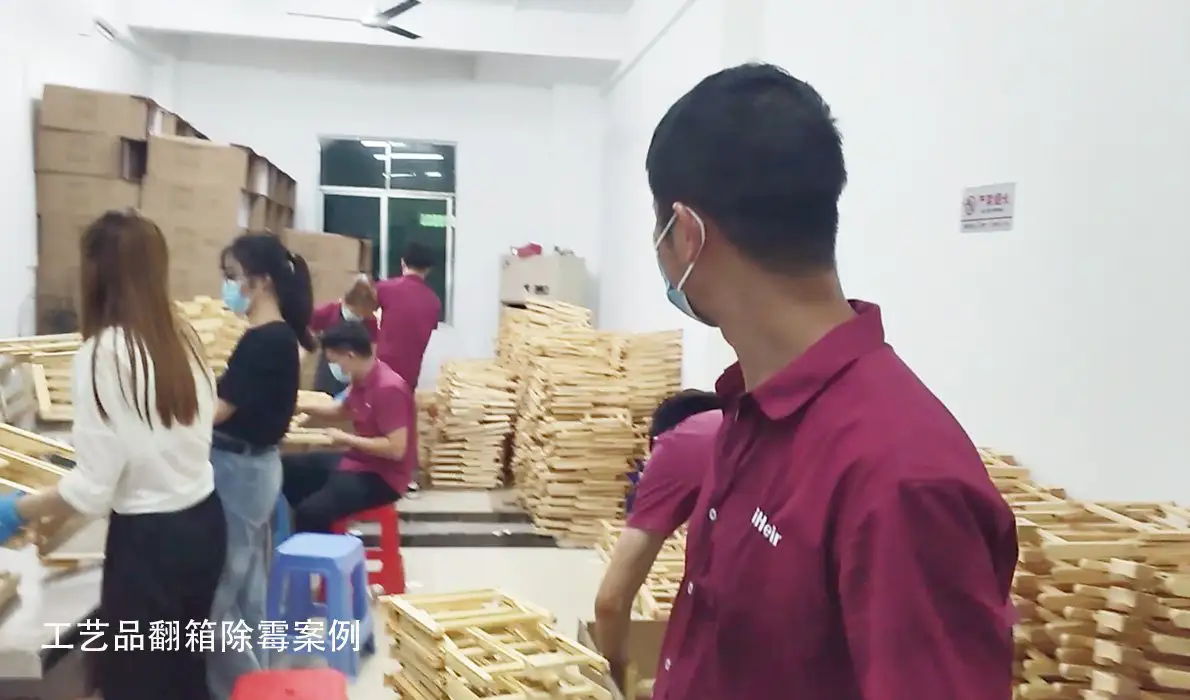
Semi-finished rattan goes into the tank in bundles before weaving. For regular orders use iHeir-JP: one part to fifteen parts water, dipped until pieces gain 10-20% weight, then drained. It bonds at room temperature, tolerates heat afterwards, and keeps a year below 60°C with three years on the drum, which suits a tank that runs all day.
For heavy builds, outdoor programmes or buyers who ask for a long protection window, switch to iHeir-M8: one to twenty water, one to ten minutes in the tank, 10-20% weight gain. Its actives are a CMIT/MIT blend with no resistance build-up. Two rules hold on either line: a mixed bath is used within a month, never carried over to a new order, and bundles are untied before dipping so the core drinks too, turned once mid-dip. Dry the dipped rattan below 25% moisture before weaving; at that level the protection lasts over a year. Weigh the bundles drained, not dripping; surface liquid flatters the number while the core stays untreated. M8 carries eighteen safety tests with US EPA and EU REACH listings, oral LD50 3700 mg/kg, so the paperwork travels with the batch when the buyer asks.
3. The frame line: sealing rust entries with PT
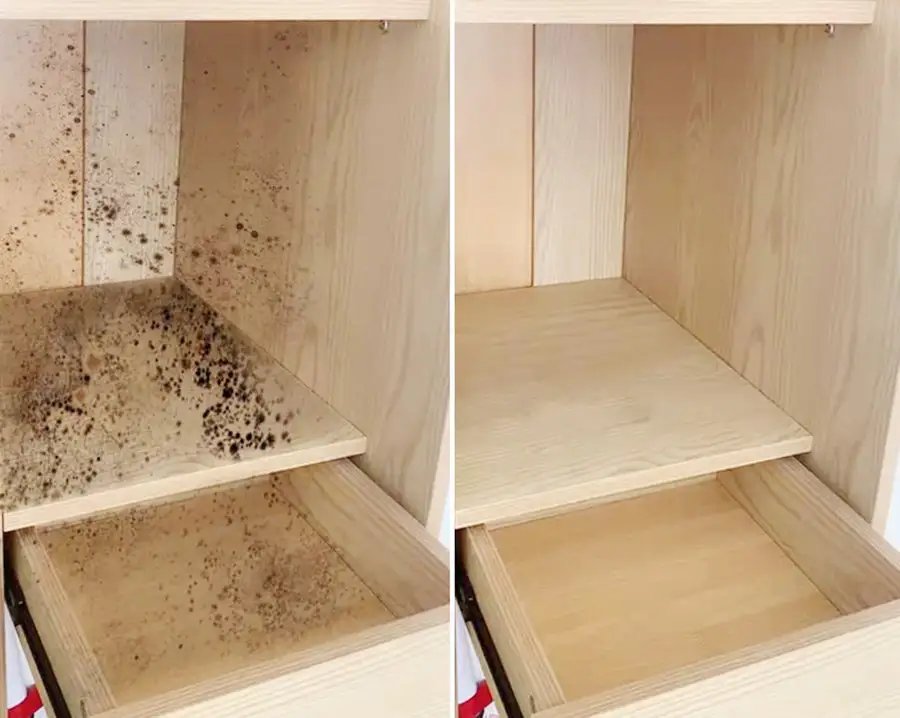
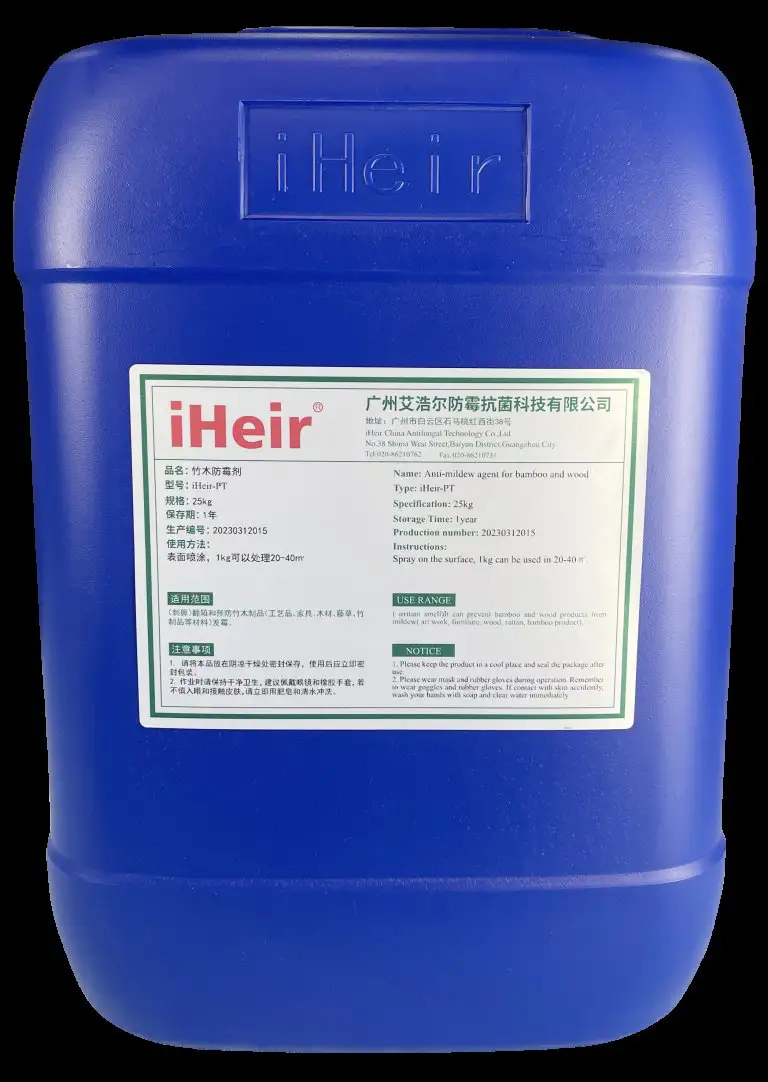
The frame’s anti-rust primer belongs to the metal section; the mould-prevention step adds sealing where rust and mould both enter: bends, weld points and cut ends left exposed after the rattan is wrapped. After shaping and before the top coat, spray or brush iHeir-PT undiluted over the bare points and the rattan surface, one kilogram covering 20-40 square metres, so consumption can be budgeted per piece. Go over the weld points a second time; a second pass costs minutes and most callbacks start there. PT works on bamboo, wood, rattan and straw alike and leaves no visible film on pale pieces. For the moisture and warehouse side of panel and solid-wood furniture, our Nankang piece covers it in depth; the finished-goods store for rattan-iron items can follow that same layout.
4. The finished-goods store and packing
Pale pieces make storage risks easy to see and easy to stop. Stack on pallets, keep the rows thirty centimetres off the walls, and treat damp floors in the rainy season with a dehumidifier rather than open doors. Rattan arriving in the rainy season also carries a higher mould background, so mix to the top of the range and top up the bath with fresh stock each shift rather than water alone. On wet weeks run a daily patrol: two pieces from the top and two from the bottom of a stack, the back of a hand on the weave for ten seconds; a cold, damp feel means the dehumidifier goes on. In the carton, add iHeir-D gas-phase anti-mould paper at 0.1-0.2 g of active per sheet; the vapour protects the bends and weave gaps no spray gun reaches. Dyed rattan next to plated fittings runs a compatibility trial first, three times the normal dose in a closed box, checking for colour bleed and plating dulling after several days.
5. Dosing at a glance
Two lines, four products, one dosage table to run the bench by:
| Product | Target | Rate | Notes |
|---|---|---|---|
| iHeir-JP | Rattan dipping, regular orders | 1:15 to water, 10-20% weight gain | Bath used within a month; stock one year below 60°C |
| iHeir-M8 | Rattan dipping, heavy or long-window orders | 1:20 to water, 1-10 min, 10-20% gain | CMIT/MIT blend; EPA and REACH; LD50 3700, low toxicity |
| iHeir-PT | Frame breaks and rattan surface sealing | Undiluted spray or brush, 1 kg per 20-40 sq m | After shaping, before top coat; no film on pale pieces |
| iHeir-D paper | Carton packing | 0.1-0.2 g active per sheet | 3x-dose compatibility trial for dyed and plated parts |
The order never changes: dip the rattan, weave, seal the frame, pack with paper. Skip the sealing and rust will undo whatever the dip achieved, because the brown stain reads as a mould failure either way. Log the weight gain per tank per shift so a drifting bath shows up before the shipment does.
6. FAQ
Q: The rattan is dipped in JP. Does the frame still need treatment?
Yes. JP protects the fibre, not the steel, and rust bleeding into the weave is billed as a mould failure by the buyer. One PT pass on the bare points covers both accounts.
Q: Can M8 and JP share one tank?
No. The systems differ and no combined performance has been validated; precipitation or a potency drop would be impossible to trace. Run separate tanks by order type, each consumed within a month.
Q: A finished piece already shows spots. Can it be saved?
Surface mould on the rattan skin wipes off with a mould cleaner, then dry and touch up with PT. Brown rust that has crept into the fibres rarely returns to colour; those pieces are re-woven or downgraded, which is exactly why both pre-treatments pay.
Q: How do samples and orders connect?
JP, M8, PT and iHeir-D all ship as samples. Send the rattan spec, frame construction and annual volume, and we come back with tank strengths and a sealing-station plan; after the trial passes, order by the drum. Welcome to contact us.