




 View Count:28
 Date:2026-11-06
How should water pump mould be handled? On a centrifugal pump the cast iron and stainless steel do not mould; the growth sits in the nitrile O-rings, the mechanical seal, the pallet and the carton liner, and a container opened at the customer means replacing seals in batches. The routine is 0.5%-1.0% iHeir-JS117 plastic anti-mould powder in the compound, plus iHeir-D vapour sheets at 0.1-0.2g of active matter on the pallet and inside the carton. This article covers the mixing stage, the cure window and export packing.
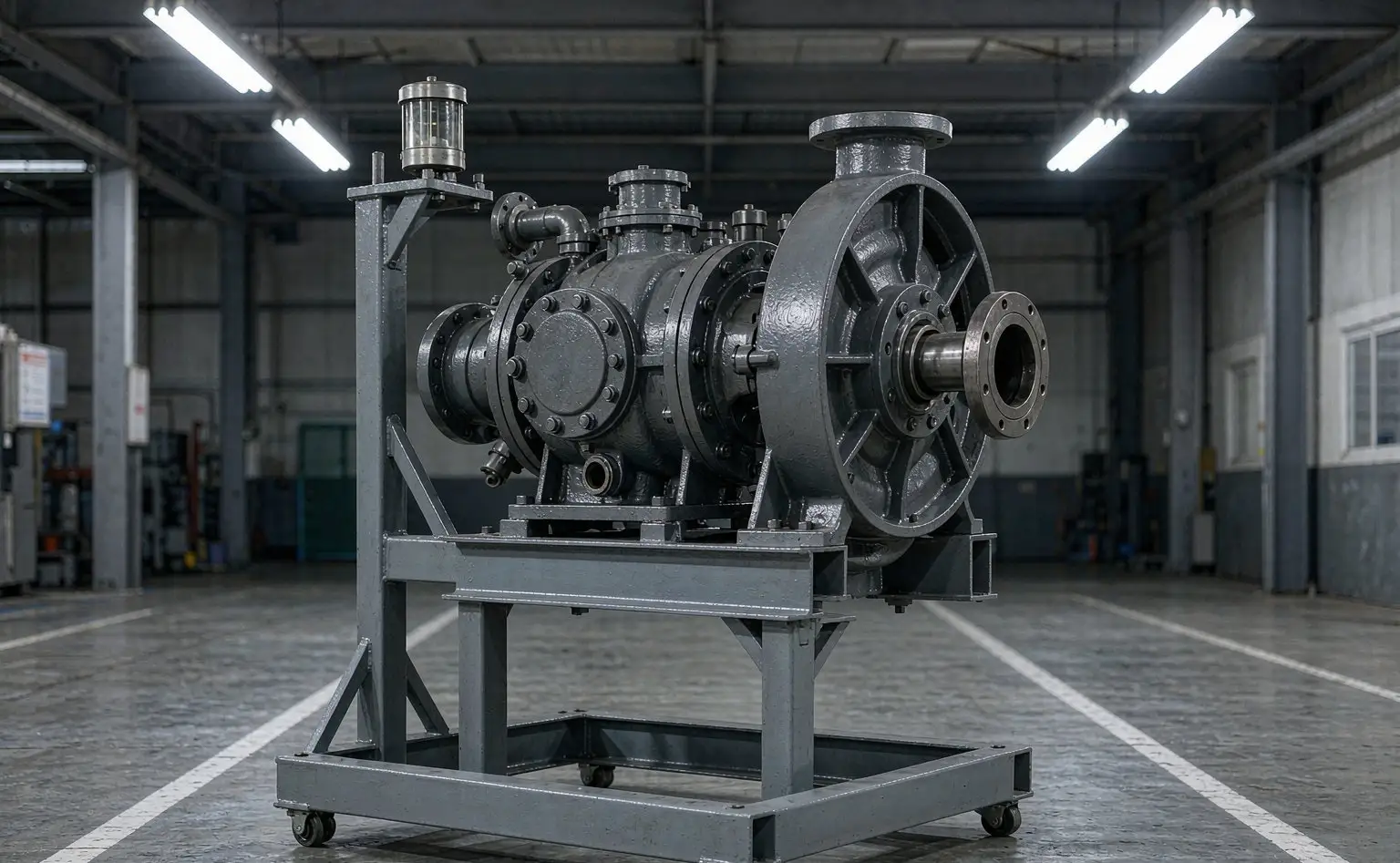
1. The casing stays clean, the seals and packing do not
Take a horizontal centrifugal pump apart: casing and cover, impeller, shaft, mechanical seal, nitrile O-rings, coupling, base plate, pallet and carton. Cast iron, stainless steel and paint feed nothing, so the exposure is in the nitrile and silicone seals, and in the pallet, carton liner and document bag.
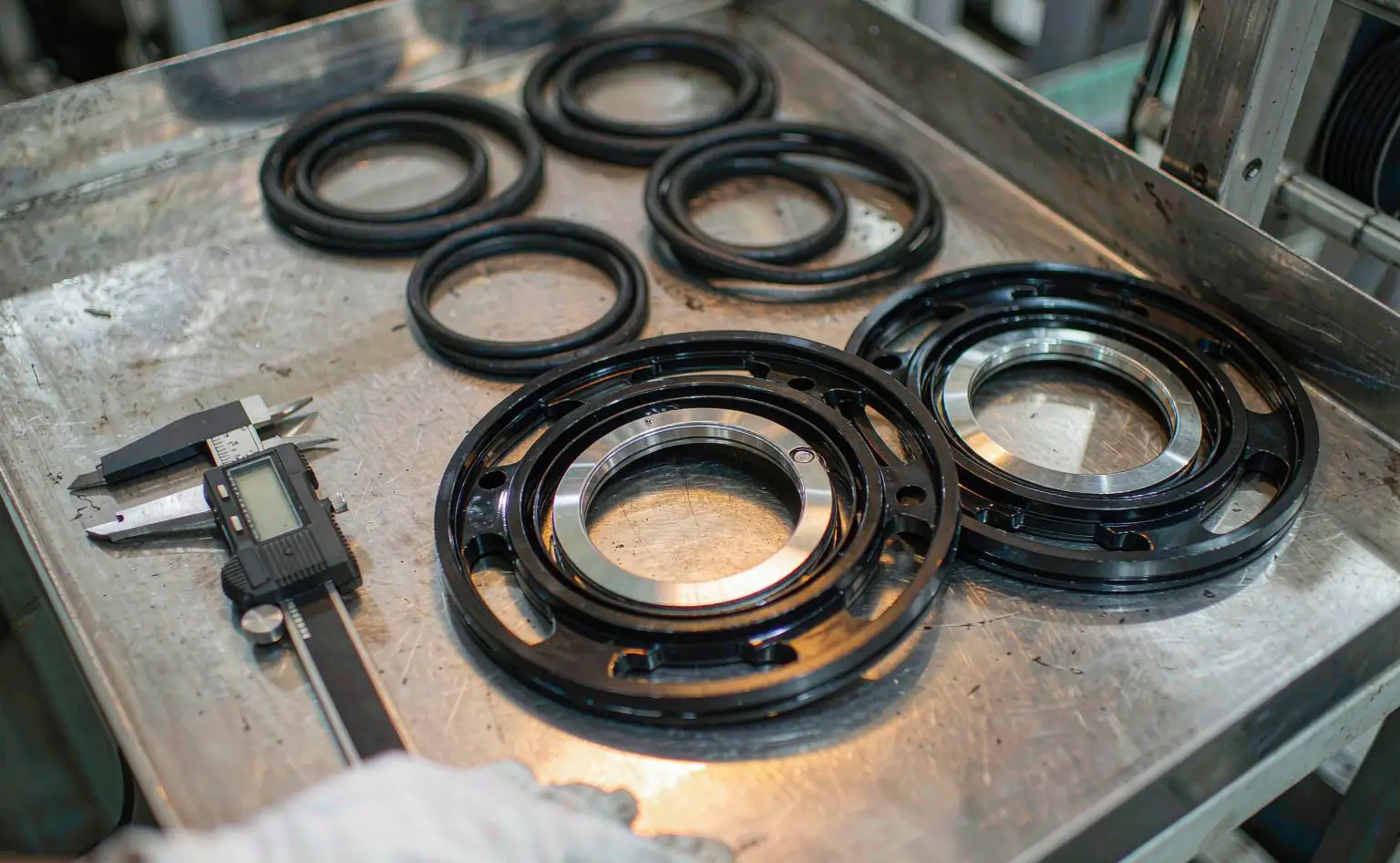
Seal mould grows out of the compound. Ester plasticisers, antioxidants and process oils in a nitrile compound are all organic food, so a seal left in the dark and the damp blooms white spots on its surface. An O-ring is a thin-walled part: once the spot bites into the rubber the dimensions and the resilience both move, and fitted to a pump that means a leak.
Packing is the second source. Export pallets are heat treated to IPPC, but timber still takes water, and cartons and corrugated liners take it faster in a wet season. With seals boxed and the box standing on the pallet, moisture climbs from below, so the spots on the seals and the bloom on the carton usually appear together.
2. Compound and packing take different units
The table lines up the seal compound, the casing, the pallet and the carton. Compound is dosed as a percentage of weight, paper as active matter per sheet, and the two are not convertible.
| Part | Material | Product and level | Stage | Control point |
|---|---|---|---|---|
| Nitrile O-rings, mechanical seal | NBR, silicone | iHeir-JS117 0.5%-1.0% of compound | Internal mixing or mill | Pre-blend with filler, no lumps |
| Casing, cover | Cast iron, stainless | No anti-mould treatment | Painting, assembly | Blow the chamber dry after testing |
| Wooden pallet | Pine, plywood | iHeir-D 0.1-0.2g per sheet | Packing, decking | Moisture checked at goods-in |
| Carton and liner | Corrugated, PE bag | iHeir-D one sheet on the wall | Packing, sealing | Only works in a closed box |
One boundary. The powder in the compound protects the seal body, the vapour sheet protects the volume in the box. Compound only leaves the pallet to mould, paper only leaves the spots inside the O-ring. Both stages, and the box opens clean.
3. Nitrile seals: where the powder goes in the mix
Seals take iHeir-JS117 plastic anti-mould powder at 0.5%-1.0% of compound weight. It is a nitrogen-heterocycle phenol alcohol complex with more than 97.0% active matter, a mean particle size of 110 microns at D50 and a bulk density of 380 kg/m³, and because it does not dissolve in water there is no wash-out to worry about.
Which stage. Add it in the internal mixer or on the mill, pre-blended with filler such as silica or light calcium carbonate before it meets the rubber. Powder scattered straight onto the compound forms lumps, the sheet comes out with white specks, and each speck is a defect after cure. Never add it with the curing agent or the accelerator, because the two interfere at mixing temperature.
How to hold temperature. Run the cure curve from the original recipe and resist the temptation to push the temperature up for throughput. A powder additive loses part of its activity over a long hot cycle, so the dose is wasted; keep discharge temperature on the original process too, and test a batch that ran hot before releasing it.
Re-test the mechanicals after adding it. Check tensile strength and elongation to GB/T 528, and compression set to GB/T 7759.1, against the unmodified recipe, and scale up only when the movement sits inside normal scatter. An O-ring is a thin-walled seal, so compression set out of spec is a leak, and this test is not optional.
4. Painting, water testing and assembly
The casing stage needs no additive, it needs the water taken out. Castings are dried before painting: a film that is still wet when the pump reaches assembly traps solvent and moisture in the chamber, and the seals pay for it. Let painted parts reach tack-free on the line before they move to assembly.
Water testing is the critical point. After the run, drain the casing, the seal chamber and the pipe stubs, then blow through with compressed air, working the mechanical seal spring cavity and the O-ring groove, where water is hardest to shake out. Do not box the pump straight away; leave it at a ventilated station first.
Hold shop and store below 60% RH with dehumidifiers through the wet season. Keep stacks off the floor and clear of the wall, and keep the top of the stack away from light fittings, where the temperature difference condenses first.
5. Pallet, carton and export packing
Packing uses iHeir-D vapour-phase paper at 0.1-0.2g of active matter per sheet. It is an ink-coated paper that holds a concentration in a closed volume rather than a spray, so grams per square metre is the wrong question.
On the pallet. Lay one sheet on the decking with the coated face up, between the boards and the pump. Check pallet moisture at goods-in and dry any pallet that comes in wet, because the pallet is where moisture enters the box, and this sheet is the barrier at the bottom.
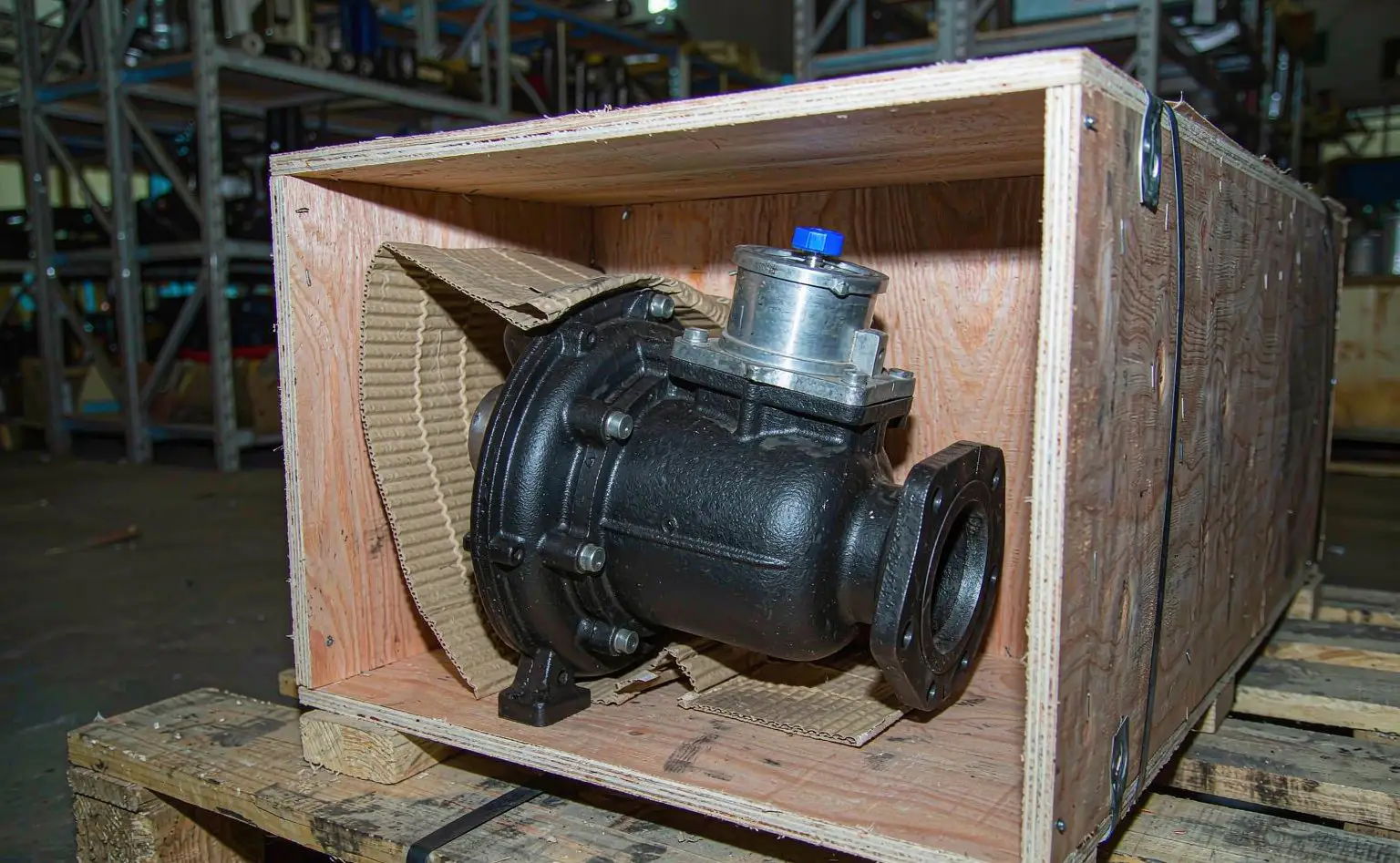
In the carton. One sheet against the wall, corrugated board between the sheet and the painted casing so nothing presses on the finish. Bag the manual and the certificate and put them to one side without sealing the bag dead. The sheet only works once the carton is closed; left open it does nothing.
Trial compatibility first. Seal three times the normal dose with a seal and a painted part, mist a little water, keep paper between the sheet and the parts, and inspect after a few days for a dulled film, hardened O-rings or white rust on plated parts. iHeir-D carries 70%±5 solids and can corrode poor-quality metal when damp, so a plated pump runs this trial first.
6. Questions on compound, seals and sheet counts
Q: The casing is cast iron, so does it need the powder too?
No. Metal feeds nothing, so the additive would be wasted; the casing risk is test water and wet paint, and controlling those two is enough.
Q: Will the powder hurt O-ring sealing?
Within 0.5%-1.0% it does not, provided tensile strength, elongation and compression set are re-checked to GB/T 528 and GB/T 7759.1. If a figure moves outside normal scatter, drop the dose and re-test before release.
Q: Can seals that already spotted be used?
Surface bloom can be wiped and the batch re-tested for mould resistance; a spot that has bitten into the rubber, or a surface that feels rough after wiping, goes to scrap, because a seal that leaks on a pump costs more than the part.
Q: Is one sheet per pallet enough?
One sheet for a single carton on a pallet; for several cartons stacked high, one sheet on each carton wall. Paper handles the volume in the box, and a pallet that has been soaked needs drying, because paper cannot rescue wet timber.
Four points to take away: dose iHeir-JS117 at 0.5%-1.0% of compound weight, pre-blended with filler, on the original cure curve, and re-test to GB/T 528 and GB/T 7759.1; add nothing to the casing and blow the seal spring cavity and O-ring groove dry after the water test; one iHeir-D sheet on the pallet and one on the carton wall at 0.1-0.2g each, after a trial at three times the dose; grade to GB/T 24346-2009 and hold a full carton 30 days at 30℃/85% RH. A 1kg sample and a pack of sheets go out for a trial, with MOQ on the iHeir-JS117 product page.


