




 View Count:37
 Date:2026-09-22
How should packaging mould control be planned? Printed boxes get mouldy from two directions: the board takes up moisture in the rainy season and in transit, while the inks, starch adhesives and laminating glues supply the nutrients. Three stages answer it. Board takes iHeir-BCA mould-proof powder at 0.5-0.75% of dry powder mass in the blending stage; printing takes an anti-mould additive in the ink and laminating glue; the finished pack takes iHeir-D gas-phase paper at 0.1-0.2 g active per sheet. This article covers each stage, the rates and the container side.
1. Two sources of mould, and closing one is not enough
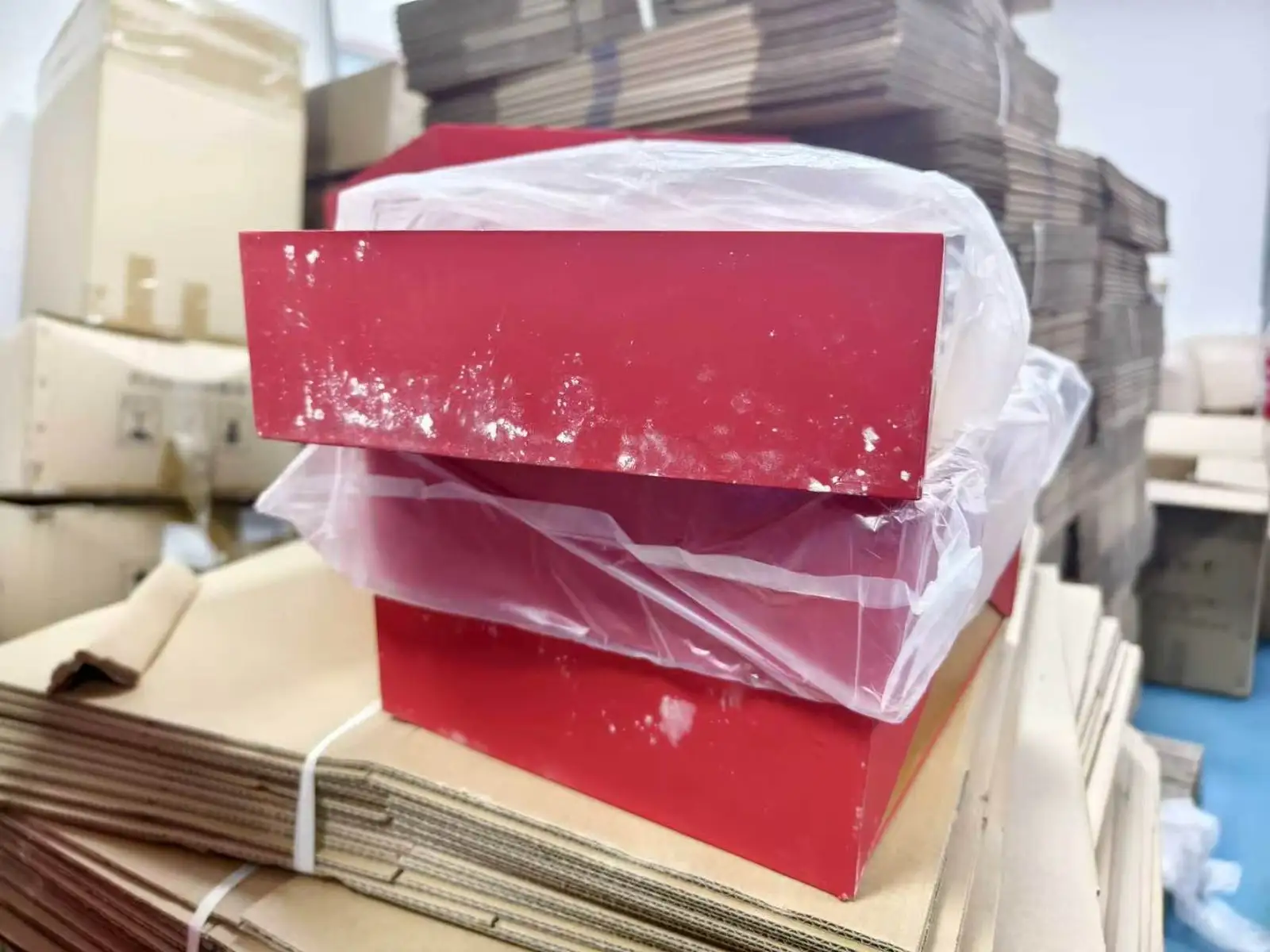
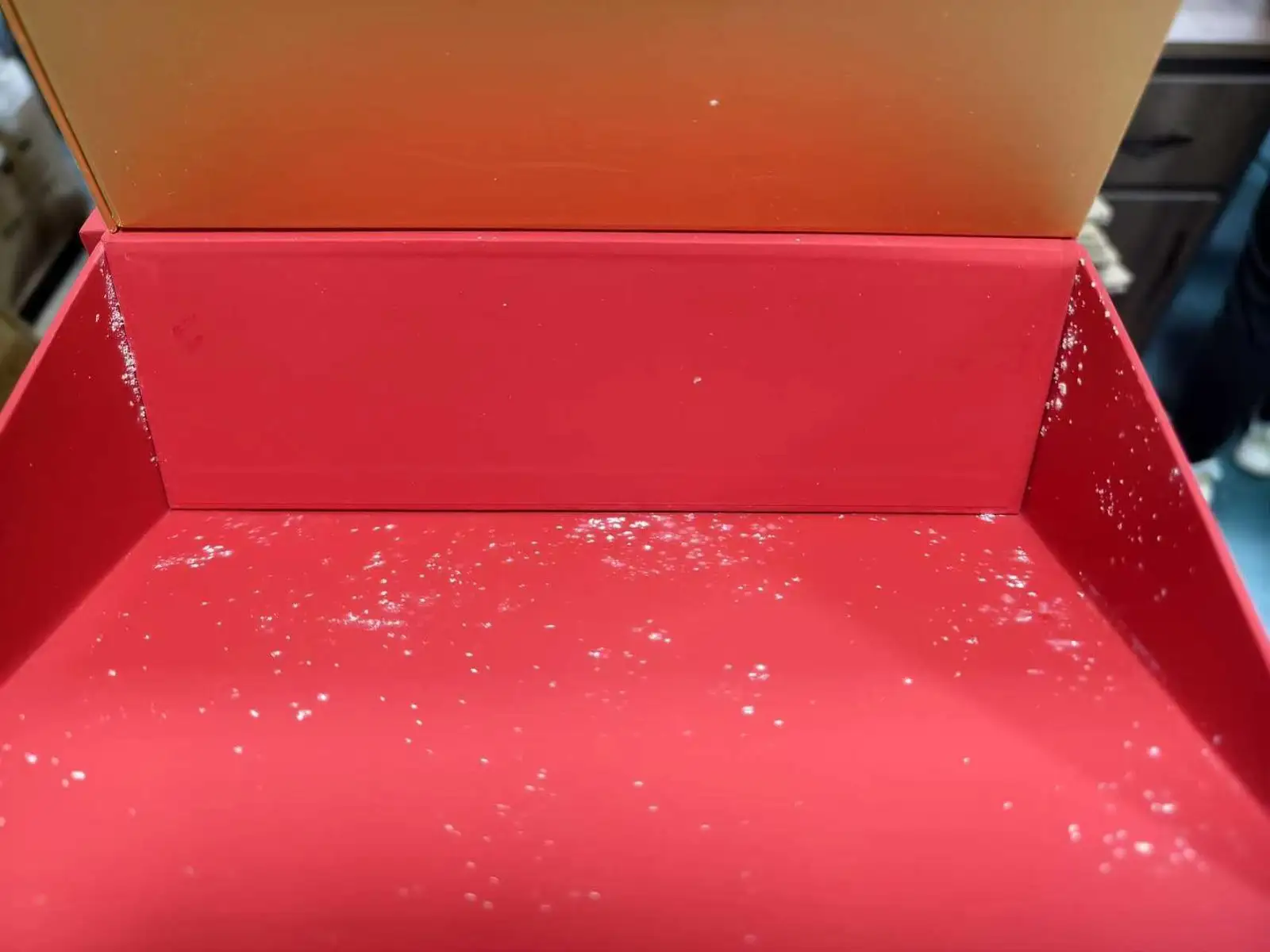
The first source is the board itself. Corrugated board, greyboard and card stock are all hygroscopic. Once warehouse humidity climbs in the rainy season the moisture content follows, and inside a sea container the day-night temperature swing condenses water on the surface. Two or three days of that is enough for spots to appear. When a printed face moulds the rework cost is severe, because the printed surface cannot be wiped or patched, so the whole run of printed boxes is scrapped.
The second source comes in with the processing. Inks, starch adhesives and laminating glues all carry water, and water plus organic binder is food for mould. The familiar pattern on the floor is a board that looks fine while the printed area moulds first: the printed and glued zones carry the most binder and moisture, so they fail earlier than blank board. Protecting the board but not the ink and glue leaves the main risk in place.
There is also a knock-on cost worth writing into the business case. When boxes mould, customers rarely return only the boxes; they return the goods inside them, and an overseas retailer will reject the whole container. Against the value of a full container, we recommend protecting all three stages rather than the box alone.
2. Three stages, three jobs
Keep the stages separate. The board stage stops the sheet itself from carrying mould, the printing stage stops the ink and glue from bringing it in, and the finished-pack stage stops mould growing in the sealed box. Products and rates are in the table below.
| Stage | Problem solved | Product | Rate and method |
|---|---|---|---|
| Board | Board and card taking up moisture | iHeir-BCA | 0.5-0.75% of dry powder mass, in the powder blending stage |
| Printing | Nutrients carried in by ink, laminating and starch glue | Ink and adhesive grade | On total system weight, dispersed with the ink or glue |
| Finished pack | Moisture in the sealed box | iHeir-D / Power Pak | iHeir-D 0.1-0.2 g active per sheet; Power Pak acts within 72 hours of sealing |
The stage most often skipped is printing, because it is invisible. But any plant using starch glue to form boxes or water-based laminating glue carries that nutrient load, especially in humid months. Where the paper or board mill runs its own coating, iHeir-B50 powder can be used at 0.5-2%: take 0.5% for quick turnover and 2% where stock is held one to two months, across pH 3-9.
3. Rates by stage: the board stage needs the right denominator
Board stage: get the denominator right. The 0.5-0.75% for iHeir-BCA is on dry powder mass, not on finished box weight. Add the powder with the fillers and binder in the blending stage. It holds from pH 5.0 to 10.0 with a particle size of 4-30 micrometre, so an alkaline system is not a problem, and being a powder it adds no extra water to a board that should stay dry.
Printing stage: dose with the ink and glue. Add the anti-mould agent on the total weight of each system during ink and glue make-up rather than topping up on the press. For the selection and compatibility criteria in detail, see choosing an anti-mould agent for inks and adhesives.
Finished pack: use gas-phase protection. iHeir-D is a gas-phase anti-mould paper made with a special ink carrying sub-5-micron particles. The active content volatilises slowly and captures mould spores in the air inside the box, reaching corners the paper never touches, at 0.1-0.2 g active per sheet, sized to the box. It carries a fade risk on poor-quality dyes and can corrode poor-quality metal fittings in damp conditions, so run a compatibility test before first use on dyed packaging: place three times the normal amount in a box, separate it with paper, seal for several days and check for fade or corrosion.
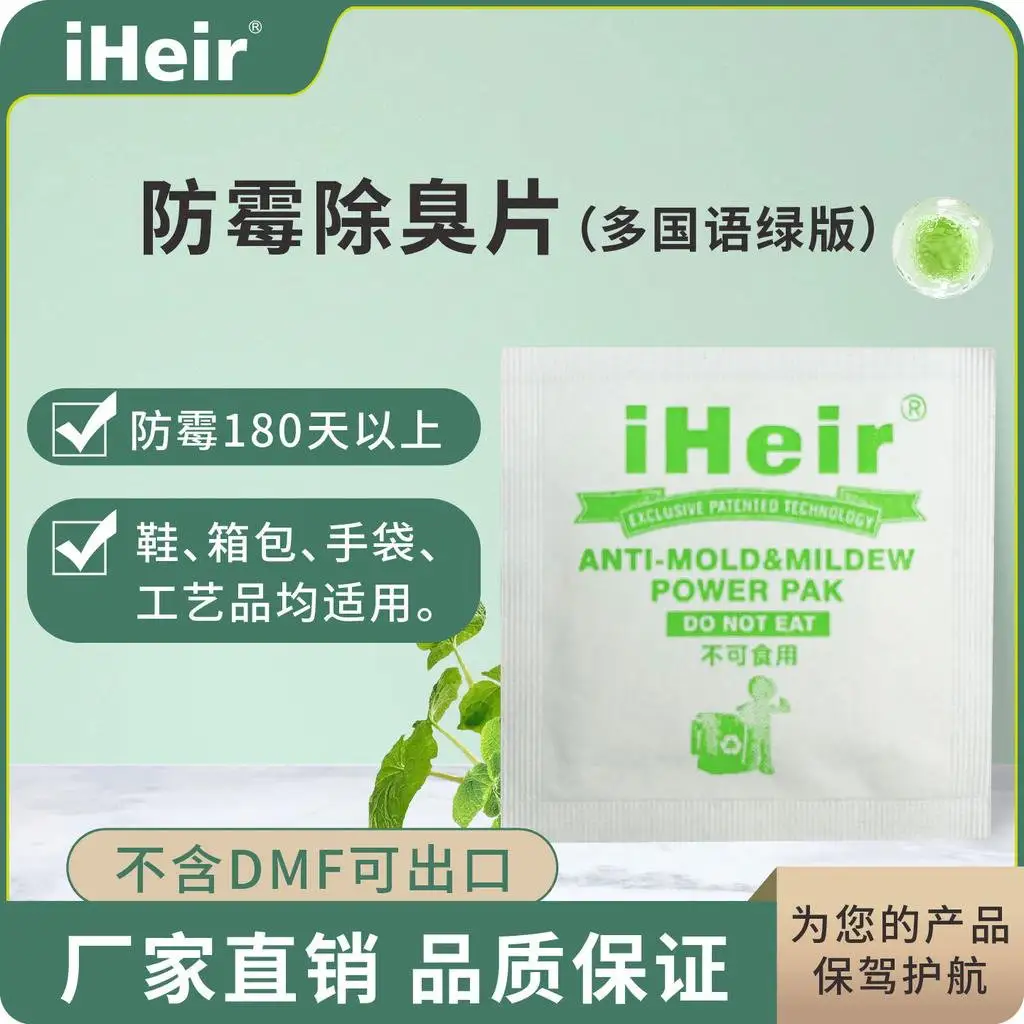
Odour-sensitive goods switch to Power Pak. Footwear, bags and handbags are sensitive to smell, so Power Pak anti-mould and deodorising tablets suit better: plant-derived actives volatilise at room temperature and complete their action within 72 hours of sealing, and a box left open beyond 15 days needs a fresh tablet. The green version contains no DMF and is export-ready.
4. Six actions on the floor
- Control board moisture: check incoming board moisture content, especially in the rainy season. Wet board going into the workshop defeats any additive downstream.
- Dose the board stage on dry mass: iHeir-BCA at 0.5-0.75%, dispersed with fillers and binder in the blending stage.
- Finish the printing stage at make-up: add the ink, laminating and starch glue additives before the press runs, not during it.
- Fit gas-phase protection to the pack: iHeir-D at 0.1-0.2 g active per sheet; if a box is opened for inspection, add a fresh sheet afterwards.
- Add desiccant at container level: fit T-1000 container desiccant sticks by container size, 8-10 per 20ft and 10-12 per 40ft, hung from the roof rail.
- Grade before dispatch: sample and grade against the mould test standard rather than passing a shipment because nothing has grown yet.
One confusion worth clearing up: desiccant and gas-phase anti-mould are not the same job. Desiccant absorbs moisture out of the container and box, while gas-phase protection suppresses mould spores. Inside a box they work as a pair and cannot replace each other. Desiccant alone removes the moisture but leaves viable spores in the air space; gas-phase protection alone leaves the box humid, and mould will still grow.
5. Grading and acceptance
Acceptance for packaging comes down to grading. Before a bulk shipment, sample against the mould test standard and record the growth grade against what the customer asked for; the method and grade meanings are in grading mouldy cartons. Keep dispatch evidence as well: photograph the goods and packaging before loading and record the quantity and batch of gas-phase product used, because those records settle responsibility if there is a claim on arrival.
6. FAQ
Is a tablet in the finished box enough? No. If the board has already taken up moisture and spores, a tablet only controls the air space inside the box while the board keeps growing mould outwards. Board, printing and finished pack have to be treated together.
Is 1% BCA safer than 0.75%? Going outside the range is not advised. The 0.5-0.75% figure is on dry powder mass, and above it the board’s physical properties can be affected. If you need margin, control board moisture content rather than adding more powder.
Will gas-phase paper affect print colour? There is a fade risk on poor-quality dyes, which is why it should be assessed before use. Run the compatibility test at three times the normal amount, separated by paper and sealed for several days, then check the printed surface.
Does a full-container shipment need protection on top of the boxes? Yes. Gas-phase protection inside each box handles the box interior, and the container still needs T-1000 desiccant sticks sized to the container to control humidity at that level. For paper selection see how to choose anti-mould packaging paper.
Packaging mould control comes down to one thing: treat board, printing and finished pack as three separate operations with their own products and rates, then hold the dispatch standard with graded sampling. iHeir-BCA powder, iHeir-D gas-phase paper, Power Pak tablets and T-1000 desiccant sticks are all available as samples with minimum order details, so talk to us about your specific pack format.