




 View Count:35
 Date:2026-10-16
Can baby cot mould be kept out of an export lot? Spots usually appear because the moisture content of the wooden frame and the bed board was never brought down, and a whole batch then has to be reworked or claimed. Wooden parts are dipped in iHeir-M8 bamboo and wood fungicide diluted 1:20 until they gain 10%-20% in weight, while rails and joints that will not fit a tank are touched up by brush with iHeir-JP bamboo and wood anti-mildew agent. This article covers how the frame, the bed board and the mattress are each handled, with the doses.
1. Why mould reaches the frame and the bed board first
The frame, the bed board and the side rails of a wooden cot are solid wood or glued timber, and timber is porous: once the moisture content climbs, mould has what it needs. What widens the problem is the trade itself: a batch passes through warehouse stacking, packing, sea freight and destination customs, two to three months in all, and one long stretch in humid air is enough for spots to appear.
The spots are predictable. The faces where the bed board meets the frame, the mortise and tenon joints and the screw holes go first, because those half-closed gaps ventilate worst and hold water longest; the line where the board back meets the cross rail behaves the same way. A dip tank drives the additive into those gaps, while brushing only reaches the outside and leaves the joints bare, so parts that fit a tank go through the tank first.
The mattress is a separate line. A cot mattress is usually foam plus fabric, sometimes latex or coir, and its protection belongs in the foam compound and the fabric finishing, not in the same tank.
2. The frame, the bed board and the mattress compared
The table lines up the material, the process, the figure and the points to watch for each part, as a first draft of the process card.
| Part | Material | Process | Figure | Points to watch |
|---|---|---|---|---|
| Frame, side rails | Solid wood or glued timber | Tank dip, fully submerged below the surface | iHeir-M8 at 1:20 in water, weight gain 10%-20% | About 1-10 minutes in the tank; drain, then air or sun dry |
| Bed board | Wood slats or plywood | Same tank, slats bundled together | Same; dry down to a moisture content below 25% | Leave gaps between slats rather than pressing them tight |
| Rails, curved parts, joints | Shaped small parts | Brush or spray touch-up where a tank will not work | iHeir-JP at 1:10-20, or dip at 1:15 | Cut faces, drilled holes and routed slots need their own pass |
| Mattress | Foam and fabric | Foam compound and fabric finishing, two separate lines | Counted apart from the wood, never through the timber tank | Plan fabric finishing and the wood drying room on different schedules |
The first two rows share one product, the third row is touch-up, and the fourth runs on a completely different material system. Once the lines are separated, the tank, the drying room and the inspection plan all fall into place.
3. Frame and bed board: tank dipping with M8 at 1:20
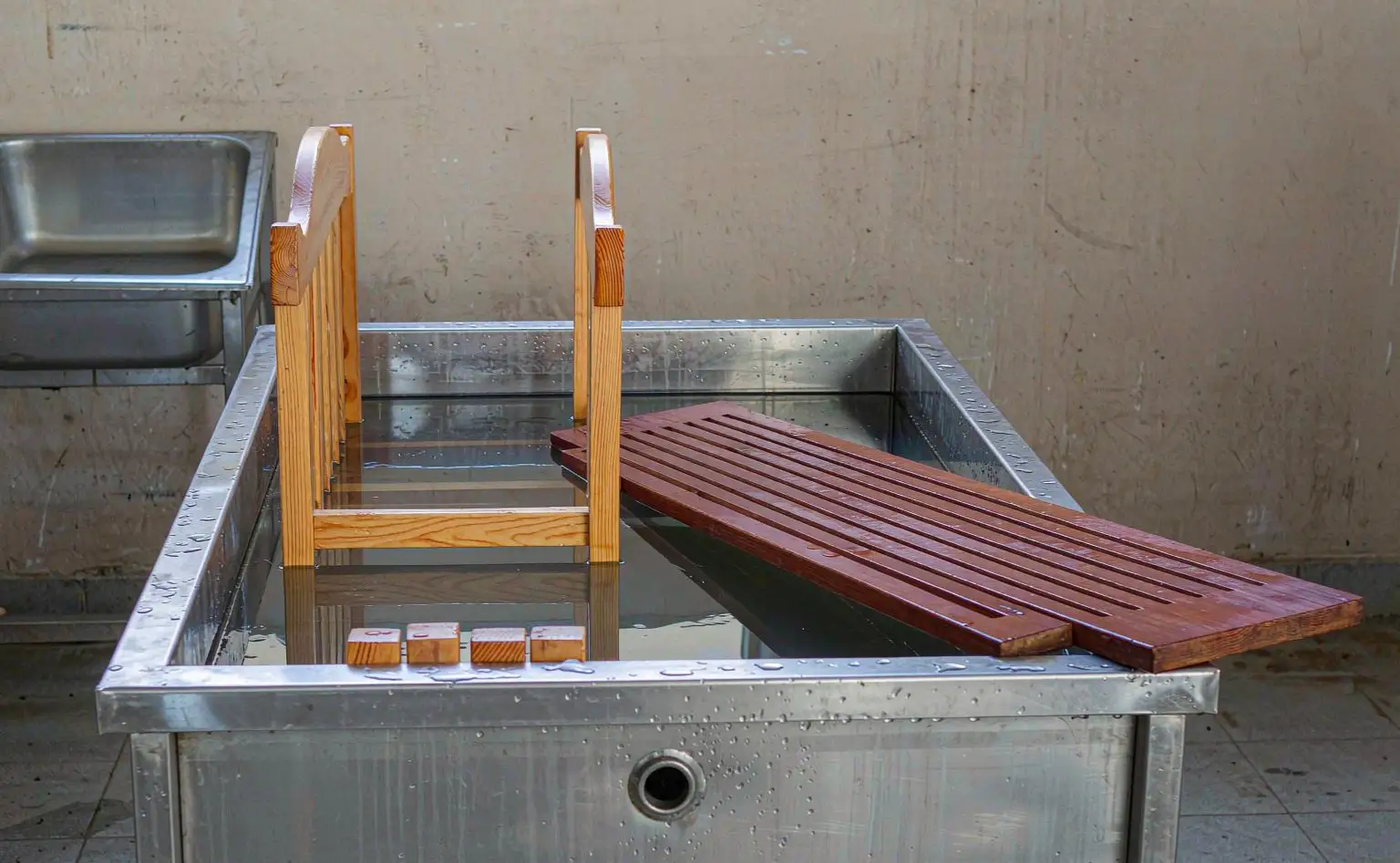
The wooden parts use iHeir-M8 bamboo and wood fungicide. It is a transparent amber liquid whose active ingredient dissolves in water at 5-7 ppm and disperses in the aqueous phase. The recommended method is dipping: mix one part of concentrate with 20 parts of water, immerse the parts completely below the surface, and hold for about 1-10 minutes until the weight gain reaches 10%-20%. Lift, drain, then air or sun dry before packing to store.
Three workshop points matter. The first is the weight gain: 10%-20% measures what the timber actually takes up, not how long it was left in, and a part that will not gain weight is usually masked by wax or oil and needs washing first. The second is tank management: a mixed bath can be reused, but should be used up within one month, and a film that forms on standing is normal and only needs stirring before use. The third is drying: protection lasts more than a year once the moisture content is below 25%, and storing a wet part simply seals the water inside.
Store the concentrate below 60℃. The original liquid keeps for three years, packed 25 kg to a drum, kept dry and out of the light.
4. Rails, curved parts and joints: brush-on with JP
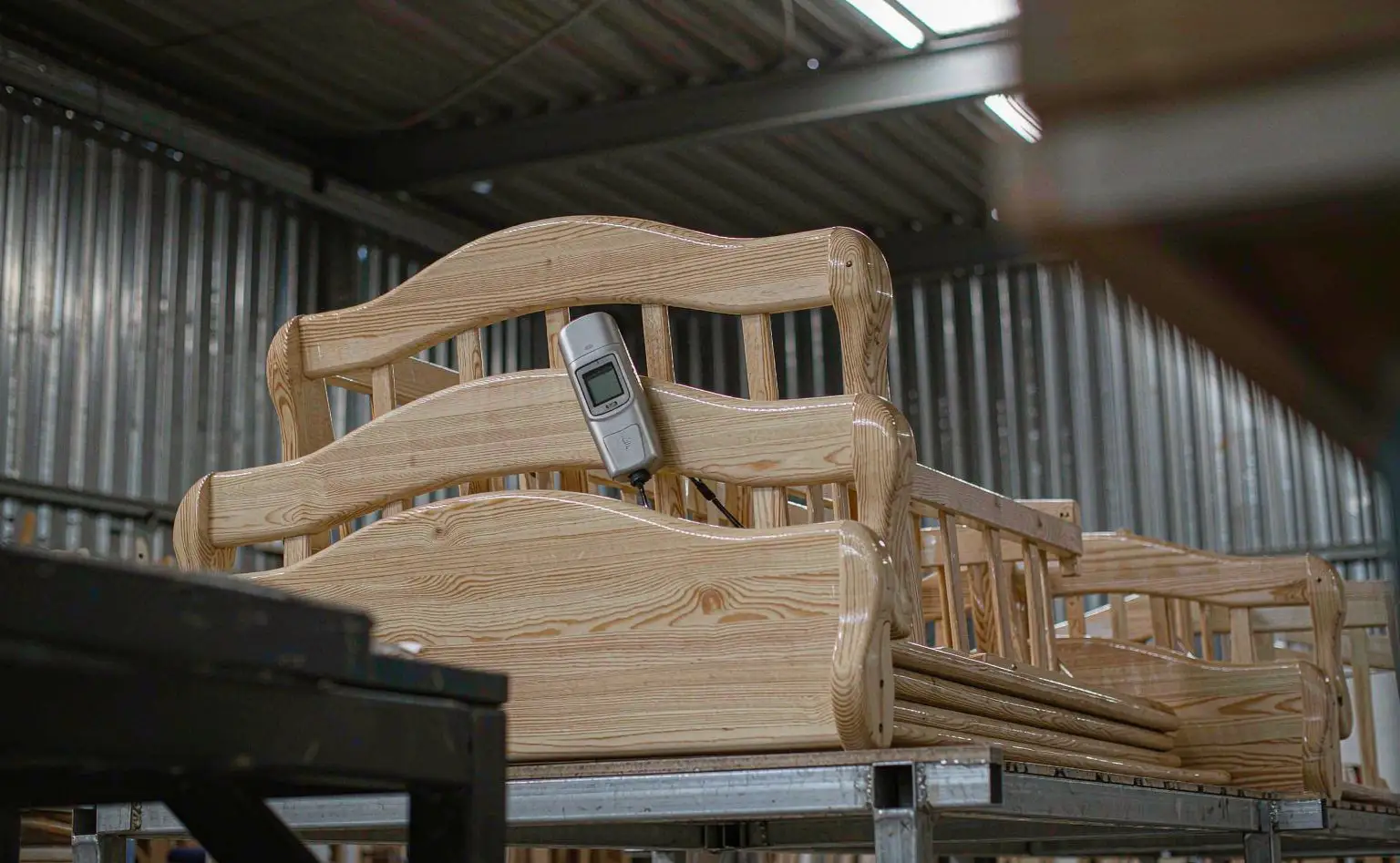
Rails, curved side pieces and decorative parts are awkward shapes that waste tank space and knock against each other, so this stage uses iHeir-JP bamboo and wood anti-mildew agent. It also serves bamboo, wood, rattan, fern, palm leaf and straw. The recommended dip is one part of concentrate to 15 parts of water; parts that will not fit a tank are sprayed or brushed at 1:10-20 in water or alcohol, worked over the whole surface and left to dry. Active content is ≥30%.
Touch-up lives or dies on the cut faces and the holes. Sawn faces, drilled holes and routed slots expose fresh fibre with nothing on it, and mould tends to start exactly there, so they need a dedicated pass. Joints should be treated before the glue and assembly step, so that the adhesive layer does not keep the liquor out. Dry them properly as well: below 25% moisture content the protection holds for more than a year.
The division of labour is clean. Large parts that fit a tank take M8; shaped parts and assembly touch-up take JP. Both are counted on the timber weight, and the two baths are never poured together.
5. The mattress: foam and fabric take a different route
A mattress is not a timber product. Its polyurethane foam has to be treated in the compound, with an internal additive mixed in before foaming; a spray stays on the skin and leaves the porous inside bare. The fabric layer, whether knit, jacquard or mesh, goes through textile finishing instead, which is not the same operation as a timber dip.
Scheduling has to keep them apart. The wood drying room and the fabric finishing line do not run in the same temperature window, so mixing them costs control on both sides. The inspection points differ too: wood is judged on moisture content and weight gain, foam on expansion ratio and additive dispersion, fabric on how evenly the finishing liquor was picked up. Line separation for natural and soft materials is set out for bamboo and wood preservation, but timber ratios must not be carried across.
6. Questions: is store dehumidification enough, and can brushing replace dipping
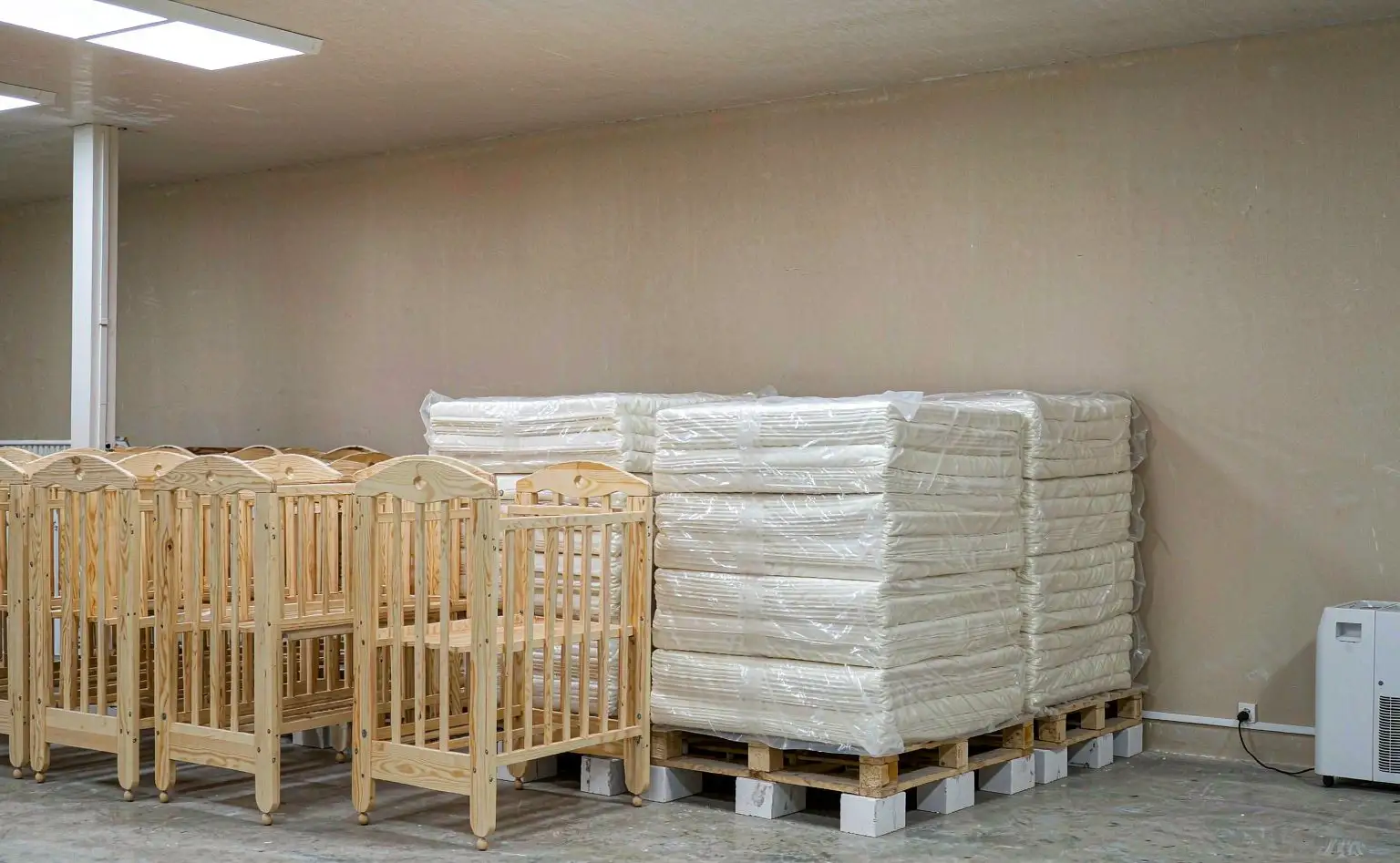
Is dehumidifying the finished-goods store enough, with no treatment on the wood? No. If a part arrives with a high moisture content, dehumidifying lowers the air around it, not the water already inside it, and over two or three months at sea the container swings through repeated condensation that draws that water back out. Bringing the moisture content below 25% before storage, and treating the part at the same time, is what actually closes the door.
Can rails and bed boards be brushed and the tank dropped altogether? Not advisable. Brushing covers the outside only and misses the joints, the board back and the faces pressed against the cross rail, which are the first places to spoil. Parts that fit a tank go through the tank; shaped parts that genuinely will not are the ones that get brush touch-up. The two ratios are not interchangeable.
Four points carry the work. The frame and the bed board are dipped in iHeir-M8 bamboo and wood fungicide at 1:20 to a 10%-20% weight gain and dried below 25% moisture content. Rails, curved parts and joints are brushed with iHeir-JP bamboo and wood anti-mildew agent at 1:10-20. The mattress runs on its own foam and fabric lines and never shares the timber bath. The finished-goods store holds relative humidity below 60% and the moisture content is rechecked before packing. Samples and TDS are available for both products.


