




 View Count:20
 Date:2026-10-28
Can billiard mould be prevented? The cloth is a wool-nylon pile fabric and the cue is a solid hardwood shaft, and the two fail along completely different routes, so one product for both will miss. The cloth takes iHeir-BJ at 2%-3% o.w.f. in the finishing bath; the shaft is soaked with iHeir-M5 at 1:40 to 15%-20% weight gain. This article covers cloth finishing, shaft soaking, roll storage and export packing.
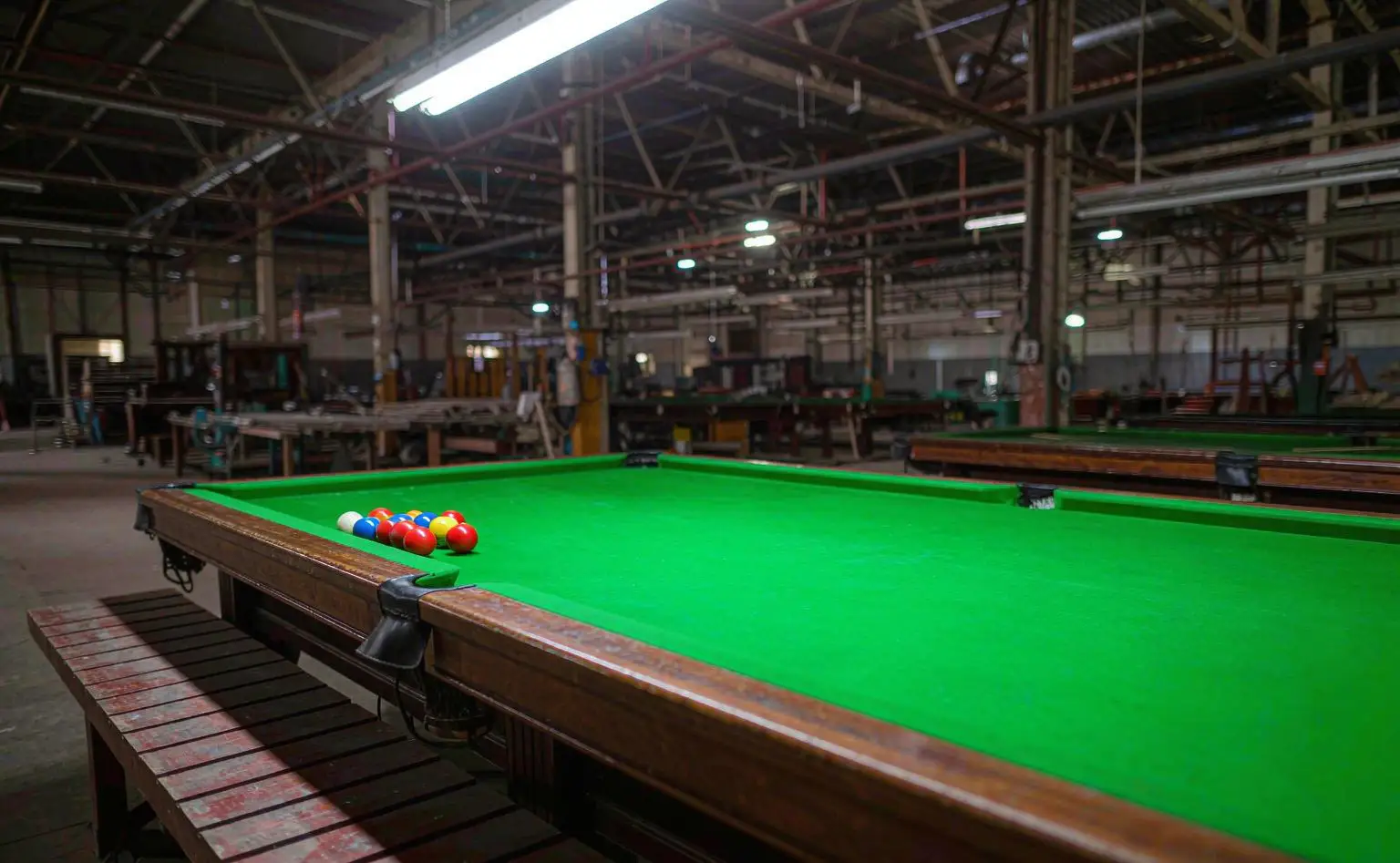
1. Cloth and cue are not the same problem
Billiard cloth is a pile fabric: wool has a high moisture regain, around 15% at standard conditions, and the pile traps air and water between the fibres. Nylon is blended in for abrasion resistance and dimensional stability, which does nothing about moisture uptake. Once mould starts in the pile, what shows on the surface is a small grey-green patch while the filaments underneath are already colonised — brushing it off does not reach the roots.
The cue is a solid hardwood part: maple or ash turned into a shaft and lacquered. It looks tight, but wood is an anisotropic capillary system, and the end grain plus the taper transition absorb water fastest. A damp shaft first changes weight and feels dead, then mould develops inside and the lacquer lifts; by the time spots are visible the core has gone.
There is a third location: roll storage. Cloth ships in rolls of tens of metres and the core is airtight, so when humidity climbs the layers nearest the core take up water first; the problem shows at cutting, when the roll is a downgrade.
The conclusion is simple: cloth goes through textile finishing, the shaft goes through a wood dip, each with its own basis, and storage is covered by how the roll is built and how the warehouse is controlled.
2. Cloth and shaft are dosed separately
The table lines up cloth, shaft, tip and roll storage. Cloth is dosed on fabric weight (o.w.f.), the shaft on weight gain from soaking, and the two bases are not interchangeable.
| Location | Material and stage | Product and level | Addition point | Basis |
|---|---|---|---|---|
| Cloth | Wool/nylon blend, finishing | iHeir-BJ 2%-3% o.w.f. | Finishing bath, padded then dried | Fabric weight (o.w.f.) |
| Shaft, front section | Maple or ash, turned | iHeir-M5 at 1:40 | Dip tank, after turning, before lacquer | 15%-20% weight gain |
| Tip, joint pin | Leather parts, metal parts | Not dipped; drying and assembly humidity | Before assembly | Moisture content |
| Roll storage | Rolled, stood upright, humidity controlled | Breathable core plus dehumidification | On receipt and before dispatch | Roll diameter and store volume |
Two boundaries. First, the shaft never enters the cloth bath: that bath is aqueous, so a wooden shaft swells and comes out a different size, and the taper is scrap. Second, cloth is never brushed with the wood dip: M5 is a red-brown acidic liquid, and on a pile surface it leaves a stripe that will not come out.
3. Cloth finishing: how the agent goes into the bath
Cloth uses iHeir-BJ textile mildew inhibitor at 2%-3% o.w.f. on fabric weight, bath temperature 21-50℃, bath pH 4.5-8.5 with 6 as the target, in soft water. Premix BJ with 9-13 times its volume of water, add 0.1% wetting agent, then make the bath up to volume; pouring concentrate straight in gives local over-concentration and marks on the pile.
Run it as a pad-dry process at 70% wet pick-up and dry in the stenter. Cloth is a heavy pile fabric and carries more liquor than a flat weave, so if pick-up drifts the actual dose drifts with it — check wet pick-up every batch rather than watching bath concentration alone.
The one that catches most plants: BJ is cationic and must not share a bath with anionic auxiliaries. Cloth finishing usually also runs softeners, antistats and penetrants; where those are anionic the two flocculate, scum forms in the bath, the fabric stops picking up the agent, and protection drops to zero. Schedule cationic and anionic auxiliaries on separate runs, or run a compatibility sample first.
Dose sets the protection period: 2% gives roughly a year, 3% gives two to three. Cloth is long-life, so on export orders we would schedule 3% rather than gamble on the storage period. Before the line starts, a drop of bromophenol blue shows in two minutes whether the finish is on the fabric.
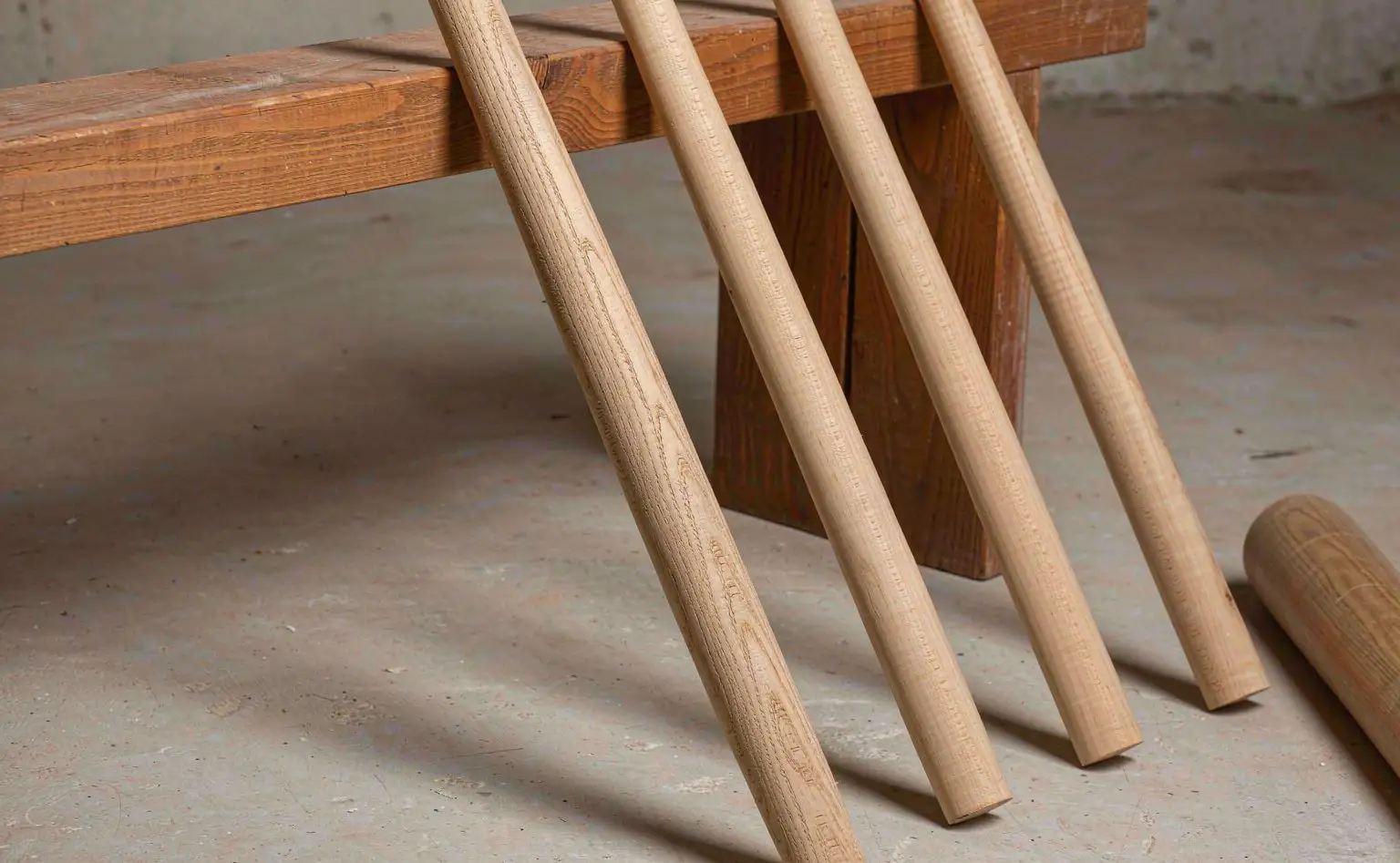
4. The shaft: soak it through, then let it rest
The shaft uses iHeir-M5 immersion-type bamboo and wood fungicide. Mix the bath at 1:40 (5kg of product to 100kg of water), submerge the shaft completely without letting it break the surface, and soak to a 15%-20% weight gain, roughly 5-10 minutes, then lift, drain and air or sun dry before turning and lacquering.
The difficulty on a cue is penetration depth. Maple is dense with straight grain, and a short dip only wets the surface layer; weighing before and after is the steadiest control, and 15%-20% is the point where the timber has actually taken it up. Because soaking changes dimensions, it belongs after rough turning and before finish turning, so there is stock left for the later cuts.
Two hard rules. M5 is acidic and must not touch metal or be mixed with alkaline material: use plastic or FRP tanks, since an iron tank corrodes and neutralises the bath. Shake the drum before use — a floating layer is normal, but pouring unshaken leaves the active content at the bottom. Do not stack wet shafts: stand them in a single layer, because the faces in contact stay wet.
After drying comes resting. Timber needs time to equalise with the shop, and lacquering early seals water under the film so that blisters lift months later. Bring the shaft to 10%-12% moisture before lacquering, with the shop held at 60% RH or below.
5. Rolls, assembly and export
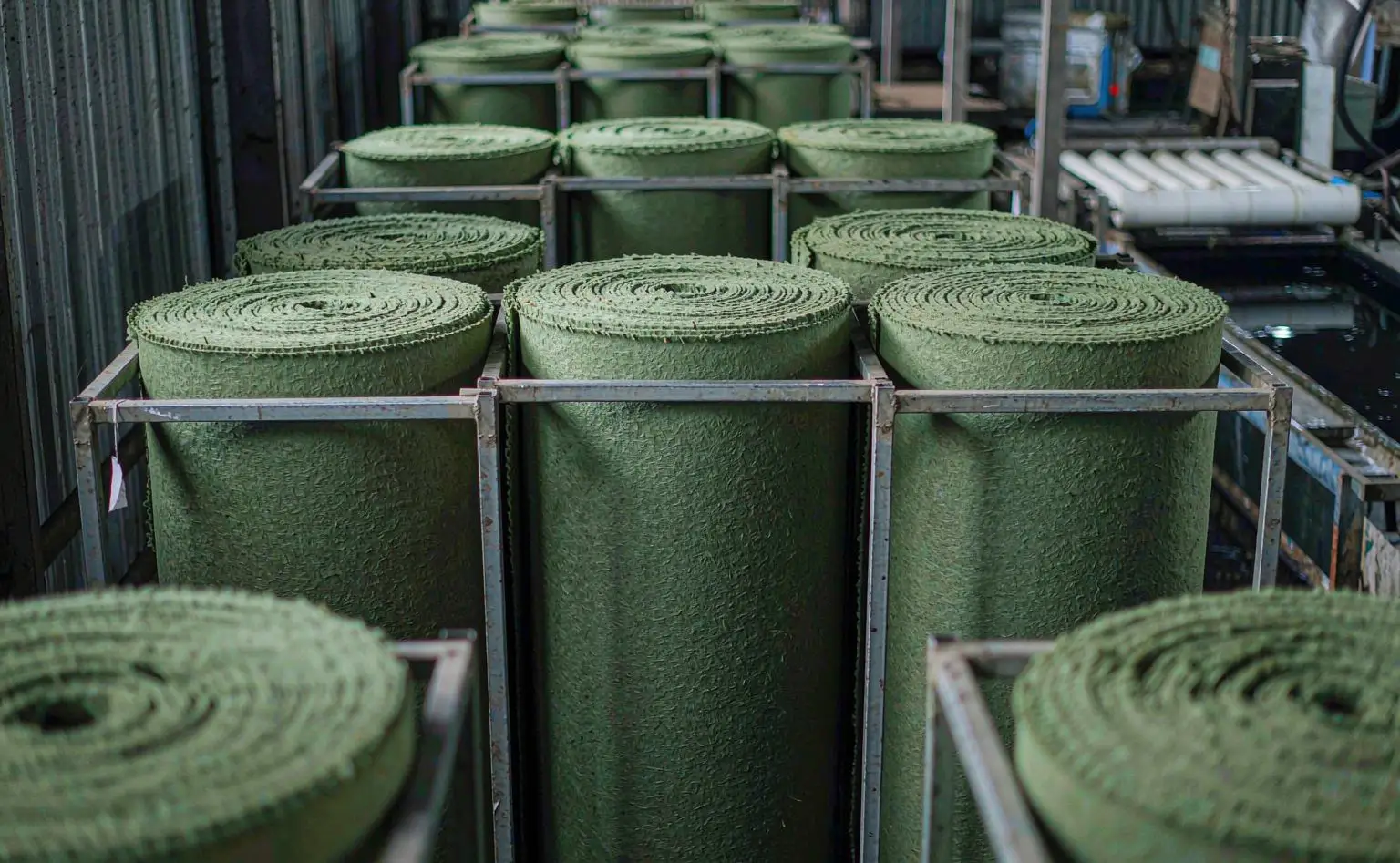
Rolling decides how cloth survives storage. Stand rolls upright, keep a breathable path through the core (a perforated tube beats a solid one), and wrap with a barrier left open at both ends so vapour escapes. Hold the store at 60% RH or below, dehumidify in the wet season, and keep rolls on pallets.
At assembly the rule is do not carry water into the finished item. Re-check cloth moisture before it goes on the slate and hold anything above 12% regain; before fitting the joint and tip, make sure no cutting fluid is left in the joint bore. Keep the assembly area separate from bulk storage so shop moisture does not drift into finished goods.
Leave an air path in the container: no carton against the wall or under the ceiling. Load cloth rolls upright with gaps between them; the day-night swing condenses water on the ceiling and the cartons at the wall and ceiling are the first to come back damp. The mechanism is the one described in condensation in sea freight containers.
Verify at three levels: cloth to a mould resistance grade under GB/T 24346 plus a bromophenol blue check for the finish; shaft to GB/T 18261 with weight gain and pre-lacquer moisture recorded; finished goods for 30 days at 30℃/85% RH, then inspect the pile and the shaft end grain.
6. Questions on hand feel, shade and cloth that already has mould
Q: Shade varies across one lot — did we overdose? First rule out flocculation from cationic and anionic auxiliaries in the same bath, which deposits unevenly and leaves patches. If the bath is clear and only the shade differs, go back to dyeing for lot-to-lot variation and to the stenter for temperature.
Q: Can cloth that already has mould still be cut? Surface bloom can be brushed off, dried and given a fresh finish. Where filaments are colonised and permanently stained, the roll is a downgrade for practice tables or scrap. Any rescued batch needs a fresh finish, or it is back within a month or two on the table.
Four points to take away: cloth at 2%-3% o.w.f. iHeir-BJ, bath 21-50℃, pH 4.5-8.5, premixed with 9-13 times water, cationic agent on its own run; shaft with iHeir-M5 at 1:40, soaked to a 15%-20% gain in a non-metallic tank; dry shafts in a single layer and lacquer at 10%-12% moisture; stand rolls upright and release goods after 30 days at 30℃/85% RH.


