




 View Count:44
 Date:2026-10-08
How should blackout curtain mould be treated? A blackout curtain is usually three layers, a base cloth, a PVC blackout foam layer and a top coating, and the mould starts on the foam layer and at the curled edge, so a spray on the finished roll never reaches the seam inside the laminate. The blackout foam layer takes iHeir-FP foam antimicrobial agent at 0.5%-1.5% on foam weight at the coating stage, and the top coating takes iHeir-TQ coating mould inhibitor at 2%-3% on system weight at the finishing stage. This article covers the two points, the figures and the roll storage.
1. Where the mould comes from: foam layer, top coat and roll storage
A blackout curtain looks like one piece of cloth, but it opens into at least three layers. The base cloth is a polyester or polyester-cotton fabric and carries the structure; the middle layer is PVC blackout foam, which blocks light through the cells and is thick and full of voids; the outer layer is a top coating for hand and appearance. Mould starts almost always on the middle layer: the foam cells hold damp without releasing it, the bond face against the base cloth has no air movement, and once the laminate takes up moisture the damp is locked inside, showing first at the curled edge and the seams.
The three layers enter at different points. The base cloth is set in weaving and dyeing and can be handled as a textile finish; the blackout foam layer goes in with the foam compound at the laminating and coating stage; the top coating goes in at the paint-mixing stage, where dispersion is most even. Merge the three into one spray on the finished curtain and only the face is covered, while the seam inside the laminate is never reached.
Storage cannot be skipped. Blackout fabric is stood in rolls, the core is airless, and damp works outwards from the core, so it only shows when the roll is cut and opened, by which time the whole roll is spoiled; on a window, mould means replacing the full panel. The protection has to be built in on the line, and storage only preserves it.
2. The two dosing points at a glance: foam layer and top coat
The table lines up the part, the stage, what is treated, the product, the figures and the points to watch, so it can serve as the first draft of a process card.
| Part | Stage | Treated item | Product | Figures | Points to watch |
|---|---|---|---|---|---|
| PVC blackout foam layer | Laminating / coating | Foam compound | iHeir-FP foam antimicrobial agent | 0.5%-1.5% on foam weight | In with the foam compound; stable from pH 1-11, check the foaming aids on a small sample |
| Top coating | Finishing | Coating system | iHeir-TQ coating mould inhibitor | 2%-3% on system weight | Add at the grinding or paint-mixing stage, where dispersion is even; stable from pH 6-7 |
| Base cloth (PET / PET-cotton) | Weaving and dyeing | Fabric | By the textile figure | Not set here | A third system; its figures differ from foam and coating and must not be borrowed across |
| Roll storage | Rolls in store | Air in the core | Humidity control only | Below 60% relative humidity | Rolls stood upright and the core sealed; sheets by stack, and damp works outwards |
| Installation and after-sales | On the window | Finished panel | None (move it upstream) | No line treatment, no rework | Mould on a hung panel means replacing it; the protection belongs on the line |
Five rows, one conclusion: the blackout foam layer is figured on foam weight and the top coating on coating system weight, so the denominators and bands differ; the base cloth is a third system with its own figures; and roll storage takes no agent at all, only humidity control.
3. The blackout foam layer: FP in the foam compound at 0.5%-1.5%
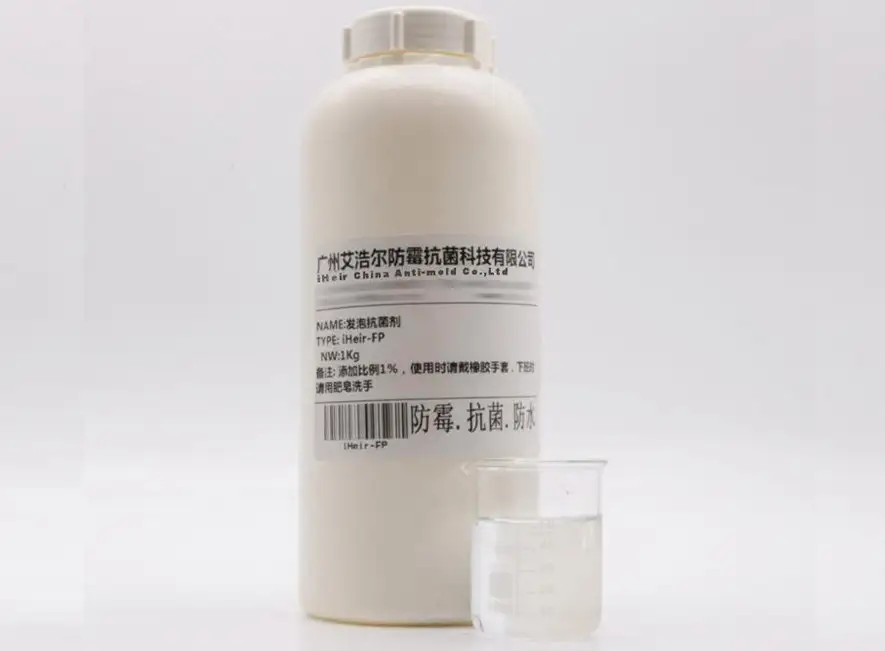
The blackout layer is completed at the laminating and coating stage. Add iHeir-FP foam antimicrobial agent at 0.5%-1.5% on foam plastic weight, in with the foam compound so it disperses through the system. It is stable from pH 1-11, so the mildly acidic or neutral PVC foam formulations commonly used are all compatible, and the antimicrobial rate reaches 99.99% with a sensitisation rate of 0. The additive is bonded inside the foam, so laminating, embossing and cutting will not rub it off.
Three details. First, the figure is on total foam weight, regrind included, so any change in the regrind ratio means recalculating, and high-regrind batches belong at the top of the range. Second, a foam compound carries many aids, so premix with the main foam material for even dispersion before foaming, since powder fed straight in agglomerates locally. Third, the blackout layer is the part that holds most damp, so cover the bond face against the base cloth as well rather than only the outer face of the foam.
4. The top coating: TQ at the paint-mixing stage, 2%-3%
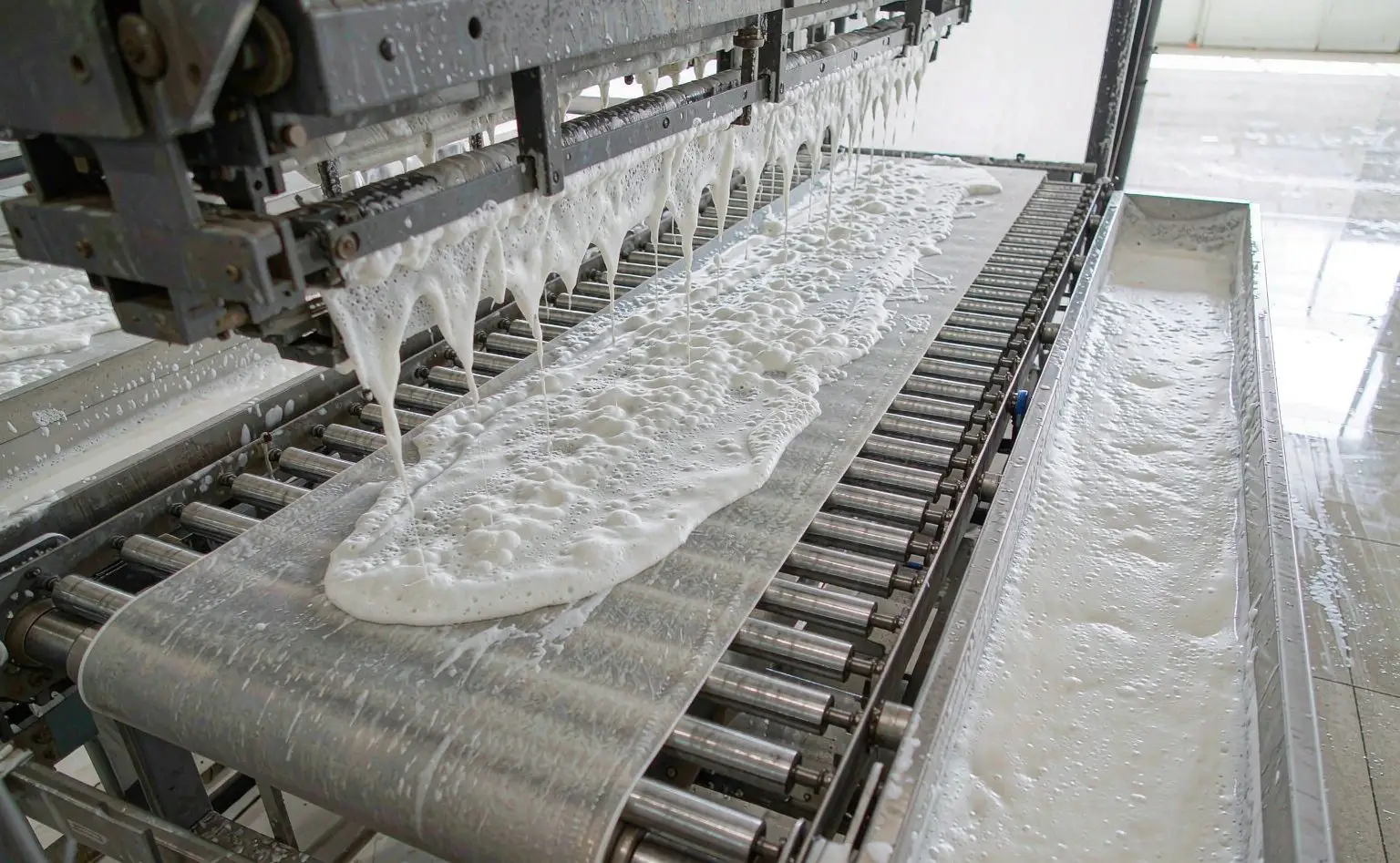
The top coating line is completed at the finishing stage. Add iHeir-TQ coating mould inhibitor at 2%-3% on coating system weight, at the grinding or paint-mixing stage, where the slurry is dispersing at speed and the additive spreads evenly. Its active content is 45% CMIT/MIT and the system holds best at pH 6-7, and its main job is in-can protection: the slurry keeps in the tank without skinning or turning sour, and once coated on the fabric it adds a further guard on the face.
Three details. First, the figure is on total coating system weight, pigments and fillers included, so any formula change means recalculating. Second, hold the pH at 6-7; adjust an alkaline slurry before adding, or the active content breaks down early. Third, allow enough dispersion time after adding at the paint-mixing stage, since topping up into a finished coating reaches the face only and never the film inside.
5. Roll storage and after-sales: the stages no agent is dosed
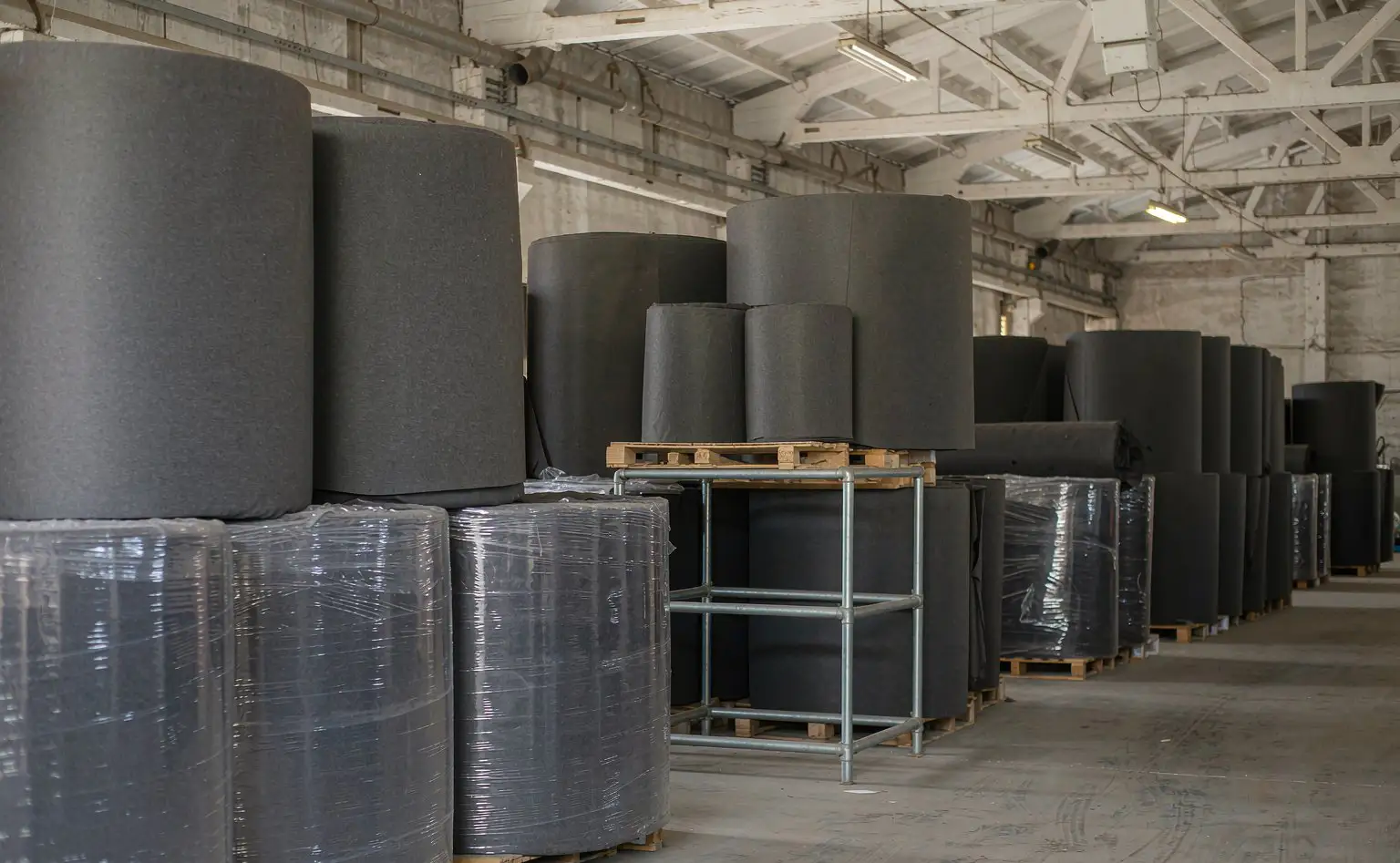
Roll storage matters just as much. Fabric is stood in rolls with an airless core and damp works outwards, so place gas-phase sheets by stack, keep them apart from the goods with liner paper, and hold the store below 60% relative humidity. For batches held a long time, dry the fabric before dispatch, because condensation once the roll is wrapped starts the damp cycle.
After-sales is the reason the protection moves upstream: mould on a hung panel means taking down and replacing the whole piece, which costs an order of magnitude more than treating on the line. See mould and antibacterial treatment for home textiles for related practice. Test the long-term growth by ASTM G21 and hold a full-width sample per batch, since testing the foam layer alone or the top coat alone does not count.
6. Questions that come up: one figure for both, or a pass after reeling
Can the foam layer and the top coating share one figure? No. The blackout layer is figured at 0.5%-1.5% on foam weight and the top coating at 2%-3% on coating system weight, so copying one number either wastes material or falls short.
Can a pass after the fabric is reeled make up for it? No. With the roll stood upright and the core airless, a spray reaches the outer wrap only, leaving the seam inside the laminate and the core untouched.
Can extra loading in the top coat cover a long spell in store? No. Damp in storage is an environment problem, not a concentration problem, and extra loading only raises cost. Hold the store below 60% relative humidity and dry the fabric before dispatch.
Two dosing points carry the work: the PVC blackout foam layer goes in with the foam compound at the laminating stage (iHeir-FP at 0.5%-1.5% on foam weight, stable from pH 1-11), and the top coating goes in with the slurry at the finishing stage (iHeir-TQ at 2%-3% on system weight, added at the grinding or paint-mixing stage, pH 6-7), while roll storage preserves both by humidity control and gas-phase sheets. Samples and TDS sheets are available for a trial on your own line.


