




 View Count:46
 Date:2026-10-06
How should silk flower mould be treated, in the fabric bath for the petals or in the masterbatch for the artificial stems? The petals are polyester or satin cloth and the stems are PE/PP mouldings, so one figure cannot cover both: the cloth is treated with iHeir-BJ at 2%-3% o.w.f., while the stems take iHeir-ECO at 0.3%-0.5% on resin weight. This article covers the two lines and the dosing points, with the figures.
1. Where the mould comes from: the cloth and the moulded parts are two materials
A silk flower looks like one piece, but it is two material systems. The petals of a silk, cloth or satin flower are polyester or satin cloth, with gaps between the fibres that take up moisture; the foliage, stems and leaves are PE/PP mouldings, which do not absorb water themselves but collect dust, hand sweat and processing aids on the surface.
The two fail in different ways. Mould on the cloth grows in the fibres and the sizing, and a wipe on the surface does not reach the inside of the fibre; mould on the moulded part grows on what is on the surface, so once there is oil and dust plus a damp store it becomes a ring of spots. The two have to be treated apart, and quoted apart: merge them into one figure and the cloth is under-treated while the mouldings are over-loaded.
Order matters too: the cloth is treated at the bath and the mouldings at injection, both before assembly. Spraying a finished bouquet reaches the exposed surface only, leaving the inner stem and cloth untouched.
2. The two materials at a glance: cloth in the bath, stems in the masterbatch
The table lines up the part, the stage, what is treated, the product, the figures and the points to watch, so it can serve as the first draft of a process card.
| Part | Stage | Treated item | Product | Figures | Points to watch |
|---|---|---|---|---|---|
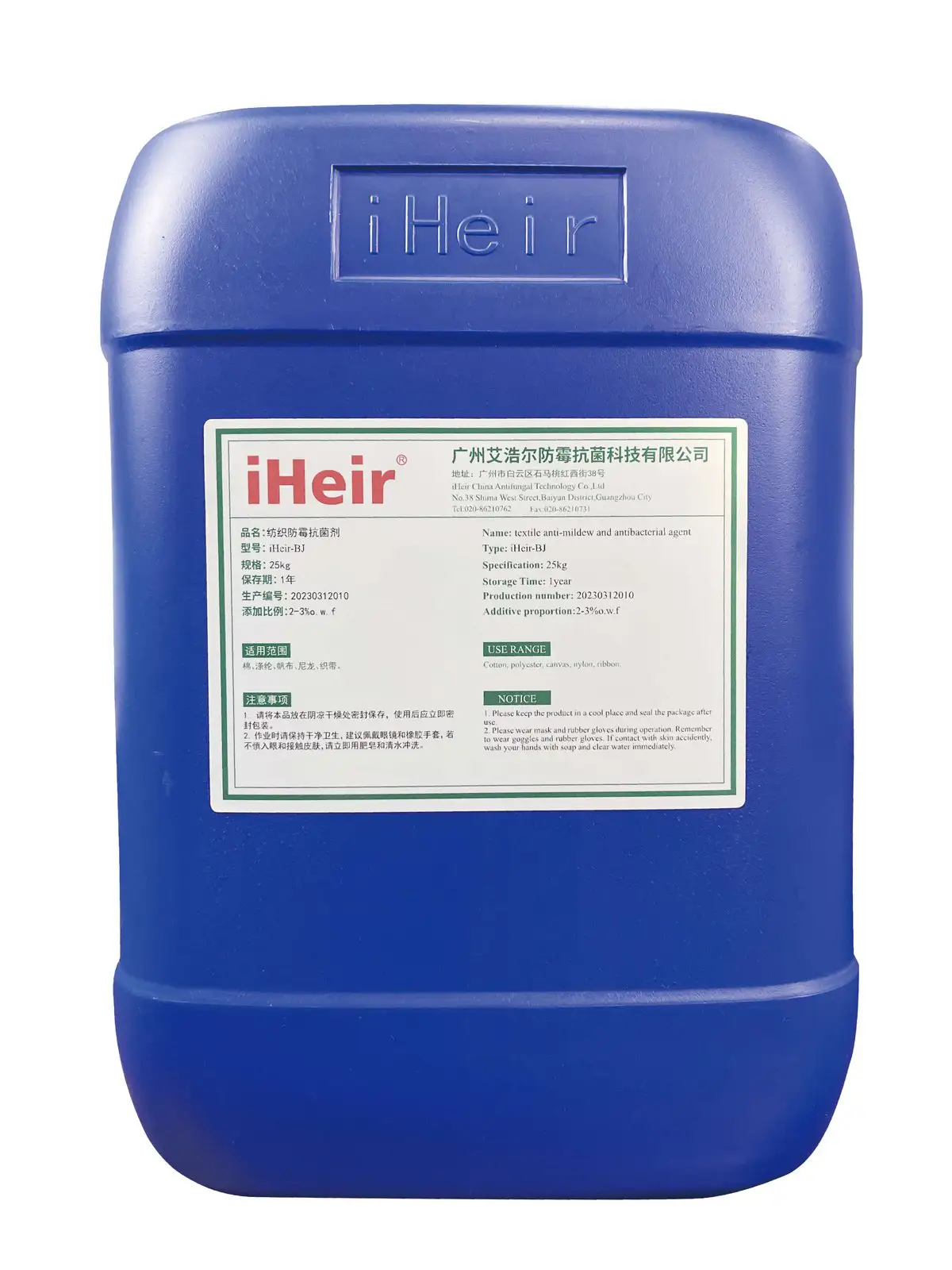
| Silk-flower cloth, satin petals | Bath and finishing | Cloth fibre | iHeir-BJ textile mildew inhibitor | 2%-3% o.w.f. | Bath 21-50 degrees, pH 4.5-8.5; premix with 9-13 times its weight in water and add in portions |
| PE/PP stems and leaves | Injection | Resin | iHeir-ECO plastic antimicrobial agent | 0.3%-0.5% on resin weight | In with the antimicrobial masterbatch or a premix; run a small trial on dispersion and colour first |
| Pale translucent petals | Injection | Pale-part resin | Grade selection (clarity and heat) | Read the agent’s heat ceiling | Above the agent’s ceiling, change the grade; set the ceiling before the line starts |
| Floral foam, foam base | Before assembly | Porous material | Control only (not one of the two lines) | By the foamer’s own figure | A porous material that takes up water is a mould source; prefer a non-absorbing support |
| Finished-goods store, container | Stacking, full container | Air in the stack and the box | Humidity control only | Below 60% relative humidity | Tight stacks, poor air movement; sheets by stack, and dry the goods before loading |
Five rows, one conclusion: the cloth takes its protection at the bath, the mouldings at injection, the two denominators never move across, and the store preserves both.
3. The cloth in the bath: iHeir-BJ at 2%-3% o.w.f.
The cloth line is completed at the bath or finishing stage. Make up the liquor with iHeir-BJ textile mildew inhibitor at 2%-3% o.w.f. on the dry weight of the cloth, premixing it with 9-13 times its weight in water and adding it to the bath in portions. Run the bath at 21-50 degrees and pH 4.5-8.5, with pick-up taken at 70%. The product bonds to the fibre surface to form an antimicrobial layer; it is a non-releasing type, so it is not used up by killing organisms and the layer lasts as long as the article.
Three details. First, BJ is cationic, so it must not share a bath with an anionic auxiliary, or the emulsion breaks and the treatment fails, which means softening and anti-mould treating belong in separate baths. Second, the figure is on the dry weight of the cloth, and a light silk-flower fabric varies in moisture, so measure it before the bath. Third, treating after dyeing gives better control of colour shift, so run a small sample to check handle and colour before a full batch. See how to choose textile anti-mould agents for the grade.
4. Artificial foliage and stems: ECO in the masterbatch at 0.3%-0.5%
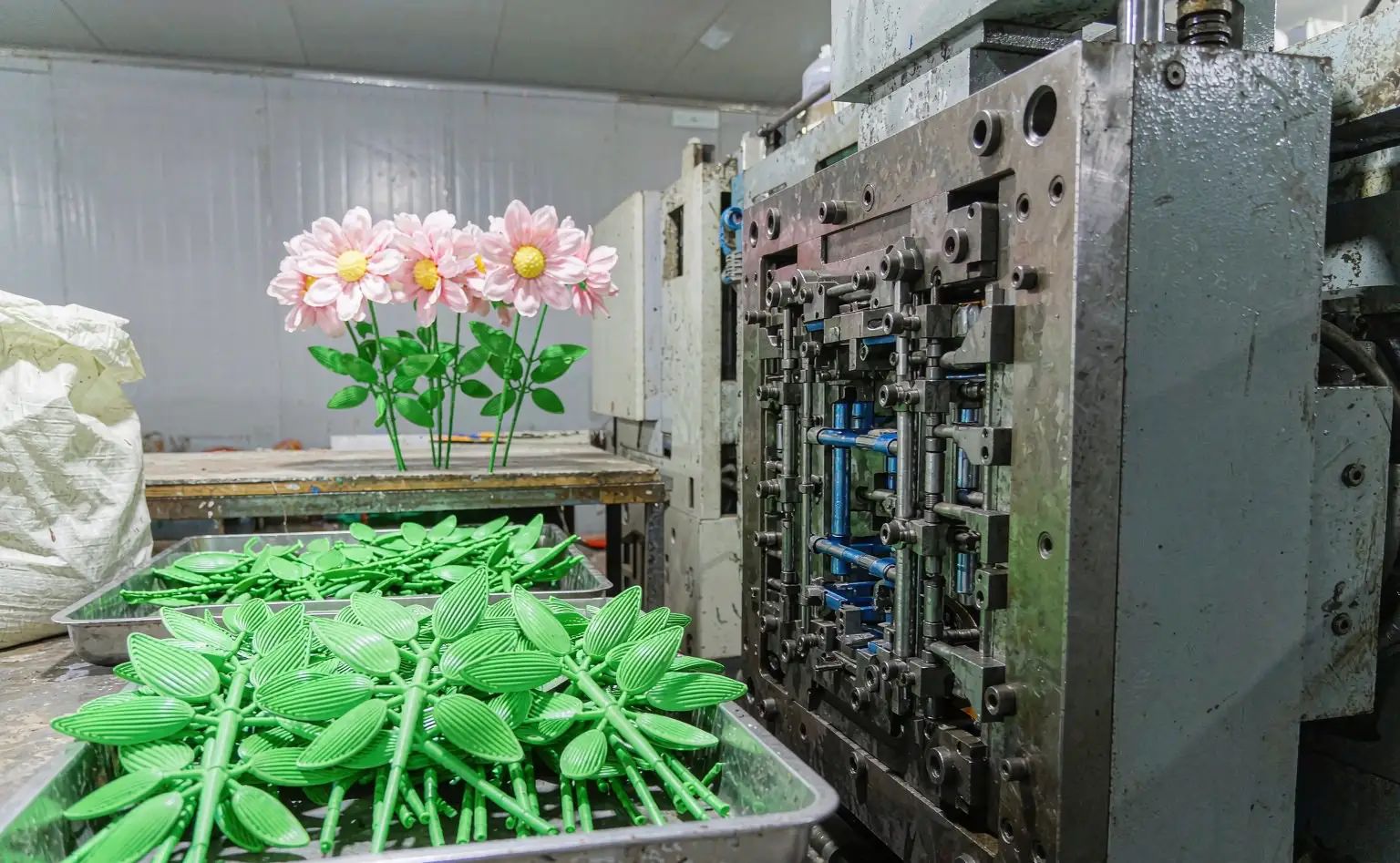
The plastic line is completed at injection. Add iHeir-ECO plastic antimicrobial agent at 0.3%-0.5% on PE/PP resin weight, made up first as a masterbatch in a matching carrier or premixed with the pellets before the hopper. The additive bonds with the material and is distributed through the whole part rather than sitting on the surface, so assembly, bending and wiping will not rub it off. Thermal stability reaches 240 degrees, and the process temperature should stay clear of 320 degrees.
Three details. First, the figure is on total resin weight, regrind included, so any change in the regrind ratio means recalculating, and high-regrind batches belong at the top of the range. Second, a stem is thin and light-walled and can only be dispersed through a masterbatch or a premix; powder fed straight in agglomerates. Third, pale and translucent petals are sensitive to colour shift, and a conventional organic grade yellows under heat, so these parts need a higher temperature grade that does not discolour, with the injection ceiling fixed before the line starts.
5. Foam base and the finished-goods store: the two places no agent is dosed
Floral foam and foam bases are porous and become a mould source once they take up water, and they sit inside the finished piece where a spray cannot reach. There are two ways to handle them: prefer a non-absorbing support, and if a porous base has to be used, have the foamer add an antimicrobial at the foaming stage on the weight of the foam, rather than trying to make it up after assembly.
The store matters just as much. Silk flowers are stacked tight with poor air movement, so ventilation will not carry moisture out of the core of a stack; place gas-phase sheets by stack, keep them apart from the goods with liner paper, and hold the store below 60% relative humidity. Bring the moisture of the goods down before they are loaded, because condensation inside the container is the ignition point.

6. Questions that come up: one figure or two, spraying after assembly
Can the cloth and the plastic stems share one figure? No. The cloth is figured at 2%-3% o.w.f. on dry cloth weight and the mouldings at 0.3%-0.5% on resin weight; the denominators differ, so copying the number either overshoots or falls short.
Can a spray over the assembled bouquet make up for it? It reaches the exposed surface only, leaving the inner stem and inner cloth untouched, and rubbing and wiping take the surface layer off, so the protection has to go in with the material at the bath and at injection.
Can extra loading make up for a high injection temperature? No. Temperature above the agent’s ceiling is a loss of activity, not a concentration problem, and extra loading only raises cost while affecting the mechanical properties and appearance of the stem. Change to a more heat-tolerant grade or adjust the injection temperature.
Two dosing points carry the work: the cloth is treated at the bath (iHeir-BJ at 2%-3% o.w.f., bath 21-50 degrees, pH 4.5-8.5, premixed with 9-13 times its weight in water and added in portions), and the stems and leaves go in with the masterbatch at injection (iHeir-ECO at 0.3%-0.5% on PE/PP resin, thermal stability 240 degrees, clear of 320 degrees), with the foam base and the store preserved by a change of material and humidity control. Test the long-term growth by a method such as ASTM G21 and hold a complete sample per batch. Samples and TDS sheets are available for a trial on your own line.


