




 View Count:33
 Date:2026-10-24
What keeps charging pile mould out of an outdoor unit, and where does each treatment go? A unit that passes one wet season at the customer site and comes back with sticky gaskets and black spots on the cable jacket is rejected as a batch. The cable jacket takes iHeir-JS117 at 0.5%-1.0% of product weight, the silicone gaskets take iHeir-GGTK at 1%-2%. This article covers the three addition points, the temperature windows and the export packing.
1. On an outdoor unit, mould starts at the gasket and the cable jacket
An outdoor unit fails not by immersion but by repeated wetting and drying: the enclosure heats to fifty or sixty degrees by day, cools at night and condenses inside, and rain runs down the panel seam, the connector holder and the cable entry. Water that goes in and out leaves a residue in the gaps, and that residue is where mould begins.
The first is the silicone gasket under the connector holder and the door. A groove is a pocket: rain and condensate collect in it and the bottom does not ventilate, so the gasket turns tacky, then discolours, then hardens and loses its spring, and the ingress rating goes with it. The second is the cable jacket: pile cables are mostly PVC or TPE, coiled against the post and dragged on the ground, and once a jacket is scuffed the roughened surface holds water and spots appear along the scratch.
The third is the enclosure. On metal it is a coating question, on plastic a moulding-surface question: rib roots, clip grooves and louvre slots trap water and dust, and where release agent or a scratch is left, mould follows the rib line. All three share one condition: water sits in a structural gap, so one measure does not cover the unit.
2. Housing, gasket and cable: three locations
The table sets out material, measure, addition point and basis for each; the gasket and the jacket take an additive, the housing does not.
| Location | Material and stage | Measure | Addition point | Basis |
|---|---|---|---|---|
| Housing, front panel | PC/ABS or coated steel | Drainage detail plus pre-assembly drying | Design and assembly | Not an additive basis |
| Polyolefin inner parts | PP / PE moulding | iHeir-JS117 0.5%-1.0% | Blending or masterbatch | On finished product weight |
| Holder and door gaskets | Silicone compression moulding | iHeir-GGTK 1%-2% | Mixing or compounding | On silicone weight |
| Cable jacket | PVC / TPE extrusion | Same JS117 at the same band | Compounding or blending | On jacket compound weight |
| Export packing | Finished unit | Desiccant and container humidity control | Bagging and loading | On carton volume and container |
Two boundaries. A silicone gasket cannot take a plastic mould powder: JS117 will not disperse in silicone and comes out as hard specks that leak at the sealing face, and GGTK in a PVC jacket does nothing about a scuffed surface. And the basis is each material’s own weight, jacket on jacket compound and silicone on silicone, never the weight of the whole unit.
3. Housing: lead the water away first, then talk about additives
On the housing, structure comes before chemistry. Make the connector holder lower outside than inside so water runs out; cut a drain notch in the bottom edge of the door, away from the electronics; fold the louvre edges inward so rain runs off the fold; and radius the rib roots, because a square root holds water nobody can wipe out.
At assembly: dry moulded shells before assembly, since moisture sealed in a cavity puts the first spot on the inside of the seam; wipe gaskets dry before they go into the groove; and after the rain or air-tightness test, blow the interior dry before the cover goes on, because test water is harder to remove than rain.
On material, the boundary has to be stated: iHeir-JS117 is specified for PVC, PU, polyolefins, polyester, TPE and rubber, so a PC/ABS housing is not on that list and the dosing there has to be proven by trial: mould a set of test pieces at 0.5%-1.0%, check impact and appearance, then decide. PP bases and PE liners are polyolefins and go straight to masterbatch at 0.5%-1.0%.

4. Silicone gaskets: iHeir-GGTK at 1%-2%, added below 200C
Holder gaskets, door seals and cable-entry sleeves are silicone and take iHeir-GGTK silicone antimicrobial agent at 1%-2%, added directly and stirred to uniformity, at a service temperature not above 200C. Active content is at least 20%, packing is 25kg drums and oral LD50 is above 5000mg/kg. It is a cationic system and addresses how a gasket fails in water: it turns tacky, discolours and develops a smell.
Add at mixing or compounding, where the curing agent and fillers already go through the rolls; GGTK disperses most evenly there. Added to an already mixed batch it can only be worked in with thin passes on the mill, and rings come out hard in one section and soft in another. Hold the 200C ceiling: pushing cure temperature for cycle time decomposes the agent and yellows a ring that goes brittle.
Levels follow the section. The main holder gasket, with a large section and long contact with water, runs at 2%; door seals and cable-entry sleeves at 1%-1.5%. Rings are compression moulded, so a set from one tool should be traceable to one batch of compound; do not mix trial and production batches. The silicone-plastic boundary is set out in how to choose a silicone antimicrobial agent.
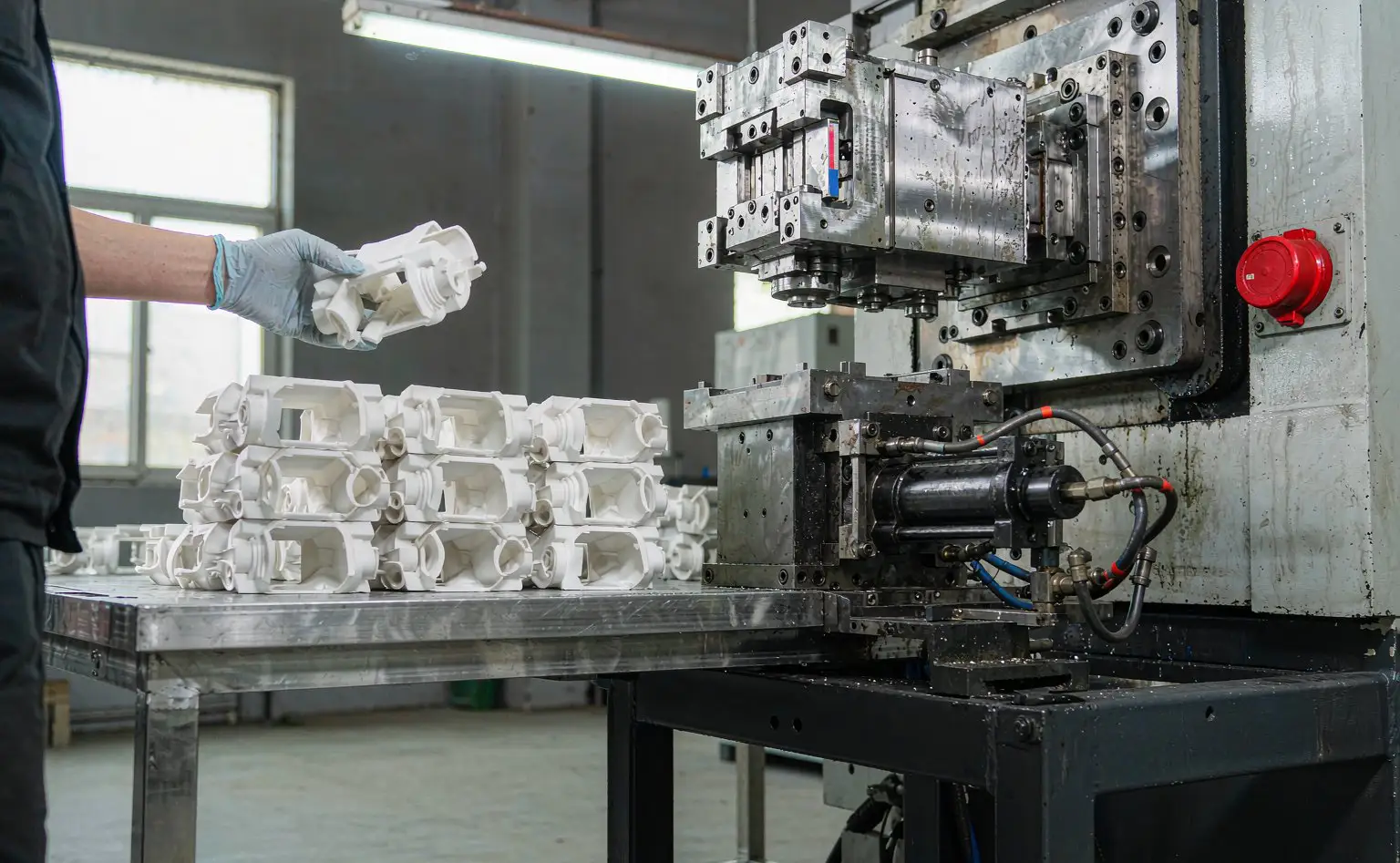
5. Cable jacket and connector: iHeir-JS117 at 0.5%-1.0% in the compound
Pile cable jackets are largely PVC or TPE, and this is where iHeir-JS117 plastic anti-mildew powder goes in at 0.5%-1.0% on the final product weight. Active content is above 97%, melting range 100-120C, moisture below 0.2%, specific gravity 1.21 and mean particle size 110 microns; it is insoluble in water, does not leach, resists wash-out, contains no arsenic, and oral LD50 in chickens is 4480mg/kg. A jacket is dragged, wetted and sunlit for years, and resistance to wash-out is why this grade is chosen.
Add at compounding or blending: tumble the powder with PVC or TPE pellets in a high-speed mixer before the extruder, or build a concentrate to let down where there is a masterbatch line. Sprinkling into the hopper does not work, because the feed section cannot mix it and the jacket comes out protected in stretches. Set the barrel to the 100-120C window; running hotter decomposes the agent and yellows the jacket.
The connector is structure, not additive. The shell, the terminal block and the boot are a push-fit stack, so water enters at the boot: make the boot a labyrinth fit, fit a sleeve at the cable entry and point it down. The small seals inside follow the same GGTK band. After the rain test, open the connector, dry it and reassemble; skip that and the first spot in the unit will be inside the connector.
6. Questions we get: does the additive hurt the seal or the jacket
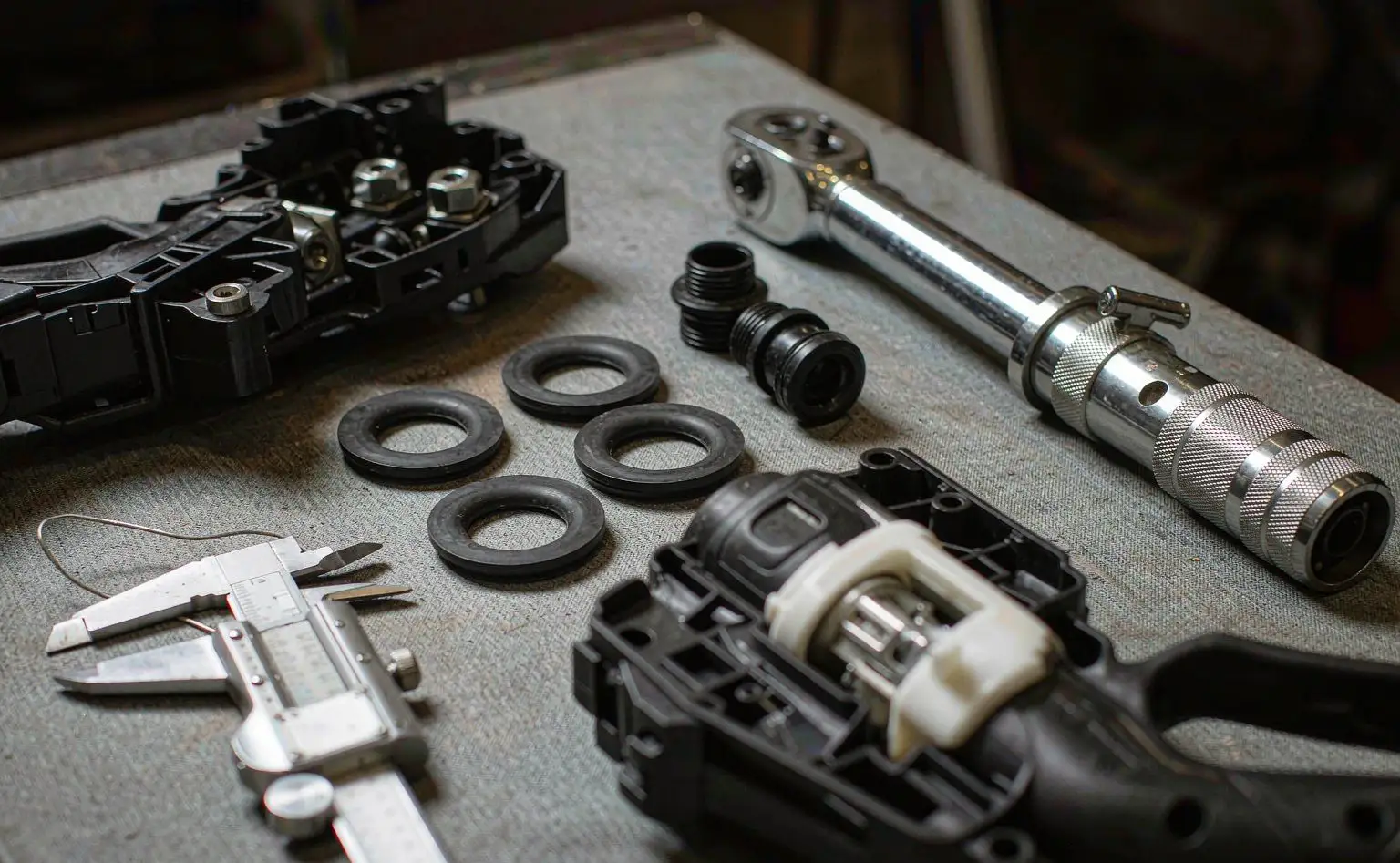
At 2%, does GGTK harden the gasket so it will not seal? At 1%-2% with proper mixing the effect on hardness is limited; what actually stops a gasket sealing is compression set and groove dimensions. Prove it with a compression set test on the same compound with and without the agent, at the same compression ratio and temperature.
With JS117 in the jacket, will it still pass mechanical and ageing tests? The effect at 0.5%-1.0% has to be measured, and PVC and TPE formulations differ. Mould three sets from the same batch, at zero, 0.5% and 1.0%, run tensile, ageing and low-temperature impact together, and choose the band that passes mould resistance without losing mechanical performance.
How is the effect verified? Plastics and jackets go to ISO 846 or ASTM G21 for a growth grade, with samples cut from a scuffed jacket and a rib root rather than a flat face; silicone parts also run to ISO 22196. Then put the unit through damp heat and a rain test and open it to check the groove and the cavity. Both products have samples and TDS for a trial on your compound.
The four points: drainage and dry shells before assembly, no forced additive in PC/ABS, GGTK at 1%-2% in silicone below 200C, and JS117 at 0.5%-1.0% on jacket compound in the 100-120C window.


