




 View Count:42
 Date:2026-10-24
Where does PV module mould start on a unit built to sit outdoors for twenty-five years? Not on the glass: it starts in the frame glue line, which shows black specks before it shows a streak, and on the junction box housing, which blooms first. The frame sealant takes iHeir-GGTK at 1%-2% on sealant weight, the junction box housing takes iHeir-JS117 at 0.5%-1.0% of finished weight. This article covers both addition points, the temperature windows and the lamination and assembly controls.
1. Module mould starts in the frame glue line and the junction box
A module is not immersed; it sits outdoors through wet and dry cycles. The back of the panel runs hot by day and cools at night, so condensate forms between frame and backsheet, and rain runs down the frame channel, the corner key and the box edge, with whatever cannot run off staying in the capillary mouth of the sealant.
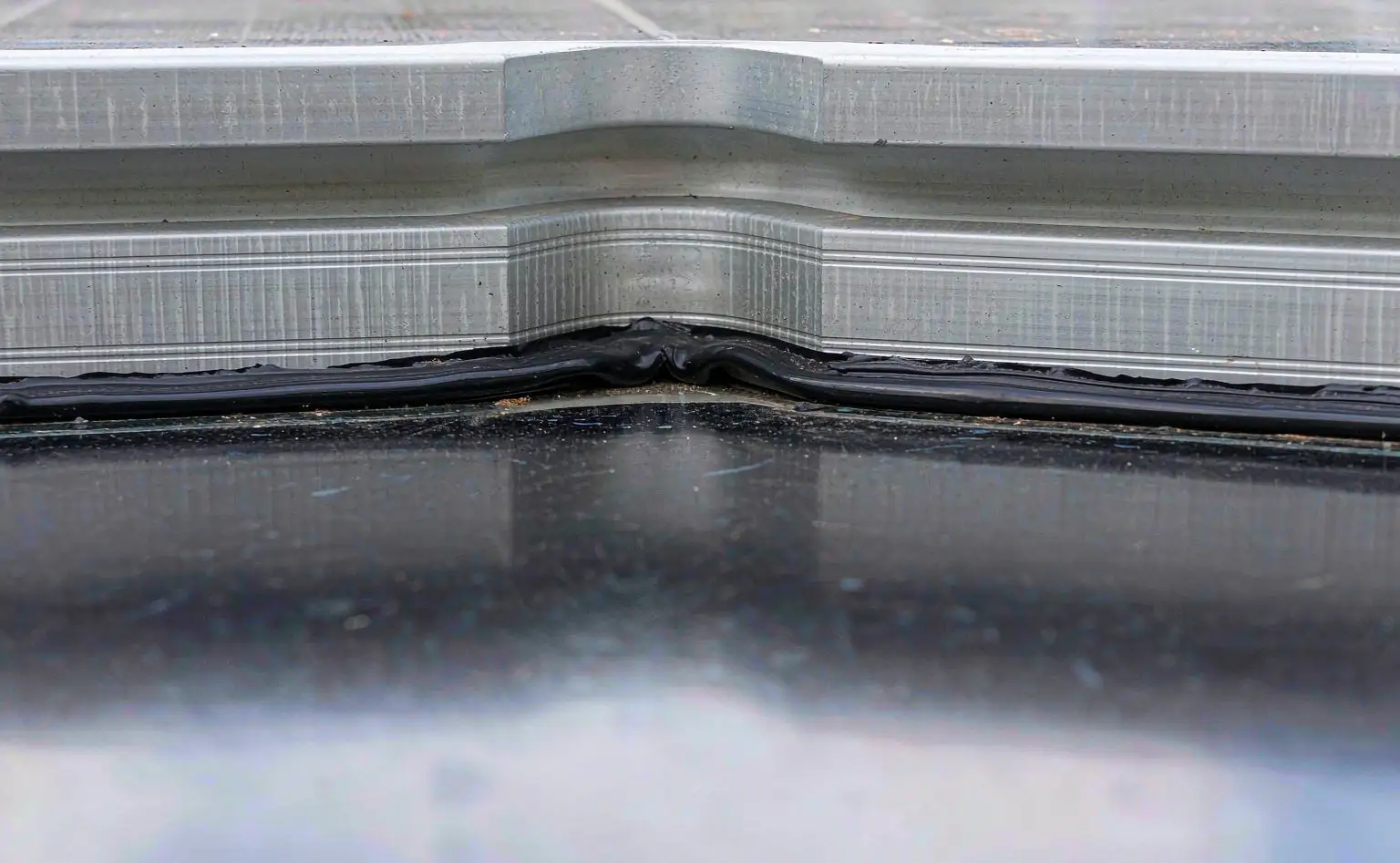
The first is the frame glue line: a bead between aluminium frame and laminate that looks smooth but carries micro-voids and tool marks, and handling, stepping and cleaning leave scratches that take up water, so spots appear, join into a line and run round the frame. The second is the junction box, a black PP or PPO moulding bonded with silicone, with two entry points, the lid and the cable gland; once moisture is inside, the encapsulant fogs first and the terminals corrode next.
A third point is easy to miss: the cut edge of the backsheet, a fibrous section that takes up water far faster than the face, so a laminate whose edge is damp before framing carries mould inward. All three share one condition: water sits on a cut or in a gap, which is why the treatment is split by material and by temperature.
2. Glue line and junction box: two locations
The table sets out material, product, level and addition point for each; one is an adhesive and one a plastic, so the systems and the temperature windows differ.
| Location | Material and stage | Product and level | Addition point | Basis |
|---|---|---|---|---|
| Frame sealant bead | Silicone or butyl sealant | iHeir-GGTK 1%-2% | Sealant compounding | On sealant weight |
| Junction box body and lid | PP / PPO moulding | iHeir-JS117 0.5%-1.0% | Blending or masterbatch | On finished product weight |
| Encapsulant surface inside | Potting and cure | Carried in with GGTK | Potting mix | On encapsulant weight |
| Laminate edge, backsheet cut | Cutting and assembly | Edge sealant plus pre-framing drying | Before framing | Not an additive basis |
| Export packing | Palletised modules | Desiccant and container humidity control | Palletising and loading | On pallet and container |
Two boundaries. GGTK goes into the adhesive and JS117 into the plastic: a powder stirred into sealant leaves hard specks that tear the bead as it is gunned, and a liquid antimicrobial added to moulding compound makes the screw slip and prints oil marks on the part. And the basis is each material’s own weight, sealant on sealant and housing on housing, never the weight of a whole module.
3. Frame glue line: iHeir-GGTK at 1%-2% in the sealant
The frame bead takes iHeir-GGTK silicone antimicrobial agent at 1%-2%, added directly to the sealant and stirred to uniformity, with an addition and service temperature not above 200C. Active content is at least 20%, packing is 25kg drums, oral LD50 is above 5000mg/kg, and it is a cationic system. It addresses what a bead does under long damp: discolouration, tackiness and smell, the three things picked out first at a visual inspection.
Add at sealant compounding, not at the gun: GGTK goes into the mixing vessel with filler and crosslinker, is stirred to uniformity and discharged, whereas topping up a filled cartridge only gets a static mix and one bead ends up protected in stretches. On the gun side, hold the bead surface dry and dust free, the substrate above the dew point, and the cure schedule rather than moving the module early.
Levels follow the position: corner keys and short edges carry the most load and hold the most water, so they take 2%, and long edges run 1%-1.5%. This stage is not checked by colour but by peel and appearance on a standard bead, the same sealant with and without the agent, cured and peeled the same way, looking for blistering and brittleness. The adhesive-plastic boundary is set out in how to choose a silicone antimicrobial agent.

4. Junction box housing: iHeir-JS117 at 0.5%-1.0% in the compound
The box body, the lid and the cable gland are plastics, so iHeir-JS117 plastic anti-mildew powder goes in at 0.5%-1.0% on the final product weight. Active content is above 97%, melting range 100-120C, moisture below 0.2%, specific gravity 1.21 and mean particle size 110 microns; it is insoluble in water, does not leach, resists wash-out, contains no arsenic, and oral LD50 in chickens is 4480mg/kg. A box sits outdoors for decades, and resistance to wash-out is why this grade is selected.
Add at blending or masterbatch: tumble the powder with PP pellets before the machine, or build a concentrate and let it down. Powder sprinkled into the hopper is not mixed by the feed section, so one run of boxes is protected and the next is not. Set the barrel to the 100-120C window and do not push it for flow, because too hot decomposes the agent and yellows the box.
State the material boundary: iHeir-JS117 is specified for PVC, PU, polyolefins, polyester, TPE and rubber, so a PP box is inside that list and PPO is not. A plant running PPO should trial at 0.5%-1.0% first, moulding test pieces for impact, appearance and weathering before fixing the level. Glands are TPE or PVC on the same product and band, counted into the finished weight.
5. Lamination, assembly and export: keep water off the cut edges
The additive looks after the material; assembly looks after the water path. First, the laminate edge: seal a trimmed backsheet edge promptly rather than leaving it in a humid shop, because an edge that takes up moisture and is then sealed keeps that water inside. Second, drying before framing: wipe the frame channel and corner cavity dry before gunning. Third, box bonding: clean the bond face, lay a continuous bead, clip the lid fully home and point the cable entry down with a sleeve.
Testing and export close two more. After damp heat and insulation tests, open a sample of boxes and look for water marks on the encapsulant, and let those modules dry before packing. For export, add absorbent material on the pallet and in the container, leave air paths between pallets and a gap to the container wall, because a five-week voyage condenses water whatever the additive does. The container side is set out in export warehouse mould control.

6. Questions we get: does the additive affect bonding or cure
At 2%, does GGTK reduce the bond strength of the bead? The effect at 1%-2% has to be measured, and silicone and butyl systems behave differently. Trial three sets from the same sealant, at zero, 1% and 2%, gun one standard bead each and peel them together after cure, choosing the band that passes mould resistance without losing bond.
With JS117 in the housing, will it still pass impact and weathering? The effect on PP impact at 0.5%-1.0% is usually limited, but prove it on your own compound: three sets of test pieces from one batch through Charpy impact and UV ageing before the level goes into production.
How is the effect verified? Beads and plastics go to ISO 846 or ASTM G21 for a growth grade, with samples taken from the bead surface and the outside of the box; the inside is checked with a whole-box simulation, sealed and held in damp heat, then opened to inspect the encapsulant and the terminals. The module itself follows the damp heat item of IEC 61215, with appearance photos before and after.
Four points: GGTK at 1%-2% on sealant weight in the mixing vessel, 2% at corners and short edges, below 200C; JS117 at 0.5%-1.0% of finished weight in the housing, held at 100-120C, with PPO proven by trial; seal a trimmed edge promptly; and open sample boxes after testing.


