




 View Count:8
 Date:2026-10-30
Where does the anti-mould powder go in Christmas decoration work, and what belongs inside the colour box? Stock is built six months ahead and crosses a wet season and a sea leg, so one mouldy batch means a container reworked. PVC needles carry no nutrients, but plasticiser migration, regrind impurities and damp cardboard add up to a bed. The foliage compound takes iHeir-JS117 at 0.5%-1.0%, and each colour box takes iHeir-D paper at 0.1-0.2 g per sheet. This article covers both doses, the metal compatibility test and the storage rules.
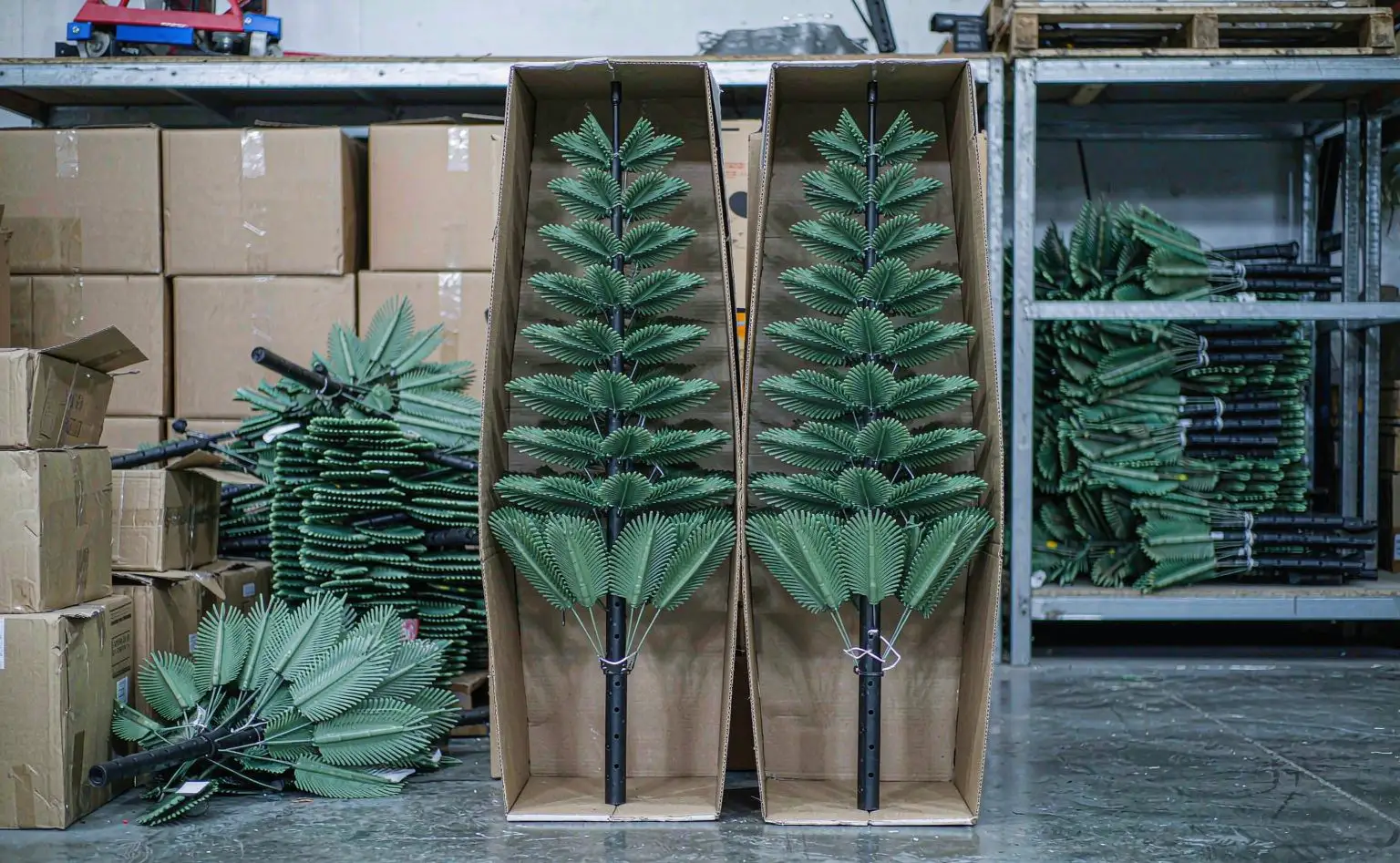
1. Mould starts on the foliage and inside the colour box
The material set is mixed: PVC or PE pine needles and branches, PS or PVC baubles, fabric bows and ornaments, metal hooks and light strings, colour box with foam inserts. Metal and glass do not grow mould; what fails is the soft PVC foliage and the paper packing.
The foliage fails on formulation. Soft PVC needs a heavy plasticiser load to feel right, and the plasticiser migrates slowly to the surface as an invisible film. Over a long storage period that film collects dust and moisture, and mould settles on it. Regrind makes it worse: filler and pigment are unevenly distributed, and the surface hazes over with specks. A buyer who opens a carton to pale needles and spotted baubles grades the whole carton as a cosmetic reject.
The colour box fails on closure and moisture uptake. Board, corrugated inserts, foam and the instruction card all take up moisture; once the box is sealed, that water cannot leave while the warehouse humidity keeps diffusing in. This stock can sit three or four months in a foreign warehouse, and the cartons at the bottom of a pallet, against the floor or the wall, are the first to go.
2. Foliage and colour box are handled separately
The table lines up foliage, ornaments, the box and storage. Foliage is dosed on compound weight, the paper on sheets and active content, and the two are not convertible.
| Part | Material | Product and level | Stage | Control point |
|---|---|---|---|---|
| Artificial foliage | Soft PVC/PE compound | iHeir-JS117 0.5%-1.0% of compound weight | Mixing or compounding | Even mixing, top of range with regrind |
| Baubles | PS/PVC spheres | Same compound family, same dose | Same mixing stage | Trial clarity on clear spheres |
| Box inserts | Board, foam, card | iHeir-D 0.1-0.2 g per sheet | At packing | Paper facing in, box sealed |
| Storage and export | Cartons, pallets | Sheets per carton, humidity control | Warehouse, loading | Store below 60% RH |
One boundary. Powder in the foliage does not excuse the box: mould growing on the insert still soils the foliage. And no box is good enough if the compound keeps bleeding plasticiser, because the film on the surface will still support mould. Both stages have to run to cover a six-month stock period.
3. Foliage: the powder goes in at mixing or compounding
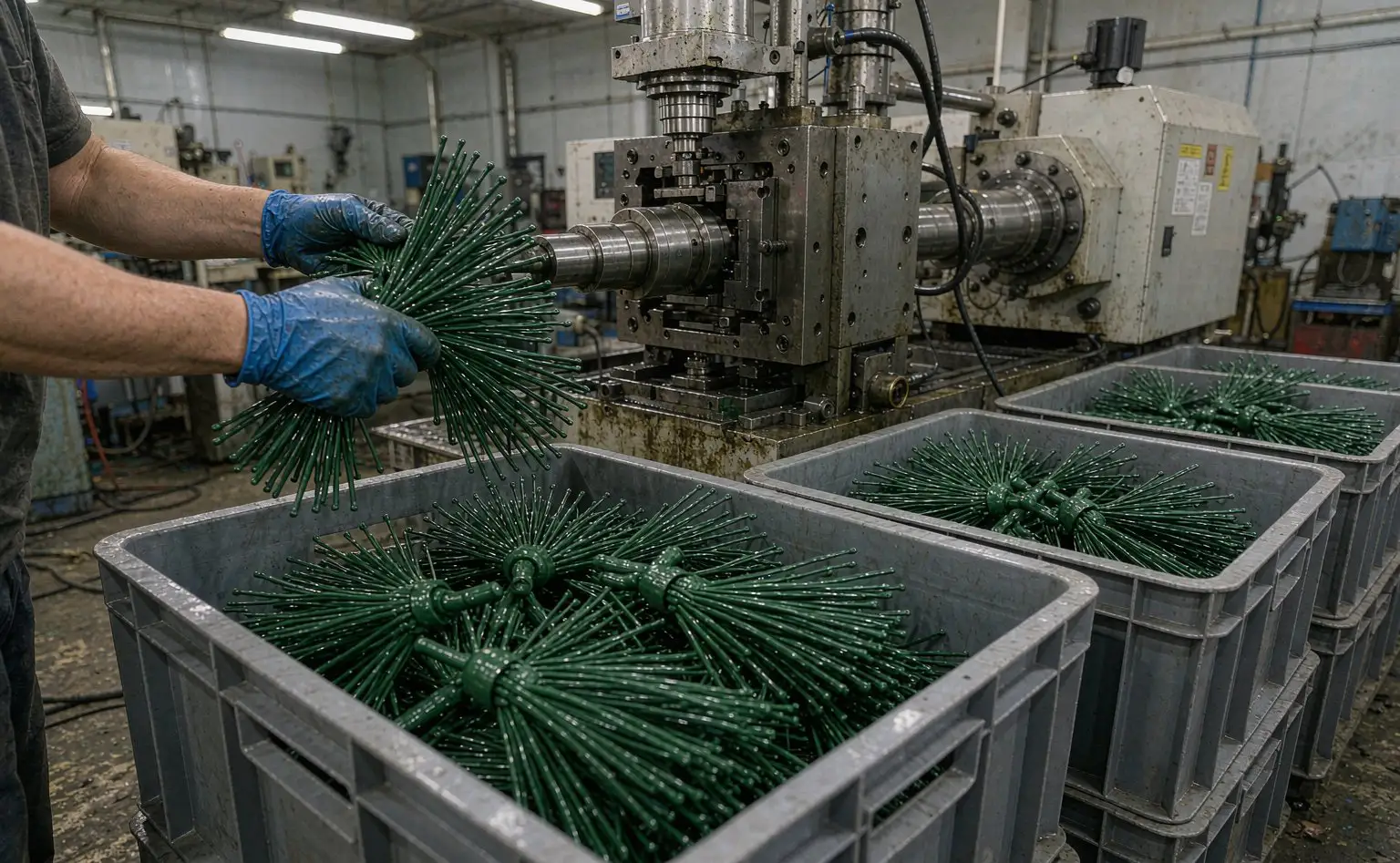
The foliage takes iHeir-JS117 plastic anti-mould powder at 0.5%-1.0% of compound weight. Active content is above 97%, bulk density 380 kg/m³, D50 around 110μm, and it is insoluble in water, so a damp warehouse or container condensation does not wash it out.
Two ways in. In an in-house high-speed mixer it goes in with resin, plasticiser and stabiliser and is discharged at 80-100℃ compound temperature, with the powder taken into the melt; if compound is bought in or you run your own masterbatch, blend it on a twin-screw at pelletising. Do not hand-scoop into the machine hopper: soft PVC runs hot and viscous, the powder lumps, and the moulding comes out with white specks.
Three points. Regrind: foliage almost always carries regrind, and above thirty percent the dose goes to 1.0%. Clear parts: trial clarity on transparent baubles first, since the powder scatters light even when fine. Colour: deep green and red hide it, while pale and gold parts need their own shade check.
4. Colour box: the paper is counted in sheets, position decides the result
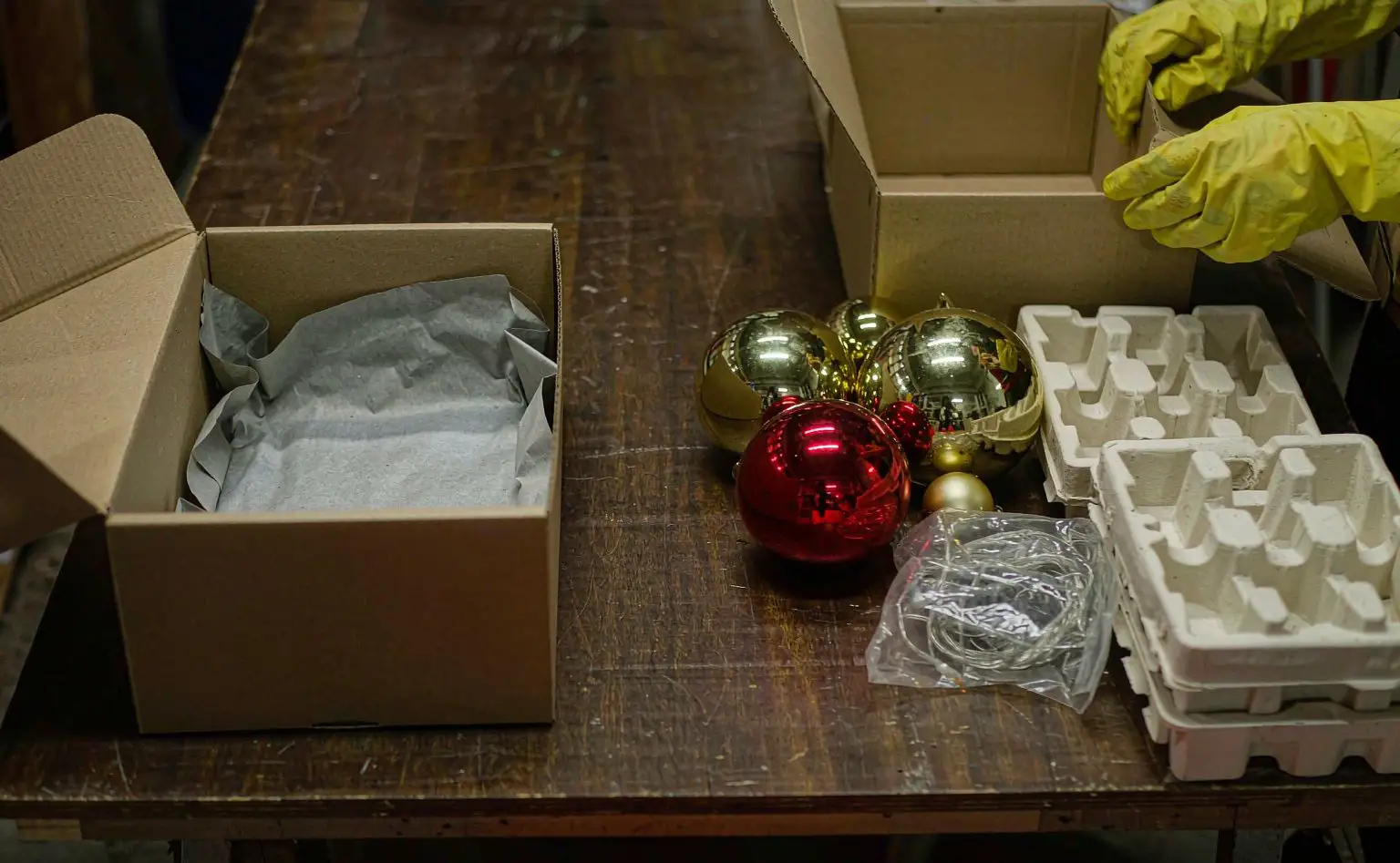
Inside the box the product is iHeir-D gas-phase anti-mould paper, 0.1-0.2 g of active content per sheet, solids 70%±5, 25kg per drum, one year shelf life. It is a coated paper and releases into a closed space, so position and closure decide the result: against the box wall with the face towards the foliage, box sealed. Sheet count follows box volume and piece count; a large box takes one sheet at the wall, a small box is dosed per piece, and a packing trial settles it.
One test you have to run first: metal compatibility. Light strings, hooks and the metal rings on ornaments are thin plated parts, and the paper can corrode poor-quality metal in damp conditions. Take three times the normal sheet count, seal it in a bag with light strings and hooks from the same batch, hold 7 days at 40℃/90% RH, then open and check the plating for darkening.
5. Storage and export across a six-month season
In the store: cartons on pallets, 10cm off the floor and 10cm off the wall, below 60% RH. Stock made in July should not sit at the bottom of the warehouse; turn the bottom layer before the wet season. First in first out does more here than any additive.
At sea, container condensation is the main enemy: leave an air path, keep cartons off the container wall, and the logic is the one in condensation in sea freight containers. On arrival the pallets should not sit on the floor either, and in a region with wide temperature swings add a moisture barrier film inside the carton.
Release at three levels: foliage to GB/T 1741 or ASTM G21, sampling both at the branch and at the needle; whole cartons for 30 days at 30℃/85% RH, checking needles, bauble surfaces and the card; and ISO 22196 where a buyer wants bacterial data. That sequence compresses six months of storage into one month of testing.
6. Questions on hardness, taint and lots already spotted
Q: Will the powder harden the foliage or fade it?
At 0.5%-1.0% the effect on softness is small, and fading usually comes from pigment-plasticiser compatibility. Run a control: half the batch dosed, half not, moulded together and both into a 70℃ oven for 7 days, then compare shade and feel.
Q: Does the paper taint the baubles?
The paper is odourless and at a normal dose does not carry over. The real risk is scuffing where paper rubs a sphere, so put a thin sheet or foam between them.
Q: Can a lot that already shows mould ship?
Surface bloom on needles can be wiped, then appearance and feel re-checked; where mould has gone into the moulding texture or the lacquer on a bauble, the part is replaced. A reworked lot needs both the foliage dosing and the box stage again; wipe only, and it returns once the box is closed.
Four points to take away: dose the foliage compound with iHeir-JS117 0.5%-1.0% of compound weight at mixing or compounding, going to 1.0% where regrind is high; put iHeir-D paper at 0.1-0.2 g per sheet into the colour box by volume and piece count, face in and box sealed, after a three-fold metal compatibility test; store below 60% RH with pallets off the floor and turn the bottom layer before the wet season; release whole cartons on 30 days at 30℃/85% RH. A 1kg powder sample and 20 sheets of paper can go out for a trial first; MOQ and lead time are on the iHeir-JS117 product page.


