




 View Count:3
 Date:2026-10-31
How should artificial flower mould be handled when the petals are fabric and the stems are coated plastic? Almost every stage from cutting and dyeing to assembly and packing carries water, and petal blanks that go into storage half dry show bloom within days, enough to downgrade or rework a whole export lot. The petals take iHeir-BJ at 2%-3% o.w.f. in the finishing bath, and the stem compound takes iHeir-JS117 at 0.5%-1.0% of compound weight. This article covers both baths, the drying rule and the storage window.
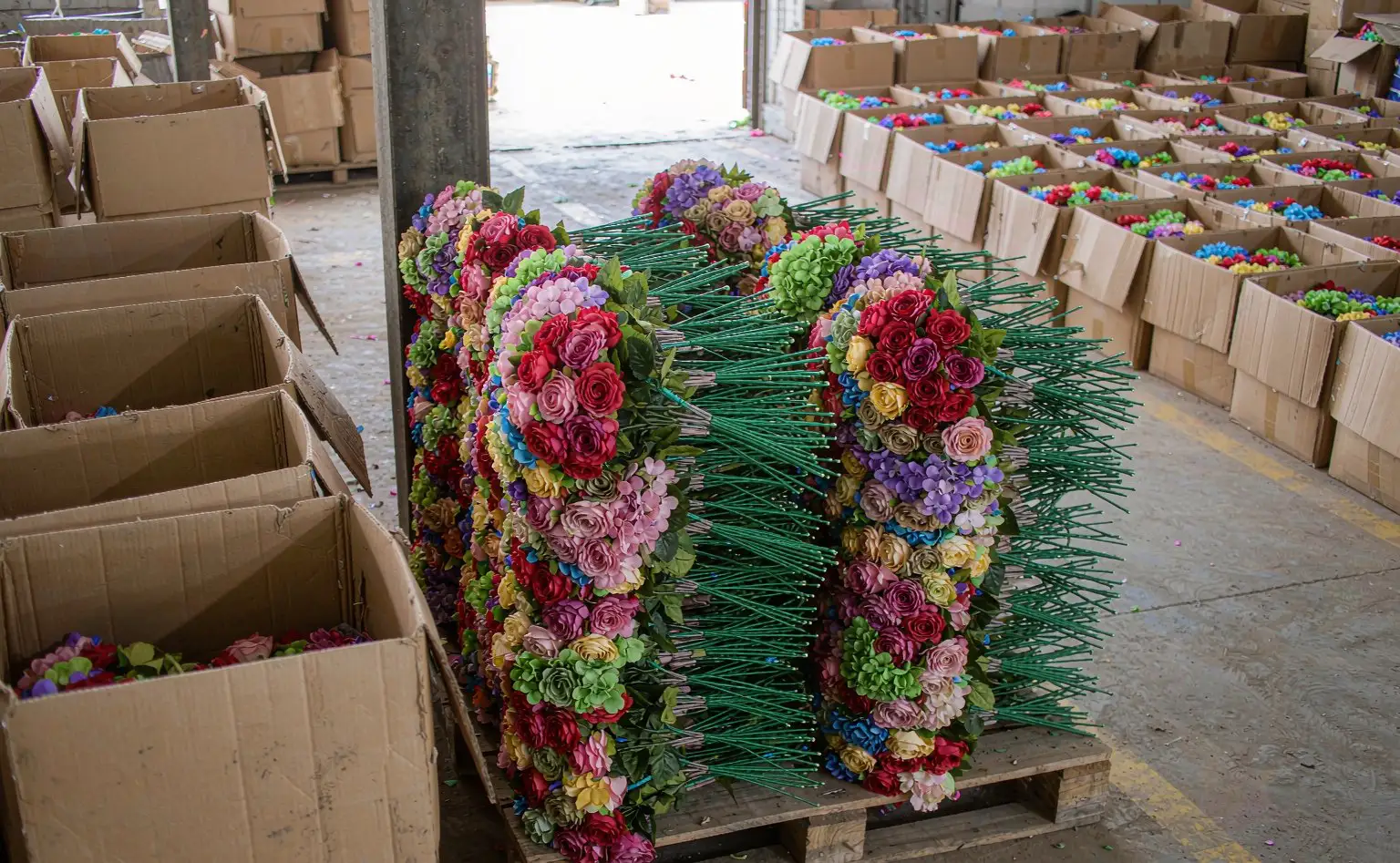
1. Mould starts on the petals and in the stem coating
The build of an artificial flower is fixed: pressed fabric petals and leaves, a wire stem with a plastic coating, a moulded calyx and core, then assembly into a carton. What grows mould is the dyed fabric and the coating compound; glass beads and bare wire do not, but they trap water inside the build.
The petals fail on residual moisture. Dyed polyester goes through washing and dewatering and still carries water; to hold a delivery date, factories press and assemble petals that are only half dry, and the water stays locked between the fabric layers. Once the carton is closed, the face hazes over, then turns to dark specks that leave a mark when wiped.
The stems fail on formulation. The outer layer is soft PVC or PE over wire, and it needs a heavy plasticiser load to stay soft and to grip the wire. The plasticiser migrates to the surface as an oily film that collects dust and moisture, and mould settles on it. Regrind makes it worse: shade drift and mould spots usually arrive together.
2. Petals and stems run on separate routes
The table lines up petals, stem coating, the moulded calyx and storage. Petals are dosed on fabric weight and converted through the wet pick-up, stems on compound weight, and the two figures are not interchangeable.
| Part | Material | Product and level | Stage | Control point |
|---|---|---|---|---|
| Fabric petals | Polyester blanks | iHeir-BJ 2%-3% o.w.f. | Finishing bath after dyeing | 70% wet pick-up, moisture checked after drying |
| Stem coating | Soft PVC/PE | iHeir-JS117 0.5%-1.0% of compound | Mixing or compounding | Even dispersion, top of range with regrind |
| Calyx and core | Moulded parts | Same compound family, same dose | Same mixing stage | Shade check on pale parts |
| Assembly and packing | Cartons, liners | Paper per carton, humidity control | Packing, storage | Store below 60% RH |
One boundary. A treated petal does not excuse the stem: the film on the coating still picks up moisture, mould climbs from the stem to the calyx and stains the back of the petal. Nor does powder in the compound fix wet fabric, because a few days in a closed carton is enough for bloom. Both stages have to run to cover a six-month stock period.
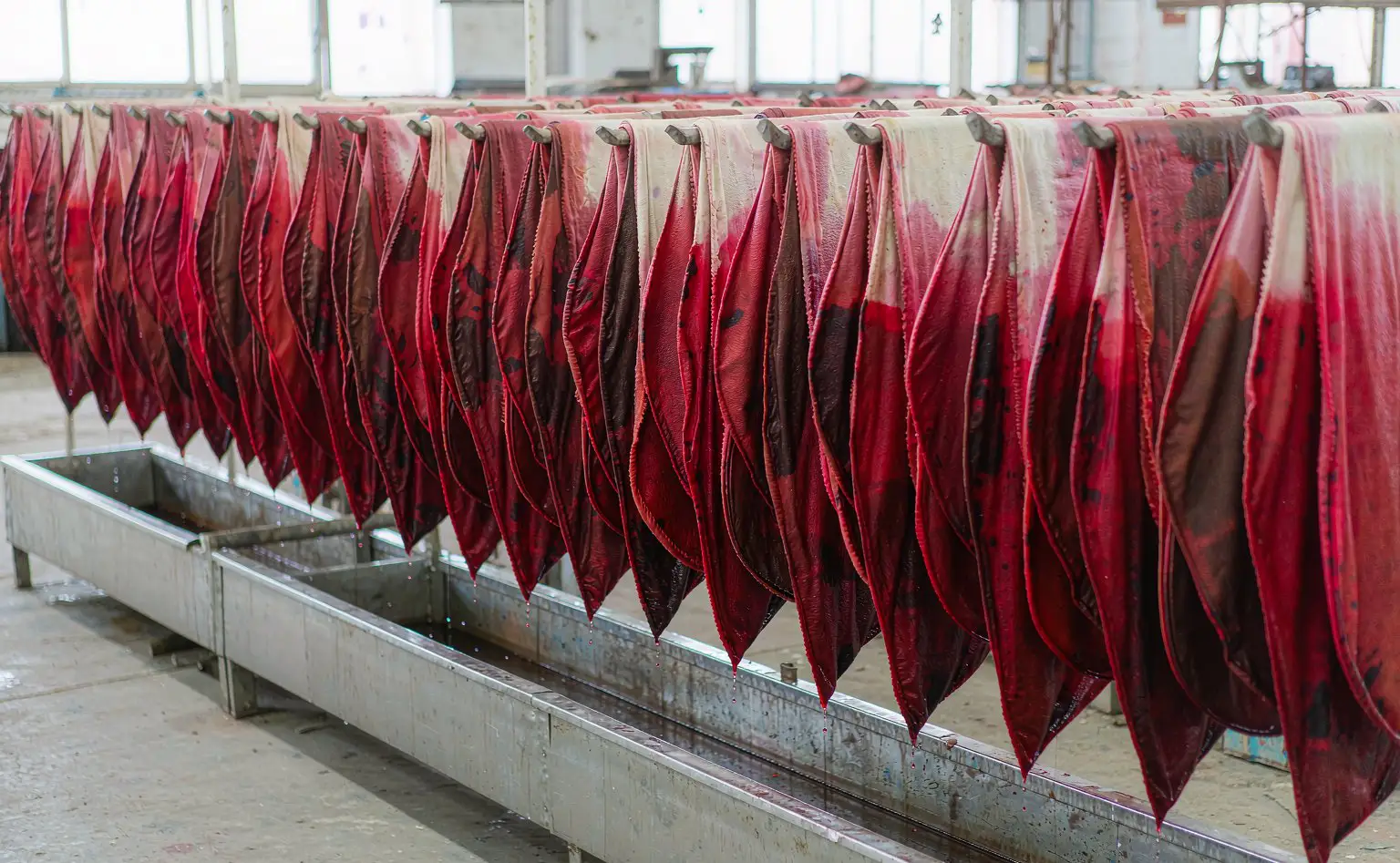
3. Petals: dip in the finishing bath, then dry right through
The petals take iHeir-BJ textile anti-mould agent at 2%-3% o.w.f. on fabric weight. The bath runs at 21℃-50℃ and pH 4.5-8.5, ideally near 6, with a 70% wet pick-up. On that basis 3kg of the agent treats 100kg of fabric, and it is pre-mixed with 9-13 times its volume of water before it goes into the bath in portions, which gives a more even take-up.
Three conditions that decide the result. First, soft water. Second, compatibility: BJ is a cationic system and cannot share a bath with anionic auxiliaries, so softeners and wetting agents have to be cationic or non-ionic, otherwise the bath breaks and leaves oil spots on the face. Third, sequence: dye, wash, treat, then press. Reverse the order and the treatment is wasted.
Drying is the critical step. Treated blanks go through squeeze rollers and into a drying tunnel. A blank that feels dry on the surface can still be damp inside; once boxed, that moisture spreads through the carton and mould starts where the petals are stacked. We suggest sampling the moisture of blanks off the line by lot and re-drying whole lots that run over, rather than judging by feel.
4. Stems: the powder goes into the coating compound
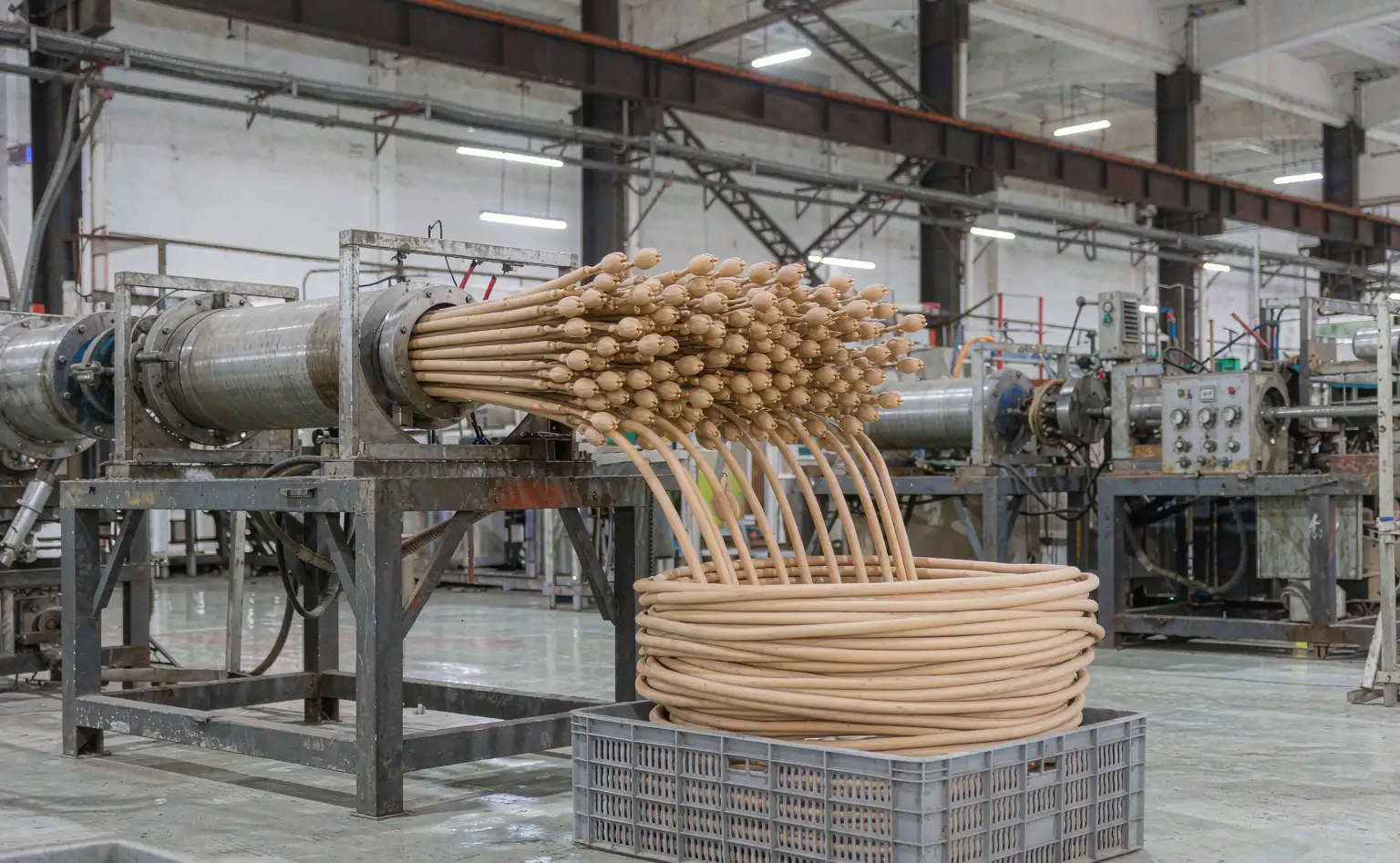
Stems take iHeir-JS117 plastic anti-mould powder at 0.5%-1.0% of final product weight. Active content is above 97%, bulk density 380 kg/m³, D50 around 110μm, insoluble in water, non-leaching, and it withstands 280℃, so neither coating extrusion nor a later bake breaks it down.
Two places to add it. If the compound is made in house, it goes into the high-speed mixer with resin, plasticiser and stabiliser and is discharged at 80-100℃ compound temperature, taking the powder into the melt. If compound is bought in, have it blended at the pelletising stage, or run it through a twin-screw yourself. Do not scoop powder into the extruder hopper: the coating layer is thin and the melt is hot, so the powder lumps and the stem comes out with white bands.
Three points to watch. Regrind: coating compound almost always carries it, and above thirty percent the dose goes to 1.0%. Colour: deep green and wine red hide it, while pale pink and ivory need their own shade check. Wire: the powder protects the coating, so exposed wire at a cut end still needs its own rust protection, and the two jobs should not be merged.
5. Assembly, packing and the export window
The assembly bench is where risk is most often missed: petals and stems are joined by tie, adhesive or clip, half-finished work sits in totes overnight, water collects in the bottom of the tote, shop humidity is high, and by morning the parts carry bloom. Keep sub-assemblies moving, raise the totes off the floor, run a dehumidifier at the bench and bag finished pieces the same day.
At packing, add anti-mould paper per carton and a moisture barrier inside. In the store, cartons on pallets 10cm off the floor and 10cm off the wall, below 60% RH, and turn the bottom layer before the wet season. For sea freight, container condensation does more damage than shop humidity, so leave an air path and keep cartons off the container wall; the logic is the one in preventing container rain.
Release at three levels: petals to GB/T 24346-2009 or AATCC 30, sampling one piece from the face and one from the back; coated parts to ASTM G21 over 28 days; whole cartons for 30 days at 30℃/85% RH, opening to check petals, calyx and liner. Textile finishing detail sits in our textile anti-mould agent buying guide.
6. Questions on pressing, hand feel and spotted lots
Q: Does pressing a treated petal lose the effect?
BJ bonds to the fibre surface and is non-leaching, so a normal pressing temperature does not remove it. What matters is moisture before pressing: blanks that are too damp mark and seal water into the layers, so dry them into the process window first.
Q: Will the powder in the stem make the coating stiffer?
At 0.5%-1.0% the effect on softness is small; plasticiser ratio dominates hand feel. When you change the formula, run a control: half the compound dosed, half not, extruded together and left 7 days, then compare bend feel and surface bloom.
Q: Can a lot that already shows mould ship?
Surface bloom on petals can be wiped, then shade and feel re-checked; where mould has gone into the fabric or the pressing texture, the petal is replaced. A reworked lot needs both the fabric treatment and the stem dosing again; wipe only, and it returns once the carton is closed.
Four points to take away: run the petals through iHeir-BJ at 2%-3% o.w.f. with the bath at 21℃-50℃ and pH 4.5-8.5, a 70% wet pick-up, drying and moisture checks by lot; dose iHeir-JS117 at 0.5%-1.0% of compound weight at mixing or compounding, going to 1.0% with heavy regrind; keep sub-assemblies moving and store below 60% RH with pallets off the floor and wall; release whole cartons on 30 days at 30℃/85% RH. A 1kg sample of the agent and 1kg of the powder can go out for a trial first; MOQ and lead time are on the iHeir-BJ product page.


