




 View Count:46
 Date:2026-10-10
How should automotive interior part mould be treated? An interior part is a stack of moulded plastic, fabric cover, foam and skin, and if you figure the wrong material the additive is either wasted or the part still mildews in the container. The moulded parts take iHeir-ECO plastic antimicrobial agent at 0.3%-1.0% on part weight, and the fabric covers take iHeir-BJ textile mildew inhibitor at 2%-3% o.w.f. in the padding bath. This article covers the dosing point and the figures for both materials, plus the assembly test.
1. Where the mould comes from: two material lines, the moulded part and the fabric cover
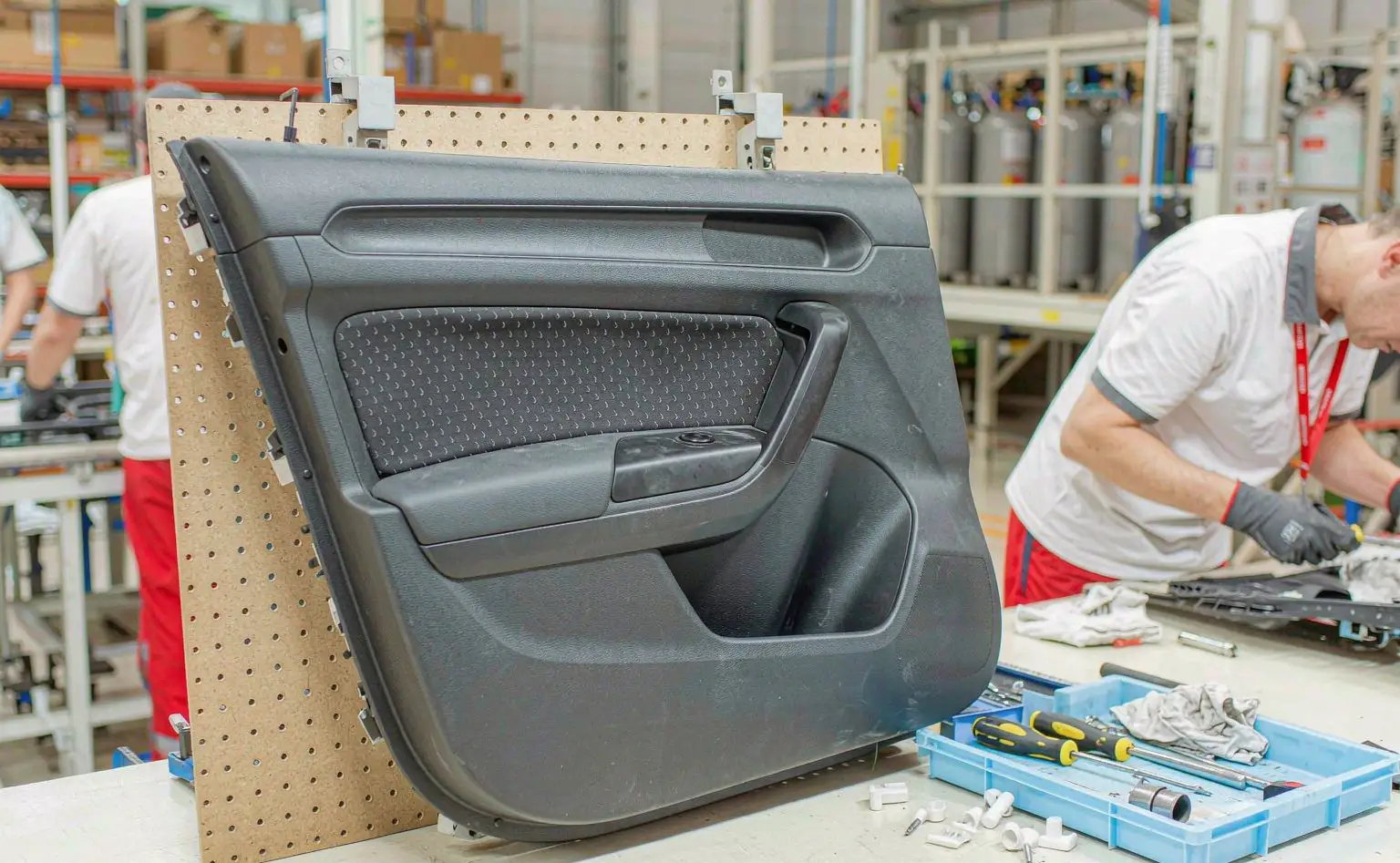
An automotive interior is a group of materials bolted together: door panels, armrests and clips are moulded plastics; seat fabric, headliner cloth and sun visor fabric are textile covers; below them sit the foam layer and the skin. Damage rarely starts in the same place. On moulded parts the mould comes from the material and from water; on fabric covers it comes from regain and from additive residue. The two lines fail on different clocks.
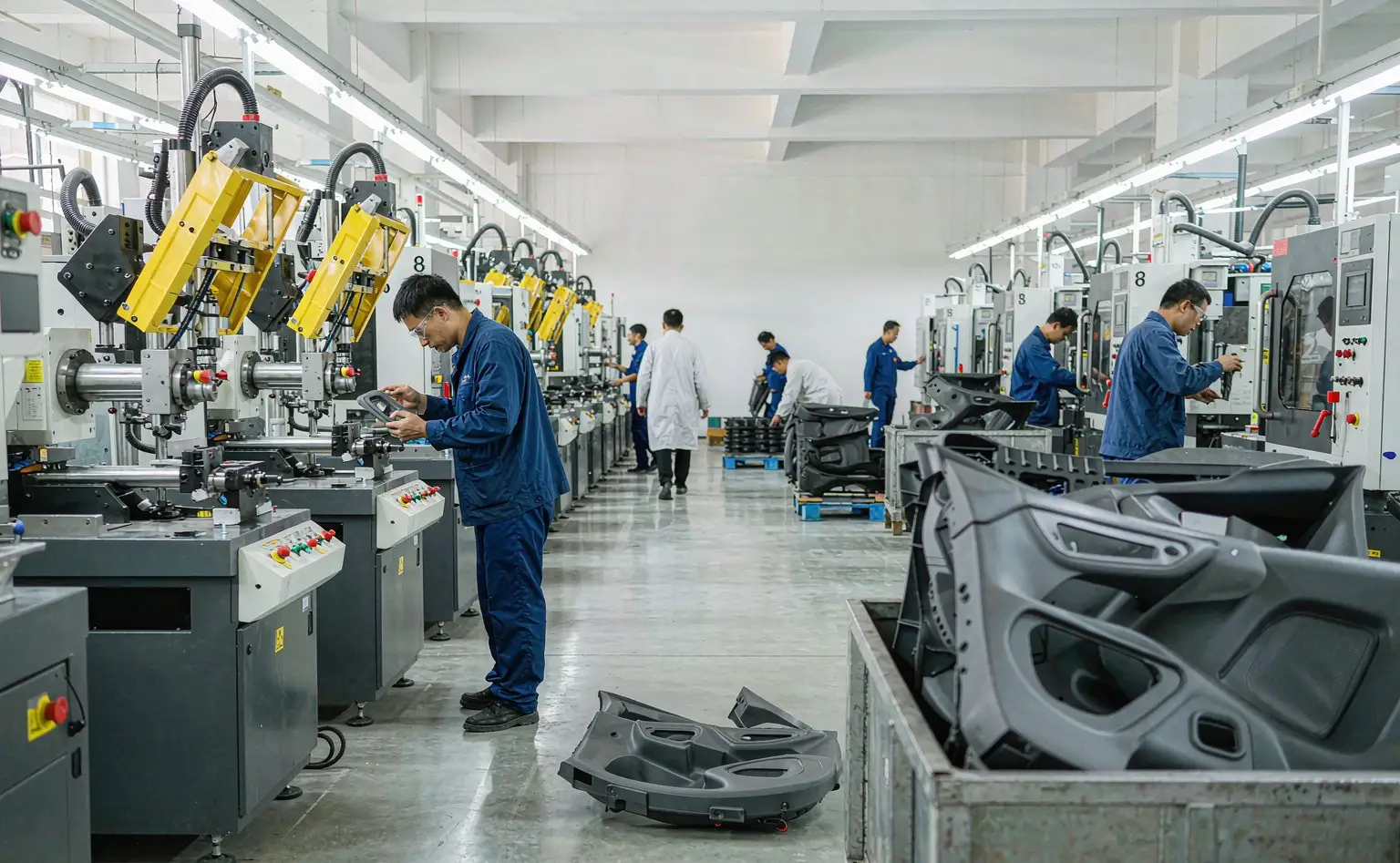
On the plastic line, pellets that were not dried and masterbatch or regrind that carries spores leave the tool with release agent and oil on the surface, and an unventilated bin turns grey spots within days. On the fabric line, greige cloth passes through water again and again in weaving, dyeing and finishing; if the rolled cloth goes into store with a high moisture content, the inner turns are sealed off from air and mildew spots appear in two or three days during the rainy season.
The two materials take their additive in different places. Moulded parts take it at mixing and plasticising, with the masterbatch going into the barrel, so the additive is distributed through the whole part. Fabric covers take it in the padding bath, where the agent goes into the fibres with the finishing liquor. Run both as one surface spray at the end and you reach neither the inner layers of the moulded part nor the inner turns of the fabric roll.
2. Dosing points at a glance
The table lines up the material, the stage, the product, the figures and the points to watch, so it can serve as the first draft of a process card.
| Material | Stage | Product | Figures | Points to watch |
|---|---|---|---|---|
| Moulded parts (door panel, armrest, clips) | Mixing and plasticising | iHeir-ECO plastic antimicrobial agent | 0.3%-1.0% on part weight (PE/PP 0.3%-0.5%, PVC 0.5%-1.0%) | In with the masterbatch or a premix; thermal stability 240 degrees, clear of 320 degrees |
| Fabric covers (seat fabric, headliner cloth) | Padding and finishing | iHeir-BJ textile mildew inhibitor | 2%-3% o.w.f. on fabric weight | Bath at 21-50 degrees, pH 4.5-8.5 (6 ideal); soft water; no anionic auxiliaries in the same bath |
| Foam layer | Foaming | Figured on the foam agent | On total foam weight, separately | Any change in density means recalculating, never share the plastic figure |
| Skin (leather or PVC skin) | Compounding and covering | Figured on the leather agent | On hide weight, separately | Keep it apart from the foam and the plastic stages; the three do not swap |
One conclusion from the four rows: every row has a different base, so no figure can be carried across.
3. Moulded parts: ECO goes in at mixing and plasticising
Door panels, armrests and clips take their additive at mixing and plasticising. Use iHeir-ECO plastic antimicrobial agent at 0.3%-1.0% on part weight, with general PE and PP at 0.3%-0.5% and PVC at 0.5%-1.0%. ECO bonds with the resin and is distributed through the whole part, so ultrasonic washing, assembly friction and wiping after moulding will not rub it off; thermal stability reaches 240 degrees and the process temperature should stay clear of 320 degrees.
Three details. First, the figure is on total part weight, regrind included, so any change in the regrind ratio means recalculating and high-regrind batches belong at the top of the range. Second, interior parts are held to a tight shade tolerance, so the masterbatch has to be premixed and dispersed evenly; tipping powder straight in tends to clump and leave cloud marks on dark parts. Third, verify the antibacterial and anti-mould effect by ISO 22196 for plastics and ISO 846 for plastics exposed to fungi, and hold a sample from the same batch.
4. Fabric covers: BJ goes into the padding bath
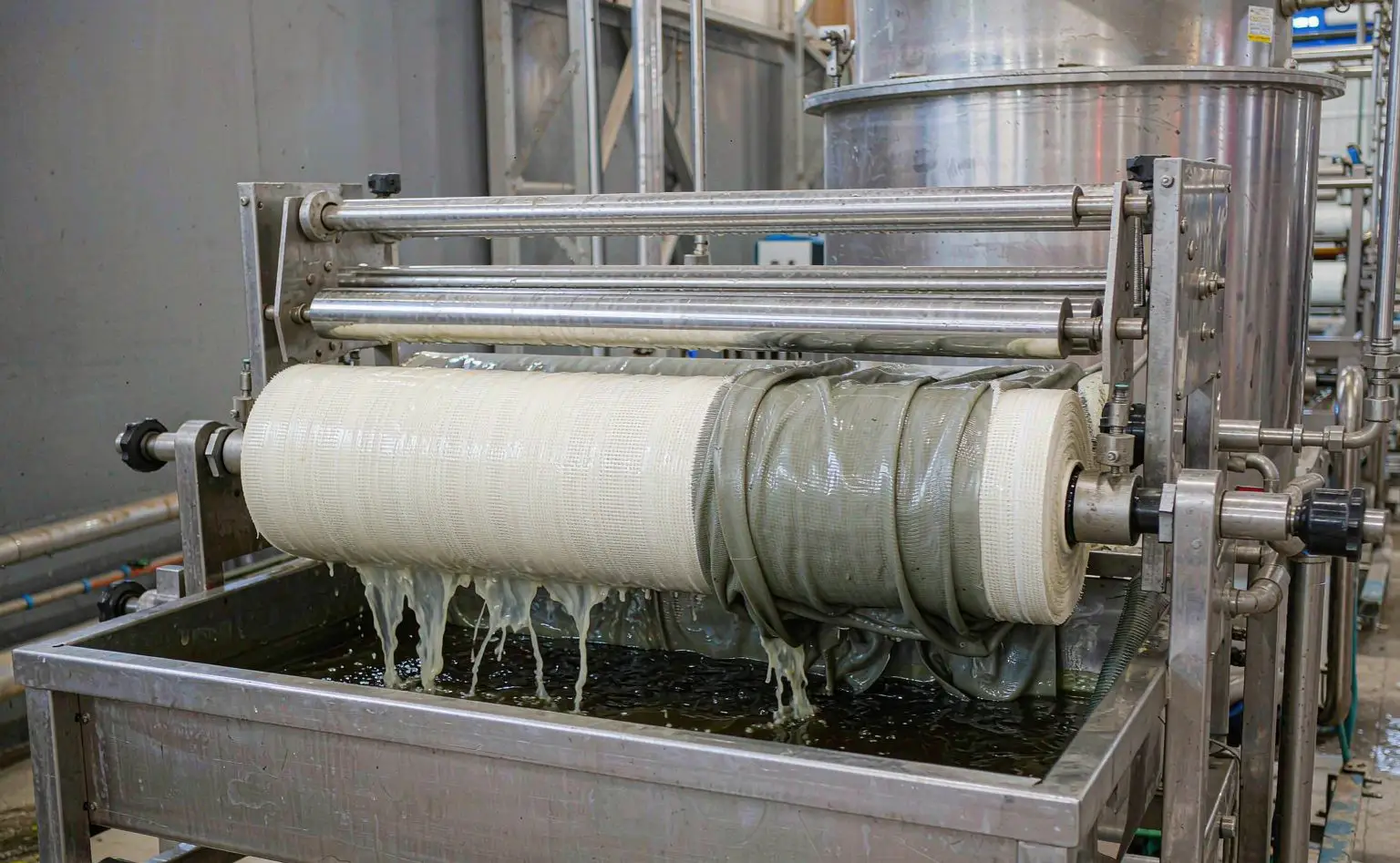
Seat fabric, headliner cloth and sun visor fabric are mostly polyester, nylon or blends. At the padding stage use iHeir-BJ textile mildew inhibitor at 2%-3% o.w.f. on fabric weight, going into the trough with the finishing liquor and staying in the fibre after padding and drying. BJ works on three fronts in textiles, anti-mould, antibacterial and anti-mite, and 2% usually holds for more than a year while 3% holds for two to three years.
Three details. First, BJ is cationic, so it cannot share a bath with anionic auxiliaries; where the recipe includes an anionic softener or wetting agent, switch to a nonionic system or split the work into two passes. Second, hold the bath at 21-50 degrees and pH 4.5-8.5, with 6 as the ideal, and use soft water, because calcium and magnesium in hard water pull the agent out of solution. Third, premix BJ with 9-13 times its weight of water before it goes in, control the pick-up at 70%, and measure the moisture content before the cloth is rolled, since a sealed inner turn is the direct cause.
5. Assemblies, not single parts, are what gets tested
An interior part is a composite of plastic, fabric, foam and skin, and what the vehicle maker asks for at audit is a result on the assembly, not a pass on one material. Moulded parts can follow ISO 22196 and ISO 846, fabric covers can follow AATCC 30 and the GB/T 24346-2009 method on swatches, and the plastic, fabric, foam and skin swatches should be submitted together with the assembly, so that a single pass does not hide mould growing in the sandwich.
Write the accelerated conditions into the report, because temperature, humidity, cycle, organism and grading rule are all needed, and keep two swatches from each batch, one for the laboratory and one for a repeat test. Once an interior is assembled it sits in a sealed cabin where heat and damp stack up, and reports that disagree on the grading rule will produce repeat results that disagree too. For batches that have already gone mouldy, the order of rework is set out in mould treatment for car interiors.
6. Questions that come up: one figure for both, or a pass after packing
Can the moulded part and the fabric cover share one figure? No. The part is figured at 0.3%-1.0% on part weight and the cover at 2%-3% o.w.f. on fabric weight, so both the compound and the base differ, and copying one number either wastes material or falls short.
Can a pass after packing make up for it? No. The moulded part has to go in with the compound at mixing and the cover has to be padded in the bath, so a surface treatment on the finished assembly cannot reach the inner layers of the part or the inner turns of the roll.
Can extra loading cover a long spell in store? No. Damp in storage is an environment problem, not a concentration problem, and extra loading only raises the cost of the additive. Hold the finished-goods store below 60% relative humidity, check the moisture content of the cover before packing, and add desiccants by carton type.
Two points carry the dosing: the moulded part goes in at the mixing and plasticising stage (iHeir-ECO at 0.3%-1.0% on part weight) and the fabric cover goes into the padding bath (iHeir-BJ at 2%-3% o.w.f. on fabric weight), while the foam layer and the skin are figured on their own and never merged into one pass. Samples and TDS sheets are available for a trial on your line.


