




 View Count:13
 Date:2026-11-09
Can acrylic sheet mould be prevented? Yes, but start by deciding where the mould actually is. The sheet does not feed mould; mould grows in the condensation trapped under the protective film and on the adhesive layer, and you only see it when the film comes off. The routine is iHeir-IPL inorganic antimicrobial at 0.8%-1.0% of resin weight in the cast syrup, a dry wipe of the face before filming, and iHeir-D vapour sheets between the panels at 0.1-0.2g of active matter each. This article covers dosing, curing and filming.
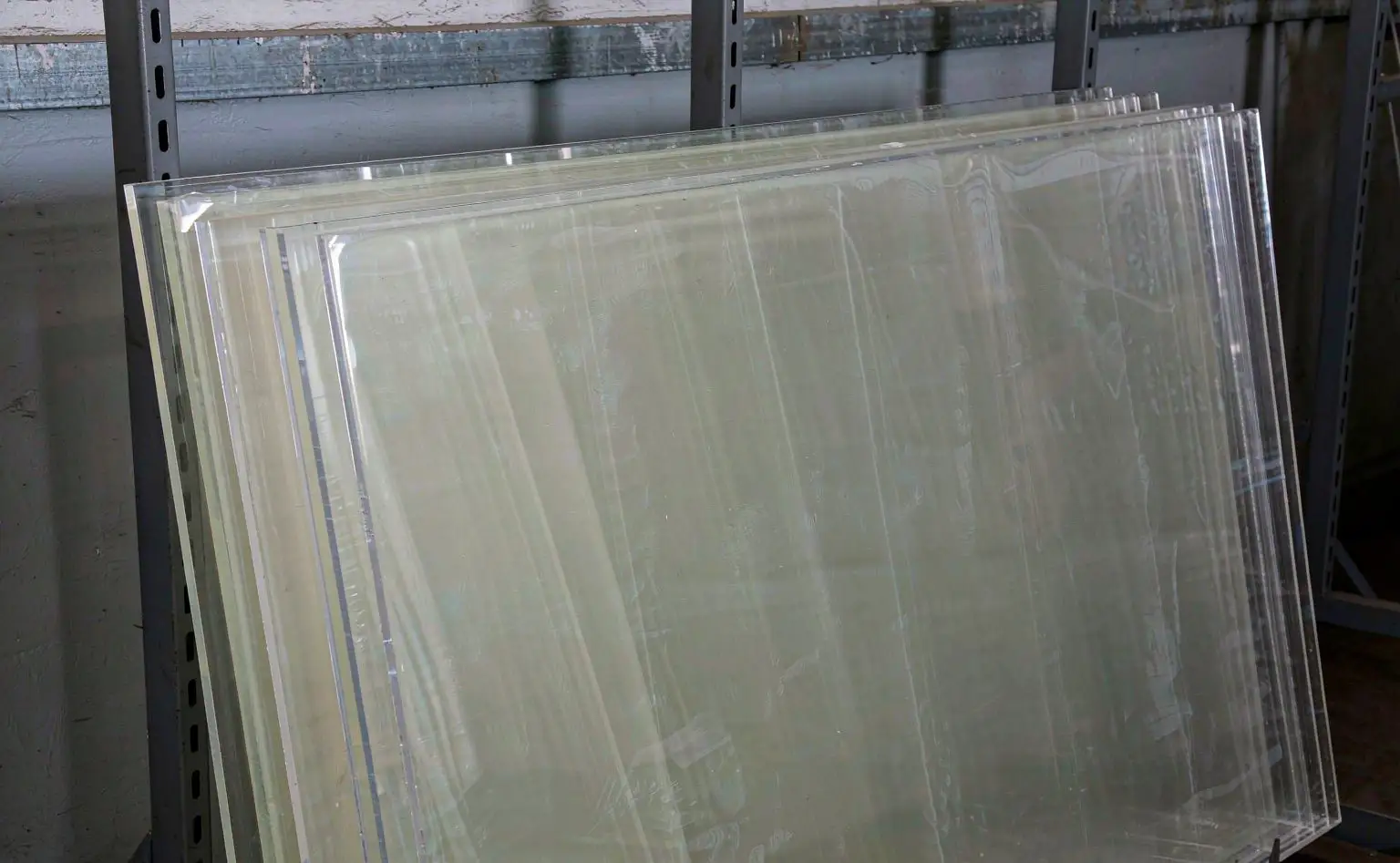
1. Spots grow in the condensation under the film
A cast acrylic sheet runs: syrup preparation, cell filling, polymerisation, demoulding, trimming, filming, inspection and packing. No step feeds mould, but two places collect it: the condensation under the film and the interleaving paper.
Under the film is a small greenhouse. Once the protective film is on, a thin layer of air sits between film and sheet. A workshop with a wide day-night swing condenses water in that layer, and where the film edge is not sealed the damp creeps in from the side. Film adhesive, fingerprints and oil on the face give mould its food, and it spreads along the film edge in patches.
Interleaving paper takes up water. Plain paper between sheets absorbs moisture and then lies against the face, which is a damp bed for mould. In a container the temperature climbs and all that water sits against the acrylic.
Why one wipe beats a higher dose. An antimicrobial handles the colony count on the surface; it cannot handle the water and adhesive under the film. Wiping the face dry and removing oil before filming cuts off the food supply. Skip that and a higher dose only certifies a dirty film.
2. Syrup and film space are counted separately
The table lines up the sheet body, the surface under the film, the interleaving layer and the carton. The syrup is counted as a percentage of resin weight, the paper in sheets of active matter, and the two are not convertible.
| Part | Material | Product and level | Stage | Control point |
|---|---|---|---|---|
| Cast sheet body | MMA syrup (PMMA) | iHeir-IPL 0.8%-1.0% | Syrup preparation, before filling | Of resin weight, dispersed with no grit |
| Surface under the film | Face and film adhesive | No agent, wipe and degrease | Before filming | Face dry, no fingerprints or oil |
| Interleaving layer | Interleaving paper | iHeir-D one per layer, 0.1-0.2g | Stacking | Stack wrapped closed |
| Outer carton | Corrugated, timber case | iHeir-D one sheet inside | Packing | Only works in a closed box |
One boundary. The IPL in the syrup handles the colony count on the sheet surface; the wipe and the vapour paper handle the damp under the film and inside the stack. Dosing alone still lets the film condensation mould, and wiping alone leaves the colony count untouched. Do both and the sheet is clean when the film comes off.
3. Dosing the antimicrobial into the cast syrup
The level is counted on resin weight at 0.8%-1.0%. Clear and light-tinted sheets take the upper figure, dark sheets can take the lower, and an order with an antimicrobial rate on the specification goes to 1.0%.
Why this grade for pale and clear parts. iHeir-IPL is a white powder with whiteness above 90 and a mean particle size of 1-2μm, and surface treatment gives it good resin compatibility, so it does not yellow or haze. Haze is what a clear sheet cannot afford, so this grade targets pale and transparent parts.
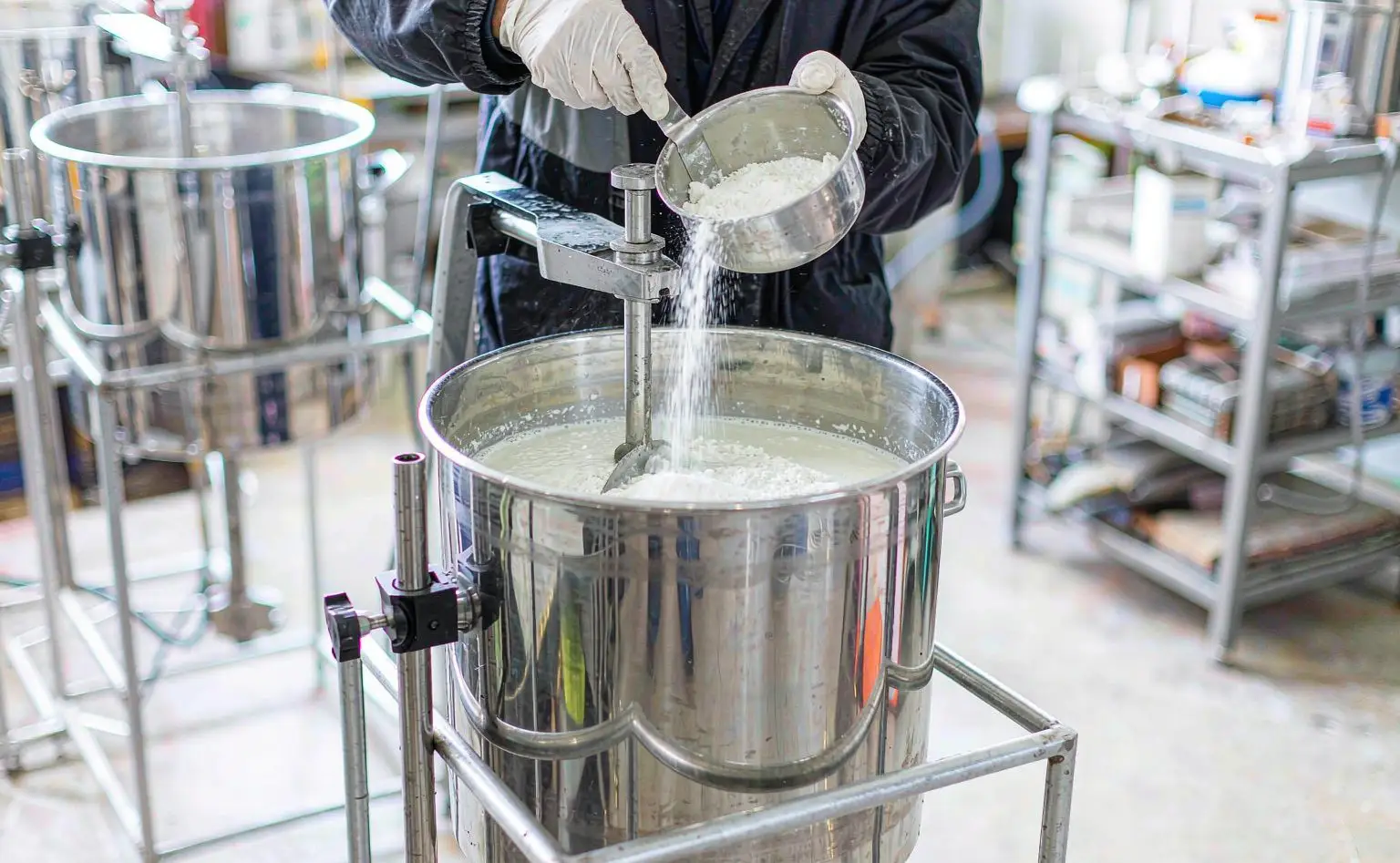
How to feed it. Add it at syrup preparation: pre-mix with a small portion of syrup into a slurry, then charge the main vessel, which is steadier than tipping powder straight in. Stir until the viscosity settles and no grit remains, and on a line with vacuum deaeration, deaerate after the agent is in.
Heat is not the issue. iHeir-IPL is heat-stable to 300℃ and withstands 300-320℃ for short periods without discolouring, well above the water bath and curing oven of a cast line. Moisture is what needs control: damp powder clumps, so finish an opened drum within the shift and store the rest sealed and dry.
Trial first. Cast one plate at 0.8% and one at 1.0%, then measure light transmission, haze and yellowness to the sheet items in GB/T 7134, plus the antimicrobial rate. A clear part must not trade clarity for antimicrobial performance, so both have to pass together.
4. Curing and demoulding: dry before filming
Curing is the critical stage: the filled cell goes into a water bath or oven on a ramp, then is demoulded and trimmed. Trouble here shows as stress and cracking, a separate issue from mould.
Let it cool before filming. Film on a warm plate traps air that condenses as it cools, which is manufacturing your own condensation. Wait until the face is near workshop temperature, and the film sits flat.
Wipe before filming. Wipe the face with a dry, lint-free cloth, paying attention to the edges and trim dust. For oil, use a neutral cleaner and wipe dry; avoid solvents, because acrylic crazes on contact. Making this a station routine is cheaper than picking spots at final inspection.
Seal the film edge. A film edge that is not pressed down lets damp creep in from the side, and that is exactly where the mould starts. Set roller pressure and speed to the film thickness, and push the air out with a squeegee on hand-applied film.
5. Stacking and packing: vapour paper in the interleaving layer
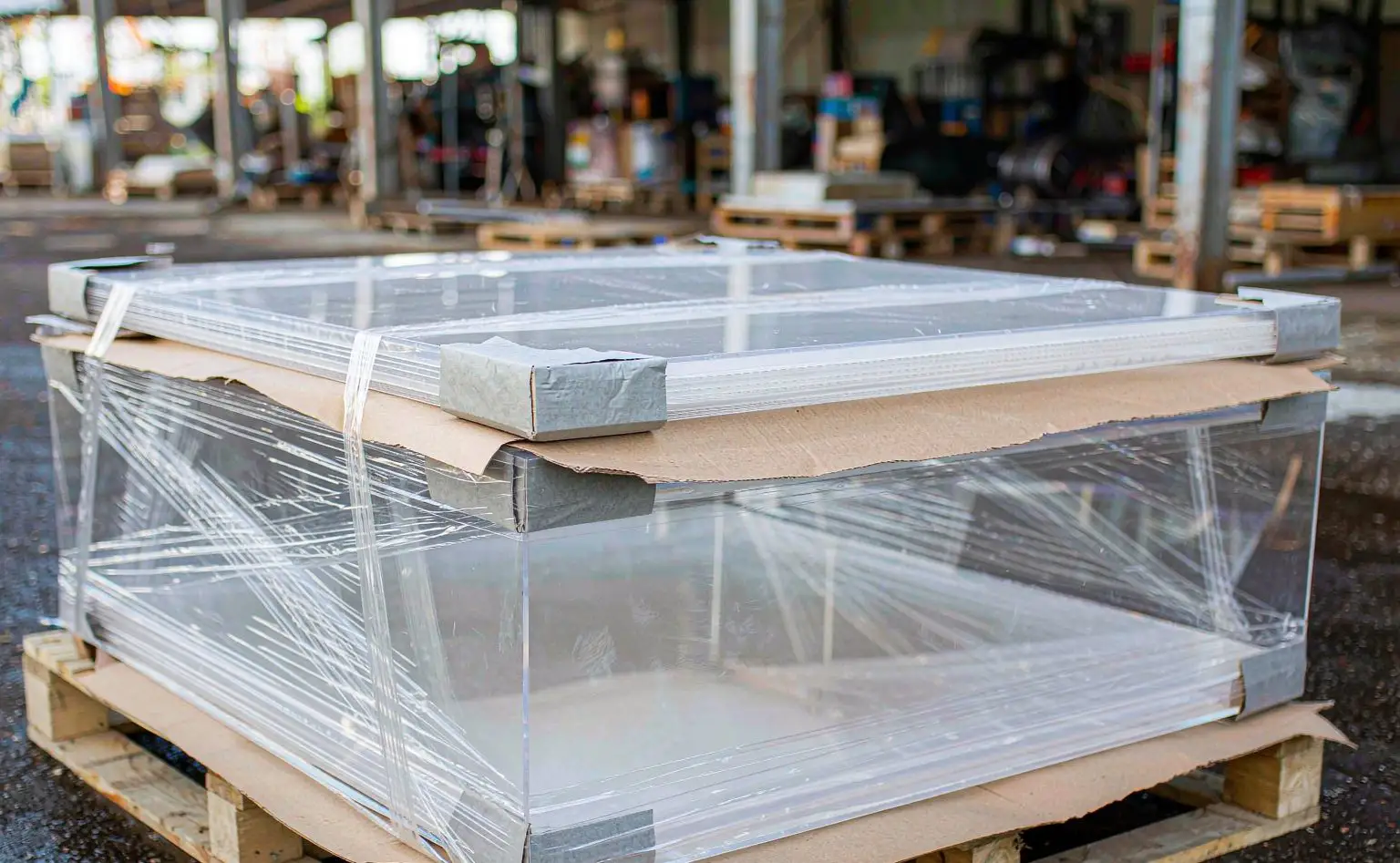
When the sheets are stacked, replace the plain interleaving paper with iHeir-D vapour paper at 0.1-0.2g of active matter per sheet, one per layer, and seal the stack wrap; add one sheet inside the carton.
Why the interleaving layer matters more than the carton. Sheets pressed together are the least ventilated space in the pack and moisture sits there longest. A sheet in that layer releases right where the problem is, which a single sheet in the carton cannot match.
Trial compatibility first. Seal three times the normal dose with a filmed plate, mist a little water, separate with paper and inspect after a few days for haze on the face, lifted film edges or tacky adhesive. iHeir-D carries 70%±5 solids and can corrode poor-quality metal when damp, so a stack with metal corner protectors gets the protectors in the trial too.
Storage and loading. Stand stacks upright on bearers, keep the store below 60% RH, wipe faces dry before loading and hang desiccant sticks in the container. For stock and export handling on other plastic parts see plastic parts in stock, and for the grade logic on clear parts see transparent part antimicrobials.
6. Questions on dosing, clarity and film
Q: Does acrylic itself grow mould?
The sheet body does not feed mould. Spots grow in the condensation under the film, on the film adhesive, on fingerprints and oil, and in trim dust. That is why the job needs both a syrup dose and a wipe: dosing alone still leaves mould under the film.
Q: 0.8% or 1.0%?
Clear and light sheets, or orders with an antimicrobial rate to meet, take 1.0%; dark sheets and domestic lines take 0.8%, both on resin weight, with the exact figure fixed by trial.
Q: The film is on and there are spots at the edge. Now what?
Strip the film, wipe the spots off, clean with a neutral cleaner and dry, then re-film. If the spot has bitten into the surface and will not polish out, downgrade the sheet. Once one sheet in a stack shows spots, break the whole stack down and inspect.
Four points to take away: dose iHeir-IPL at 0.8%-1.0% of resin weight, pre-mixed into a slurry before the main vessel, stirred clear and deaerated before filling; let the plate cool to workshop temperature before filming and wipe oil and trim dust off the face, pressing the film edge down; replace interleaving paper with iHeir-D at 0.1-0.2g per sheet, one per layer plus one in the carton, after a three-times-dose compatibility trial; grade mould resistance to GB/T 24346-2009, send antimicrobial rate to ISO 22196 and check transmission and haze to GB/T 7134. A kilogram of antimicrobial and a pack of sheets go out for a trial, with MOQ on the iHeir-IPL product page.


