




 View Count:5
 Date:2026-11-12
How should switch plate mould be handled? The visible face is a glossy PC part, yet the trouble usually starts on the brass terminals, the screws and the layer of moisture inside the bag: two weeks in the finished-goods store and the brass spots green, the plates haze over, and the lot goes back for rework. The routine is iHeir-IPL inorganic plastic antimicrobial at 0.8%-1.0% of compound weight, plus brass and screws dried and packed in a moisture-barrier bag with one iHeir-D vapour sheet at 0.1-0.2 g of active. This article covers compounding, moulding and packing parameters.
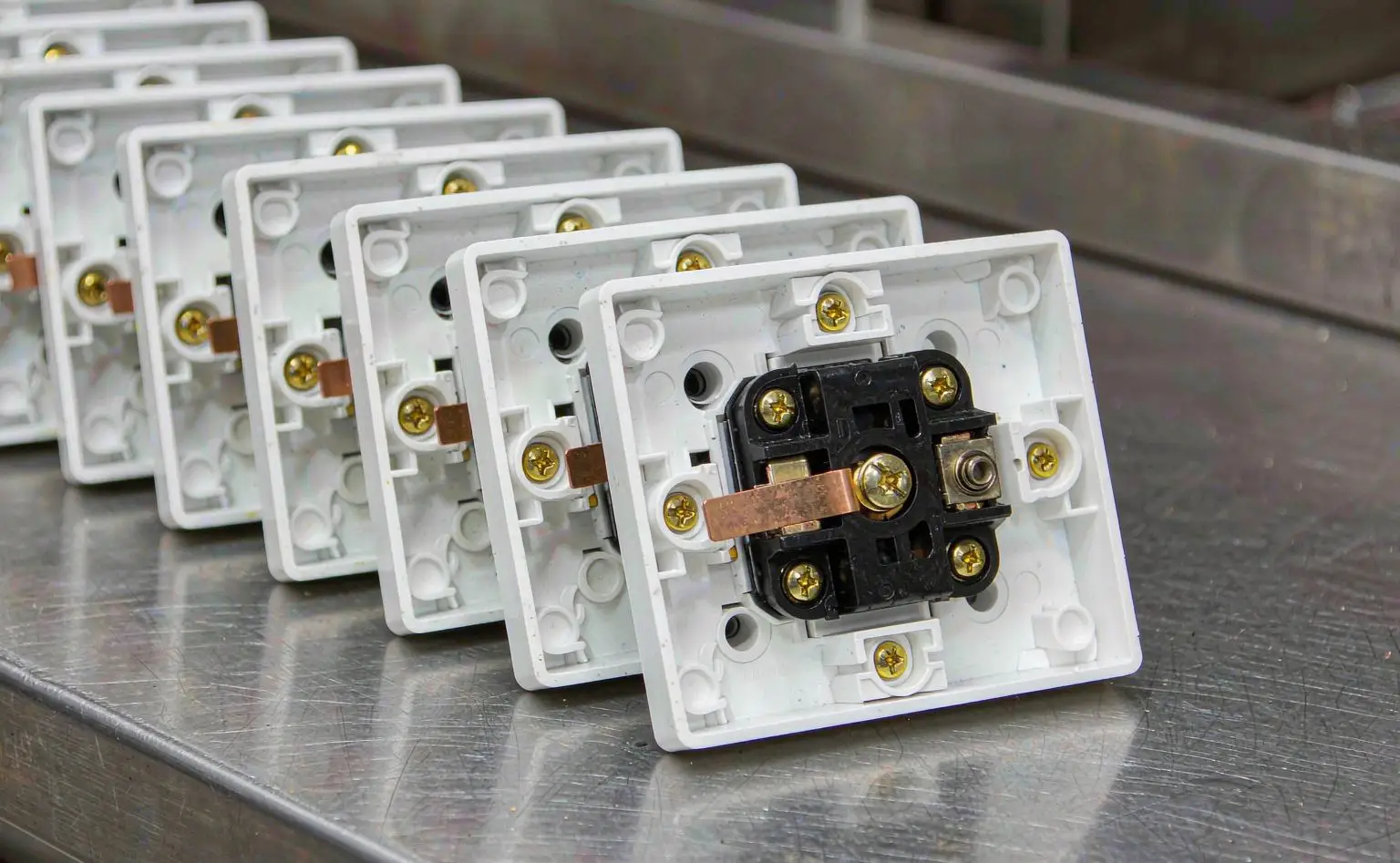
1. The mould is on the brass, the screws and the moisture in the bag
Take a switch plate apart: the plate (PC or PC/ABS), the carrier frame, the brass terminal, the clamping screw, the spring leaf, the poly bag. PC is dense and glossy and rarely attacked directly; what fails is the brass surface, the thread roots and the air inside the bag.
Brass takes up moisture and spots green. Copper terminals held in damp air oxidise green, and that green layer is not mould itself, but the oxide grabs water and hand grease, and mould then grows along it. Export lots travel by sea, where day and night temperature swings make the inside of the bag condense over and over, and that film of water is enough to feed the growth.
The bag is a greenhouse. Once a plate is bagged the film barely breathes. Bag a part while it is still warm from the tool and the moisture is sealed in, and a white haze shows at the plate edge within a week. Wiping such a lot clean looks fine on the bench, and the growth returns from the back face two months after installation.
2. Panel compound and brass packing are counted on two different bases
The table lines up the PC plate, the carrier frame, the brass parts and the packing. Compound is counted as a percentage of material weight, vapour paper in sheets, and one does not convert into the other.
| Part | Material | Product and level | Stage | Control point |
|---|---|---|---|---|
| Plate | PC, PC/ABS | iHeir-IPL 0.8%-1.0% | Compounding or pre-mix before moulding | Of compound weight, twin-screw dispersion |
| Carrier frame | ABS, PC/ABS | iHeir-IPL same lot | Mixing | Calculated on its own weight |
| Brass and screws | Brass, nickel-plated brass | Dry, then bag | After plating, before assembly | Dry through first |
| Bag and colour box | PE bag, carton | iHeir-D 1 sheet per bag, 0.1-0.2 g | Bagging, boxing | Sheet between layers, off the terminals |
One boundary. iHeir-IPL deals with the plate itself and keeps working after the part leaves the plant; the vapour sheet deals with the air inside the bag and is finished when the bag is opened. Skip the compound and paper will not hold back mycelium already running on the brass.
3. Dosing the panel compound with iHeir-IPL at 0.8%-1.0%
The level is 0.8%-1.0% of compound weight. White, off-white and brushed-silver plates take the high end, dark grey and black take the low end, and orders that will be tested for antimicrobial performance are dosed at the top of the range with a sample lot kept aside.
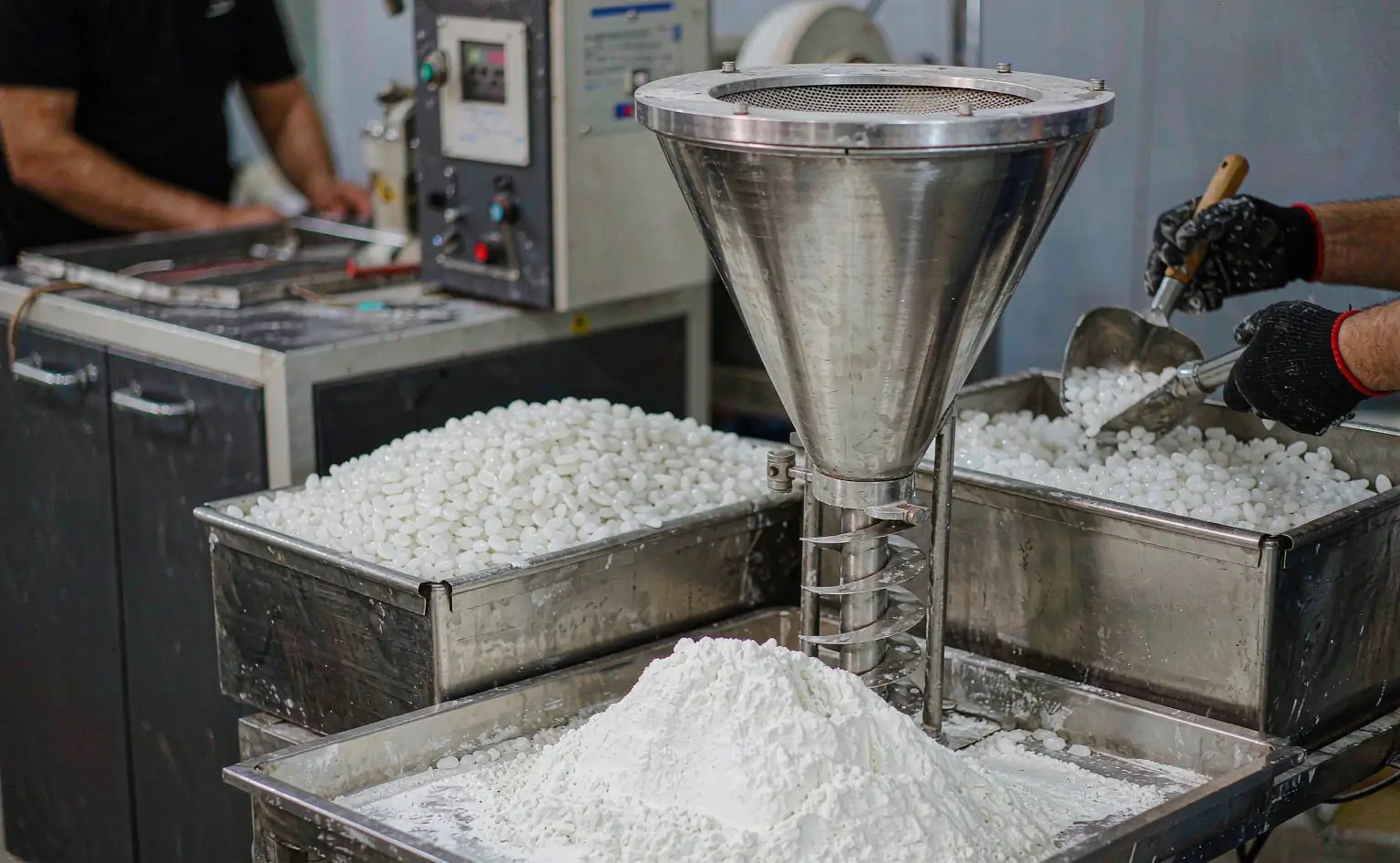
Where it goes. Plants with a compounding line dose at the pelletising stage and mould antimicrobial pellets; smaller plants pre-blend with a mixer for 10-15 minutes before the machine. Either way the powder has to be dispersed: iHeir-IPL is a white powder of 1-2 µm mean particle size and 10-15 m²/g specific surface, so a lump that survives the mix leaves a white speck on a glossy face.
Twin screw beats single screw. iHeir-IPL is stable to 300-320°C, so the process window is not the limit; shear and residence time are. The dispersion zone of a twin screw opens the agglomerates, while single-screw powder dosing leaves material in the barrel and carries specks into the next colour.
Run a sample first and look at three things. One, colour and haze: white plates are the most sensitive, so press a colour plaque. Two, mechanicals: tensile to GB/T 1040 and flexural to GB/T 9341, watching the impact figure. Three, surface: check the gloss face for haze and silver streaking. If any fails, step the level down and make up the difference on the brass and packing side.
4. Humidity at moulding and assembly breaks more lots than the additive
This section carries no product, and it is the one plants skip most often.
Dry the PC. PC picks up moisture readily and must be dried to spec before moulding; mould it wet and micro-voids release that water after assembly, and growth starts on the inner face. Keep the dryer and hopper lid closed: in the humid season an open hopper overnight undoes the drying.
Mould temperature and cooling. A cold tool leaves stress and a hazy surface, and pad printing then picks up pinholes where water sits. Run the cooling circuits and let parts cool before stacking.
Assembly area. Hold assembly and packing at 45%-60%RH, run a dehumidifier in the humid season, and never leave plates flat on a bench overnight. Gloves carrying hand sweat should not touch the brass.
5. Dry the brass, bag it, and put one sheet in the bag
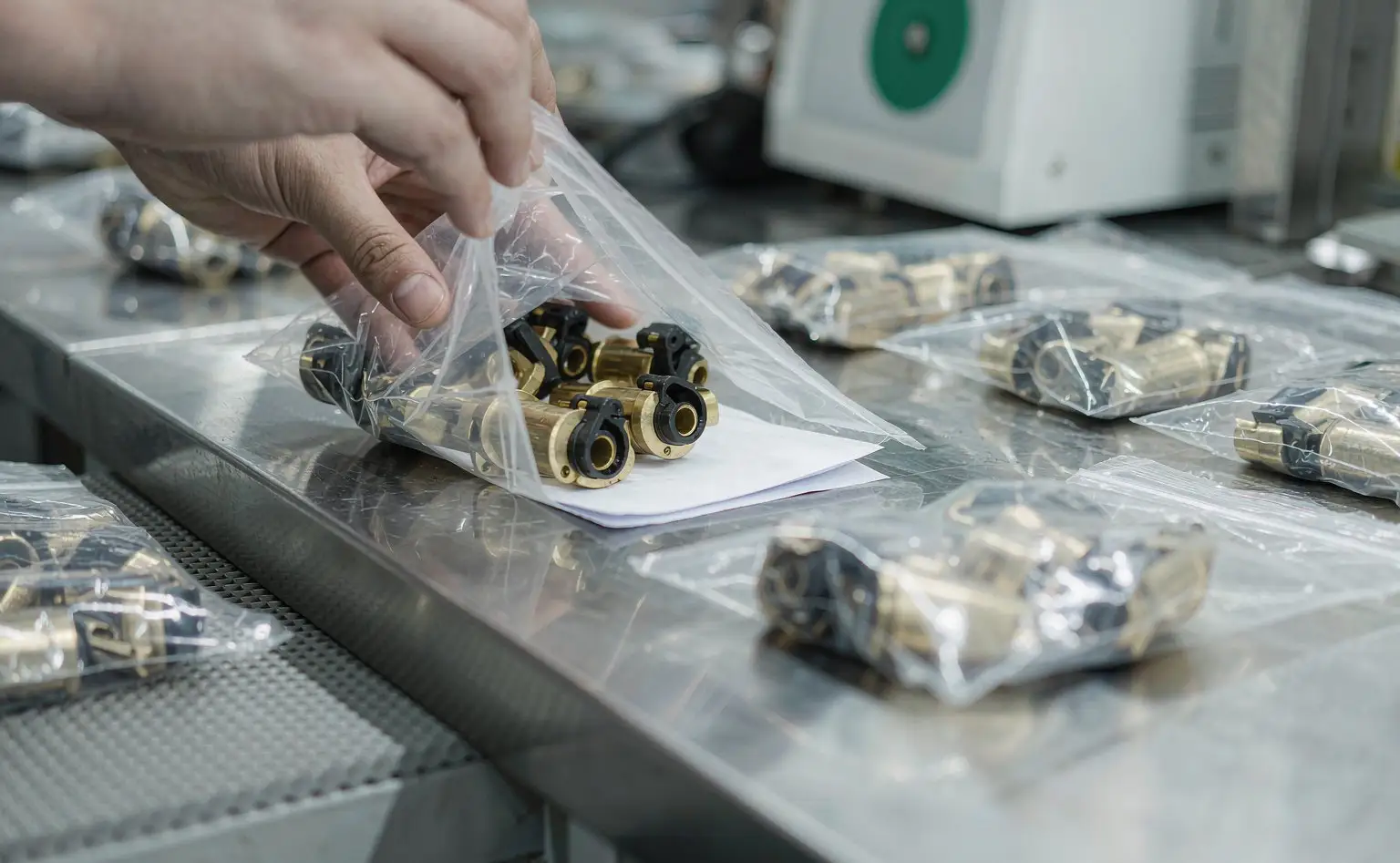
Brass and screws take iHeir-D vapour paper at 0.1-0.2 g of active per sheet, laid against the bag wall or between the layers of the colour box, never wrapped directly onto the contact face of a terminal.
Dry through first. A part that comes off the plating dryer cool to the touch is not necessarily dry: thread roots and blind holes hold water. Before bagging, press a few parts against filter paper and re-dry any that leave a mark. Bag them wet and the water film blocks the vapour, so the sheet does nothing.
Run a compatibility test. Seal a part with three times the normal amount of paper, mist a little water, keep paper between sheet and part and leave it a few days. Watch the brass for discolouration, the nickel for dulling and the plate for stains. iHeir-D has 70%±5 solids and can corrode poor-quality metal under damp conditions, so thinly plated terminals must be tested first.
Bag and box. Expel as much air as possible before sealing, keep the sheet on the bag wall and off the terminals, then seal the carton and stretch-wrap the pallet. Hold the finished-goods store below 60%RH with pallets 10 cm off the floor, and audit brass colour before the humid season.
Export. For full-container loads, line the container, hang desiccant sticks and check cartons for soft corners at loading. Comparable electrical work is covered in switchgear cabinet supports and in-cabinet desiccant, and cable jacketing in wire and cable jacket compound.
6. Questions from the line
Q: With antimicrobial in the plate, do we still need to treat the brass?
A: Yes. The additive sits in the PC and cannot reach the brass surface; the green on brass is oxidation plus moisture, which drying and a vapour sheet address. Both stages are needed.
Q: Can clear plates take iHeir-IPL?
A: Yes, but check haze first. It is a white powder and at 1% a clear part may show haze, so press a 3 mm plaque and compare; if haze is visible, run the 0.8% low end.
Q: 0.8% and 1.0% are close, can the line pick either?
A: No. That is a 25% difference in active content, which decides pass or fail on a tested order. Fix it by plate colour and customer requirement, write it on the batch card, and do not leave it to the operator.
Four closing points: dose the plate compound at 0.8%-1.0% of weight with iHeir-IPL at the pelletising stage or in a 10-15 minute pre-mix, disperse on a twin screw and re-test tensile to GB/T 1040 at the 1% level; calculate the carrier frame on its own weight; dry PC before moulding and hold assembly at 45%-60%RH; dry the brass through after plating, bag it with one iHeir-D vapour sheet at 0.1-0.2 g of active, run the three-times compatibility test and line the container for export. Performance can be verified to ISO 22196 or GB/T 31402, a one-kilogram sample can be sent ahead, and lead times are on the iHeir-IPL product page.


