




 View Count:6
 Date:2026-10-31
Where does wig mould come from, and why does it survive a whole sea leg? Synthetic hair and the knitted cap net both take up moisture, the cartons sit in a container for three weeks or more, and what comes out smells close, with strands matting and dark spots across the net. Both parts go through one bath of iHeir-BJ at 2%-3% o.w.f., run at 21℃-50℃ and pH 4.5-8.5, and both have to be dried right through afterwards. This article covers the bath, the dose conversion, the drying rule and container loading.
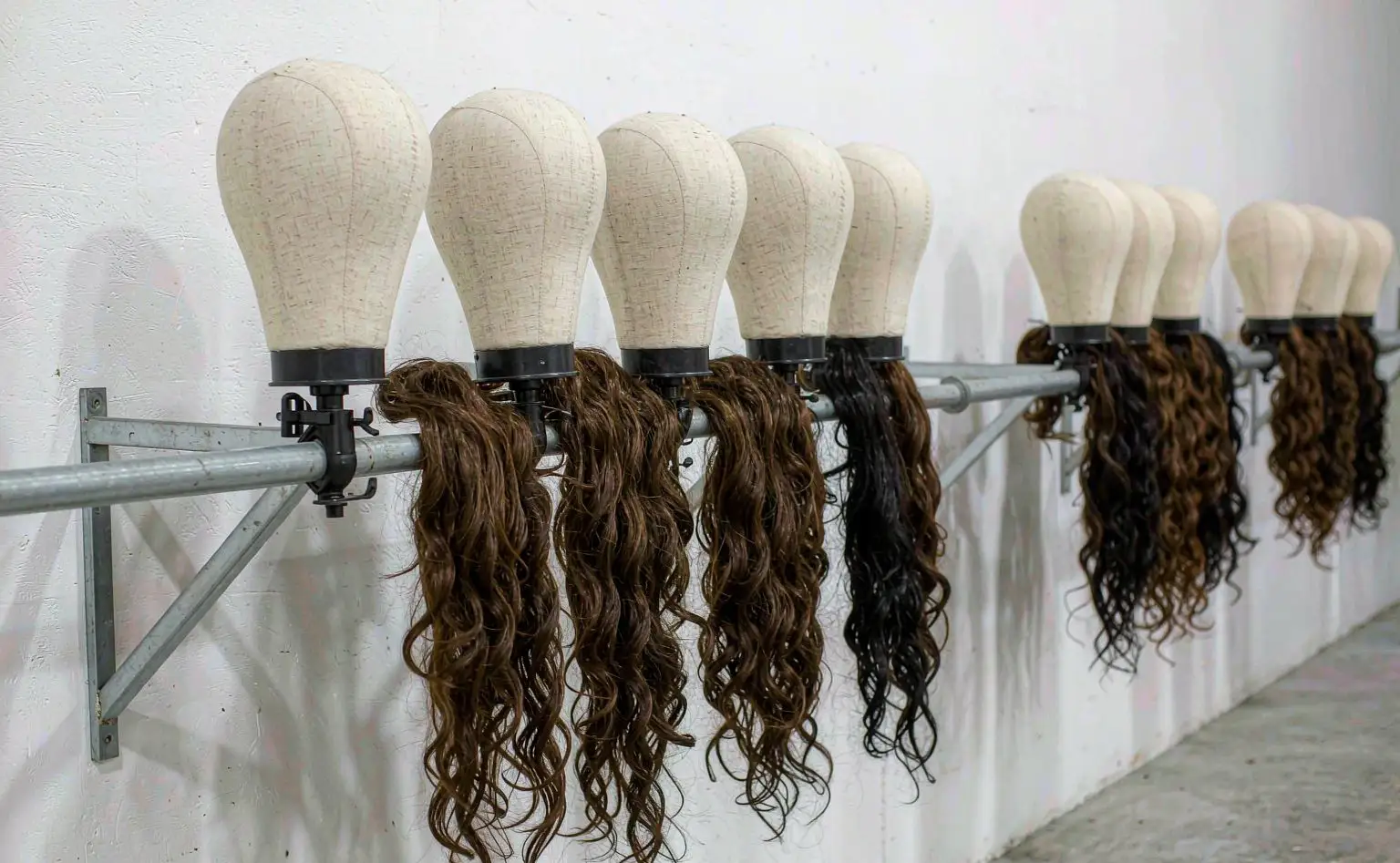
1. Mould starts on the hair and on the cap net
A wig is three parts: synthetic hair, a knitted cap net with elastic band and adjuster, and the sewing thread. Neither fibre grows mould on its own; what grows is the sizing, the oil finish, sweat residue and shop dust on the fibre, plus the water held between fibres.
The hair fails on moisture uptake and residual oil. Synthetic hair arrives with an oil finish and gets more during carding and weaving. That film holds water and stops it leaving, and the tighter and denser the bundle, the harder the core is to dry. In a sealed container the ends and the inner layer go first.
The cap net fails on structure. The knit is thin but layered, and where the net meets the hair there are two or three plies with thread locking water inside. Steam setting puts water back in. Strip a reworked piece and the spots are usually on the inside of the net, right at the hairline joint.
2. Hair and cap net share one bath
The table lines up hair, cap net, thread and packing. Hair and net run in the same tank, but their wet pick-up differs, so the bath is calculated separately for each.
| Part | Material | Product and level | Stage | Control point |
|---|---|---|---|---|
| Synthetic hair | Polyester/modified fibre | iHeir-BJ 2%-3% o.w.f. | Before weaving or as finished goods | Wet out the bundle core, 70% pick-up |
| Knitted cap net | Knitted mesh | Same bath, dosed on net weight | Same tank | Double ply at the joint, soak through |
| Thread and elastic | Polyester thread, rubber elastic | Same bath, run through together | Same tank | No long hot soak on elastic |
| Drying and packing | Finished piece, PE bag | Dry through, bag singly | After setting, before cartoning | Moisture sampled, carton kept dry |
One boundary. One bath does not mean one condition. Hair needs a full soak to reach the fibre under the oil film, while the net needs a time limit because elastic loses recovery in a long hot soak. Run the same bath but load in stages: hair first, net after, and pull them in material order instead of dropping everything in at once.
3. The bath: dose, temperature and water
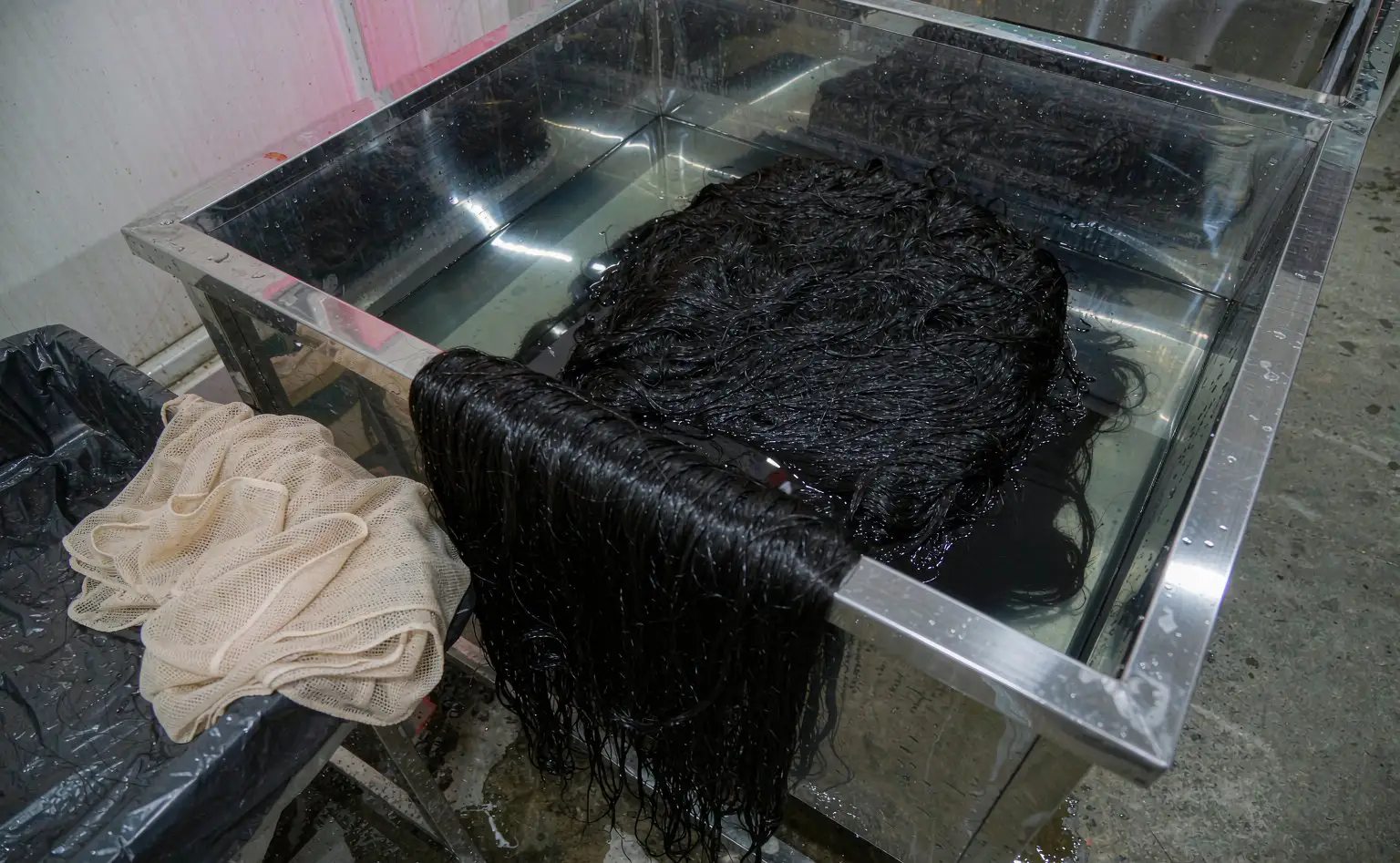
Dose at 2%-3% o.w.f. on the weight of the goods. The bath runs at 21℃-50℃ and pH 4.5-8.5, ideally near 6, with a 70% wet pick-up; on that basis 3kg of the agent treats 100kg of hair and net. Pre-mix the agent with 9-13 times its volume of water and add it in portions, which gives a more even take-up and avoids a local high concentration.
Three conditions. Soft water, because calcium and magnesium compete with a cationic system and blunt the effect. Compatibility, because BJ is cationic and cannot share a bath with anionic auxiliaries, so softeners and antistats must be cationic or non-ionic or the bath breaks and the hair goes greasy. Sequence, because oil and dust have to be washed off before the treatment bath; loading dirty goods seals the soil into the fibre.
One common misjudgement. Assuming more is safer and pushing the dose to 4%-5% makes the hair stiff and impossible to comb, which is graded as a cosmetic reject. To extend protection, improve the evenness of pick-up and dry properly instead of raising the concentration.
4. Drying is the step that decides the outcome
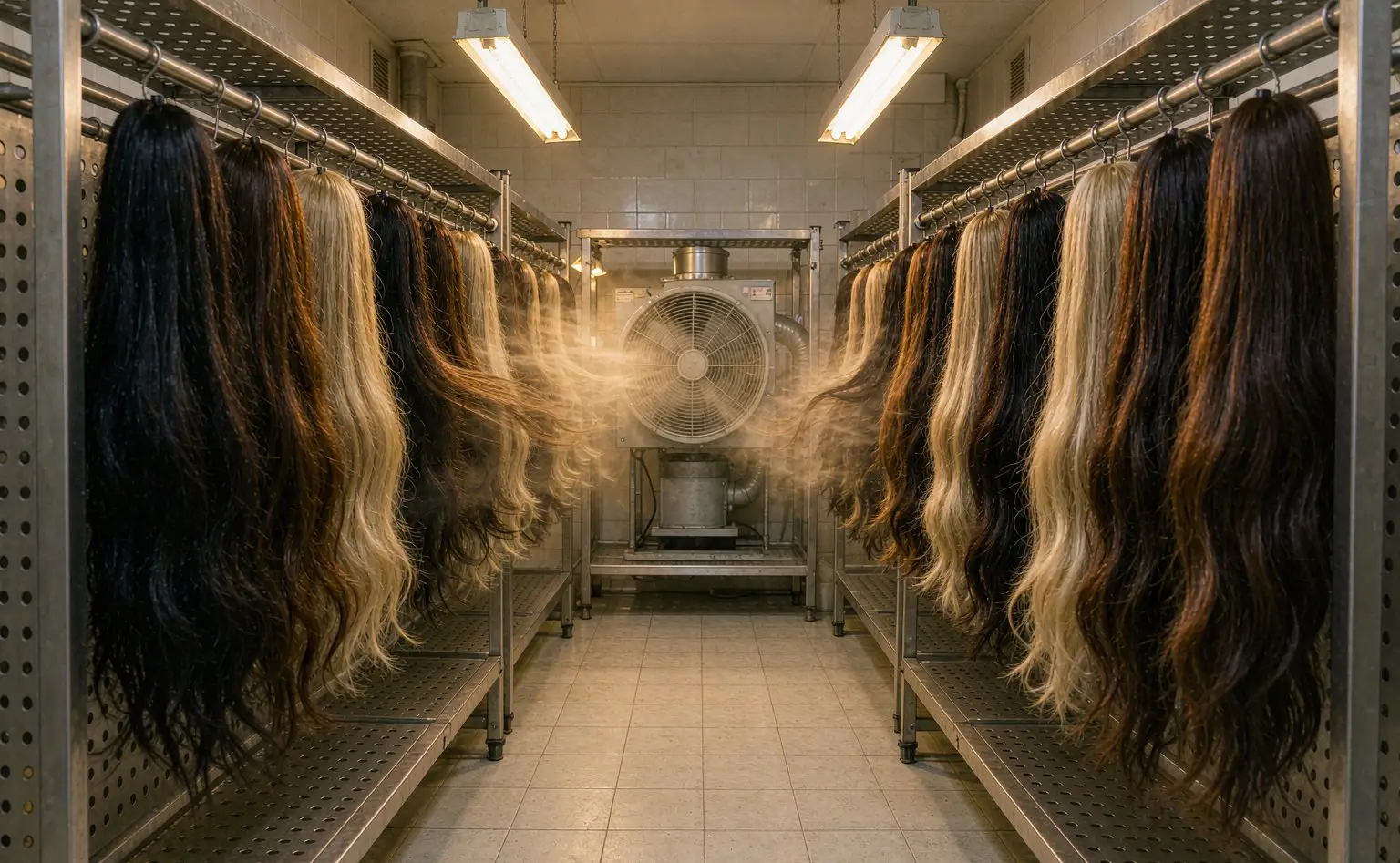
Drying cannot be rushed. Synthetic fibre has a softening point, and too much heat costs the curl and the set; too little airflow and the bundle core and the net joint stay damp. Split it: low temperature and high airflow to strip surface water, a circulating-air room to pull water out of the inner layers, then the set.
Three control points. Moisture out of the drying room, sampled by lot at the bundle core and on the inside of the net. Stacking, because pieces should be spread and cooled to room temperature before cartoning, or residual heat pushes moisture into the bag. Steam setting, because the steam puts water back in and needs a second drying pass, which is the step most often skipped.
Blends of human and synthetic hair need one more step: human hair takes up moisture faster and moulds sooner once it picks up damp, so time the mixed lot on the human hair, not on how the synthetic part feels.
5. Container loading and storage
In the store: bag each piece in PE, carton it, keep cartons 10cm off the floor and 10cm off the wall, below 60% RH, and turn the bottom layer before the wet season. First in first out.
At sea, the day-night temperature swing condenses water on the container walls and on the surface of the stack, which is the most common source of damp damage in wig exports. Leave an air path, keep cartons off the wall and dose desiccant by container size; the layout is in preventing container rain, and desiccant quantity is covered in how much desiccant a container needs.
Release at three levels: hair to GB/T 24346-2009, sampling one bundle from the ends and one from the core; cap net to AATCC 30 over 28 days; whole cartons for 30 days at 30℃/85% RH, opening to smell the goods and inspect the inside of the net. Odour control is a separate line, covered in our garment mould treatment piece.
6. Questions on curl, hand feel and spotted lots
Q: Does the shared bath pull the curl out?
The curl comes from setting, and a normal bath at normal temperature does not affect it. What does damage it is a long hot soak: keep the bath under 50℃, squeeze after the bath and dry straight away rather than stacking wet pieces for the next lot.
Q: Will the treated hair feel coarser?
At 2%-3% with an even pick-up the change is small. Coarseness usually means a broken bath or too high a dose, so check whether the softener is anionic first, then check the bath concentration.
Q: Can a lot that already shows mould be saved?
Surface bloom on the hair can be washed, then the treatment re-run and feel and curl re-checked; where mould has gone into the net joint or the hairline, the net is replaced. Re-dry the whole lot afterwards, because washing without drying brings it back once cartoned.
Four points to take away: run hair and net through iHeir-BJ at 2%-3% o.w.f. with the bath at 21℃-50℃ and pH 4.5-8.5, a 70% pick-up, pre-mixed with 9-13 times its water; load in stages so the hair soaks through while the net and elastic stay on a time limit; squeeze, then dry in stages and dry again after steam setting, sampling moisture by lot; store below 60% RH and dose desiccant with an air path in the container. A 1kg sample can go out for a trial first; MOQ and lead time are on the iHeir-BJ product page.


