




 View Count:24
 Date:2026-11-07
Can aluminium profile mould be prevented? Yes, but start by naming the problem: the white bloom on a profile is usually not the anodising tank, it is the interleaving paper taking water and acid onto the film. The routine is neutral, chlorine-free paper once sealing and drying are finished, one iHeir-D vapour sheet over the bundle at 0.1-0.2g of active matter per sheet, and T-1000 drying rods in the container. This article covers sheet timing, bundle practice and container humidity.
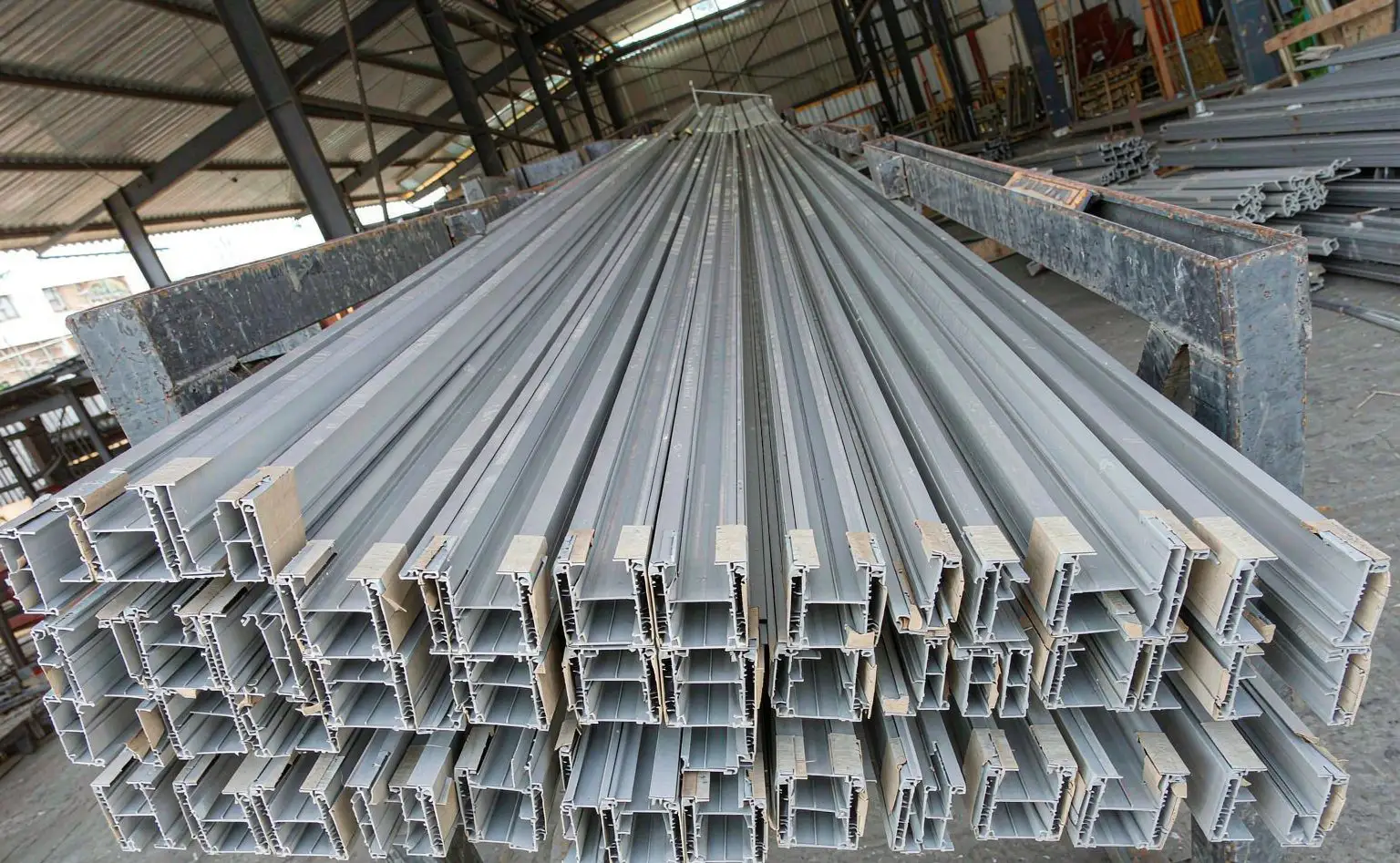
1. The white bloom is rarely the anodising tank
A profile runs extrusion, ageing, etch, anodising, sealing, interleaving, strapping and packing. Aluminium does not feed mould and neither does the oxide film; what fails is the interleaving paper, the carton, the pallet and the paper corner boards, plus sealer left in the pores.
Where the bloom comes from. Paper takes water, sits against the film, and the water stops between paper and metal; the pores take it up and react with the acid in the paper, leaving a soft-edged white bloom or a water mark. A tank problem looks different: uneven film, a bloom across the whole rack rather than only on the papered face.
Paper is a water carrier. Corrugated board and kraft reach an equilibrium moisture content above 12% in a wet season, and a corner board is thicker and dries slower. Once the bundle is strapped, that water has nowhere to go but the film, and the profiles in the middle of the bundle fail first.
Condensation finishes the job. A shop at 33℃ by day and a store at 24℃ by night leaves an invisible film of water inside the bundle, and that water plus paper acid is the bloom. Mould then grows in the same bundle and makes the appearance worse.
2. Film, paper and container take separate counts
The table lines up the film face, the interleaving, the bundle top and the container. Vapour paper is counted in sheets of active matter, rods in pieces, and the two are not convertible.
| Part | Material | Product and level | Stage | Control point |
|---|---|---|---|---|
| Oxide film face | Anodised aluminium | No anti-mould treatment | Sealing, drying | Dry film before any paper |
| Between profiles | Chlorine-free neutral paper | One sheet per profile | Interleaving, strapping | Neutral pH, no chlorine |
| Bundle top and sides | Vapour-phase paper | iHeir-D 0.1-0.2g per sheet | Packing, strapping | Only works in a tight bundle |
| Carton and pallet | Corrugated, plywood | iHeir-D one sheet on the wall | Packing | Board moisture within spec |
| Container | 20ft / 40ft box | T-1000 8-10 / 10-12 rods | Loading | High up, clear of the doors |
One boundary. Neutral paper separates, vapour paper handles mould inside the bundle, and the rod handles water in the container. Change only the paper and the bundle still moulds; add only the sheet and a saturated paper still prints a bloom on the film.
3. Dry the film, then put the neutral paper in
Do not skip the dryer after sealing. Paper laid on a film that still holds water in the pores seals that water between paper and metal, so the bundle should feel dry and the paper should not stick to the surface. In a cold shop the drying time has to be extended, not shortened.
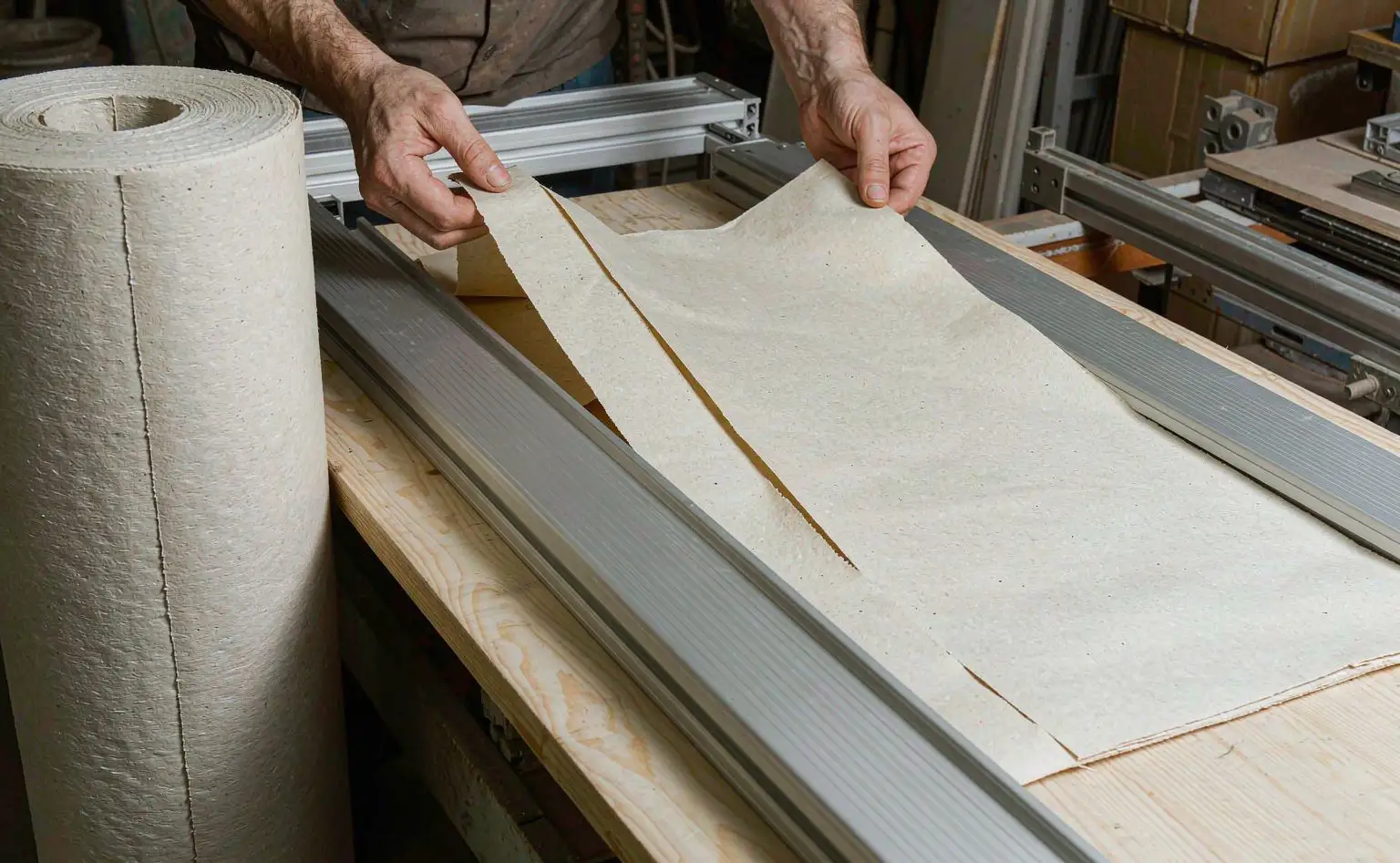
Three rules for the paper. Chlorine-free, neutral, and no recycled pulp. Acid paper attacks the oxide film; chlorine-bearing paper releases chloride when damp and pitting is harder to save than a bloom; recycled pulp brings spores and adhesive residue into the bundle.
How to place it. One sheet per profile, never one sheet shared by several, and the paper should be wider than the section so the corners are covered. Profiles must not touch each other, and the paper corner boards need a layer against the metal too.
Where the vapour sheet goes. Before the bundle is tensioned, lay one iHeir-D vapour sheet on top and one on each side, at 0.1-0.2g of active matter per sheet. It works by holding a concentration in a closed volume, so a loose bundle or an open wrap cuts the effect.
Trial compatibility first. Seal three times the normal dose with a profile sample, mist a little water, separate with paper, and inspect after a few days for loss of gloss, a bloom or a colour shift. iHeir-D carries 70%±5 solids and can corrode poor-quality metal when damp, so thin film and poor sealing get the trial first.
4. A sheet on the bundle top, rods in the container
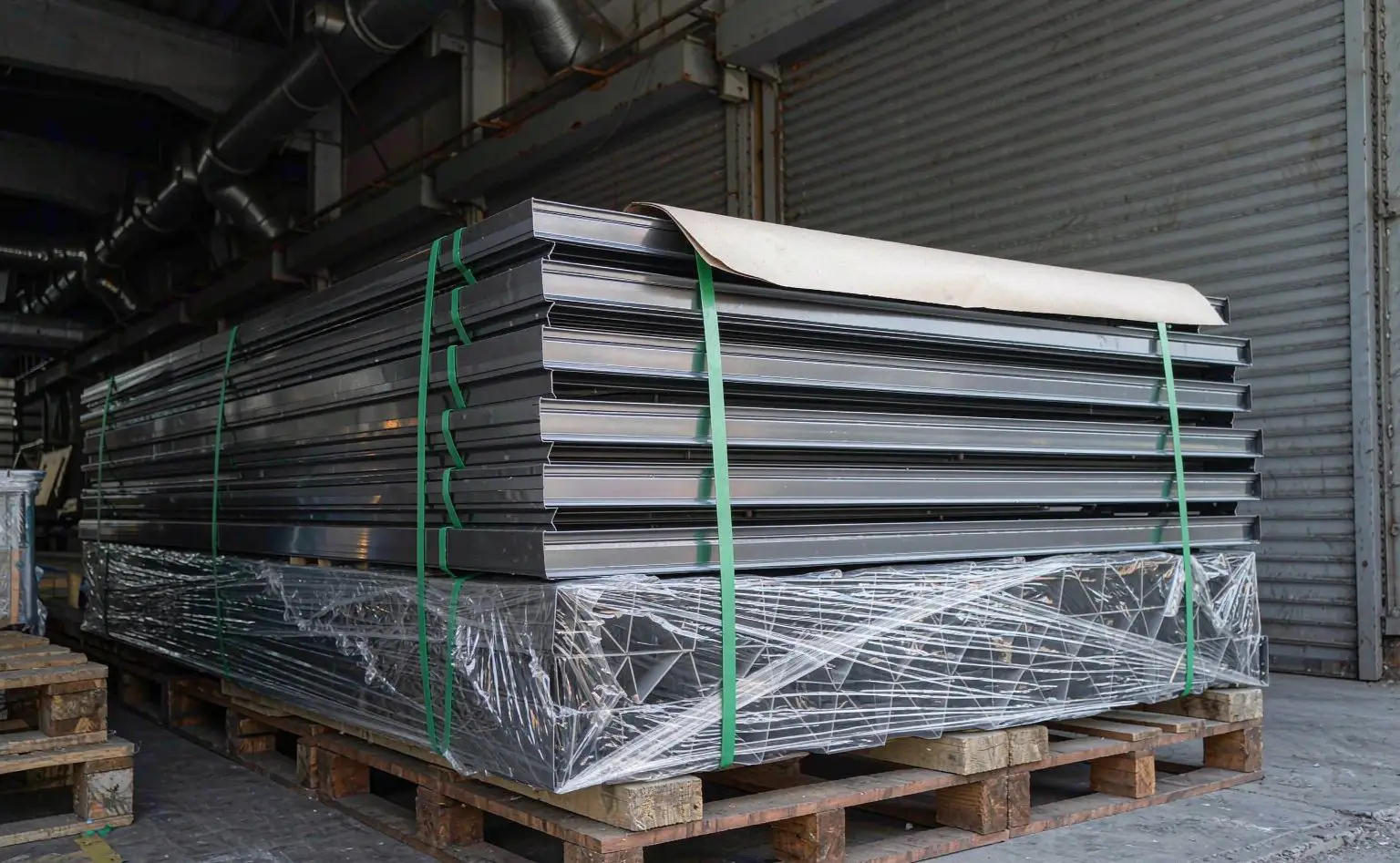
Stack the strapped bundles, lay a vapour sheet on top and cover with stretch film, but leave two small vents. A fully sealed stack locks water inside under a temperature swing and ends up worse than an open one.
Counts for the container. Load with T-1000 container drying rods at 8-10 for a 20ft box and 10-12 for a 40ft box, at 1000 grams per rod. The material is cross-linked sodium polyacrylate, chlorine-free, neutral in pH and non-corrosive to aluminium, absorbing more than its own weight at 25℃ and 80% RH.
How to hang them. On the roof beam or high on a side wall, clear of the doors so loading does not knock them down, and never resting on the profiles, because a rod gains weight and marks the metal. In a container stacked to the roof, hang the rods between the top layer and the ceiling.
When to hang them. Hang the roof rods when loading is seven or eight tenths done and close the doors last; hung open for hours beforehand, they absorb dock air and arrive half spent.
5. Store humidity, and telling a bloom from mould
Keep the finished goods store below 60% RH with dehumidifiers in the wet season, and put the hygrometer at mid-shelf. Bundles stand on pallets 10cm off the floor and off the wall, with gaps between bundles, and never against an external wall.
Two kinds of mark. A bloom has a soft edge, does not wipe off and feels smooth, and comes from water plus paper acid; mould shows as spots with a spreading edge, smells musty and leaves a faint scar when wiped. The first is an appearance downgrade, the second means opening and ventilating the whole bundle, repapering it and rechecking the seal.
Do not skip seal quality. Test seal quality to GB/T 8753.1 and sample film thickness to GB/T 5237.2. Poorly sealed stock blooms in a cluster at the packing stage, and no paper will hold that back.
How to verify. Grade mould resistance to GB/T 24346-2009, keep a bundle 30 days at 30℃/85% RH and reopen it, and put a logger in the container on export lots so the curve tells you, on arrival, whether the rod count was enough.
6. Questions on paper, film and sheet counts
Q: Does an aluminium profile actually grow mould?
The metal does not; the paper, carton, pallet and corner boards do, and the bloom on the film is water reacting with paper acid. Treat both and the bundle opens clean.
Q: Can kraft paper replace neutral paper?
Only if its pH and chloride content pass. Ordinary kraft runs acidic and some lots carry chloride, which blooms a film in one wet season; otherwise put a neutral layer between kraft and metal.
Q: Will the vapour sheet dull the film?
Not at the normal dose. Run the three-times-dose trial and compare gloss and colour before and after, and go to a small batch on thin film.
Q: How many sheets does one bundle take?
One on top and one on each side, more on a large bundle or a long sea route; the bundle has to be tight, because a loose wrap will not hold the concentration.
Four points to take away: dry after sealing, and pack only when the film is dry and the paper does not stick; one chlorine-free neutral sheet per profile, with a layer against the corner boards; one iHeir-D sheet on top and on each side before strapping at 0.1-0.2g each, with two vents left in the stretch film; T-1000 rods at 1000g, 8-10 per 20ft or 10-12 per 40ft container, hung high. Check seal quality to GB/T 8753.1, film thickness to GB/T 5237.2 and mould resistance to GB/T 24346-2009. A pack of sheets and two rods go out for a trial, with MOQ on the iHeir-D product page.


