




 View Count:20
 Date:2026-11-19
Can flange fitting mould be prevented at the socket and thread? Yes, once you accept where the mould actually sits: the casting has been impregnated, so what it attacks is the machined socket, the thread and the timber pallet underneath. Dry and oil the cut faces, soak the dunnage 1:40 in iHeir-M5 to 15%-20% pick-up, and sheet the pallet with iHeir-D at 0.1-0.2 g. This article covers the three stages and the inspection criteria.

1. Where the mould comes from: socket, thread, pallet timber
The machined face comes first. The rough casting is impregnated, so the water in its porosity is pressed out; but the socket, the sealing face and the thread are cut afterwards and get no treatment, and the machining grooves hold both water and oil.
Face-to-face contact comes second. Stack two flanges and their sealing faces touch, the air between them stops moving and moisture cannot leave. Unstack a pallet and the contact ring carries pale spots while the outside is clean.
The dunnage comes third. Galvanised and stainless parts sit on timber boards at 18% moisture or more, and moisture climbs from below; the underside of the part is where it shows first.
So the work is three jobs: protect the bare faces, treat the timber, and keep an air path between stacked parts.
2. Socket and thread: blow dry, oil thin, film the sealing face
No additive here; the job is to get water out and seal the bare surface.
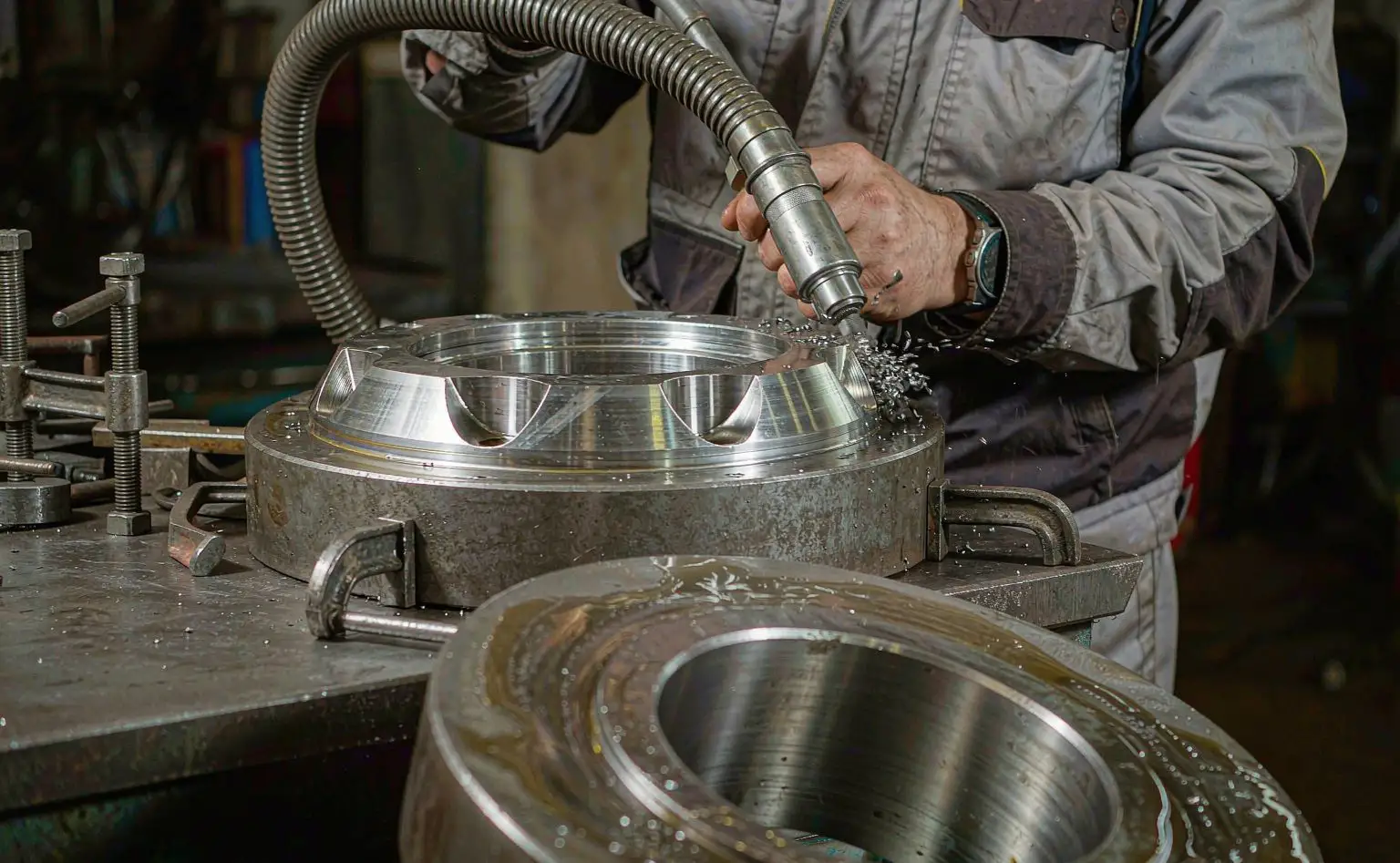
Blow chips and moisture together. After turning, the socket holds chips and coolant. Blow from inside the socket outwards, then along the thread in its helix; coolant left in the thread root puts rust at the bottom of the flank within two days.
Oil thin and even. Brush or dip the rust oil to a film you can see but cannot measure, and do not let it pool in the thread root, where it biases torque readings and traps water.
Film the sealing face. A peelable film or coating on the machined water-line face comes off before dispatch. Film that is not sealed at the edge lets condensate in from the rim, and the face opens on a ring of spots.
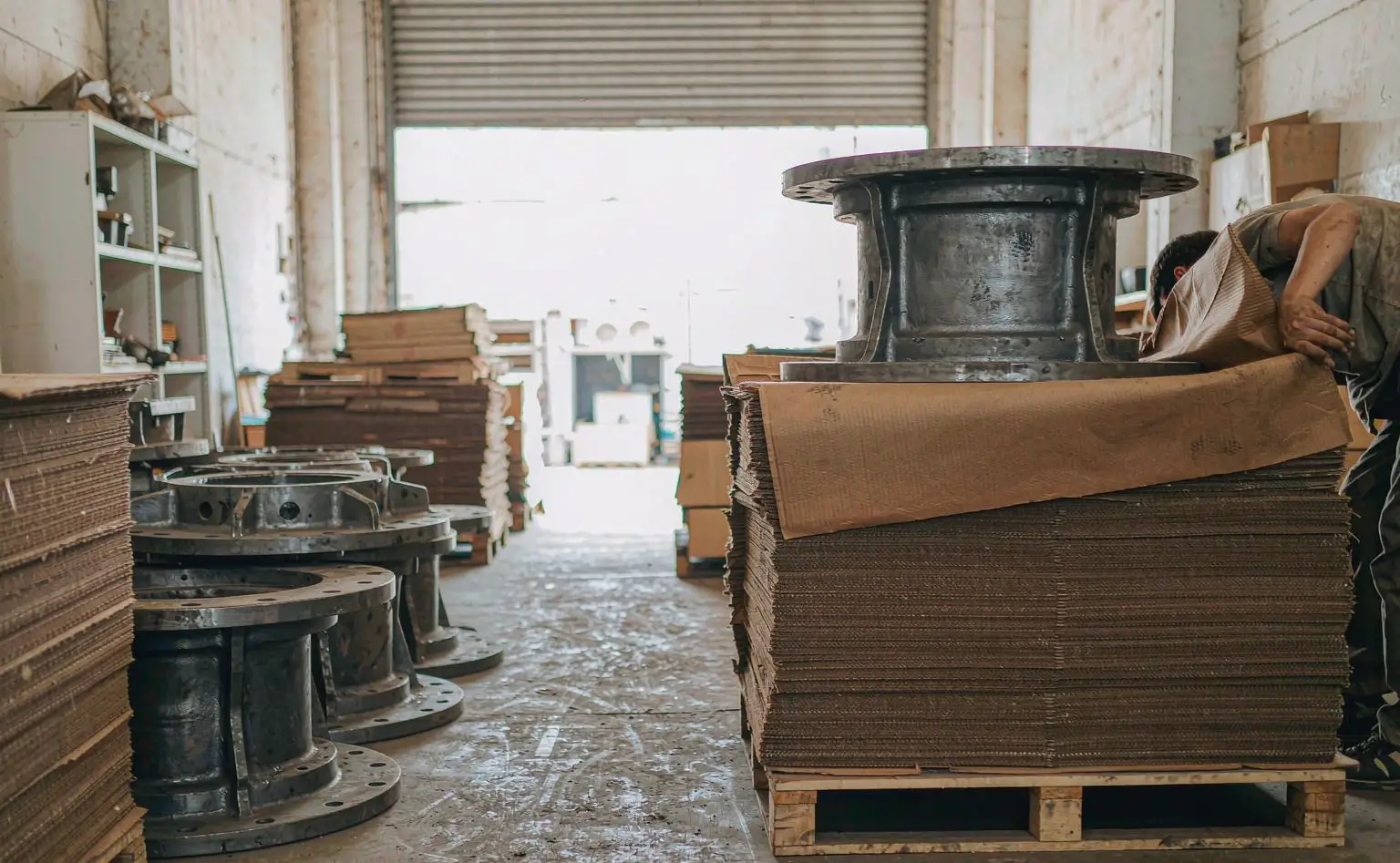
Leave a gap when stacking. A strip of corrugated board or foam between parts gives the contact face an air path; in a two-metre stack, the layers with no gap are the ones that come back damp.
3. Dunnage: soak 1:40 to 15%-20% pick-up
Timber is the only place in this job that takes an additive, and it has to be immersion, not spray.
Mix to the product page. iHeir-M5 is dosed at 1 part to 40 parts water, for example 5 kg in 200 kg of water, mixed for the day and used up the same day.
Five to ten minutes, judged by weight. Keep the timber under the surface and lift it at 15%-20% pick-up. Short of 15%, the timber is too dry or the soak too brief; soak longer rather than raising the concentration.
Dry right through before use. Rack it to drain, then let it dry until the cut ends are no longer damp; half-dry dunnage under steel seals water onto the contact face.
M5 is acidic, so put a layer in between. The product page rules out contact with metal, which means neutral board or PE film between dunnage and flange. Galvanised parts need this most: acidic residue blooms the coating.
| Stage | Position | Product and level | How it is applied | Control point |
|---|---|---|---|---|
| After turning | Socket, thread | No additive | Air gun, chips then moisture | No coolant in the thread root |
| Rust protection | Thread, sealing face | Thin rust oil | Brush or dip | Visible film, no pooling |
| Dunnage | Pallet boards, square timber | iHeir-M5 1:40 | Immersion 5-10 min | 15%-20% pick-up, dried through |
| Stacking | Pallet face | iHeir-D 0.1-0.2 g per sheet | Sheets on pallet face and in crate | Board between part and sheet |
| Sea freight | Container | Drying rods and floor board | Placed at loading | Floor and wall moisture, board at the bottom |
One boundary. The process handles the water on the bare faces, M5 handles the organisms in the timber, gas-phase sheets handle the air around the load. Treated dunnage will not save a socket that still holds coolant.
4. Pallet face and crate: how to lay the sheets
Count sheets. Each iHeir-D sheet carries 0.1-0.2 g. Lay one to two across a pallet face for a layer of parts; inside a crate, one on each wall and one in the lid.
Under the load, not wrapped round it. Sheets go on the pallet face or crate floor and the parts sit on top, so the vapour spreads upward. Wrapped around a flange, the sheet blocks the contact face and holds water instead.
Keep sheets off galvanised surfaces. The product page warns of corrosion on poor-quality metal parts under damp conditions, so board goes between sheet and part. On a first order, run the compatibility test: three times the rate, a little water, paper in between, closed for a few days, then check for discolouration.
Dry the pallet itself. Hold pallet moisture below 20% and dry anything above it; store pallets 10 cm off the floor and cover the stack, so condensate from the roof does not drip onto it.
5. Container loading and arrival inspection
Check three surfaces before loading. Floor, wall and roof moisture all get measured; a wet container is swapped or aired first. Board goes on the floor and another layer under the bottom pallet.
Hold the air inside. Hang drying rods behind the doors, sized to the container. Over thirty to forty days at sea the wall runs with condensate that settles at the bottom of the stack, which is where the lowest pallet fails.
Look at the contact faces first. Write three checks into the inspection sheet: spots on the contact face, rust at the thread root, blackening on the cut ends of dunnage. Each maps back to one stage, so the failure points at the stage to fix.
Rework rules. Surface bloom only: wipe with cleaner, blow dry, re-oil and ship. Spots that have reached the socket groove, or pitting on the sealing face: downgrade or scrap, and never mix them into an export lot. Comparable practice is in water pumps: seals and pallet sheets and transformers in wooden crates.
6. Questions from the line
Q: Do stainless flanges grow mould too?
A: The steel does not, but coolant residue, polishing compound and fingerprints are organic matter, and with moisture they support the same growth; add a damp pallet and it starts from below.
Q: Will M5 on the dunnage affect the galvanising?
A: M5 is acidic and the product page rules out metal contact, so dry the timber through and put neutral board or PE film between dunnage and part.
Q: Can the gas-phase sheet be wrapped around the flange?
A: Better not. Wrapping stops the contact face breathing and holds water, and the sheet carries a corrosion risk on poor-quality metal under damp conditions; on the pallet face with board in between is the safer layout.
Q: A lot has a few spots already, can it still ship?
A: Judge the depth. Surface bloom wipes off and ships after drying; spots in the socket groove or pitting on the sealing face mean downgrade or scrap, and the dunnage moisture and container control need rechecking.
Blow chips and coolant out of the socket and thread, oil thin, film the sealing face, and leave a gap between stacked parts; soak dunnage 5-10 minutes at 1:40 in iHeir-M5 to 15%-20% pick-up, dry it through and keep neutral board between timber and steel; lay iHeir-D sheets at 0.1-0.2 g on the pallet face and in the crate after a compatibility test; hold pallet moisture below 20% and add drying rods and floor board in the container. Mould performance can be verified to GB/T 1741, GB/T 18261 and ASTM G21, and lead times are on the iHeir-M5 product page.


