




 View Count:19
 Date:2026-11-19
Where does hydraulic cylinder mould actually start? Not on the steel: the mould feeds on the timber dunnage, the paperboard liners and the water still sitting in the bore. Dry the bore before the rust film goes on, dip the dunnage 1:40 in iHeir-M5 to 15%-20% pick-up, and put iHeir-D sheets at 0.1-0.2 g into the crate. This article covers the drying criteria, the soak ratio and the packing rules.
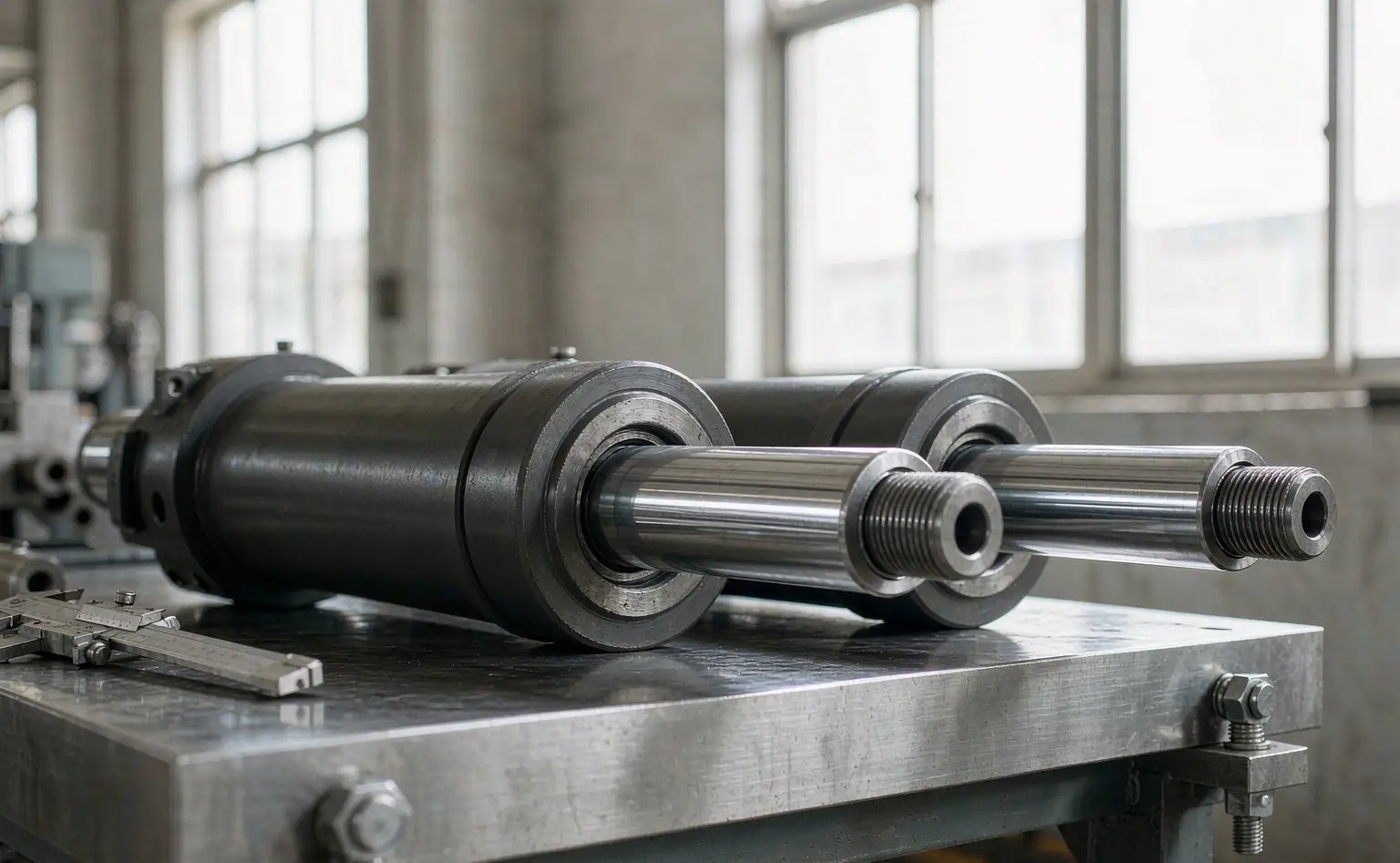
1. Where the mould comes from: trapped water, dunnage, air in the crate
Steel, chrome plate and cast end caps are not food for mould. It needs organic matter and water, and both arrive with the packaging.
The bore holds the first lot of water. After washing, if only the outside is blown off, a film stays in the honing crosshatch and the rust-preventive coat seals it in. The coat looks sound, the water creeps underneath, and the crate opens on ring rust and pale spots.
The dunnage brings the second. Square timber under the crate and pallet boards often sit at 18%-25% moisture and never dry in the store; once the container warms up, that water leaves the wood and lands on the barrel.
The crate traps the third. A timber crate lined with barrier paper is a closed box; board, foam and labels all take up moisture, and it condenses on steel when the temperature drops.
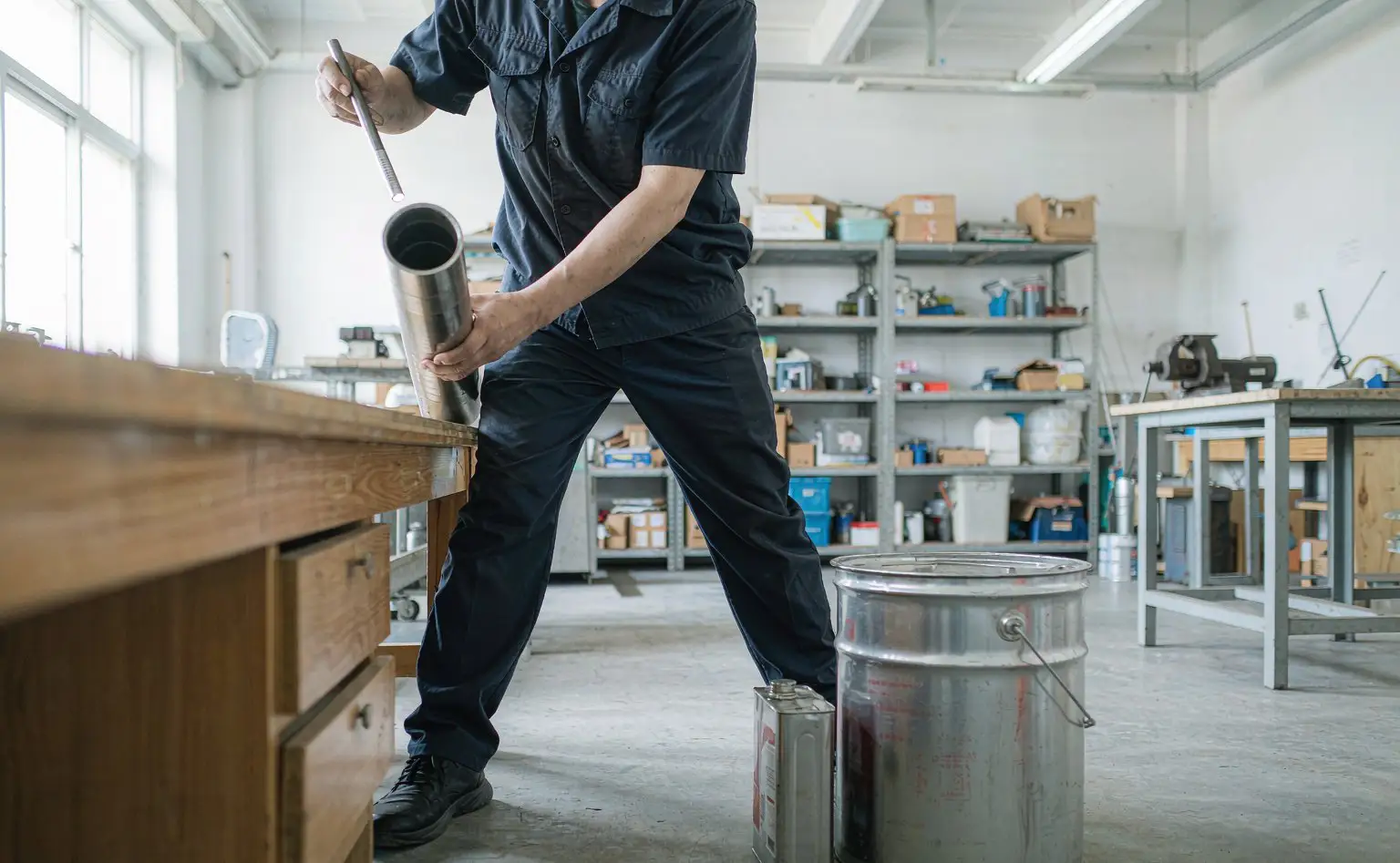
2. The bore: dry to no visible moisture before the rust film
No additive does this stage; it is temperature and time. The sequence is wash, blow, dry, cool to near room temperature, then coat.
Blow the bore first. Run compressed air end to end with the lance spiralling along the wall, pushing water out of the crosshatch. The air must pass an oil-water separator; damp air is no better than none.
Set drying by wall thickness. For barrels up to 10 mm wall, 40-60 minutes at 60-80℃ in the tunnel is usually enough, and thicker sections need longer rather than hotter. Too hot and the anti-rust primer cures early, which costs adhesion at the next coat.
Do not coat straight out of the tunnel. Coating above room temperature flashes the solvent and gives an orange-peel film; let the barrel come back down first.
Put the criteria on the route card. No visible moisture, no water runs, no rust points. With a borescope, sample 3-5 barrels per lot and keep the photographs.
3. Rod ends and the test bench: blow clean, then cap
The thread and the key slot are bare. The chrome resists moisture; the thread and key slot cut after plating do not, and they rust first. Before assembly, carry a thin film of rust oil over them, even and not pooled in the thread root.
Blow after the pressure test. Once the bench test is done, oil sits in the barrel and in the lines; when the hoses come off it runs onto the thread, mixes with moisture in the air, and rust shows within two days. Blow the end clean with dry air and cap it.
Dry the caps themselves. Plastic plugs, paper tape and stretch film all take up water, so keep plugs in a sealed bag.
Let the barrel settle before packing. A cylinder off the bench is still warm, and warm steel in a closed crate condenses; leave it in the assembly area for four hours.
4. Dunnage and pallets: soak 1:40, aim for 15%-20% pick-up
Timber needs an additive, and it needs immersion rather than a spray. Mould in wood lives in the fibre; a spray covers the face and the sawn end is back within a day.
Mix to the product page. iHeir-M5 is dosed at 1 part to 40 parts water, for example 5 kg of agent in 200 kg of water. Mix what the day needs and use the bath up the same day.
Five to ten minutes, judged by weight. Keep the timber under the surface and lift it at 15%-20% pick-up. Below 15% the soak was short or the timber too dry to take liquor; soak longer rather than raising the concentration.
Drain before stacking. Rack the pieces until no liquor runs off; stacked wet, the pile centre goes black within days.
M5 is acidic, so keep it off the steel. The product page rules out contact with metal, so put neutral board or PE film between treated dunnage and the barrel, and let the timber dry right through before crating.
| Stage | Position | Product and level | How it is applied | Control point |
|---|---|---|---|---|
| After washing | Cylinder bore | No additive | Compressed air then tunnel | No moisture, no runs |
| Before coating | Cylinder bore | Rust film to recipe | Coating or spray | Cool to near room temperature |
| After the bench test | Rod thread and key slot | Thin rust oil | Brush or dip | Even film, not pooled |
| Dunnage | Square timber, pallet boards | iHeir-M5 1:40 | Full immersion 5-10 min | 15%-20% pick-up, drained before stacking |
| Crating | Air inside the crate | iHeir-D 0.1-0.2 g per sheet | Sheets between wall and part | Sheets off the chrome surface |
One boundary. M5 handles the organisms in the timber, drying handles the water on the steel, gas-phase sheets handle the air in the crate. Treated dunnage will not rescue a bore that went under film wet.
5. Crating and the container: where the sheets go
Count sheets, do not estimate by area. Each iHeir-D sheet carries 0.1-0.2 g of active. One to two sheets per cylinder, laid between the crate wall and the barrel, with one more inside the lid.
Keep sheets off machined faces. The product page warns that under damp conditions the agent can corrode poor-quality metal parts, so put neutral board between sheet and chrome or thread. On a first order, run the compatibility test: three times the normal rate, a little water, paper in between, closed for a few days, then check for discolouration and corrosion.
Dry the crate itself. Hold board moisture below 20% and dry anything above it. Line the crate with barrier film but leave a small vent; sealed dead tight, the moisture inside has nowhere to go.
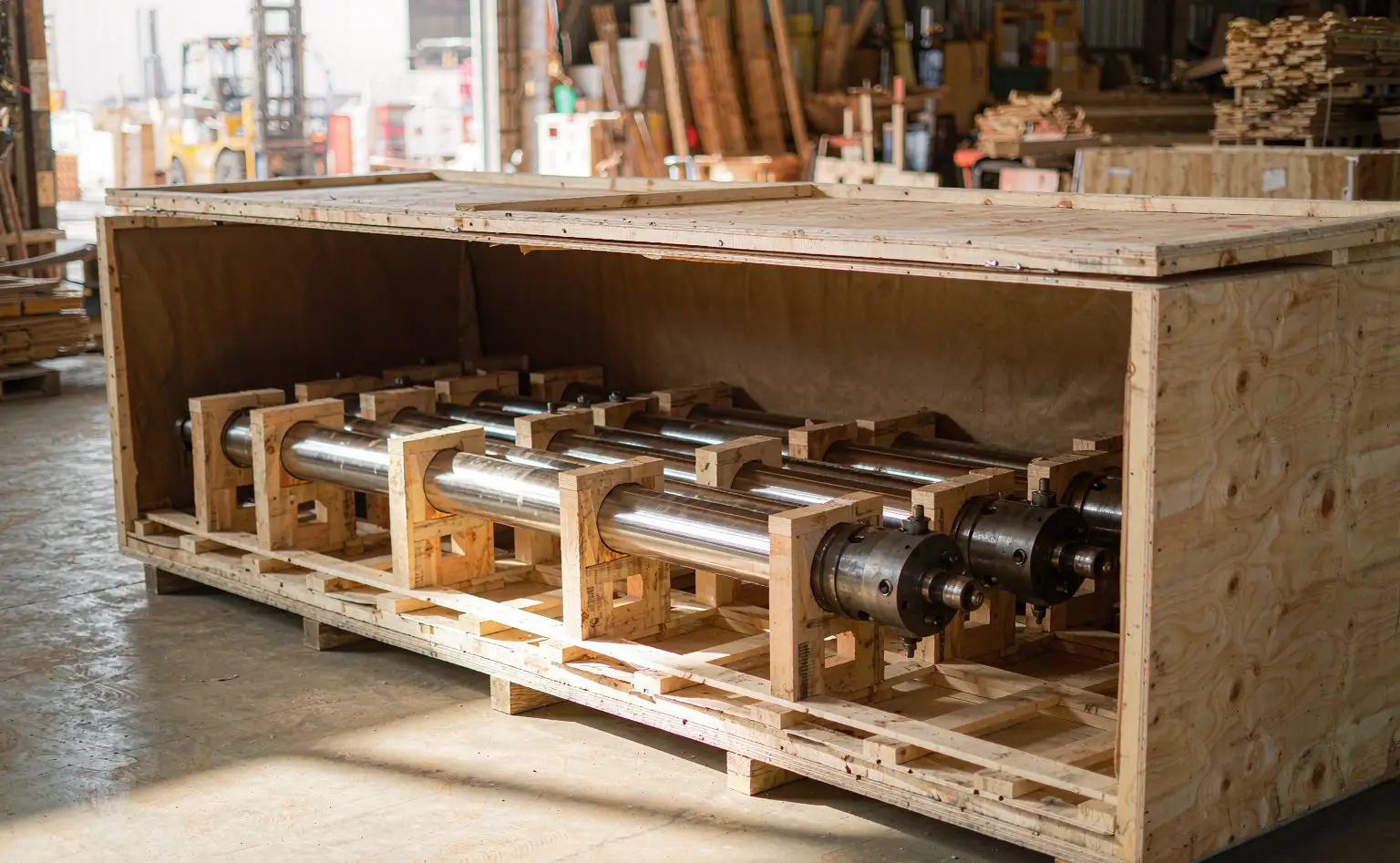
Add a layer in the container. Check floor and wall moisture, put board under the load, and hang drying rods behind the doors. Over thirty to forty days at sea the wall condensate settles at the bottom, so the lowest crate gets another board layer.
Check three things on arrival. Bore for rust points, dunnage for spots, sheets for whether they have gone soft. Together they tell you whether drying was short or the crate took water afterwards. Comparable practice is in bearings: rust oil and drying rods and hardware tools at the carton stage.
6. Questions from the line
Q: Why not just brush an anti-mould agent into the bore?
A: Because steel does not grow mould. What you brush in becomes a new water and organic residue source; the bore needs water removed.
Q: Can the dunnage be sprayed instead of soaked?
A: Not as a substitute. A spray wets the surface only, and mould is back at the sawn end within a month at sea. Pick-up is what proves the timber took the liquor.
Q: M5 is acidic, will it attack the cylinder?
A: The product page rules out metal contact, which is why treated timber dries through and neutral board or PE film sits between dunnage and barrel.
Q: How many gas-phase sheets does a crate need?
A: By part count and volume: one to two per cylinder, the upper end for large crates. Lay the sheet flat instead of balling it up; a sheet crushed into one corner protects only that corner.
Blow and dry the bore at 60-80℃, cool it, then coat; blow the rod end clean after the bench test and cap it; soak dunnage 5-10 minutes at 1:40 in iHeir-M5 to 15%-20% pick-up, drain, dry through, and keep neutral board between timber and steel; sheet the crate with iHeir-D at 0.1-0.2 g per sheet after a compatibility test; hold board moisture below 20% and add board and drying rods in the container. Mould and rust performance can be verified to GB/T 1741, GB/T 18261 and ASTM G21, and lead times are on the iHeir-M5 product page.


