




 View Count:13
 Date:2026-11-20
Can FRP tank mould be prevented? Yes, but cure comes before antimicrobial. Growth does not start on the glass; it starts in the resin fillers and the liner cure. Dose the winding resin with iHeir-IPL at 0.8%-1.0% of resin weight and disperse it, check the cured liner with a Barcol impressor, and close the manway and nozzles with iHeir-D sheets at 0.1-0.2 g before dispatch. Pale patches and a smell after filling end in a rejection, and a tank cannot be reworked, so it is scrapped. This article covers dosing, curing, draining and sealing.
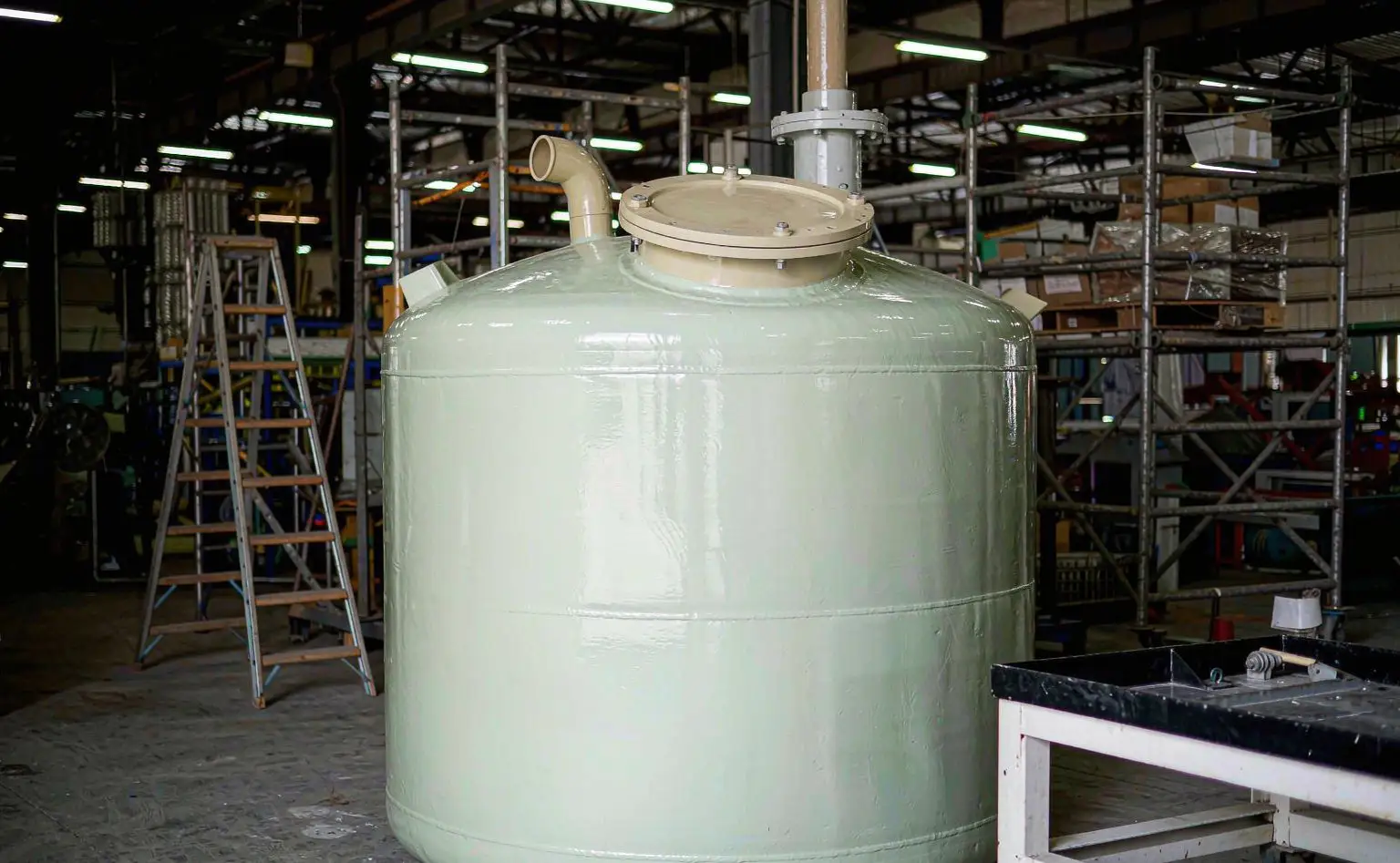
1. Where the growth comes from: filler, accelerator, cure
Fillers and accelerators are food. Calcium carbonate filler, accelerator and residual styrene are all carbon sources a microorganism can use. Tanks with a high filler load and low resin content spot on the inner wall first.
An under-cured liner is the main cause. Hand lay-up varies in thickness, and thin and thick areas peak at different exotherms. The thin area gels first and stays tacky, and a tacky surface is both residual styrene and a moisture trap, which is exactly where spotting begins.
Hydrotest water stays in the tank. Hydrostatic testing is routine before dispatch. After draining, a layer remains at the bottom and in the lowest part of the head; once the manway is closed the interior sits near saturation and spots and smell appear within days.
Temperature cycling in storage. Sun by day and cool by night condenses moisture on the inner wall, and the runs mark where growth will appear.
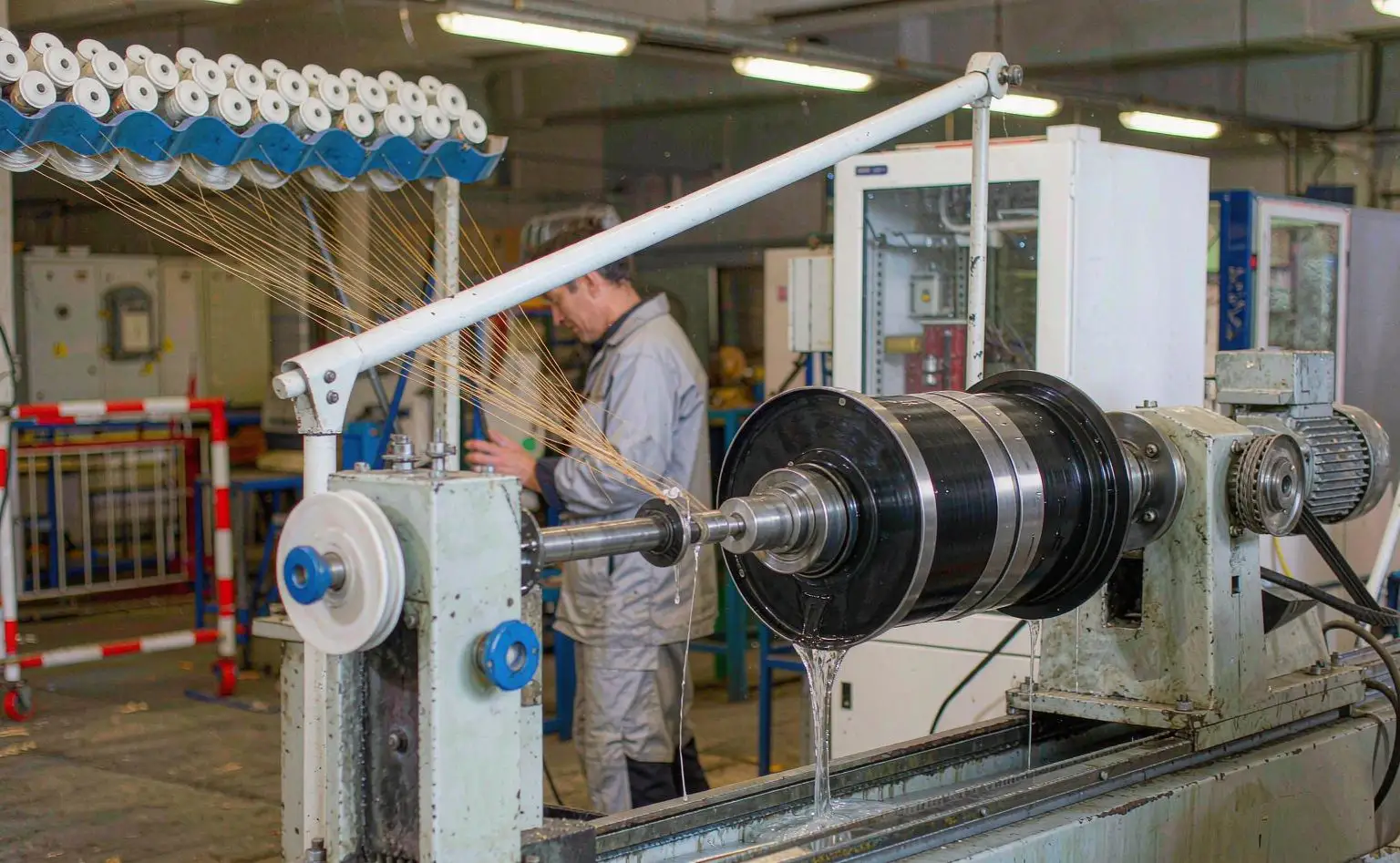
2. Resin mixing: IPL at 0.8%-1.0%
Dose on total resin weight. iHeir-IPL goes in at 0.8%-1.0% of resin weight, with the upper end for thin-wall tanks and food-grade liners. Once the recipe is fixed, keep it fixed; do not adjust by feel.
Add it at mixing, not afterwards. Add after the resin and filler are blended and before the hardener, then disperse at high speed for 10-15 minutes. Adding it after the hardener means the batch is already gelling and the powder will not open up.
Particle size and appearance. IPL is 1-2 μm with whiteness above 90, so pale and translucent systems show no yellowing. Dark systems take it as normal.
Packaging and storage. 25 kg fibreboard drums, stored sealed and dark at ambient for 12 months. Tie the liner after opening and discard anything caked by damp. Antimicrobial rate is 99.99% or better and can be verified to ISO 22196 and GB/T 20944.3.
It is not a curing agent. IPL is an inorganic carrier type and takes no part in the cure, so it will not speed gel time, and a tank that is under-cured cannot be rescued by adding more.
| Part | Material | Product and level | Stage | Control point |
|---|---|---|---|---|
| Winding structure | Unsaturated polyester and glass | iHeir-IPL 0.8%-1.0% of resin | High-speed dispersion at mixing | In before hardener, evenly dispersed |
| Liner | Resin-rich layer | As above, carried in with the resin | Hand lay-up or spray | Even thickness, Barcol on spec |
| Tank interior | Air | iHeir-D 0.1-0.2 g per sheet | Placed before sealing | Sheet on the manway, not on the floor |
| Hydrotest water | Water | No additive | Drain and blow dry | No standing water at the low point |
| Export transport | Tank and saddles | Sheets by tank volume, saddle timber treated separately | Loading and securing | Manway gasket intact |
One boundary. IPL handles the organisms in the resin and liner, cure handles the food and the damp face on the inner wall, gas-phase sheets handle the air in a sealed tank. Cure is the one most often skipped and the one that costs most to redo.
3. Winding and liner: even thickness, measured cure
Even out the liner first. Hand lay-up fails on thickness variation, and thin areas spot first. Lay it in two passes: a thin pass rolled to release air, then build to design thickness.
Judge cure by hardness. Check the liner with a Barcol impressor, at least five points per tank. A wide spread means local under-cure; a tank that does not make the reading does not go to the next stage, because reworking in-house is far cheaper than a field failure.
Deal with a tacky surface. Wash residual styrene off with warm water and a little detergent, then dry. Do not keep wiping with solvent: it dissolves the surface resin and exposes filler.
Hold winding tension. Fluctuating tension gives uneven resin content, and resin-rich areas take up moisture faster. Set tension to the process card, log it each shift and watch the bath level.
4. After the hydrotest: get the water out
Drain to the lowest point. Empty through the bottom drain, then blow compressed air down from the manway to push the water out of the head. Wipe the bottom with white paper; no damp mark means it is done.
Do not bake it with hot air. GRP conducts heat slowly, so hot air dries the surface while water stays in the wall and condenses back as soon as the temperature falls. Circulate dry air instead and seal only below 60% RH.
Treat test water that stands. Water left more than three days blooms, and what is not drained stays at the bottom. Biocide it to normal water-treatment practice, drain and rinse once.
Inspect before sealing. With the manway open, light the inner wall and look for pale patches, tackiness or smell. Sheets will not suppress growth that has already started.
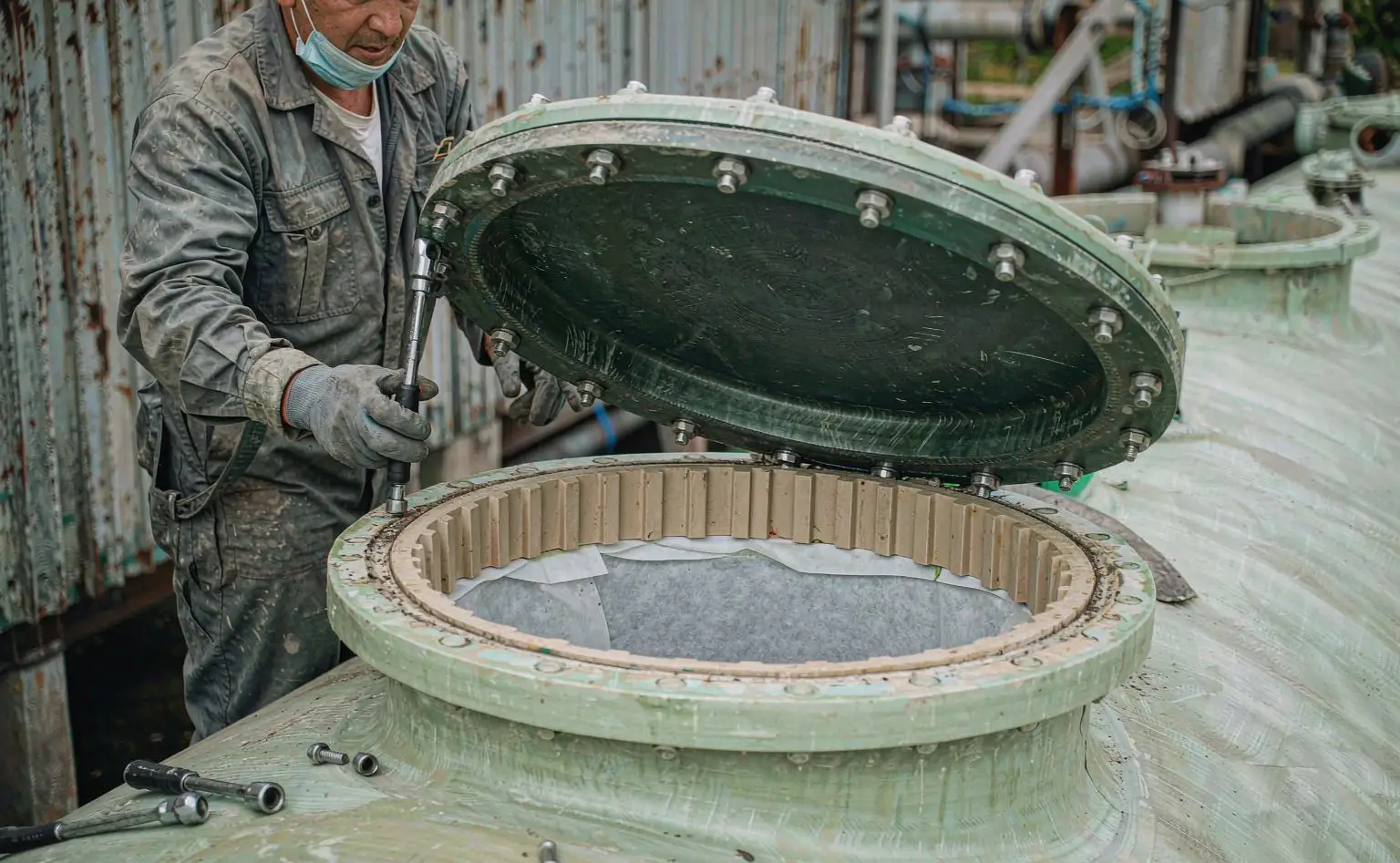
5. Manway and nozzles: where the sheets go
One sheet per opening, roughly. Each iHeir-D sheet carries 0.1-0.2 g of active. A 10 m³ tank takes 1-2 sheets at the manway and half to one per nozzle; larger tanks add by internal volume, not by tonnage.
Inside, not on the floor. Tape the sheet to the inside of the cover or the neck so it cannot fall in during transport. The product page warns of corrosion on poor-quality metal parts in damp conditions, so where a tank has metal internals, keep a PE layer between sheet and metal.
Seal it properly. Tighten manway bolts in a diagonal pattern, dust the gasket with talc before fitting, and blank every nozzle with a gasket rather than a plastic bag pushed in. A leaking seal is no seal.
Run a compatibility test. Three times the rate, paper in between, closed for a few days, then check the liner for tackiness and colour shift. For food-grade or potable water tanks, clear the sheet plan with the customer and switch to physical dehumidification where needed. Comparable composite and crate work is in transformer pressboard and wooden crate, and saddle timber in water pump seals and pallet sheets.
6. Questions from the plant
Q: Does GRP itself grow mould?
A: A fully cured surface does not. Growth appears on tacky under-cured areas, where filler is exposed, and in water standing at the bottom. Cure comes before dosing.
Q: Does IPL affect the resin cure?
A: No. It is an inorganic carrier type that takes no part in the reaction, but it must go in before the hardener and be dispersed, otherwise pot life and dispersion both suffer.
Q: What Barcol reading counts as cured?
A: Whatever your liner process card says; the spread across one tank matters more than the absolute number. A wide spread means local under-cure, so rework before moving on.
Q: Does a sheet inside the tank affect it once filled?
A: The sheet works during the sealed period and is removed before service. For food-grade and potable tanks, agree the plan with the customer first and use a desiccant or ventilation where required.
Dose the winding resin with iHeir-IPL at 0.8%-1.0% of resin weight before the hardener and disperse at high speed; lay the liner in passes to even thickness and check Barcol hardness at five points; drain the hydrotest from the lowest point, blow dry and seal below 60% RH; fit 1-2 iHeir-D sheets at 0.1-0.2 g per manway and half to one per nozzle, inside the opening, after a compatibility test. Antimicrobial and mould performance can be verified to ISO 22196, GB/T 20944.3 and ASTM G21, and samples and lead times are on the iHeir-IPL product page.


