




 View Count:23
 Date:2026-11-16
How should air compressor mould be handled? Water stays in the bottom of the receiver tank after pressure testing, the control cabinet condenses with every day-night swing, and the base frame and crate absorb moisture, so the machine ships with damp sealed inside and opens to rust and hazy green terminals. The route is to drain and blow the tank dry before capping it, put 0.1-0.2 g iHeir-D gas-phase sheets in the control cabinet by volume, and hang 8-10 T-1000 sticks in a 20 ft container. This article gives the drying criteria and the counts.
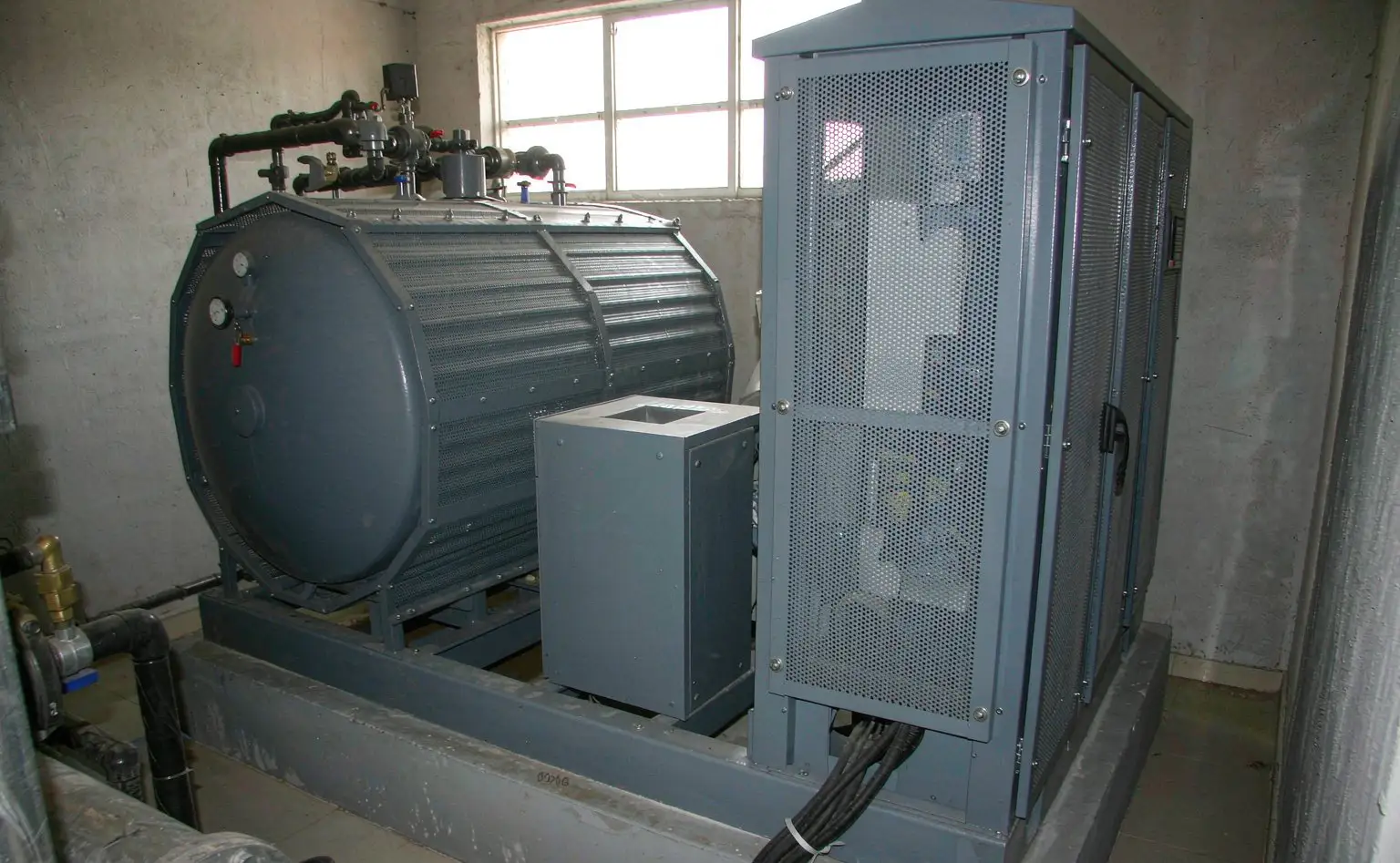
1. Where compressor mould comes from: tank wall, cabinet, base frame, crate
A screw compressor package is the airend, tank, cooler, cabinet and base frame, and before dispatch it goes through pressure testing, a trial run, draining, capping and packing. Rust and growth follow those steps.
The tank wall comes first. Water from pressure testing or the trial run collects at the bottom, and the drain valve only takes the free water; the film on the wall needs air. The tank is a closed space, vapour cannot leave, and rust spots appear within weeks. Rust and growth usually arrive together, because a rust layer holds water itself.
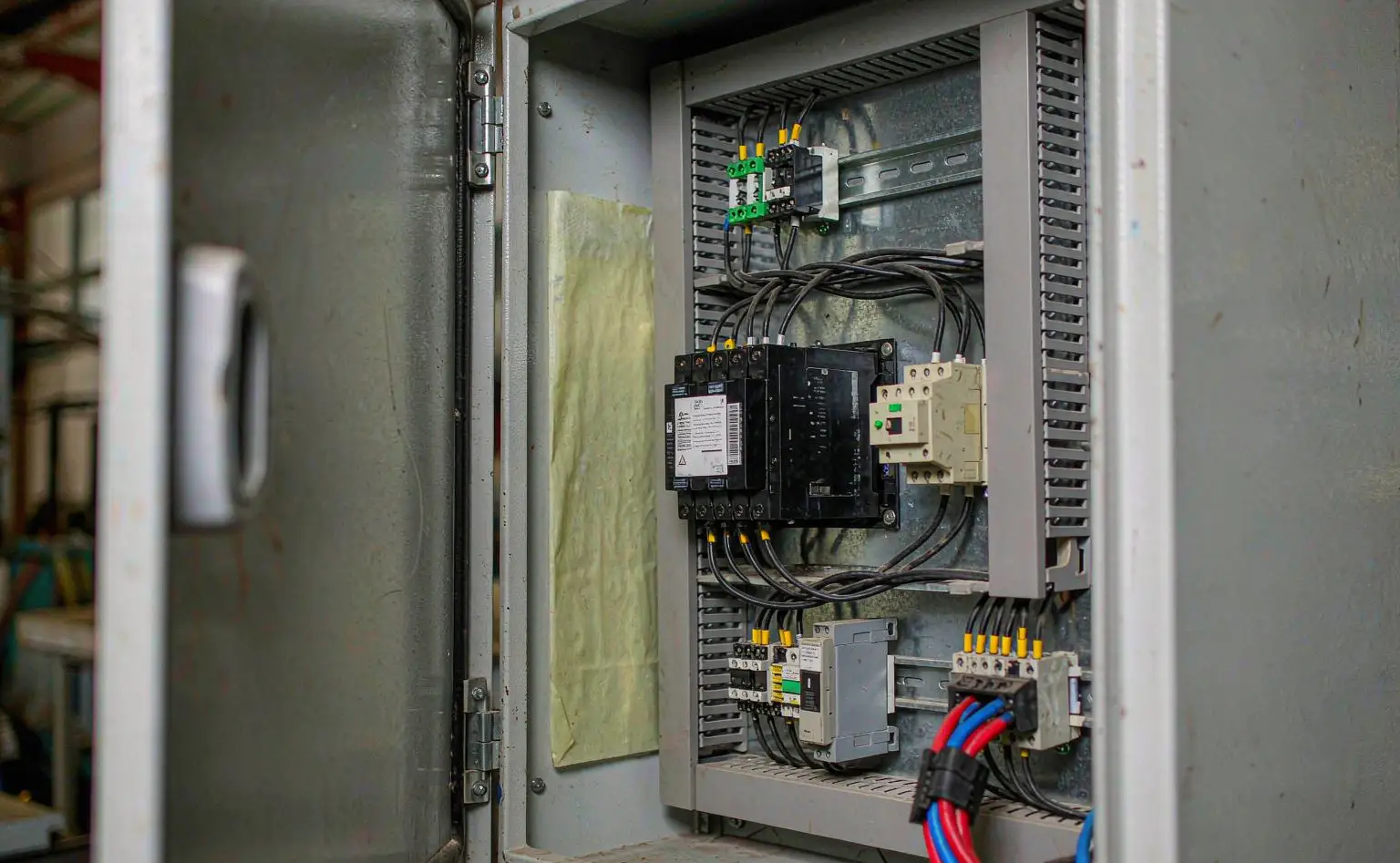
The control cabinet comes second, and is the easiest to miss. Contactors, a drive and terminal rails sit in a sealed box where the day-night swing condenses water on the terminals and boards: first a hazy green film, then falling insulation and a trip on power-up.
Base frame and crate come third. Welded frames have a rough surface and thin paint that holds water; export crates are heat-treated to ISPM 15 but that is not drying, and boards at 15%-20% moisture top up the whole box.
2. How to dry the tank wall: free water first, then hot air
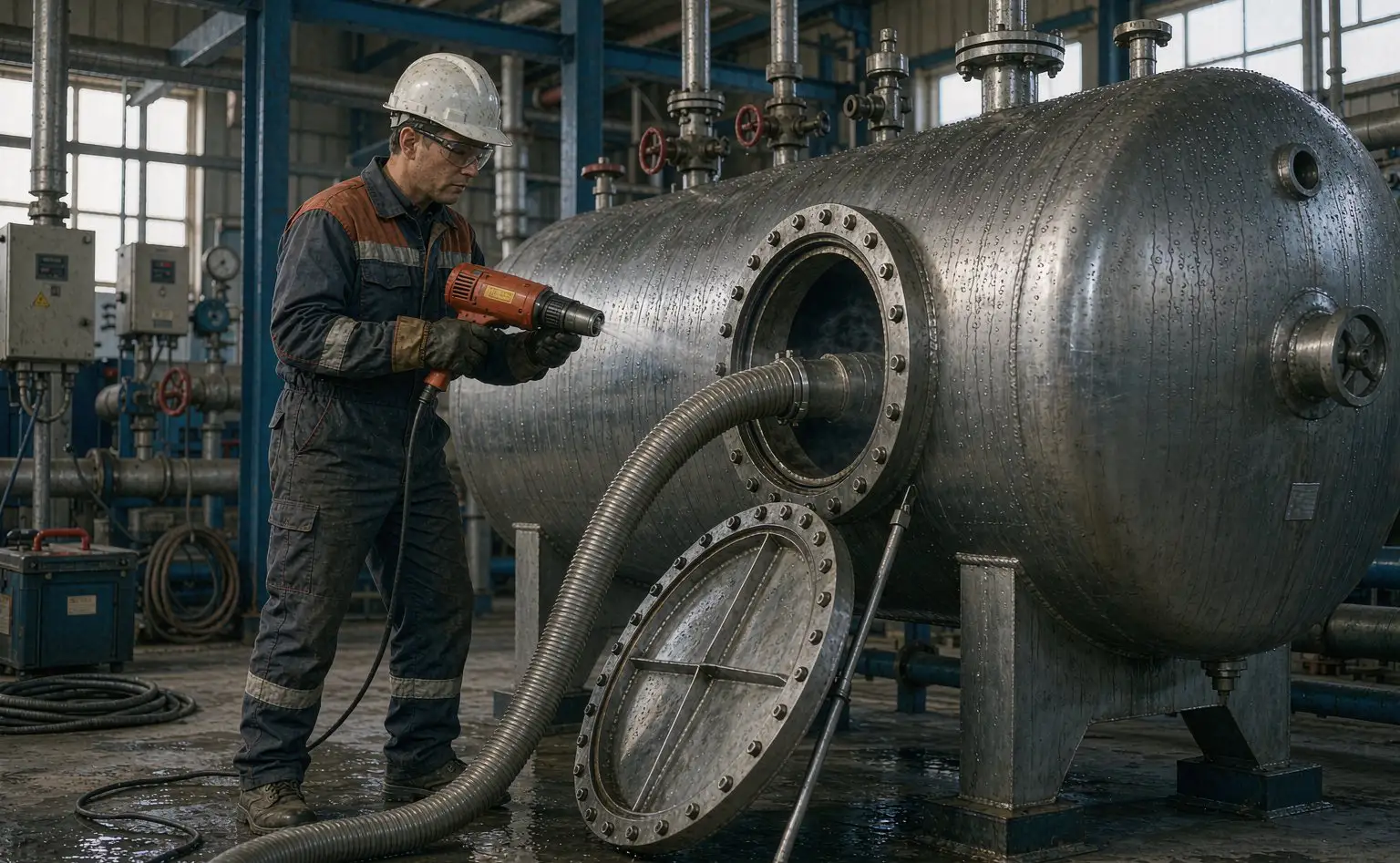
There is no shortcut inside the tank, only drain and blow, judged on criteria not a clock.
Drain properly. After testing, take the free water out at the lowest drain, tilt the shell 3-5 degrees overnight and drain again the next morning. Wash out sediment first where there is any, because water hides under the sludge and swarf.
Blow hot air. Put a hot-air duct through the inspection opening at 60-80℃ for two to three hours with the manhole or a drain left open at the other end so the wet air has somewhere to go. Large shells take a second pass; finish by feeling the lower wall for water marks.
Cap it afterwards. The tank is too large for paper to be economic, so it is dried and sealed instead, with every opening plugged or blanked before the shop air gets back in. The sheets belong to the small closed spaces: the cabinet and the crate.
3. How to dose the cabinet: by internal volume, off the terminal rail
A control cabinet is a small closed space, which is exactly what vapour-phase paper is for. The count follows internal volume.
How many sheets. Each carries 0.1-0.2 g of active. A small machine cabinet of 0.02-0.03 m³ takes two; a large box with a drive above 0.05 m³ takes three to four. Fix them on the upper inside of the door and the top of a side wall, staggered.
Keep them off the terminals and boards. No sheet on the terminal rail, none on a contactor arc chute, none against a drive heat sink. Vapour-phase paper can corrode poor-quality metal in damp conditions, so machines with thin plating need the compatibility test first.
When to fit. After electrical assembly and the power-on test, with the door closed and the gasket compressed. Fitting during testing with the door open wastes the sheet, and it has to be replaced after any service opening in store.
| Part | Material | Product and level | Stage | Control point |
|---|---|---|---|---|
| Tank wall | Q345R shell | No additive, drain and hot air | After testing, before capping | 60-80℃ for two to three hours |
| Control cabinet | Sheet steel box | iHeir-D 2-4 sheets (0.1-0.2 g each) | After electrical test | By volume, off the terminal rail |
| Base frame | Weldment, paint | No additive, derust and repaint | Painting and assembly | No water in welds, film intact |
| Export crate | Boards and blocking | iHeir-D 2-4 sheets per crate | Packing | Board moisture at or below 20% |
| Container | 20 ft / 40 ft | T-1000 8-10 / 10-12 sticks | Loading | On the door, off the cargo |
One boundary. The tank is drained and blown, the cabinet is dosed with paper, the container is covered by sticks. The three spaces differ in size and tightness, and the methods do not swap.
4. Pipes and valves: get the condensate out before it is sealed in
A compressor is run before dispatch, so pipes and the cooler keep condensate, and this is usually treated as a detail.
Blow the pipework. After the trial run, blow the lines with dry compressed air from the highest point down to the lowest, with a clear container at the outlet to show what comes out; keep blowing until no mist appears on the container wall.
Drains and the oil separator. The auto-drain valve seat and the separator blow-off hold water, so take them off, blow them dry and refit. Elements and filters stay sealed until fitted.
The cooler. Plate and fin-passage coolers are narrow and slow to drain, so blow longer and clean the fin face so dust cannot hold water.
5. Crate and container: sheets inside, sticks in the box
The package is heavy and packs tight, and this last stage decides whether the crate is opened to rust spots and hazy terminals three months later.
Control board moisture. Test incoming boards and replace or dry anything above 20%; line the crate with a barrier film, block the feet 10 cm off the floor and leave a 2 cm gap to the wall rather than letting the machine touch the boards.
Sheets per crate. Two or three for a single machine, four for a package with a receiver tank and dryer, each at 0.1-0.2 g, fixed at the upper corners of the inner walls and kept off painted faces.
Sticks in the container. Hang 8-10 T-1000 sticks in a 20 ft and 10-12 in a 40 ft, on the rings inside the door, staggered top and bottom. The stick uses a natural plant-fibre carrier, contains no chloride and is pH neutral, so it does not attack the shell, the pipes or plating, and it takes up the water released when the container cools. Related practice is in water pump seals and pallet sheets and valve rubber parts and cartoning.
6. Questions from the line
Q: Should the receiver tank hold sheets as well?
A: It does not pay. The tank is large with several openings, so one sheet cannot cover the volume; drain it, blow it and plug the openings instead.
Q: How often are the cabinet sheets replaced?
A: Fit once before dispatch, and replace after three months in store or any service opening. A damp sheet is replaced, never dried.
Q: Can the sheet corrode the terminals?
A: Not at the normal dose, but thin plating is sensitive. Run the seven-day bag test at three times the dose and move the sheet to the door behind a neutral paper if colour shifts.
Q: With sticks in the container, are crate sheets still needed?
A: Yes. Sticks cover the container air, sheets cover the small volume in the crate, and the two differ by an order of magnitude.
Four closing points: after pressure testing drain the tank at its lowest point, tilt it 3-5 degrees overnight and drain again, then blow 60-80℃ air through the inspection opening for two to three hours and cap it only when the lower wall shows no water mark, plugging every opening; after the electrical test put two iHeir-D sheets in a 0.02-0.03 m³ cabinet and three to four above 0.05 m³ at 0.1-0.2 g each, on the inside of the door and off the terminal rail; blow the pipes and cooler with dry air until no droplets appear and dry the drain valves and separator blow-off before refitting; hold crate boards at or below 20%, two or three sheets for a single machine and four for a package, and hang 8-10 T-1000 sticks in a 20 ft and 10-12 in a 40 ft. Mould resistance can be verified to ASTM G21 and GB/T 1741, and lead times are on the iHeir-D product page.


