




 View Count:54
 Date:2026-10-07
For garden ware mould and bacteria, is it better to add a masterbatch at injection or to do a surface treatment? Garden ware is mostly PE, PP and PVC parts that sit outdoors in damp and sunlight, and the spots and tacky surface start on the resin. Adding iHeir-ECO plastic antimicrobial agent at 0.3%-1.0% on resin weight puts the antimicrobial through the whole part, which lasts far longer than a surface layer; pale parts and long-life outdoor parts then take 0.8%-1.0% of iHeir-IPL inorganic plastic antimicrobial agent. This article covers the trade-off between the two routes.
1. Where the mould comes from: the resin, the surface layer and outdoor exposure
Garden ware has three ways in. First, the resin does not absorb water, but once moulded it collects dust, hand sweat and release aids, and with rain followed by sun the surface becomes a foothold for mould and algae. Second, if a sprayed or coloured layer goes on the surface, the interface between coating and resin holds water, and once it blisters the mould starts from that interface. Third, the store and the sea freight: planters are bulky, pack tight and stack high, so damp in the core of a stack cannot escape and a ground-level store is the worst of all.
Those three ways decide the route. To protect the whole part, the antimicrobial has to go into the resin with the material, where wear and scratches will not rub it away. A surface treatment loses a layer with every rub, and an outdoor part shows white within a quarter. So for new parts made in volume the masterbatch route is the main one, and surface treatment is only a remedy for parts that are already moulded and cannot be reformulated.
One point is easily missed: garden ware is often made with regrind, which has a rougher surface that holds soil more readily, so a change in the regrind ratio means recalculating rather than copying the virgin-material figure.

2. The two routes at a glance: masterbatch and surface treatment
The table lines up the route, the stage, the durability, the figures and the parts it suits, so it can serve as the basis for grade selection.
| Route | Stage | Treated item | Product | Figures | Fit and points to watch |
|---|---|---|---|---|---|
| Masterbatch (main) | Injection | PE/PP resin | iHeir-ECO plastic antimicrobial agent | 0.3%-0.5% (PE/PP) | Protects the whole part and is not rubbed off; in with the masterbatch or a premix |
| Masterbatch (main) | Injection | PVC resin | iHeir-ECO plastic antimicrobial agent | 0.5%-1.0% (PVC) | PVC parts take the upper band; recalculate for any change in the regrind ratio |
| Masterbatch (weathering) | Injection | Pale and outdoor resin | iHeir-IPL inorganic plastic antimicrobial agent | 0.8%-1.0% on resin weight | Inorganic silver type, whiteness above 90; pale parts resist yellowing and it takes heat well |
| Surface treatment | After moulding | Surface of a moulded part | Control only (not one of the two lines) | By the outside process | A remedy for moulded parts only; one layer of wear defeats it, so not for volume production |
| Finished store and container | Stacking / full container | Air in the stack and the box | Humidity control only | Below 60% relative humidity | Bulky and stacked high, so damp cannot leave the core; desiccants by container type |
Five rows, one conclusion: if the material can still be changed, choose the masterbatch by resin type and part; only when it cannot does surface treatment come in, and it wears off; the store preserves both.
3. The main masterbatch band: ECO at 0.3%-1.0% by resin type
The masterbatch route is completed at injection. Add iHeir-ECO plastic antimicrobial agent at 0.3%-0.5% on PE and PP resin weight and at 0.5%-1.0% on PVC resin weight, made up first as an antimicrobial masterbatch or premixed with the pellets before the hopper. The additive bonds with the material and is distributed through the whole part rather than sitting on the surface, so rain, grit and washing will not rub it off. Thermal stability reaches 240 degrees, and the process temperature should stay clear of 320 degrees.
Three details. First, the figure is on total resin weight, regrind included, so high-regrind batches belong at the top of the range. Second, planters and seed trays are thin-walled with deep cavities, so they can only be dispersed through a masterbatch or a premix; powder fed straight in agglomerates. Third, purge the barrel when changing material grades so a pale part is not tinted. See how to choose an antimicrobial for engineering plastics and transparent parts for the grade.
4. The weathering band: IPL inorganic at 0.8%-1.0%
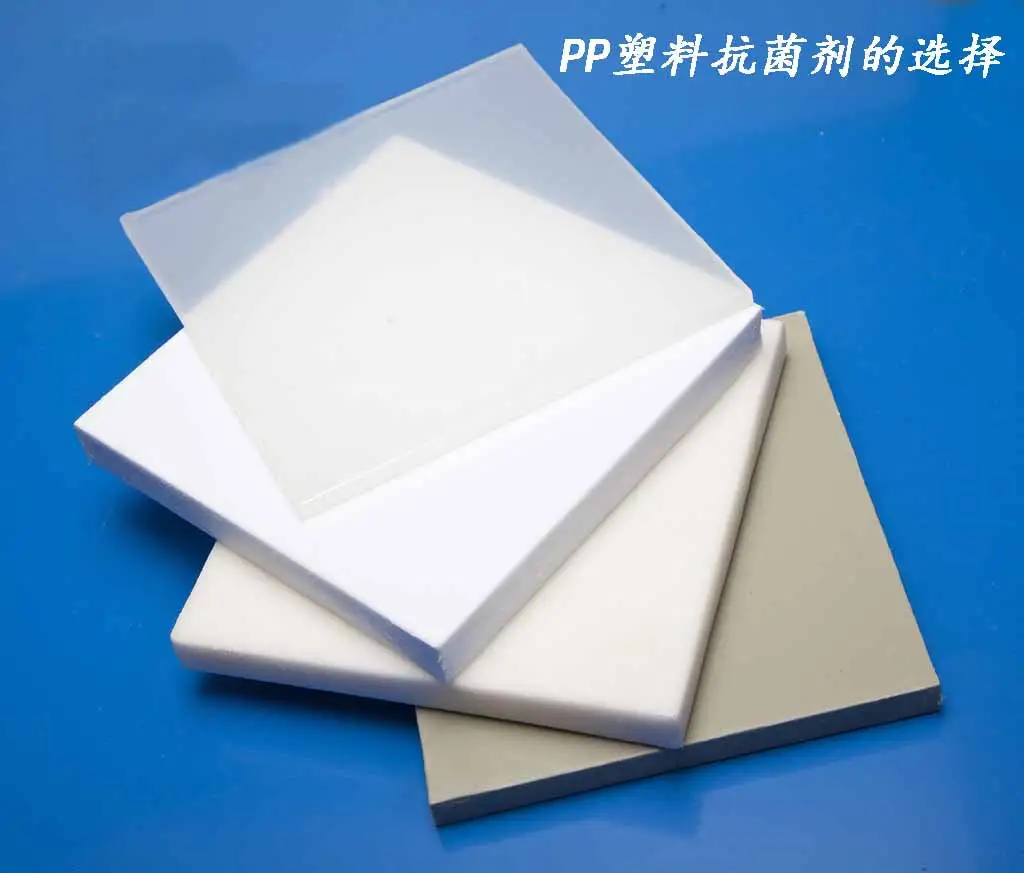
Pale parts and long-life outdoor parts take iHeir-IPL inorganic plastic antimicrobial agent at 0.8%-1.0% on resin weight. It is an inorganic silver type with whiteness above 90 and a particle size of 1-2 microns, more heat-tolerant than a conventional organic grade, so pale and translucent parts are unlikely to yellow, which suits white planters and seed trays that are colour-sensitive and outdoor parts that face long spells of sun and rain.
Three details. First, the inorganic type is friendly to colour but depends more on even dispersion, so run a small sample to check dispersion before a full batch. Second, do not stack it with ECO; pick one band per part, since loading both raises cost and makes the result hard to attribute. Third, outdoor parts also need an anti-ageing and UV-stabiliser system: the antimicrobial deals with mould and surface soiling while anti-ageing deals with chalking and cracking.
5. Surface treatment and the store: a remedy and a humidity finish
Surface treatment has two uses only: a part is already moulded and there is no time to change the material, or a rework batch needs a temporary treatment. Its problem is plain: one layer of wear defeats it, an outdoor part will not last a quarter, and the interface between coating and resin holds water, which can set off blistering and mould. So for volume production it is not recommended as the main route.
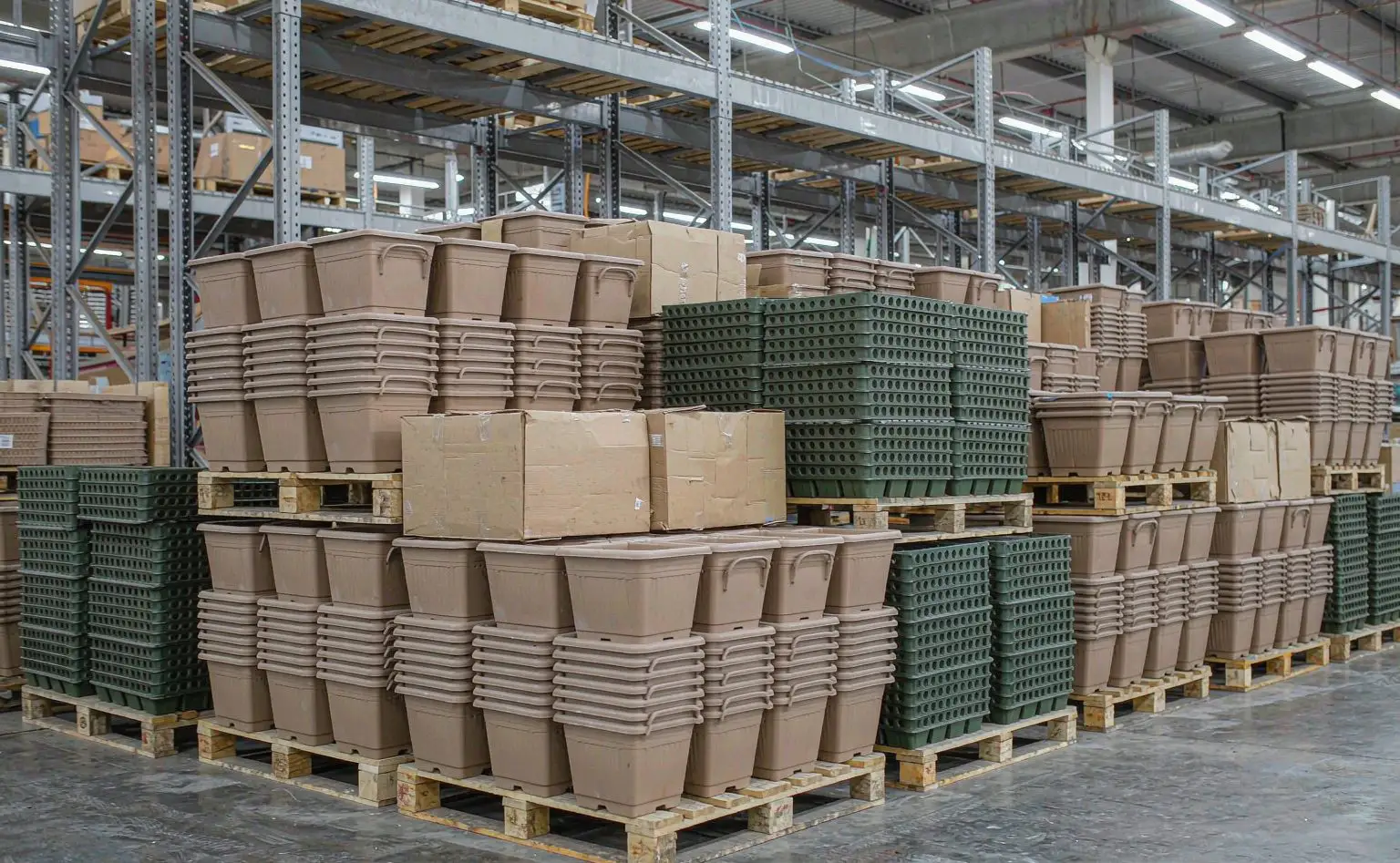
The store matters more than usual for garden ware. Planters and seed trays are bulky, pack tight and stack high, so damp cannot leave the core of a stack; place gas-phase sheets by stack, keep them apart from the goods with liner paper, and hold the store below 60% relative humidity. A sea voyage is long and the day-night swing is wide, so desiccants by container type stabilise the humidity inside; goods stored outdoors should be raised off the ground and kept clear of standing water. For the outdoor picture more broadly, see choosing an anti-mould product for outdoor goods.
6. Questions that come up: masterbatch or surface, and dosing two agents
How do you choose at a glance? If the material can still be changed, use the masterbatch. New parts and batches whose recipe can still be adjusted all go the masterbatch way; only moulded parts that cannot be reformulated are considered for surface treatment, and its wear has to be accepted.
Can ECO and IPL be dosed together? Not advised. Pick one band per part: general parts take ECO, pale and long-life outdoor parts take IPL. Loading both raises cost and makes the effect impossible to attribute.
Can extra loading make up for long outdoor exposure? No. Exposure brings chalking and ageing, which is a materials question, not a concentration question; an outdoor part needs anti-ageing and UV stabilisers built into the recipe, while the antimicrobial deals only with mould.
The route in one line: if the material can be changed, choose the masterbatch and set the band by resin type, iHeir-ECO at 0.3%-0.5% for PE/PP and 0.5%-1.0% for PVC, and switch pale and long-life outdoor parts to iHeir-IPL inorganic at 0.8%-1.0%; surface treatment is a remedy for moulded parts only, and the store and container are held by humidity control, gas-phase sheets and desiccants. Test the long-term growth by a method such as ASTM G21 and hold a complete sample per batch. Samples and TDS sheets are available for a trial on your own line.


