




 View Count:6
 Date:2026-11-10
What does LED display mould work actually involve? The risk on a screen is not spots on the face but damp inside the case reaching the driver board, where one power-up at site writes off a batch of modules. The routine is iHeir-JS117 plastic anti-mould powder at 0.5%-1.0% of part weight compounded into the PC bottom shells and masks before moulding, plus 8-10 T-1000 desiccant sticks per 20ft container. This article covers the dosing, the moulding and the packing.
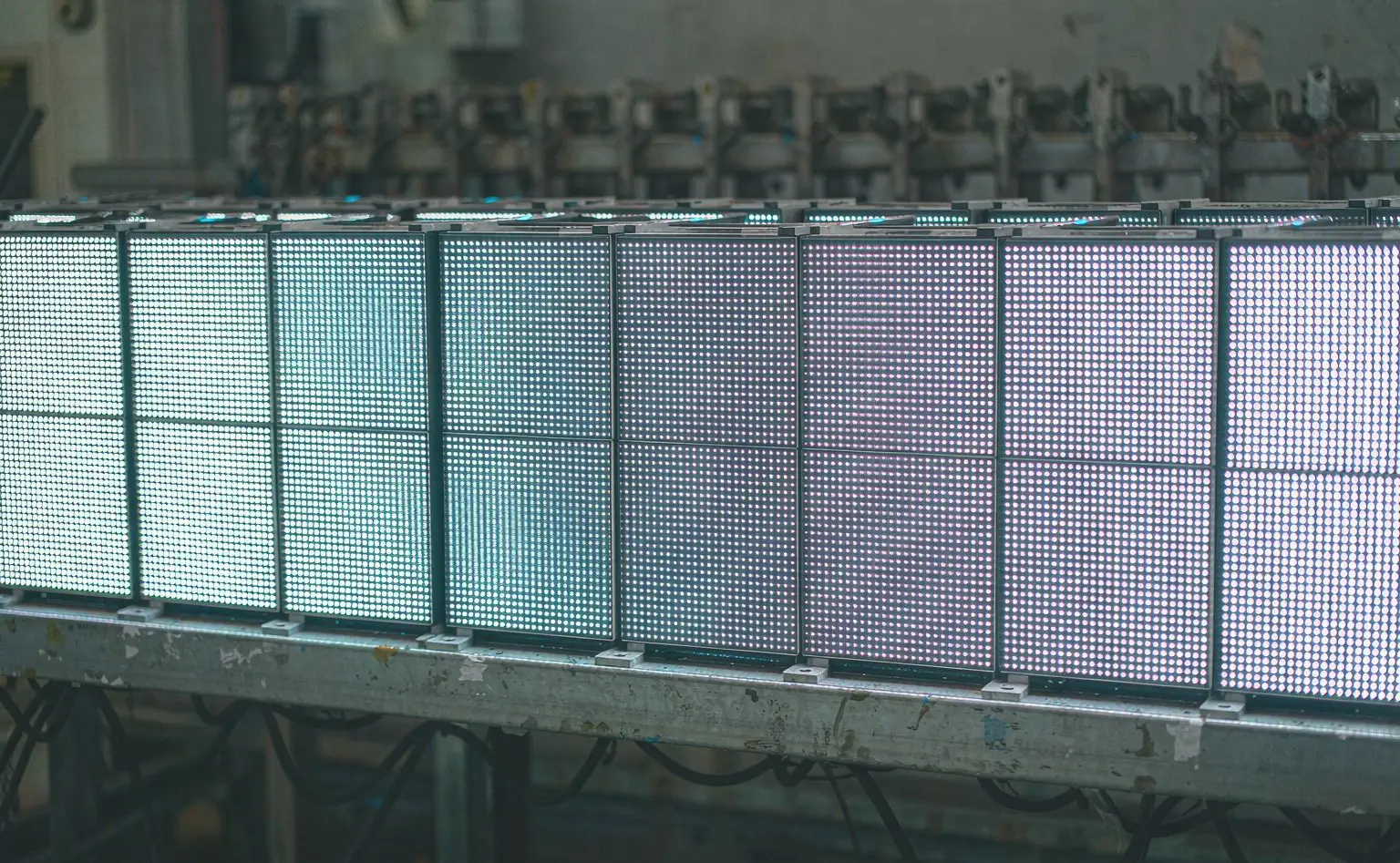
1. Mould and damp get into the shell, the mask and the packing, not the LEDs
Take one LED module apart: PC bottom shell, mask, LED array, PCB, driver IC, potting compound, ribbon cable. Of these, what can mould is the plastic parts and the packaging; what fears damp is the driver board.
Shell and mask go first. PC parts pick up release agent, fingerprints and paper dust through moulding, transport and assembly, and all of that is organic food. In a humid season the white growth starts on the inner wall of the shell and the back of the mask, where nobody sees it from the front.
Packing is the stuffiest stretch. A screen goes into a flight case or a carton with foam and paperwork, sealed. Over a month or two at sea the day-night swing condenses water inside, the water lands on the PCB and the ribbon connectors, and at site the first symptom is a flicker on part of the panel before the whole module goes dark.
Why packing alone is not enough. The plastic carries its own contamination and the packing only holds humidity down; once the case is open and the screen is on a wall, the plastic is back in warm humid air. Dosing the shell is a permanent effect, drying the case only covers the voyage.
2. Shell compound and packing are counted separately
The table lines up the shell, the mask, the PCB and the packing. Plastic parts are counted as a percentage of part weight, desiccant in sticks; the two are not convertible.
| Part | Material | Product and level | Stage | Control point |
|---|---|---|---|---|
| Module bottom shell | PC, PC+ABS | iHeir-JS117 0.5%-1.0% | Compound, then mould | Of part weight, mixed evenly |
| Mask and louvre | PC | iHeir-JS117 with the same lot | Moulding | Trial light colours for shade first |
| LEDs and PCB | LED, FR-4 | No dosing | SMT, soldering | Must not touch any treatment liquor |
| Flight case and container | Case, foam | T-1000 1-2 per case | Case packing, loading | Hang on the wall, not under the load |
One boundary. iHeir-JS117 works inside the plastic and keeps working after the screen leaves the plant; the desiccant covers the volume inside the case and is finished when the voyage ends. Skip the shell and the driest case still moulds three months after installation.
3. Compounding the PC shell at 0.5%-1.0%
The level is 0.5%-1.0% of part weight. Indoor screens in dry regions take 0.5%; outdoor screens, coastal sites and orders with an antimicrobial acceptance test take 1.0%. Count on the finished part, not on the resin weight.
How to feed it. Into the mixer with the pellets, dry-blended until even, then to the moulding machine. A line with a masterbatch route can make a 10% masterbatch and let down from there, which is more even than dry blending. Poor mixing is the most common failure: some parts in a lot get enough and others do not, and the antimicrobial result across a batch of modules does not match.
Trial first. PC runs at 260-300C, so the powder has to survive that without decomposing, blooming or shifting colour. Mould a trial set from the same grade and check three things: pits or silver streaks on the surface, haze on a clear mask, and any drop in ball impact or clip strength. If the trial fails, protect the part from post-treatment and packing instead of forcing the dose up.
Trial light colours separately. White and light grey shells show shade differences worst. iHeir-JS117 is a white to pale yellow powder, invisible in dark parts; for light parts make a colour plaque first and hold the dose down or change route if the shade is out.
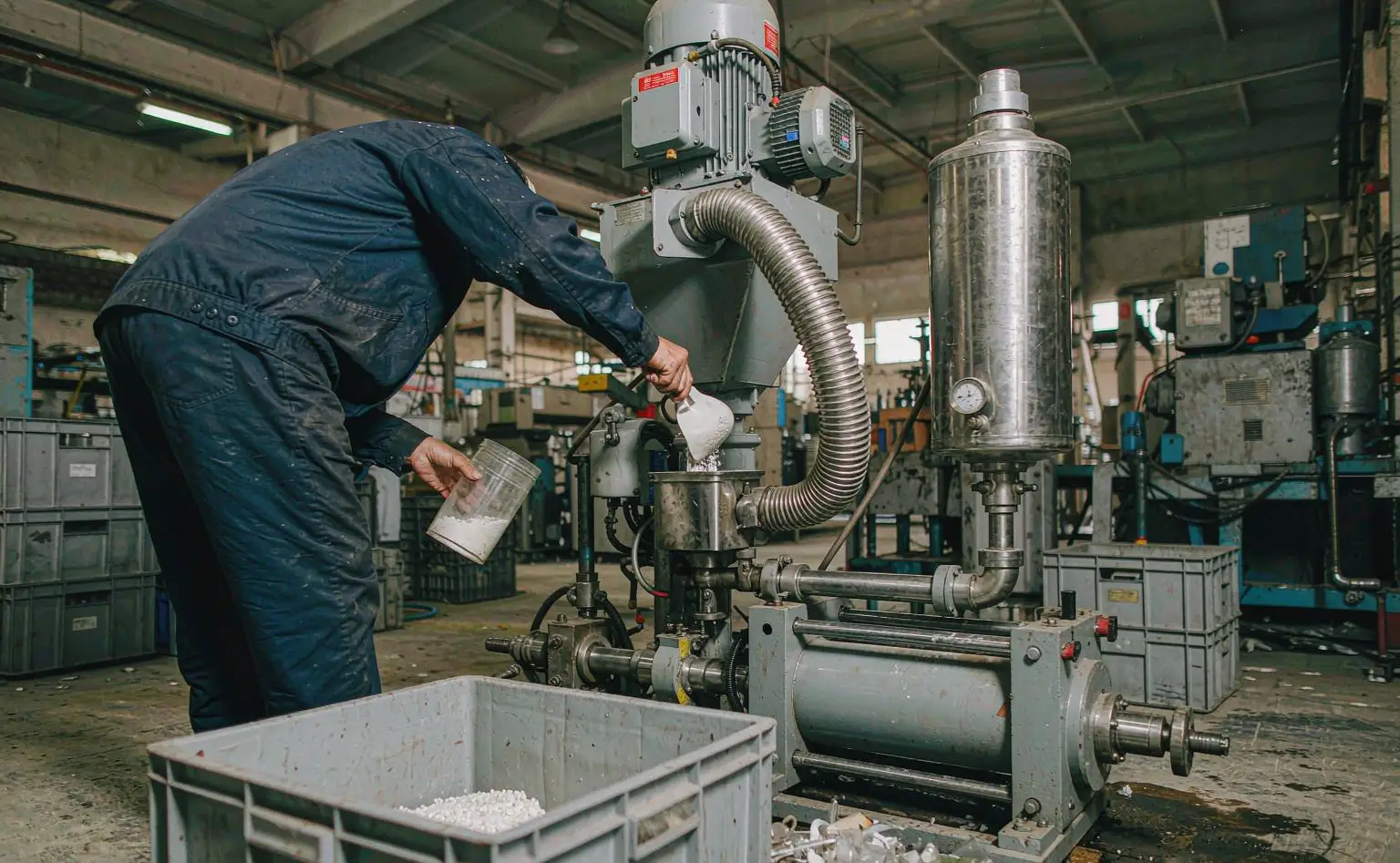
4. LEDs, PCB and driver board must not touch treatment liquor
Half the parts on a screen cannot take water, let alone water carrying an agent. Write that boundary onto the line.
LEDs and optical parts. The emitting face, diffuser and light guide show a mark once any liquid dries on them, and brightness uniformity fails straight away. These parts get dry handling only: dust removal, humidity control, static control.
PCB and connectors. Ribbon sockets, gold fingers and pads oxidise on contact with liquid, contact resistance climbs, and the symptom is a random flicker that is the hardest fault to trace. Keep every spray bottle off the assembly bench.
Driver board and potting. What the driver board needs protection from is damp, not mould. Potting compound can be reformulated for mould resistance, but that is a different recipe and outside this article; this section is handled by packing and shop humidity.
Shop humidity. Hold SMT and assembly at 45%-60% RH and run dehumidifiers through the humid season; close windows and shut fresh air at shift end so damp does not flow back in overnight.
5. Flight cases and containers: 1-2 per case, 8-10 per 20ft box
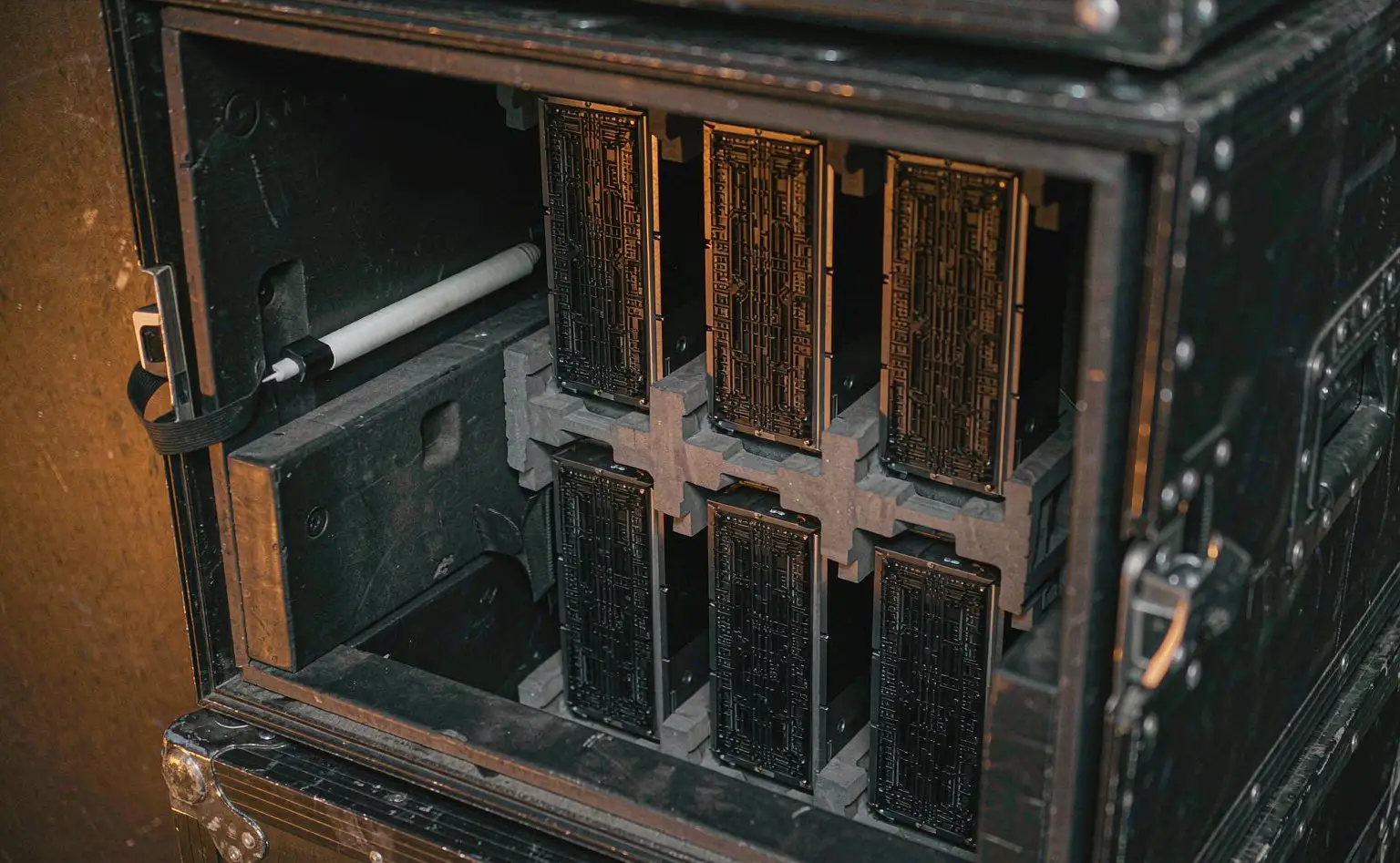
Screens in flight cases get 1-2 T-1000 sticks hung on the case straps, never laid on the modules. Full containers take 8-10 sticks in a 20ft and 10-12 in a 40ft, split along both inner walls.
Why the case needs its own. A flight case is a sealed box, and the foam and paperwork both carry water; that moisture cannot leave and works directly on the back of the modules. One or two sticks give that stretch its own humidity control.
Why not a salt-type bag. T-1000 holds water in cross-linked sodium polyacrylate, gels as it absorbs and does not bleed back under load; pH is about 6.9, neutral, so it does not attack brackets or screws. A salt-type bag turns to liquid when saturated, and a leak onto a module is a write-off.
Before and after loading. Check the case for damage and the foam for damp, line the container with barrier film, stack with a ventilation channel, and count the sticks before the doors close. Other electronics routines sit in power bank shell packing, and the small-device side in battery compartment control.
6. Questions on shells, levels and damp screens
Q: If the shell is dosed, does the mask need it too?
Dosing the same lot is the simplest route. The mask is a light part, so confirm the shade on a trial first; leaving it out will not fail immediately, but mould on the back of the mask still ends up inside the module.
Q: 0.5% or 1.0%, a factor of two?
Follow the service environment and the acceptance test. Indoor, dry, fast turnover takes 0.5%; outdoor screens, coastal sites and buyers asking for an antimicrobial report take 1.0%. Both count on part weight.
Q: Can a surface spray replace compounding?
Not advised. A spray damages the emitting face and the PCB, and it sits only on the surface, so one rub removes it. A plastic part that has to last is dosed in the compound.
Q: The screens took water on the water. What happens at the port?
Do not power them up. Open the cases, unpack, rest in a dry room for 24 hours or more, then check insulation and connector resistance before power. Isolate any module that already flickers instead of mixing it back into the batch.
Four points: compound iHeir-JS117 at 0.5%-1.0% of part weight into PC shells and masks, dry-blended evenly or through a masterbatch, with a trial at PC processing temperature for pits, haze and strength; keep LEDs, PCB and ribbon sockets away from every treatment liquor and hold SMT and assembly at 45%-60% RH; hang 1-2 T-1000 sticks in each flight case and 8-10 in a 20ft container or 10-12 in a 40ft, on the walls with a clear air path; send plastic parts to ISO 846 or ASTM G21 and run whole-unit damp heat to GB/T 2423.3. A kilogram of powder goes out for a trial, with MOQ on the iHeir-JS117 product page.


