




 View Count:6
 Date:2026-11-10
Can glassware mould be prevented? Glass itself does not feed mould; it grows on the paper dividers, the foam liners and the cartons, then prints onto the ware so that a whole carton opens looking dusty. The routine is iHeir-D vapour sheets at 0.1-0.2g of active matter per sheet in place of plain dividers, plus 8-10 T-1000 desiccant sticks in a 20ft container. This article covers the swap, the drying step and the loading figures.
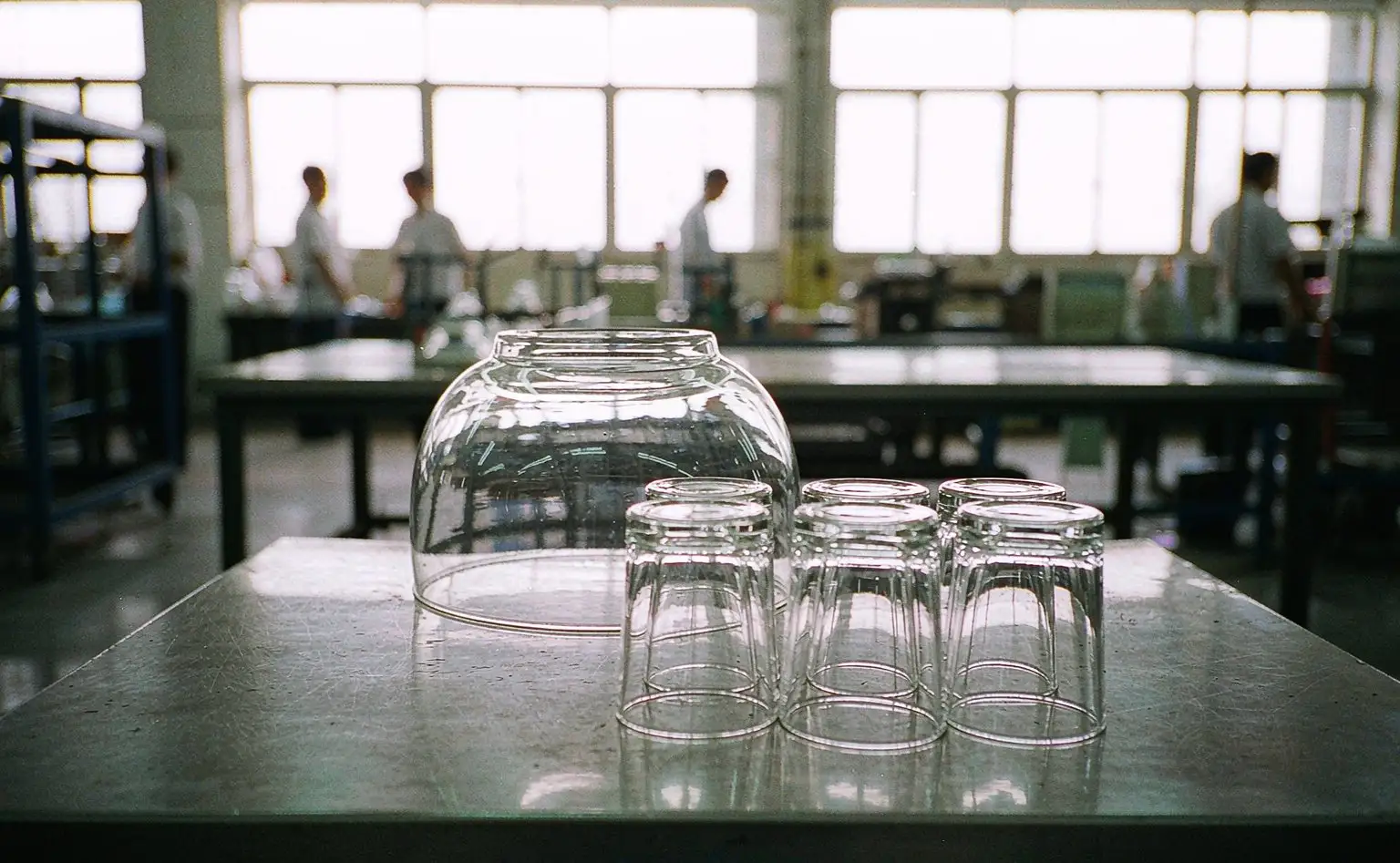
1. Glass does not mould, the dividers, liners and cartons do
Open a carton of export glassware and you have the ware, corrugated dividers, foam or EPE liners, a colour box and the shipper. Of those four packaging layers, only the glass cannot mould; the other three are paper and foam, and all of them can.
The dividers go first. Corrugated and white-board dividers take up moisture quickly and go soft as soon as the shop floor gets humid. The starch adhesive and recycled fibre in the board are food for mould, so spots start at the divider edges and flute cuts and then rub onto the wall of the glass resting against them.
Foam liners are worse hidden. EPE and EVA liners hold a great deal of closed-cell volume, and moisture sits in those cells. The surface looks clean until a seam is opened and a grey-green layer shows on the cell walls.
Why the glass pays for it. The spots land on the ware, and the buyer inspects the ware, not the packaging. A rejected lot or a hundred percent wipe-down is costed against the glass, not against the board.
2. Dividers, liners and the container are counted separately
The table lines up the dividers, the liners, the colour box and the container. The vapour sheet is counted in sheets of active matter, the desiccant in sticks; the two are not convertible.
| Part | Material | Product and level | Stage | Control point |
|---|---|---|---|---|
| Dividers between pieces | Corrugated board, white board | iHeir-D 0.1-0.2g per sheet | Cartoning | Swap the divider or sandwich the sheet |
| Foam and EPE liners | EPE, EVA | Drying plus vapour space | Liner assembly | Hold liner moisture first |
| Colour box and shipper | Corrugated board | Moisture tested to GB/T 462 | Packing | Board moisture below 10% |
| Container volume | Loaded cartons | T-1000 8-10 sticks, 20ft | Loading | On the walls, clear of the stack |
One boundary. The vapour sheet covers the closed volume inside the carton, the desiccant covers the whole container; water already in the board is beyond what a stick can pull out. Do both and the carton opens without a smell.
3. Swapping the dividers for vapour sheets at 0.1-0.2g
Two ways to do it. Direct replacement: the sheet between pieces becomes the divider. Sandwich: keep the original divider and press a vapour sheet on each side. High-volume lines take the first because the sheet can be die-cut to shape; dividers that carry the cushioning and cannot be replaced take the second.
Dose by the sheet. Each sheet carries 0.1-0.2g of active matter, matched to carton volume: one sheet in a normal glass colour box, two in large or deep pieces or a carton of twelve and up, one more at the mouth of deep bowl-shaped pieces.
Trial compatibility first. Seal three times the normal dose with the ware, mist a little water, separate with paper and inspect after a few days for a hazy film on the glass, a dulled gold stamp or a shift in the printed colour box. iHeir-D carries 70%±5 solids and can corrode poor-quality metal when damp, so ware with metal caps or bands is trialled first.
Do not skip the seal. The sheet works by release, so an open carton or an unclosed colour box simply vents it. Close the colour box, tape the shipper fully, and avoid opening cartons repeatedly during inspection.

4. Packing before the wash is dry is the most common self-inflicted case
A lot of glassware mould is not bought in, it is carried in: the wash is not dry and the ware goes straight into packing.
Blow the film off. Fit air knives at the washer exit to strip the water film inside and out; draining time depends on depth, and deep pieces need twice the time of a tumbler. Anything that feels cool or shows a water line goes back.
The cavity is the hardest to dry. The base cavity of a tumbler or bottle is a dead corner no air knife reaches. Before dividers go in, turn a few pieces over; any bead of water inside means the carton stays open.
Board moisture is a separate gate. Test corrugated board to GB/T 462 and use it below 10%; accept cartons to GB/T 6543, and spread cartons that arrive in the rainy season out in the store for two days before the line uses them.
Sample by lot. Run counting sampling to GB/T 2828.1, open cartons from each lot and look at divider edges and the rim of the ware; record the area, position and whether a spot wipes off, because that tells you whether the board came in contaminated or the load took water.
5. Sticks in the container: 8-10 for a 20ft box
Hang 8-10 sticks in a 20ft container and 10-12 in a 40ft (T-1000, 1000g). These are recommended figures; add more for long sea legs, routes with wide temperature swings and long yard dwell.
How to hang them. On the lashing rings along both inner walls, split front and rear rather than crowding the door end, and keep a gap between stick and cargo so air can move. Horizontal or vertical both work; under the stack does not.
Why a stick rather than a salt-type desiccant bag. T-1000 holds moisture in cross-linked sodium polyacrylate, which gels as it absorbs so water stays inside the polymer network and does not bleed back under load. pH is about 6.9, neutral, so it does not attack metal. A salt-type bag turns to liquid when saturated and a leak soaks the cargo.
Before and after loading. Check the box for holes and that the floor is dry, line it with barrier film, stack with a ventilation channel, and before closing the doors count the sticks and check none has dropped behind the cargo. Other routines sit in export warehouse control, and the carton grading side in mouldy carton grading.
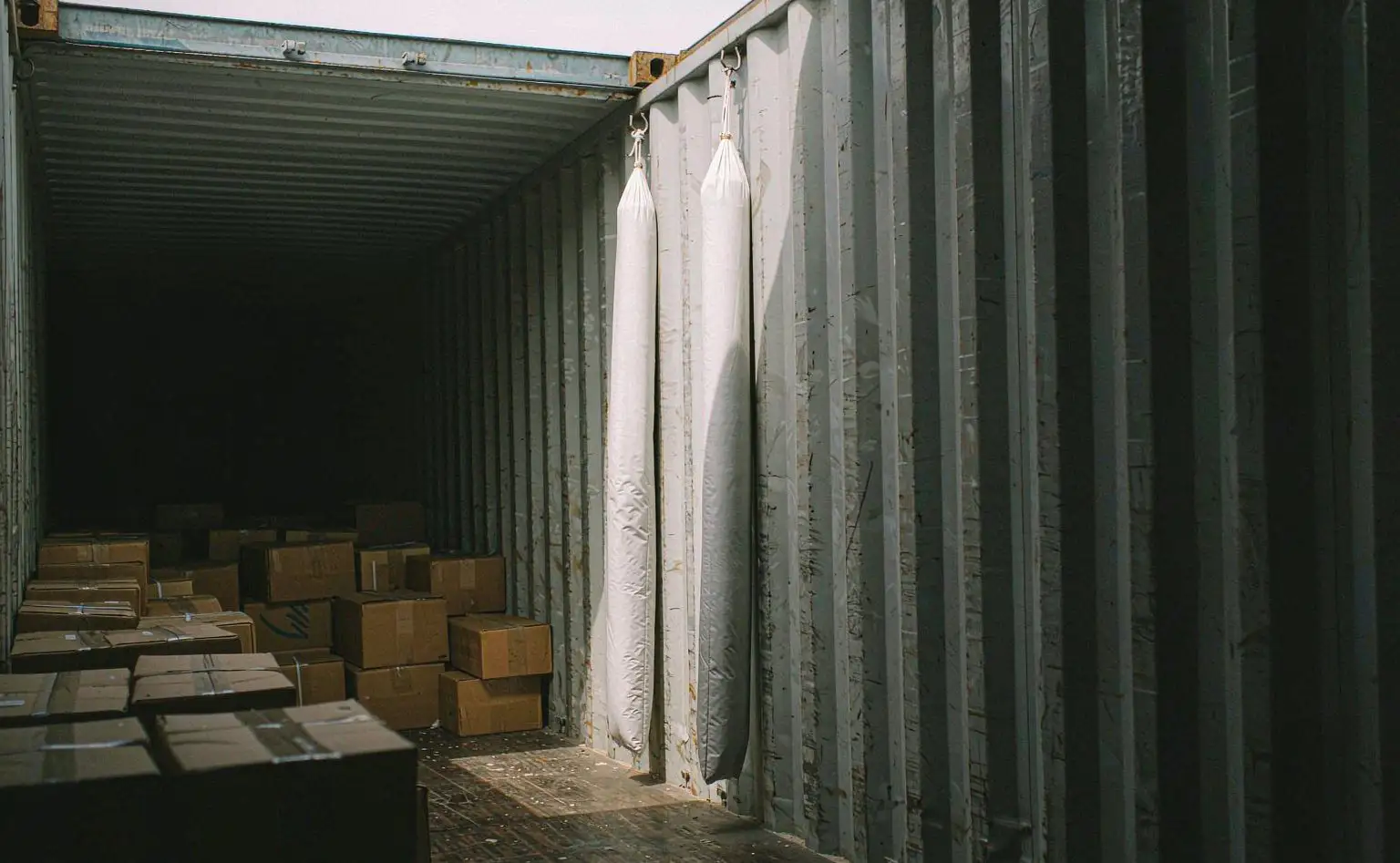
6. Questions on the ware, the dividers and the sticks
Q: Does the glassware itself need a treatment?
No. Glass is inorganic and offers nothing for mould to live on; treating the surface costs money and achieves nothing. Work on the dividers, the liners and the volume inside the carton.
Q: Can a vapour sheet replace a corrugated divider for cushioning?
It depends on grammage and structure. Choose a stiffer grade for direct replacement, or keep the corrugated divider and sandwich the sheet; a thin sheet alone will show up first in the drop test.
Q: Can the sticks go inside the colour box?
A small format can, but container protection still belongs on the walls. A colour box is too small a volume for one stick to absorb much, and it makes the box stuffier.
Q: Can spotted ware be wiped clean?
Spots on plain glass wipe off, but they often sit inside printing, gold stamping or a frosted finish and leave a mark. Run the lot as a downgrade rather than mixing it into good cartons.
Four points: swap the dividers for iHeir-D sheets at 0.1-0.2g of active matter, seal the carton and trial at three times the dose first; blow the cavity dry after washing and hold corrugated board below 10% moisture to GB/T 462; hang 8-10 T-1000 sticks in a 20ft container and 10-12 in a 40ft, split along both walls with a clear air path; sample to GB/T 2828.1 and accept cartons to GB/T 6543. A pack of vapour sheets and two sticks go out for a trial, with MOQ on the T-1000 product page.


