




 View Count:23
 Date:2026-11-18
Where does wallpaper mould start? At the dip, where the paper meets it. Wood-pulp fibre carries hemicellulose, so a dip that is only water leaves all of that food in place, and a damp face layer then seals water into the roll. Dose 1%-2% iHeir-JS into the dip and 0.8%-1.0% iHeir-IPL into the face compound, dry before lamination and cool before winding. This article covers both stages, the drying criteria and the winding limits.
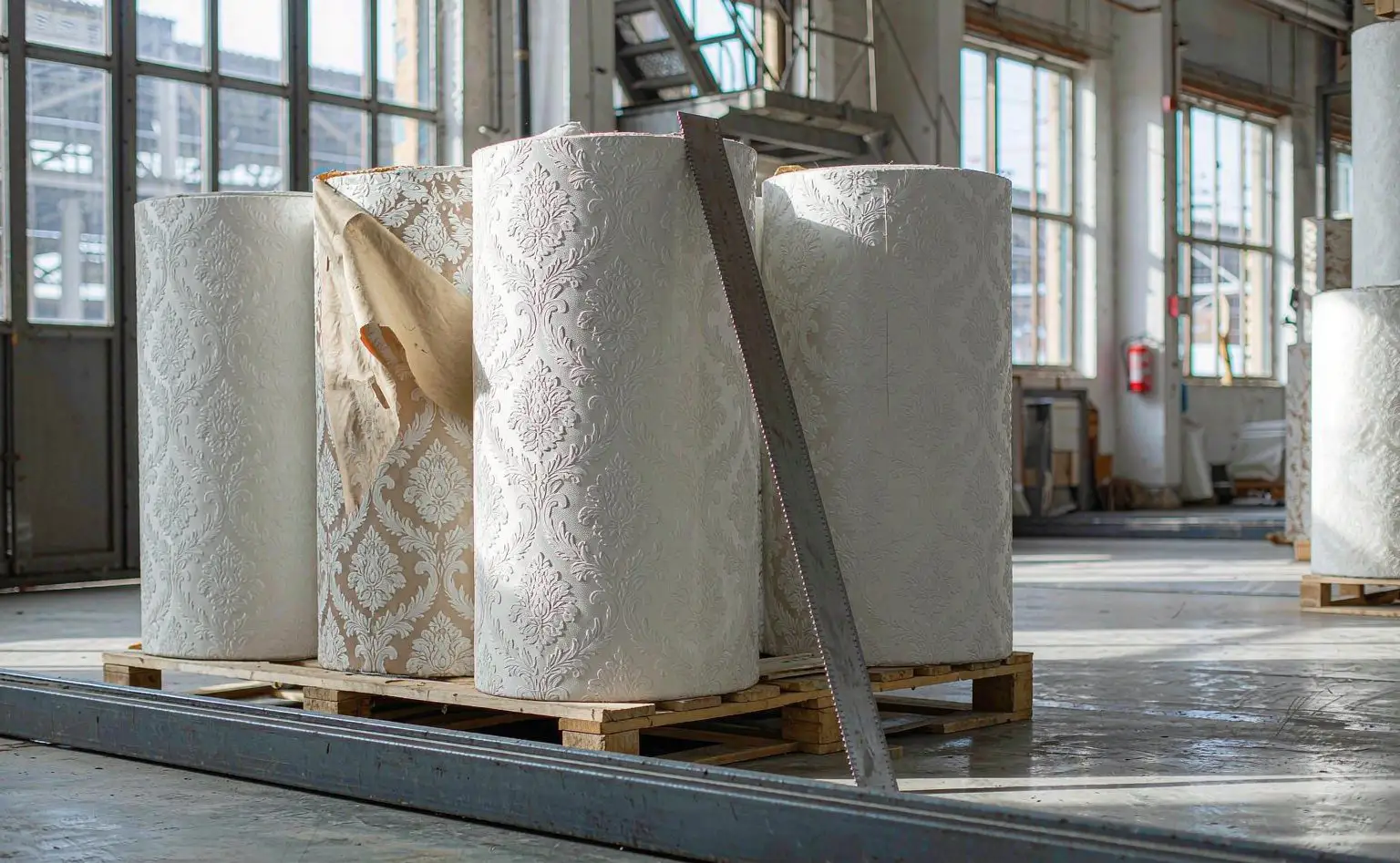
1. Where the mould comes from: base paper, binder, water in the roll
Wallpaper is a laminate of base paper and a face layer. Mould does not care about PVC; it goes for the paper fibre, the starch binder and the water between layers.
The base paper comes first. Hemicellulose and residual lignin in wood-pulp paper are nutrients, which is why the dip itself has to carry an anti-mould component rather than water alone. A dip with only water, or only a wet-strength resin, wets the sheet through and leaves every bit of the food in it.
The binder comes second. Starch or latex in the dip tank is a ready culture medium, and with the liquor held at 30-40℃ and recycled, an undosed tank turns sour within a few days and inoculates every metre of paper that passes through it.
Water in the roll comes third. After coating, the web leaves the drying tunnel above 60℃; wind it before it cools and the residual heat pushes vapour towards the core, where it condenses between layers. A roll several hundred metres long then opens dry outside and tacky inside, with the spots growing outwards.
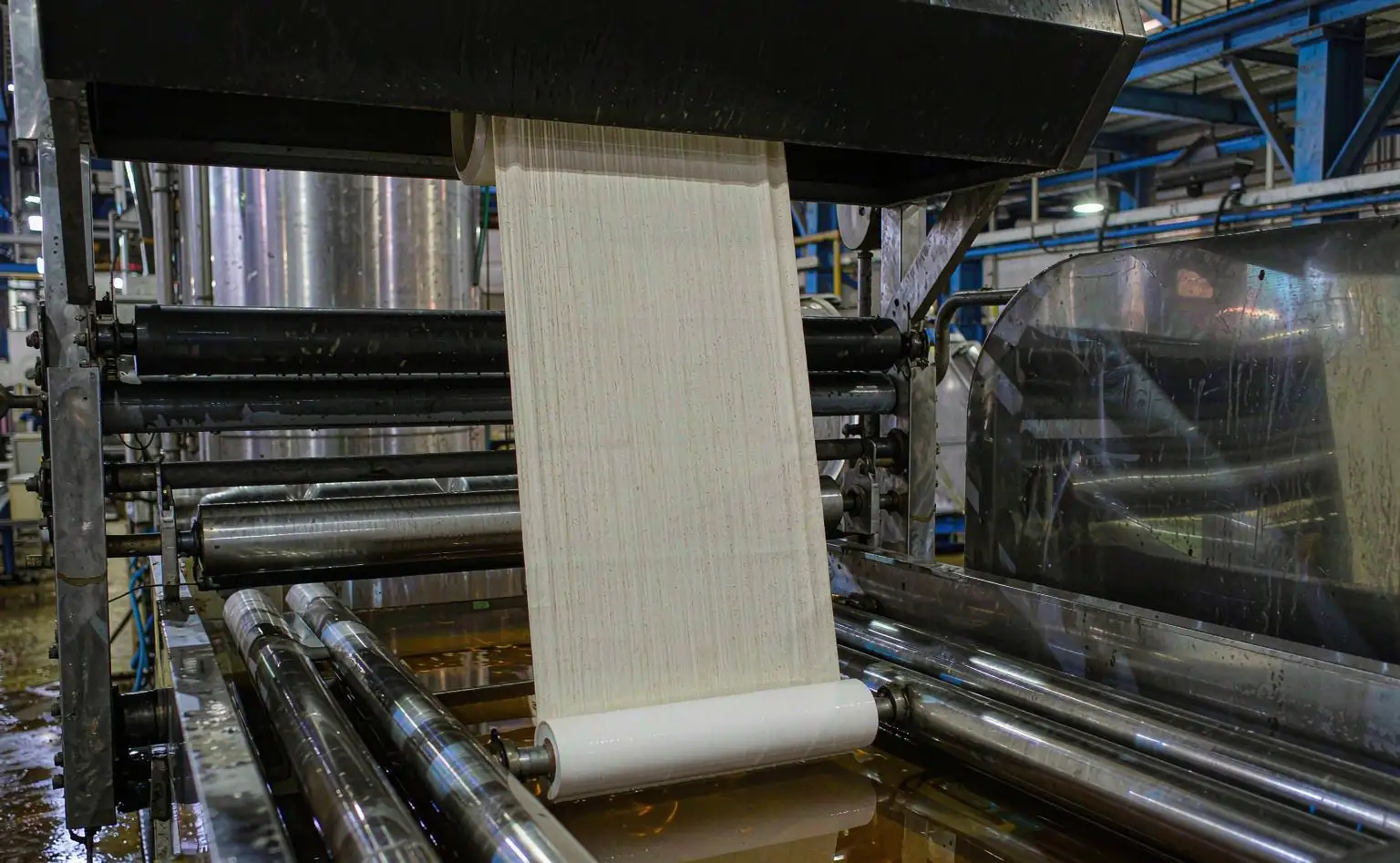
2. The base paper dip: 1%-2% in the binder, and keep the tank clean
Dose on the binder weight. iHeir-JS is used at 1%-2%, taken on the total weight of the binder in the dip, whether that is starch, latex or a blend, not on the dry weight of the paper. Take the top of the range in a concentrated tank; a dose in a water-only tank achieves nothing, because there is no binder to carry it onto the sheet.
Dilute before it goes in. Thin the agent with about three parts soft water, then add it along the tank wall while the liquor circulates for 10-15 minutes. Poured neat into a thick binder it over-concentrates locally and leaves streaks on the face.
Hold the tank at pH 6-7. iHeir-JS is stable in a water-based system at pH 6-7. When the paper drags the tank down, bring it back with buffer rather than a slug of alkali, which breaks the emulsion. Use soft water; calcium and magnesium in hard water curdle the binder.
Test and change the liquor. Check pH and viscosity once a shift. A sudden viscosity drop means the binder has broken down and no dose brings it back; change the tank instead.
3. The face layer: 0.8%-1.0% in the compound, dry then cool
Dose on the face compound. iHeir-IPL goes in at 0.8%-1.0% on the weight of the PVC paste or the water-based face coating. It is a white powder with whiteness above 90 and a 1-2μm particle size, so pale and pearlescent faces show no shift.
Pre-mix for dispersion. Run the powder with plasticiser or filler in a high-speed disperser for 5-10 minutes and add the resulting slurry to the compound. Tipped in dry, it clusters and the pressed face shows specks, and those patches carry no protection.
Measure moisture before lamination. Take the base paper out of the dip dryer and check it; 6%-8% is the window for lamination. Wetter and the layers carry water, drier and the sheet turns brittle and cracks at the embossing nip. A water-based face coating has to be dry to the touch as well.
Cool below 35℃ before winding. Run the web over cooling rollers down to 35℃ and only then wind it. Wound hot to keep output up, several hundred metres of vapour sit against the core.
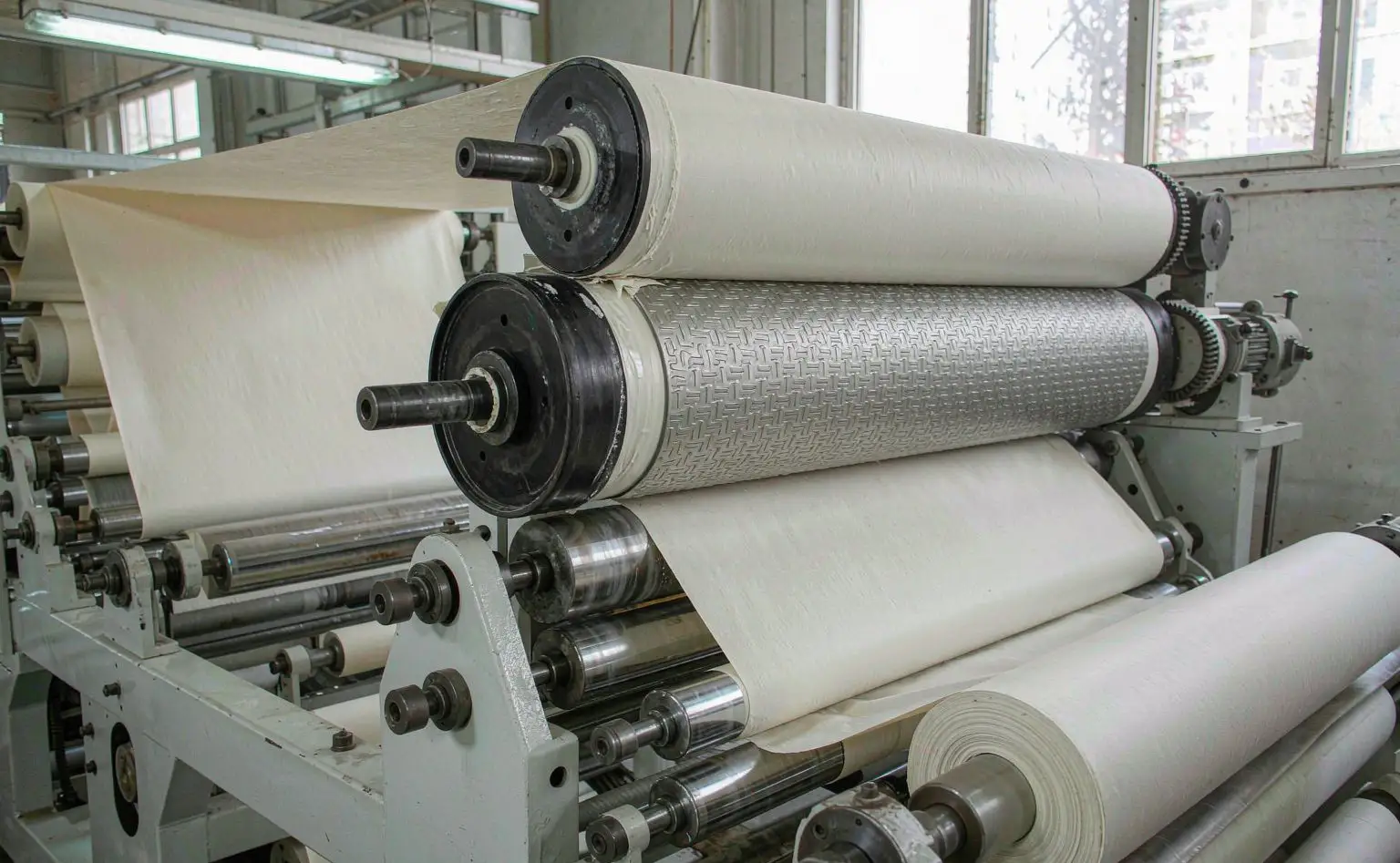
4. Winding and packing: tension, core, standing on end
Do not wind tight. A hard roll leaves no air path between layers and the vapour cannot leave; run at the lower end of the recommended tension, and lower still for large diameters.
Dry the core. A damp core pushes water outwards and the inner layers fail first. Test incoming cores and dry anything above 10% moisture.
Store on end. Stand rolls upright on the pallet; laid flat, the roll deforms under its own weight and the layers press together. Pallets 10 cm off the floor and 20 cm off the wall, with gaps between stacks.
Wrap the roll. Shrink film or moisture-barrier paper around the whole roll, sealed at both ends. An open roll keeps pulling moisture out of the store and spends the margin built in at the two earlier stages.
| Stage | Position | Product and level | How it is added | Control point |
|---|---|---|---|---|
| Base paper dip | Binder in the tank | iHeir-JS 1%-2% on binder weight | Diluted, added along the wall | pH 6-7, soft water, circulate 10-15 min |
| Base paper drying | Out of the dip | No addition | Drying tunnel | 6%-8% moisture before lamination |
| Face compound | PVC paste or water-based coating | iHeir-IPL 0.8%-1.0% on compound weight | Pre-mixed with plasticiser | 5-10 min dispersion, no specks |
| Lamination and gelling | After coating | No addition | Tunnel and embossing | Gelling to recipe, web cooled down |
| Winding | Inside the roll | No addition | Cooling rollers, winder | Below 35℃ before winding |
One boundary. The dip covers the nutrients in the fibre, the additive covers the compound, drying and cooling cover the water between layers. The three are in series, and the last can only partly make up for a missed first.
5. Store and export: humidity, standing rolls, the container
Hold the store below 60% RH. Run a dehumidifier above 70% and log it at the wall. Never store rolls beside freshly wound hot rolls; the vapour they release is taken up by cooler stock.
First in, first out. Ship the oldest rolls first and open-check inner layers past three months; do not fill an export order from stock older than six months.
Container and pallets. Check container floor and wall moisture, line the walls with a vapour barrier and put board under the load. Dry any pallet timber above 20% moisture. Over thirty to forty days at sea the wall condensate settles at the bottom of the stack, so the bottom pallet gets another layer of board.
Open-check on arrival. Write the unwind check into the inspection sheet: watermark near the core, blocking between layers, spots that are points or patches. Comparable practice on paper-based stock is in wall sticker PVC film and release paper and glue going mouldy.
6. Questions from the line
Q: Can we spray the base paper instead of dipping it?
A: Not for a batch that needs protection. A spray covers the surface while the fibre inside stays dry, and the cut edge then carries nothing; the value of the dip is that the agent travels into the fibre with the water.
Q: Can one product cover both stages?
A: Two different systems. The base paper stage needs an agent that dissolves in a water-based binder; the face is a PVC paste, where a powder disperses. One product for both leaves both short.
Q: We found water beads and blocking inside a roll, can it be saved?
A: Light blocking can be unwound, aired and re-wound at controlled humidity, but the roll is downgraded. Patchy spots mean scrap and must not go into an export lot; the cause is usually winding temperature or tension.
Q: PVC paste contains no water, so why dry it?
A: The paste does not, but the base paper and any water-based coating do, and lamination moves that water into the interface; a hot web wound without cooling condenses it anyway. Drying before lamination and cooling before winding are two separate gates.
Dose 1%-2% iHeir-JS on the binder weight, diluted and added along the tank wall with 10-15 minutes of circulation at pH 6-7 in soft water; take the base paper out of the dryer at 6%-8% moisture before lamination; add 0.8%-1.0% iHeir-IPL to the face compound after a 5-10 minute pre-mix with plasticiser; cool below 35℃ before winding, keep cores under 10% moisture, and store upright below 60% RH. Mould resistance can be verified to GB/T 1741 and ASTM G21, and lead times are on the iHeir-JS product page.


