




 View Count:32
 Date:2026-11-18
Is copper busbar mould preventable? Copper and tin feed nothing, but drawing oil, tinning rinse water and paper dust do, and damp turns them into spots that a buyer reads as both an appearance fault and a doubt about the material. Dry to no watermark after tinning, clean the oil off before wrapping, sheet 0.1-0.2 g iHeir-D between the layers and hang T-1000 sticks in the container. This article covers the drying criteria, the cleaning method and the sheet count.
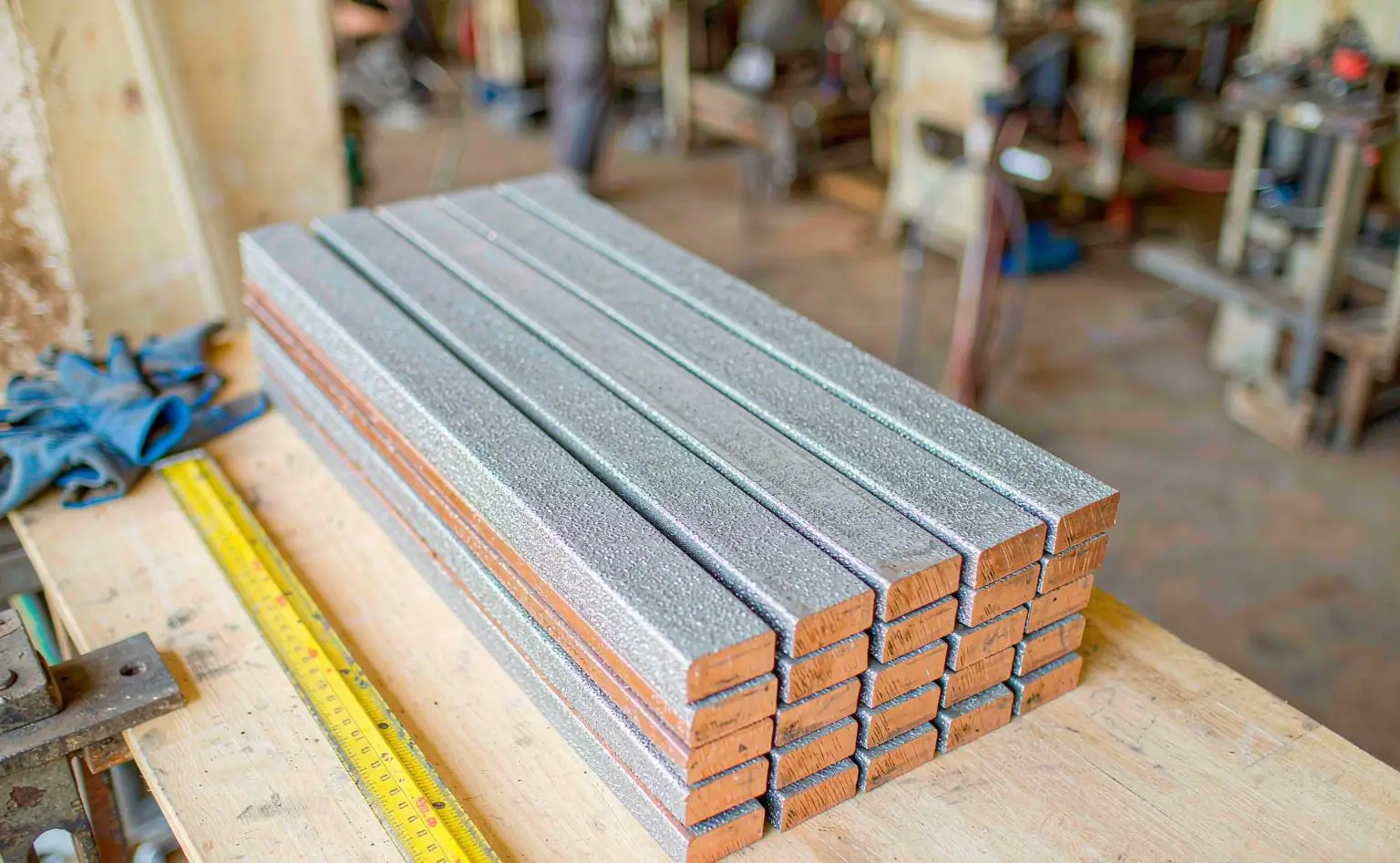
1. Where the mould comes from: oil, water film, paper and case
Copper and tin offer micro-organisms nothing to eat. What grows on a busbar is the breakdown of oil film, cleaning residue and paper fibre in damp, and the spot is only the visible end of it.
Drawing and rust-preventive oil come first. Extruded or drawn bars carry an oil layer with copper dust in it, and that film both takes up moisture and holds nutrients. Wrap without cleaning it off and the oil sits inside the paper; two weeks later the spots appear.
The water film after tinning comes second. Hot-dip or electroplated tin means rinse, passivation and drying, and water hides in the drilled ends, inside bends and between bars that touch. Wrap before it is dry and the paper takes the water first, then the mould follows.
Paper and case come third. Kraft, vapour-phase paper, corrugated dividers and case boards all take up moisture, and a board above 20% moisture is a wet sponge inside the packing. Thirty to forty days at sea and the wall condensate ends up in the bottom of the case.
Spots usually arrive mixed with oxidation: white specks first, then green or a dull tin layer; if you cannot tell them apart, treat it as the worse case.
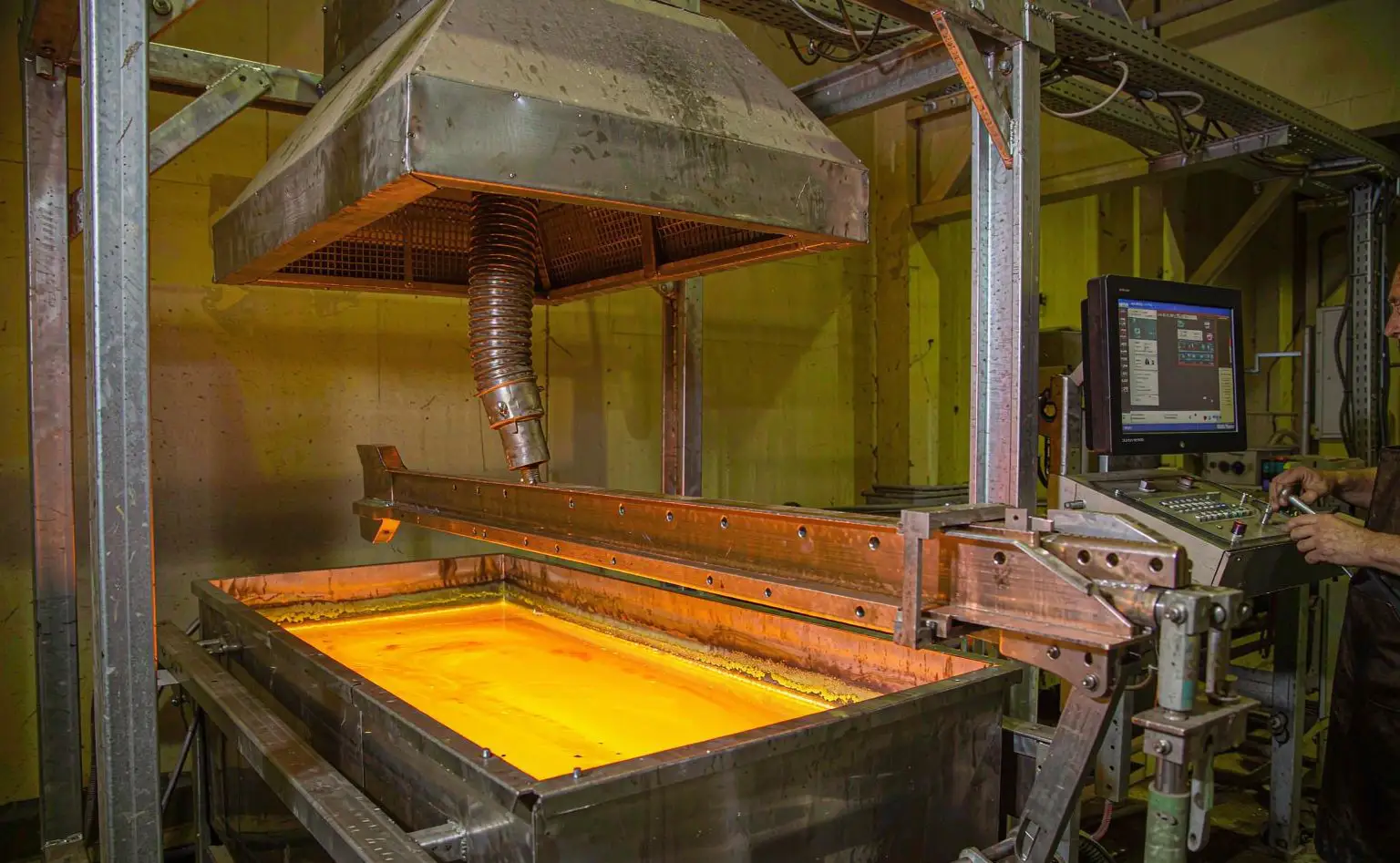
2. How to dry after tinning: knives for free water, a low oven for the rest
Air knives first. Set the knives square to the bar face and the ends, and raise pressure until the bar stops vibrating. Knives only clear free water; water in the holes and between touching bars still needs the oven.
Dry at 60-80℃, not hotter. Too hot and the tin surface skins over while the inside stays wet. Run 20-40 minutes, the top of the range for thick bars and drilled parts, through an oven with an extraction vent; without extraction the moisture only moves from the bar into the air and back.
Test with white paper. Cool to room temperature, press clean white paper on the face and over a drilled end for ten seconds; no watermark means dry, a watermark means another pass. A bar straight out of the oven is hot, and hot bars feel dry.
3. How to clean before wrapping: neutral cleaner and lint-free cloth
Work from the ends inwards. Wipe the drilled ends and the inside of bends first, then the faces, one pass per cloth face. Heavy oil gets a dry wipe first, then a wet one.
No chlorine. Chlorinated solvents and cleaners left on copper push the metal straight into corrosion, so the green spots arrive before any mould. Rinse with deionised or clean soft water and dry again.
Do not handle the faces bare-handed. Salt in sweat is ready nutrition; wear clean gloves, and put sampled bars straight back into the packing instead of leaving them on the bench.
The oil criterion. Wipe a face with white cloth; no yellow-brown mark means clean. Sample three to five bars per lot before wrapping and record it on the route card.
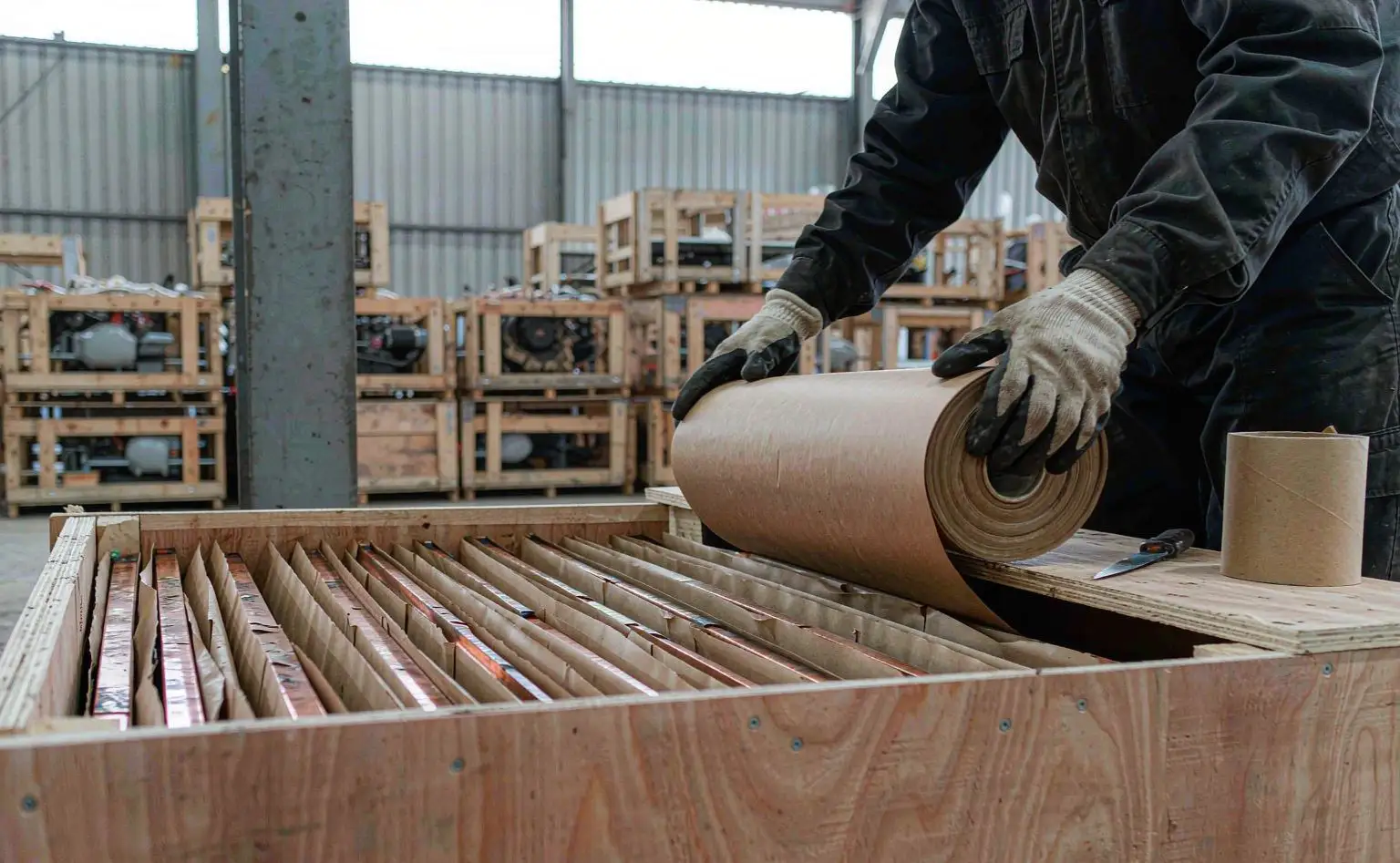
4. How much paper: one sheet per layer, after a compatibility test
One sheet per layer. Lay an iHeir-D sheet flat between two layers of bars, each carrying 0.1-0.2 g of active ingredient, face down to cover the layer below. A bundle of up to four layers takes three sheets; above four, add one sheet per two layers.
Do not lay it on the tin. Vapour-phase paper can corrode poor-quality metal in damp, and a tin layer is thin with pinholes, so put neutral or capacitor paper between sheet and bar. Bag-test at three times the dose for seven days and check the tin for dulling or mottling before fixing the count.
Wrap the outside as well. Close the bundle in kraft or film-faced paper and tape the seam; an open seam lets the sheet pull moisture out of the shop air and spends it early.
Do not bundle different metals. Copper next to aluminium or galvanised parts invites galvanic corrosion at the contact faces, so keep paper or board between them.
| Stage | Condition | Product and level | Step | Control point |
|---|---|---|---|---|
| Rinse after tinning | Free water | No addition | Air knives | Knives square to face and ends |
| Faces and drilled ends | Residual water | No addition | Drying | 60-80℃ for 20-40 min, white paper clean |
| Ends and inner bends | Oil, fingerprints | Neutral cleaner + lint-free cloth | Cleaning | No yellow mark, no chlorine |
| Between layers | Two layers | iHeir-D 1 sheet per layer (0.1-0.2 g each) | Wrapping | Neutral paper under, off the tin |
| Container | 20 ft / 40 ft | T-1000 8-10 / 10-12 sticks | Loading | On the door, off the cargo |
One boundary. The knives take free water, the oven the water in holes, the cleaning the oil film, the sheet the air between layers, the sticks the container air. Skip any one and the rest are discounted.
5. Case and container: board moisture and the right desiccant
Test the board first. Sample incoming cases and pallets and dry anything above 20%; line the case, put corrugated board under the bars, and keep nails and strapping off the faces.
Sticks in the container. Hang 8-10 T-1000 sticks in a 20 ft and 10-12 in a 40 ft, on the rings inside the door and staggered, never on the cargo. The stick uses a plant-fibre carrier, contains no chloride and is pH neutral, so it does not attack copper or tin.
Why the chloride point matters. Salt-type desiccants release chloride as they take water up, and copper is sensitive to it: the tin dulls first, then green spots appear. That damage often gets reported together with mould, but the two have different causes. Comparable practice on electrical parts is in switchgear cabinet supports and rods and bearing rust oil and drying rods.
Record the loading. Measure and photograph the container floor and wall moisture, and put a humidity card inside; if a claim comes at the destination, that record is the basis for both the fix and the argument.
6. Questions from the line
Q: Are the green spots on the bar mould or corrosion?
A: White, fuzzy and wipable with a musty smell is mould. Green or blue-green spots that leave a pit when wiped are copper corrosion. Both fail the inspection, but they point in different directions: the first at oil and damp, the second at cleaning residue and a chloride-bearing desiccant.
Q: The bars were dried after tinning, do we dry again before wrapping?
A: It depends on the gap. If the cleaning step used a wet wipe, dry again. Dry-wiped with the shop below 60% RH, you can skip the oven, but still run the white paper test before wrapping.
Q: A sheet on every layer, is that not expensive?
A: A sheet carries 0.1-0.2 g of active ingredient, which is cents per bar along the length, while one surface rework costs far more. For deep bundles, step down to one sheet per two layers.
Q: Can ordinary moisture-barrier paper replace it?
A: Barrier paper only blocks water; it does not inhibit mould, and the moisture it takes up still feeds the growth. To control the air between layers you need paper with a vapour-phase anti-mould component.
Knife the free water off after the tin bath, dry at 60-80℃ for 20-40 minutes and confirm with white paper at room temperature; clean the drilled ends and inner bends with a neutral cleaner and lint-free cloth, never a chlorinated one; sheet one iHeir-D per layer at 0.1-0.2 g each with neutral paper under it, bag-testing at three times the dose first; keep case board below 20% moisture and hang 8-10 T-1000 sticks in a 20 ft and 10-12 in a 40 ft. Mould and corrosion testing can follow GB/T 1741 and ASTM G21, and lead times are on the iHeir-D product page.


