




 View Count:19
 Date:2026-10-26
Can badminton racket mould be stopped? Yes, if the work goes to the right place: the growth usually enters along the grip seam and establishes in the wooden handle core. The core is soaked in iHeir-M5 at 1:40 to a 15-20% weight gain, and iHeir-D paper at 0.1-0.2g per sheet goes into the racket bag and the carton. This article gives the level, the sequence and the check for each stage.
1. Racket mould enters through the grip seam
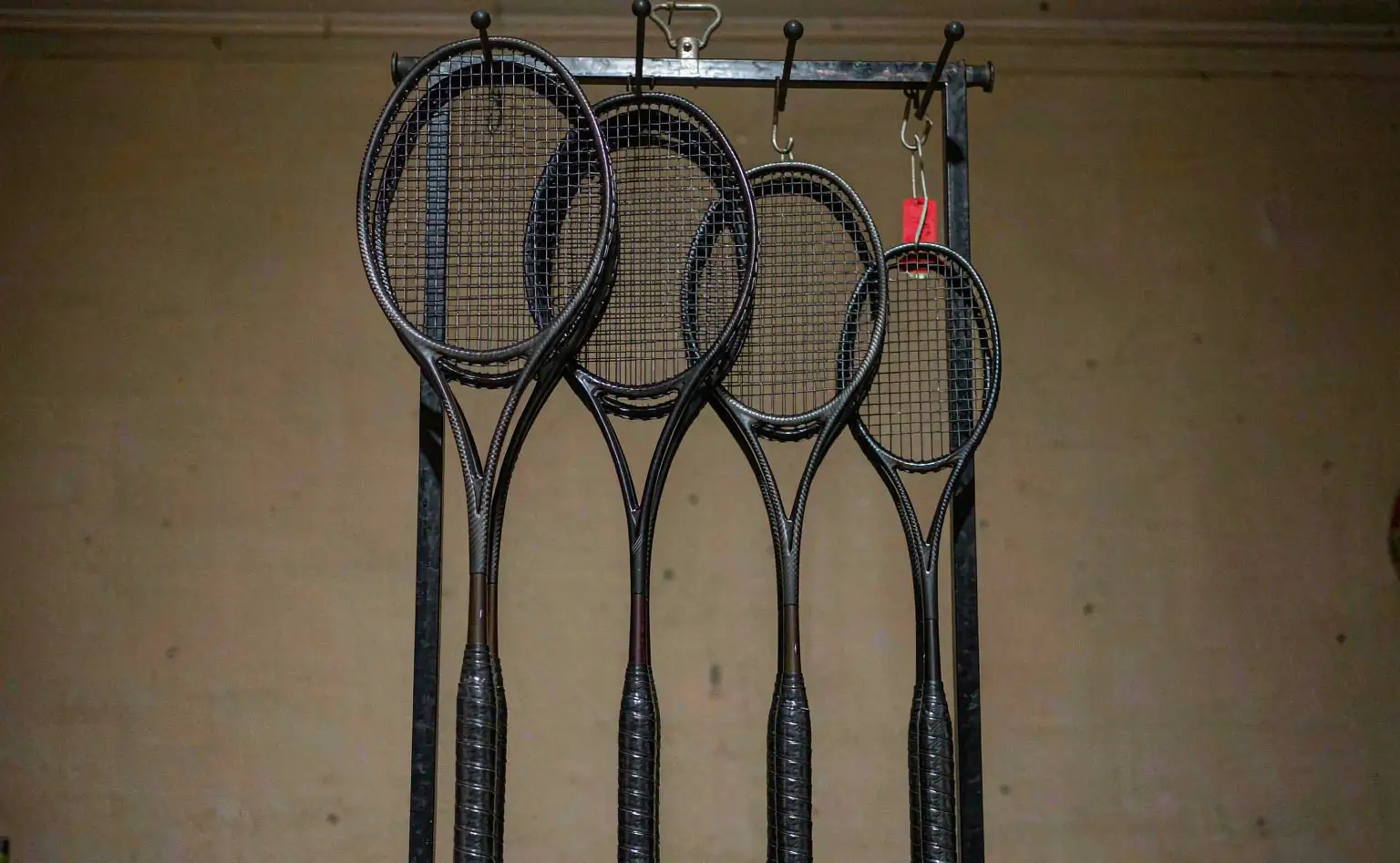
A racket looks like one piece but is several materials: a carbon or alloy frame, a carbon shaft, a wooden core inside the handle, a grip wrapped over it and a bag. The first spots appear in a predictable place: the grip seam and the edge of the top cap.
The reason is structural. The grip is wrapped turn by turn, so the finished seam is a narrow channel; players sweat, sweat runs into that channel and is taken up by the core inside. The core is solid or finger-jointed wood, and once wet it does not ventilate, with the grip outside and the bag around that, so the water stays in. The handle core is the reservoir, and the grip simply keeps the water inside it.
The second location is the bag and the packing. Rackets ship in a bag, bags go into cartons, the bag lining is cloth or foam, and a carton does not ventilate; on export orders held for a month or two the lining takes up moisture first. So the order is soak the core, dry it before assembly, then control the air in the bag and carton with paper.
2. Handle core and racket bag: two locations
The table sets out object, measure, level and acceptance for both. The core is a soak, the bag is a paper job, and each covers its own stage.
| Location | Material | Measure and product | Level | Acceptance |
|---|---|---|---|---|
| Handle core | Solid or finger-jointed wood | iHeir-M5 dip | Bath at 1:40, dipped to a 15-20% weight gain | Gain checked on a scale |
| Core ends | Bare end grain | Dipped with the core | Same, ends down and left longer | Colour taken up through the end |
| Assembly joint | Core into the shaft | Dried before assembly | Moisture under the factory limit | No hollow spot after cure |
| Bag lining | Cloth, foam | iHeir-D paper | 0.1-0.2g per sheet | Open and check after 30 days |
| Metal parts | Frame fittings, screws | Compatibility test with D | Test at three times the dose | No blackening, no white rust |
Two boundaries. The racket cannot be dipped after assembly: the core is what gets soaked, then the shaft is fitted and the grip wrapped; dipping a finished racket opens the adhesive and damages the frame finish. And the paper does not remove mould: a core that already shows spots is pulled out, and the paper only keeps this batch from coming back.
3. Handle core: iHeir-M5 at 1:40 to a 15-20% weight gain
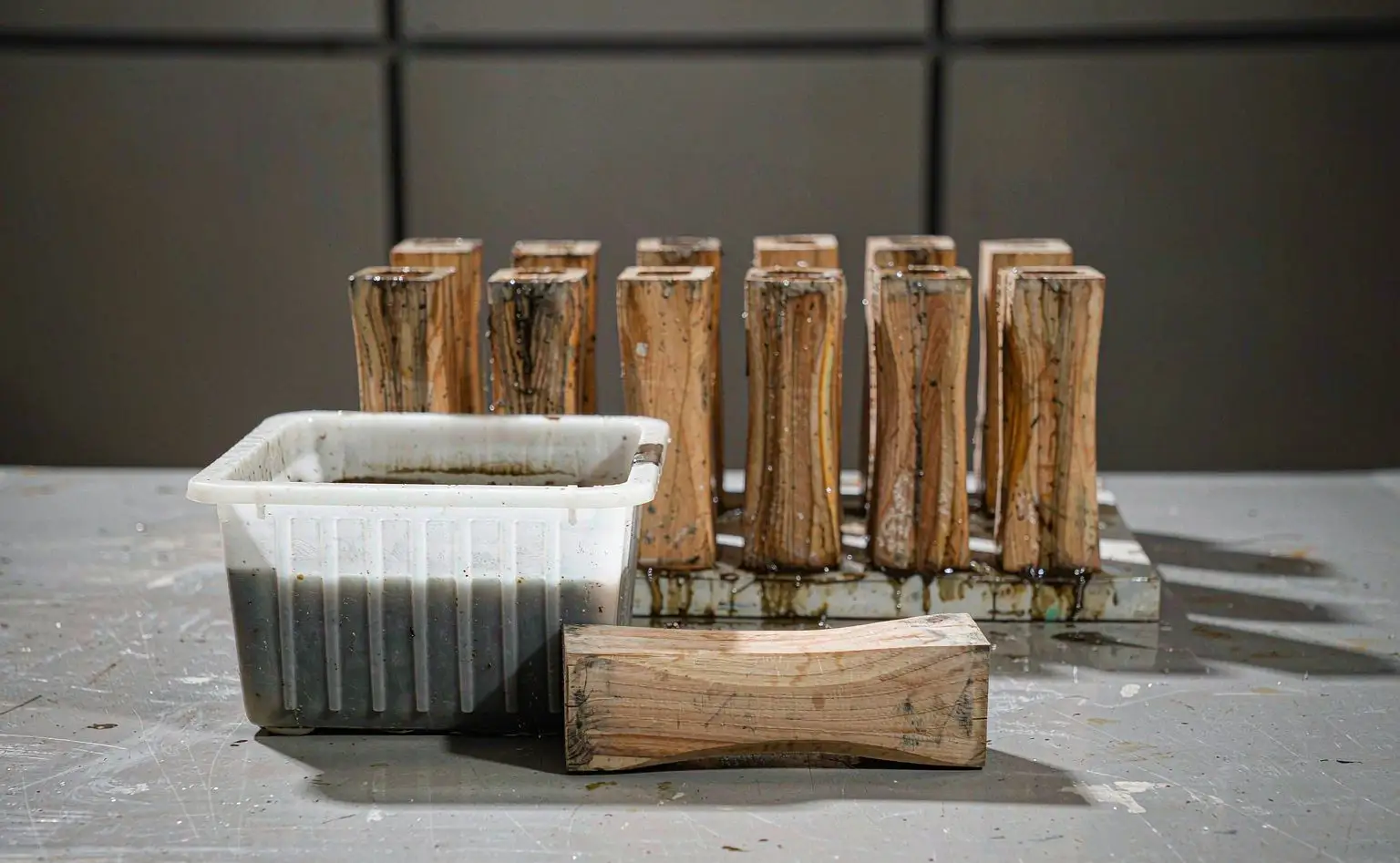
Mix at 1:40, 5kg of agent to 100kg of water, water in first then the agent, stirred; floating matter is normal, so stir before use. Use a plastic tank rather than steel, because M5 is acidic and the data sheet rules out contact with metal or alkaline material; a steel tank rusts and the rust water stains the grain beyond sanding.
Three points on the dip. Full immersion: the core goes completely under the surface, held down with a grid if it floats. Weight gain: bring it to 15-20%, about 5-10 minutes, with denser hardwood taking longer, and confirm on a scale. Drain, then dry: drain the liquor and dry in a single layer, air or sun, rather than stacking.
Handle size matters: different grip profiles and core dimensions reach the same gain a minute or two apart in the same tank, so weighing the batch is steadier than timing it. M5 comes in 25kg drums with a one-year shelf life kept dry and dark, and dipped cores darken slightly, so run a colour trial for a natural finish. The wider practice is in bamboo and wood preservation.
4. Dry before assembly: water hides in the joint
Assembling a wet core is the most common cause of a claim. The path is clear: wet core into the shaft, grip wrapped over it, bag over that, and once four layers close around it the water has nowhere to go; it sits in the joint and the mould appears through the grip seam.
Drying is a process step, not an option. Drain, dry in a single layer, and release to assembly only when the ends are not damp and moisture is under the factory limit; in wet weather extend the time or force air through rather than stacking to catch up. Apply the adhesive thin and press fully, because a thick layer is more water.
One more stage to watch between assembly and packing: do not bag a racket straight off the wrapping station; let it stand so the wrapping adhesive and hand moisture disperse, and in humid seasons dehumidify the station instead of leaving it open to the doors.
5. Bag and carton: vapour-phase paper for that air
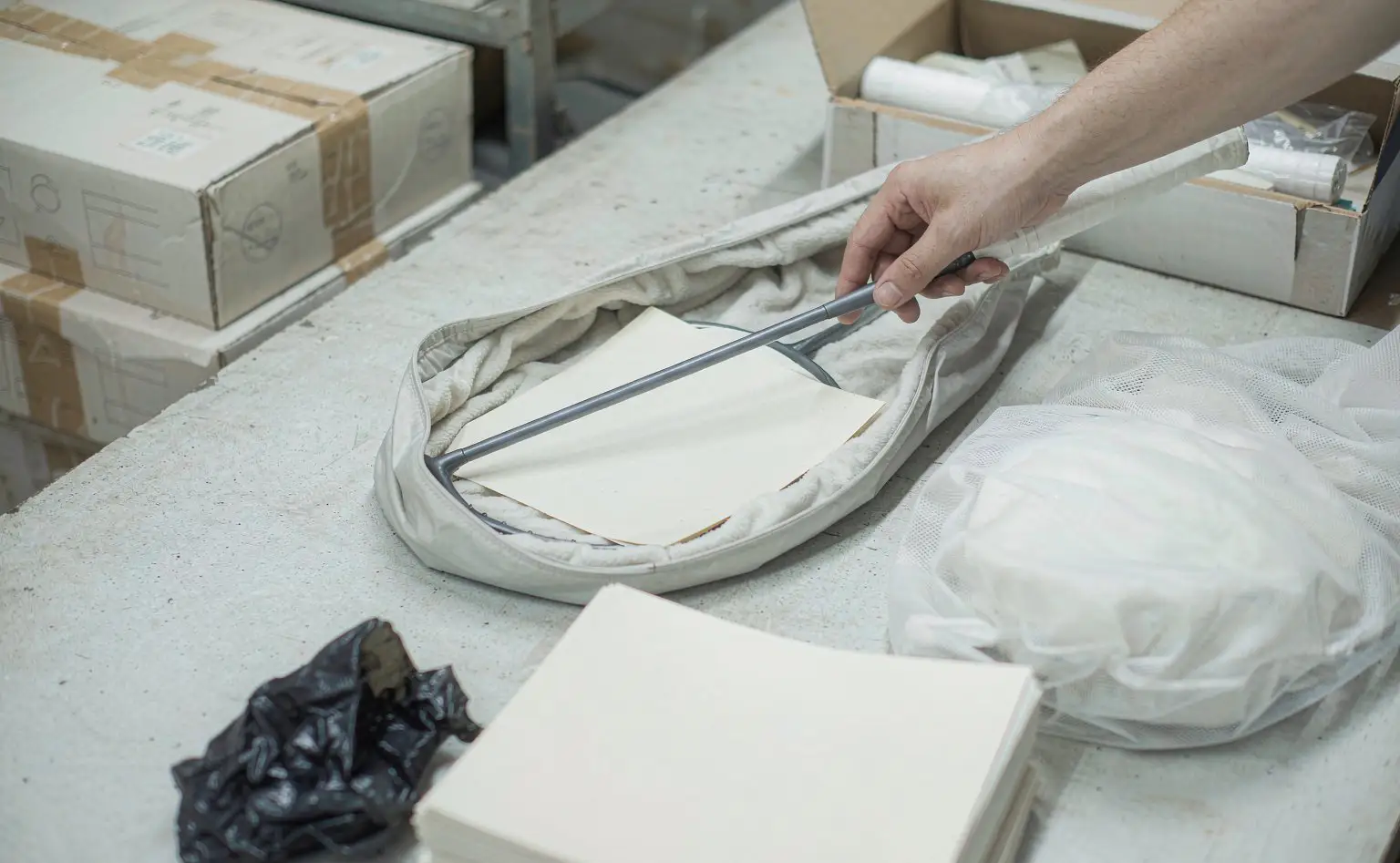
The last risk sits in the bag and the carton. The bag lining is cloth or foam, the carton volume is small and unventilated, and a sea container condenses on every temperature swing. That stage belongs to iHeir-D gas-phase inhibitor: 0.1-0.2g per sheet of active content, cut to fit the bag lining or the carton base.
Three points on placing it. Position: one sheet inside the bag lining against the frame face, plus one on the carton base by volume for multi-racket cartons. Timing: bag, box and seal in one movement, since an open sheet vents its vapour. Quantity: one per single-racket bag, more by volume for a carton, at the upper level for sea freight. D is an anti-mould ink made into antimicrobial paper and sachets, solids 70% plus or minus 5, 25kg drums, kept sealed and used up once opened.
The metal parts get their own test. Frame fittings and screws share the carton with D, so run a compatibility test at three times the normal dose: same batch of fittings sealed with 3x D in damp heat, checked for blackening and white corrosion. If it fails, move the paper to a corner away from the hardware or specify thicker plating. Paper grades are covered in choosing anti-mould packaging paper, and the container side in container condensation in sea freight.
6. Questions we get: dip time, dipping the whole racket, and verification
How long does the core stay in the bath? Read the gain, not the clock. At 1:40, bring it to a 15-20% weight gain, about 5-10 minutes, longer for dense hardwood, and confirm on a scale.
Can a finished racket be dipped? No. It opens the assembly adhesive and ruins the frame finish; the soak belongs before assembly, and the core is dried through before it goes into the shaft.
How is the batch verified? In two stages. The core is checked by weight gain and by moisture after drying; the finished racket goes through a whole-carton simulation, bagged, boxed and sealed at 30C and 85% relative humidity for thirty days, then opened to inspect the grip seam, the core ends and the metal fittings. Timber performance can be run to GB/T 18261 on inoculated specimens.
Four points: start at the grip seam and the core rather than the surface; dip the core in iHeir-M5 at 1:40, fully immersed, to a 15-20% gain, then dry it flat; dry through before assembly with a thin adhesive at full pressure; and put 0.1-0.2g of iHeir-D paper per sheet into the bag and carton, bagging and sealing at once, with a three-times-dose test on the fittings first.


