




 View Count:17
 Date:2026-09-14
Every dyeing plant knows this conversation: the QC manager holds a report and asks why the batch still molded after a 2% antimicrobial treatment, the supplier insists the agent is fine, the mill finds nothing wrong on its side, and the dispute dissolves until the next batch repeats it. The truth in most of these cases is not the dosage — it is that the process parameters, wet pickup and the drying curve, never actually anchored the agent to the fiber. The same agent on the same greige can land two grades apart in wash durability depending on whether it was padded, coated, or exhausted. This article maps the boundaries of the three routes, their key parameters, and their failure modes, so fabric mills, dyehouses, and finishers can hold the article up against their own lines.
Padding, Coating, Exhaustion: Where Each Route Belongs
Keep three territories separate. Padding (pad-dry-cure) is the default for loose fiber, yarn, and wash-tolerant fabric — the most uniform coverage and the best agent utilization, as long as the fabric tolerates water and heat. Coating serves the no-water cases: laminates, flocked fabric, paper-touch PU backing — the agent goes into the coating paste and is knifed on in one pass, efficient but surface-only. Exhaustion (overflow/jet or jig) fits dye-and-finish combined orders: the agent rides in the dye bath, saving a pass, at the cost of a high liquor ratio and lower fixation. None of the three is universally better; the classic mismatch is testing a padded lab sample while running production on the coating line, which is why client feedback never seems to match the report.
A note for purchasing: the per-meter agent cost barely differs across routes — the real spread is rework. A batch that molds because it took the wrong route gets rewashed and refinished at roughly RMB 0.3-0.5 extra per meter in labor and energy. Picking the right process saves more money than raising the dosage ever will.
On the Padding Line, Wet Pickup and Cure Are Everything
The core parameter of pad-dry-cure is not the bath concentration but wet pickup — the percentage of finishing liquor the fabric carries out of the nip relative to dry weight. At 70% pickup, a 2% liquor deposits 1.4% agent on the fabric; let pickup slip to 40% and the deposit falls to 0.8%, a full grade down. Pickup is set by nip pressure, fabric weight, and absorbency: cotton runs 65-75%, hydrophobic polyester 50-60%, blends in between by ratio. Measure it for every new quality — weigh dry, pad, weigh wet; it takes a minute and beats forensics on a moldy batch every time.
The drying curve quietly steals the rest. Fixation depends on a crosslinking reaction that needs both temperature and time: pre-dry at 100-110°C to remove free water, then cure at 150-160°C for 60-90 seconds. The classic failure is chasing delivery: the stenter speeds up, cure time shrinks from 90 to 40 seconds, the agent achieves physical adsorption but never crosslinks — the first two washes strip most of it and the fabric arrives at the customer unprotected. A quick fixation check: wash the finished sample 5 times per standard and retest the antibacterial rate; a drop beyond 15 percentage points almost always means under-cure.
Coating and Backside Finishing: The Laminate Reality
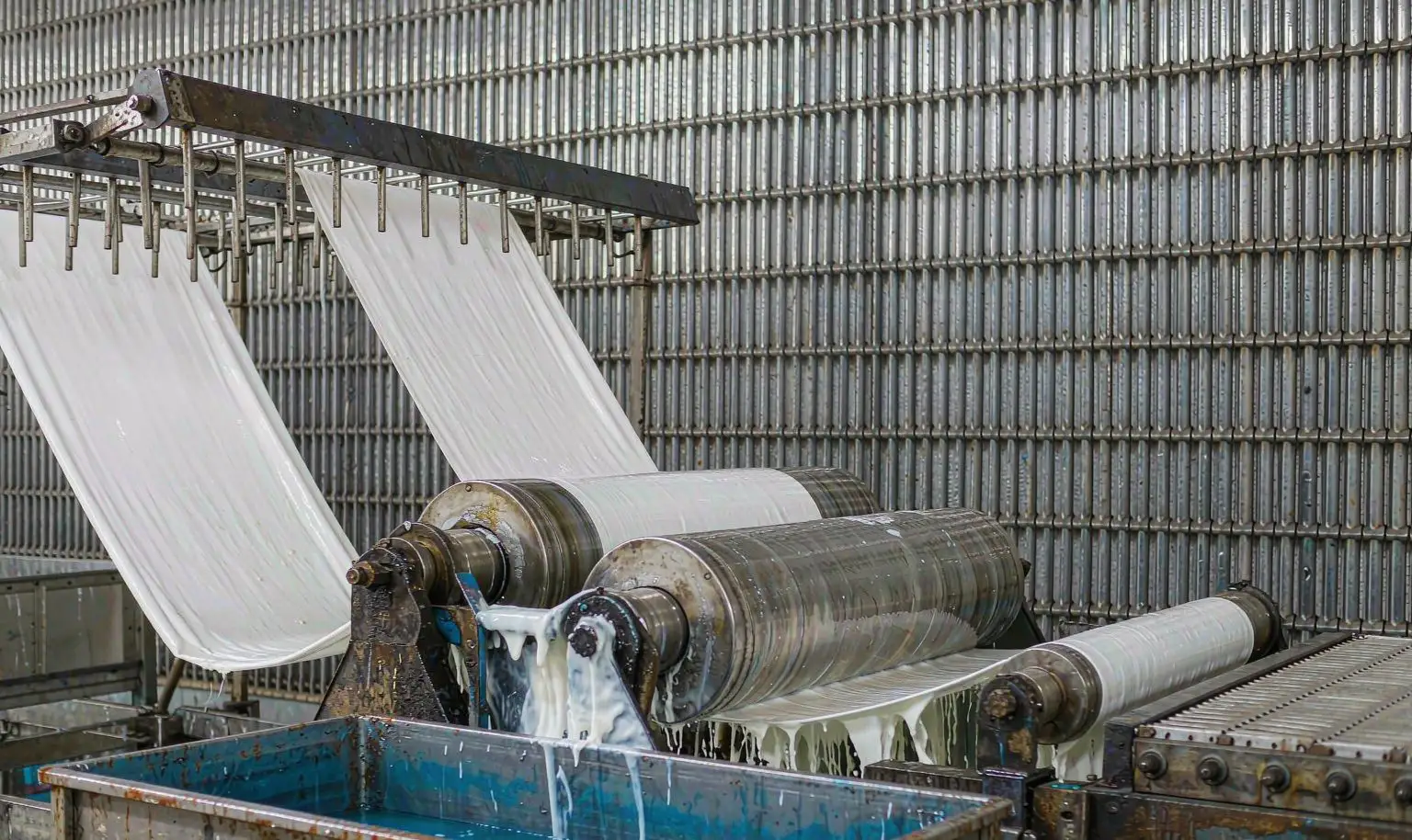
Laminates, blackout fabric, and bag-leather base cloth cannot survive washing, so coating is their main battlefield: disperse the agent into the PU or PA paste and knife or transfer-coat in one pass. Three process points: run a compatibility sample first (no emulsion breaking or settling after 48 hours); start the dosage at 1.5-3% of paste solids; and cover the selvage — the uncoated edge is where mold lands first. These fabrics often fail “inside-out”: the face looks fine while white mycelium grows between base cloth and coating, detectable early only by a musty ammonia smell and edge inspection. The triple-proof plus anti-mold combination for outdoor canvas and tents is fully worked out in our outdoor textile finishing article.
For paste compatibility, liquid formulations are the safe choice: iHeir-BJ textile mildew inhibitor was built for textile systems and mixes cleanly into water-based PU pastes; where export orders carry hard antibacterial requirements (baby and hygiene lines), stack iHeir-BJ1000 silver-ion textile antimicrobial agent into the paste for another step up in rate and wash durability.
Exhaustion: The One-Bath Shortcut and Its Traps
Jet and jig exhaustion suits combined dye-and-finish orders: add the agent at the dye hold stage, liquor ratio 1:8-1:12, 98°C for 30-40 minutes, then soften and drop. It saves a pass, but watch three traps. First, dispersing and leveling agents in the bath compete with the antimicrobial for fiber sites — dose 20-30% above the padding equivalent. Second, whites and pale shades face yellowing: exclude chlorine-type agents outright. Third, the reduction clearing on deep shades washes out part of the agent, leaving fixation 10-15 percentage points below padding — when the order spec is strict, run the padding pass anyway. The exhaustion details for narrow fabrics like webbing and rib are covered in our webbing anti-mold article.
Matching the Agent to Cotton, Polyester, and Blends
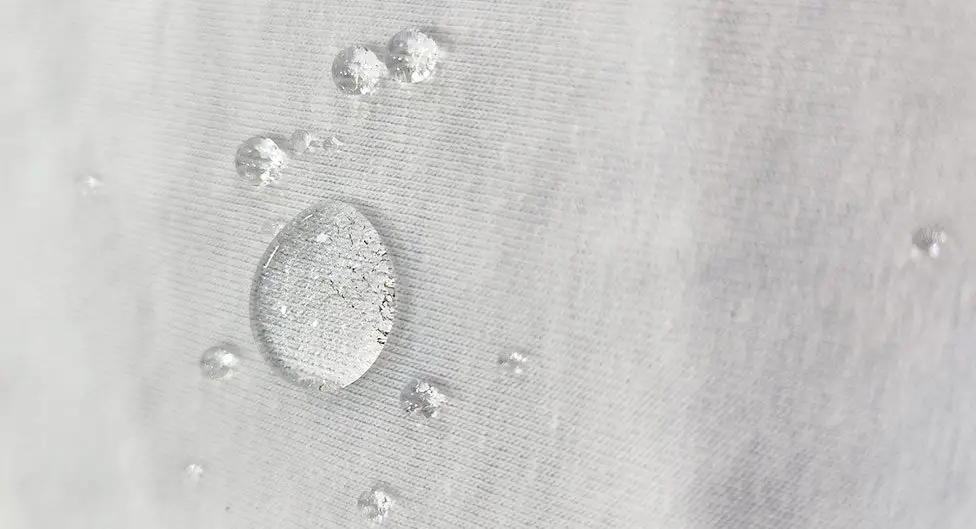
For R&D, one table settles fiber matching. Cotton and cellulosics: hydrophilic, the most mold-prone, and the richest in fixation sites — wet pickup can run 75%, and the real risk is bale-storage mildew when regains climb past 9%, so warn the warehouse. Polyester: hydrophobic and mold-resistant in itself; failures trace to finish-oil and size residues, so the sequence is “clean first, treat second,” and pick anchoring rather than penetrating formulations. Cotton-poly blends: scale dosage with the cotton share — a 65/35 blend takes about 30% more than pure polyester. Spandex-core stretch fabrics: spandex tops out near 150°C, so drop the cure to 140-145°C and extend 20 seconds, or elasticity suffers. When compatibility questions remain, run the lab sample first — the cheapest insurance in this industry.
The full fiber-to-garment prevention map is in our textile anti-mold agent buying guide, and warehouse-side stack management for fabric mills is covered in the Keqiao fabric anti-mold article.
Testing Protocols and FAQ
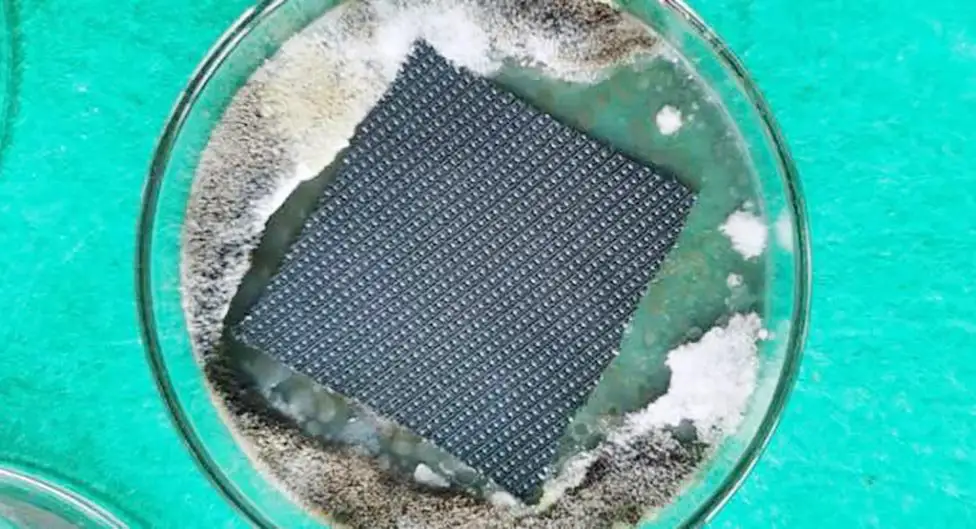
Three protocols for QC. Antibacterial: GB/T 20944.3 shake flask or AATCC 100, report the reduction rate. Anti-mold: AATCC 30 or the GB/T 2412 series, report on the 0-4 scale where grade 0 (no growth) is the standard export requirement. Wash durability: retest after 5-10 standard washes and hold the drop within 10 percentage points. Put all three on one release report — a supplier reporting only one figure will get stuck at customer audits. For finished-goods container protection, see the Nantong home-textile export guide; the difference from mills is mainly the packaging layer.
FAQ.
Hand feel turned tacky or stiff?
Overdose or over-cure: cut the dosage half a point, drop cure 5°C, and confirm softener order — softener first, finish second, is the safer sequence.
Conflict with fluorescent brighteners?
Some quaternaries adsorb the brightener and cost 1-2 degrees of whiteness; run a compatibility sample on pale grounds and split the bath if needed.
Is the complaint a fabric fault or a storage fault?
Judge by distribution: spots along edges and folds point to storage condensation, uniform face mold points to a finishing miss. Writing this judgment tree into the complaint SOP settles half the liability arguments before they start — and that, more than any single number on a report, is what keeps buyers and QC teams aligned.
Can a molded batch be reworked?
Three tiers by pattern: isolated spots that have not merged, wash the mold out and re-run padding with the antimicrobial at 10-20% above the original dosage and full curing time, releasing the batch only after an antimicrobial and mold-rating retest; merged patches with odor, wash and downgrade to lining or interlining; mold that has eaten into the fibre with tear strength down more than 15%, scrap it rather than hold hidden risk in the warehouse.