




 View Count:44
 Date:2026-10-09
How should data cable mould be handled? A data cable is a sheath and a connector, and the mould usually comes not from the surface of the cable but from the inner turns of the coil and from the damp carried into the connector. The PVC sheath compound takes iHeir-ECO plastic antimicrobial agent at 0.5%-1.0% on sheath weight at extrusion, and the moulded connector takes iHeir-JS117 plastic anti-mildew powder at 0.5%-1.0% on finished weight at moulding. This article covers the two points, the figures and the damp control at coiling and packing.
1. Where the mould comes from: the sheath compound, the connector and the coil
A data cable dampens from three sources. At sheath extrusion a PVC compound is extruded hot and water-cooled, the cable holds water, and once it is coiled the inner turns get no air, which is the first place to mould inside a sea container. At connector moulding the pellets take up damp and the regrind ratio runs high, the part leaves the tool with release agent on the surface, and grey spots appear within days in the bin. At coiling and packing the reels and the carton liner take up damp, and once the bundles are loaded the damp is locked in until the box is opened.
Of the three, the first two can put the protection into the material and the third can only control damp. The sheath takes its protection at the blending stage of the extrusion line, in with the compound; the connector takes its additive at the mixing and plasticising stage, in with the masterbatch or a premix; and coiling and packing dose no agent at all, relying on plant and warehouse humidity and on drying the liner first.
Start by working out which stage is at fault. Mould on the cable body with the inner turns worst points to the sheath; grey spots on the corners of the connector point to moulding; mould on the inner layer of a carton and on the liner points to coiling and packing. Decide the stage before choosing where to dose, and do not run one figure through both.
2. The two dosing points at a glance
The table lines up the stage, what is treated, the product, the figures and the points to watch, so it can serve as the first draft of a process card.
| Stage | Treated item | Product | Figures | Points to watch |
|---|---|---|---|---|
| Sheath extrusion | PVC sheath compound | iHeir-ECO plastic antimicrobial agent | 0.5%-1.0% on PVC sheath weight | Premix with plasticiser and stabiliser before the machine; blow the line dry before winding |
| Connector moulding | Part / resin | iHeir-JS117 plastic anti-mildew powder | 0.5%-1.0% on finished weight | Above 97% active content and 380 kg per cubic metre, mixed with the resin before forming |
| Coiling and packing | Reel and liner | Damp control only | Below 60% relative humidity | Check liner moisture before cartoning; add desiccants by carton type |
Three rows, one conclusion: the sheath is figured on sheath weight and the connector on finished weight, so the compound and the base both differ, and coiling and packing dose no agent at all.
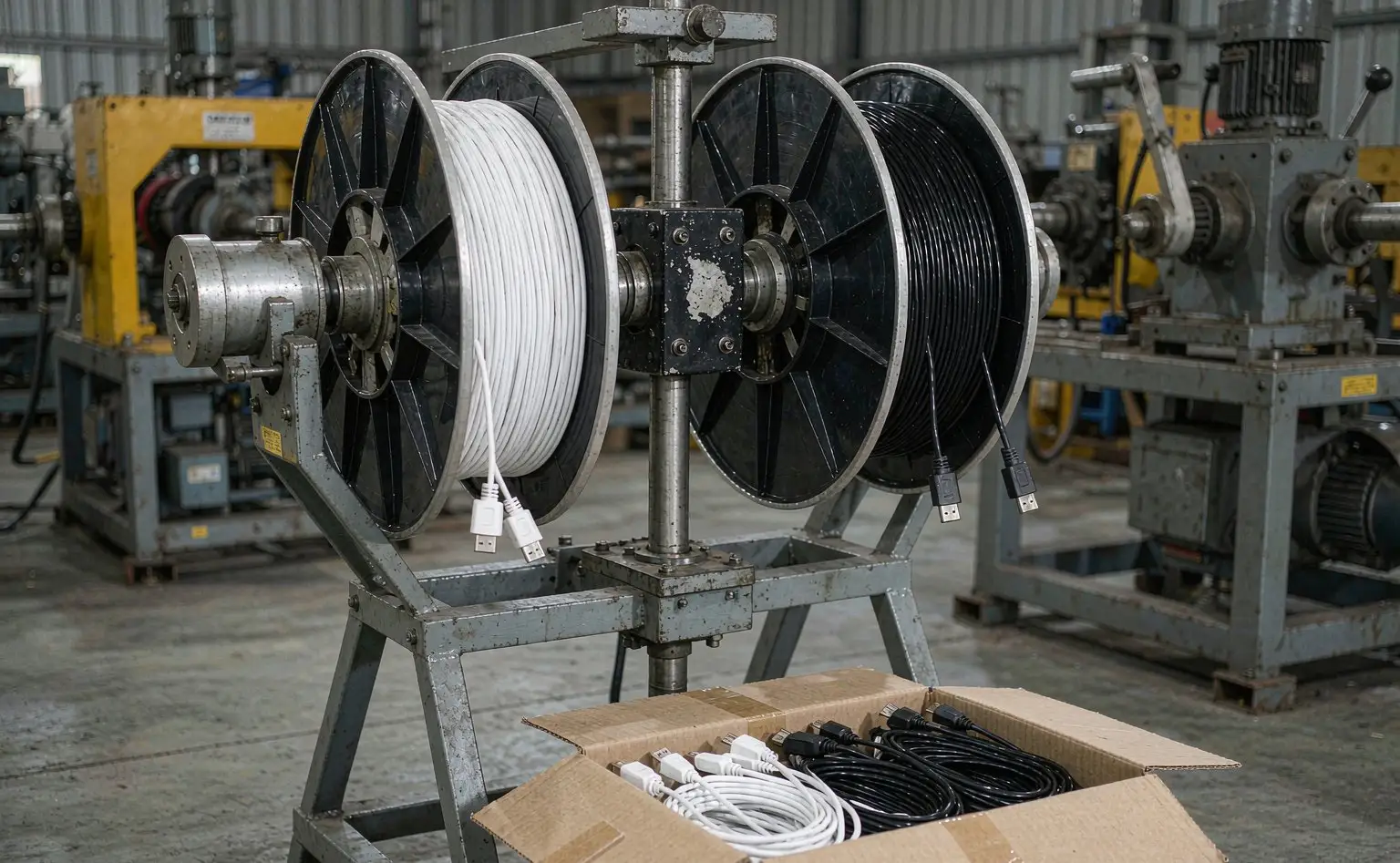
3. Sheath extrusion: ECO goes in with the compound
A data cable sheath is mostly PVC or TPE. At the blending stage the compound takes iHeir-ECO plastic antimicrobial agent at 0.5%-1.0% on PVC sheath weight, premixed with the plasticiser and stabiliser before the machine. The sheath is water-cooled after forming, so the additive sits inside the sheath and cannot be wiped or rubbed off when the cable is coiled; thermal stability reaches 240 degrees and the process temperature should stay clear of 320 degrees.
Three details. First, the sheath compound is a different grade from the connector, so its figure is calculated on sheath weight alone; do not carry over the connector ratio. Second, extrusion runs at a different temperature from moulding, so hold the PVC sheath temperature and avoid long residence at high heat that drives the additive off early. Third, blow the line dry after the cooling trough before winding, because coiling wet cable is the direct cause of mould in a sea container.
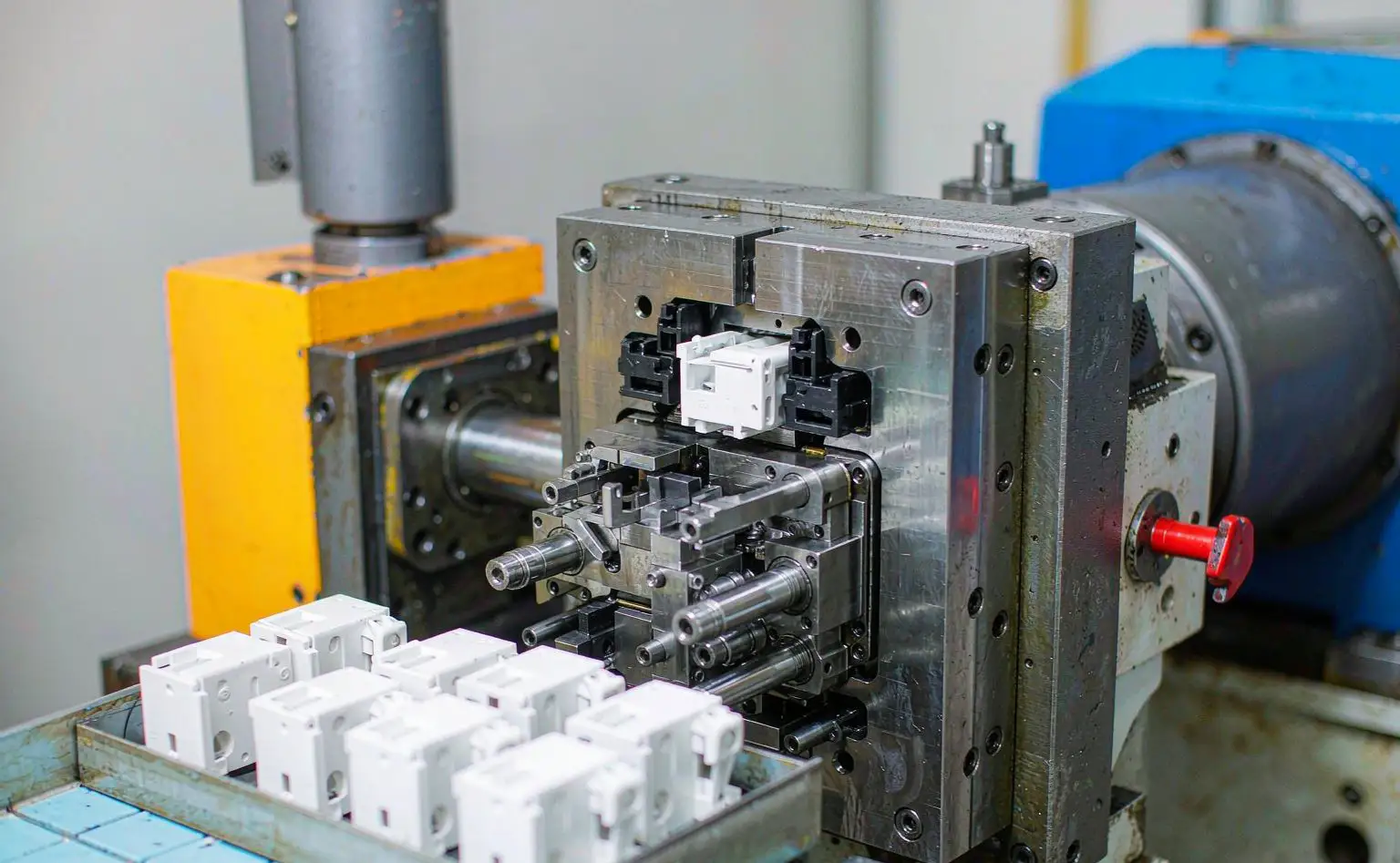
4. Connector moulding: JS117 on finished weight
The connector is handled at the mixing and plasticising stage. Add iHeir-JS117 plastic anti-mildew powder at 0.5%-1.0% on finished weight, mixed with the resin before forming. It is a powder built on a nitrogen heterocycle and phenol-alcohol compound, above 97% active content with a bulk density of 380 kg per cubic metre and a mean particle size of 110 microns, used in PVC, PU, silicone and polyolefins; the loading is low and the effect is stable and long-acting, and it does not dissolve in water or leach out.
Three details. First, premix the powder evenly with the resin, because powder fed straight in agglomerates and leaves pits on the moulded surface. Second, the figure is on total finished weight, regrind included, so any change in the ratio means recalculating and high-regrind batches belong at the top of the range. Third, the connector is sensitive to dimensional accuracy, so a masterbatch or a premix is steadier than feeding powder and easier to keep consistent batch to batch. Verify the anti-mould effect by ASTM G21 and hold a sample from the same batch.
5. Coiling and packing: the two steps no agent is dosed
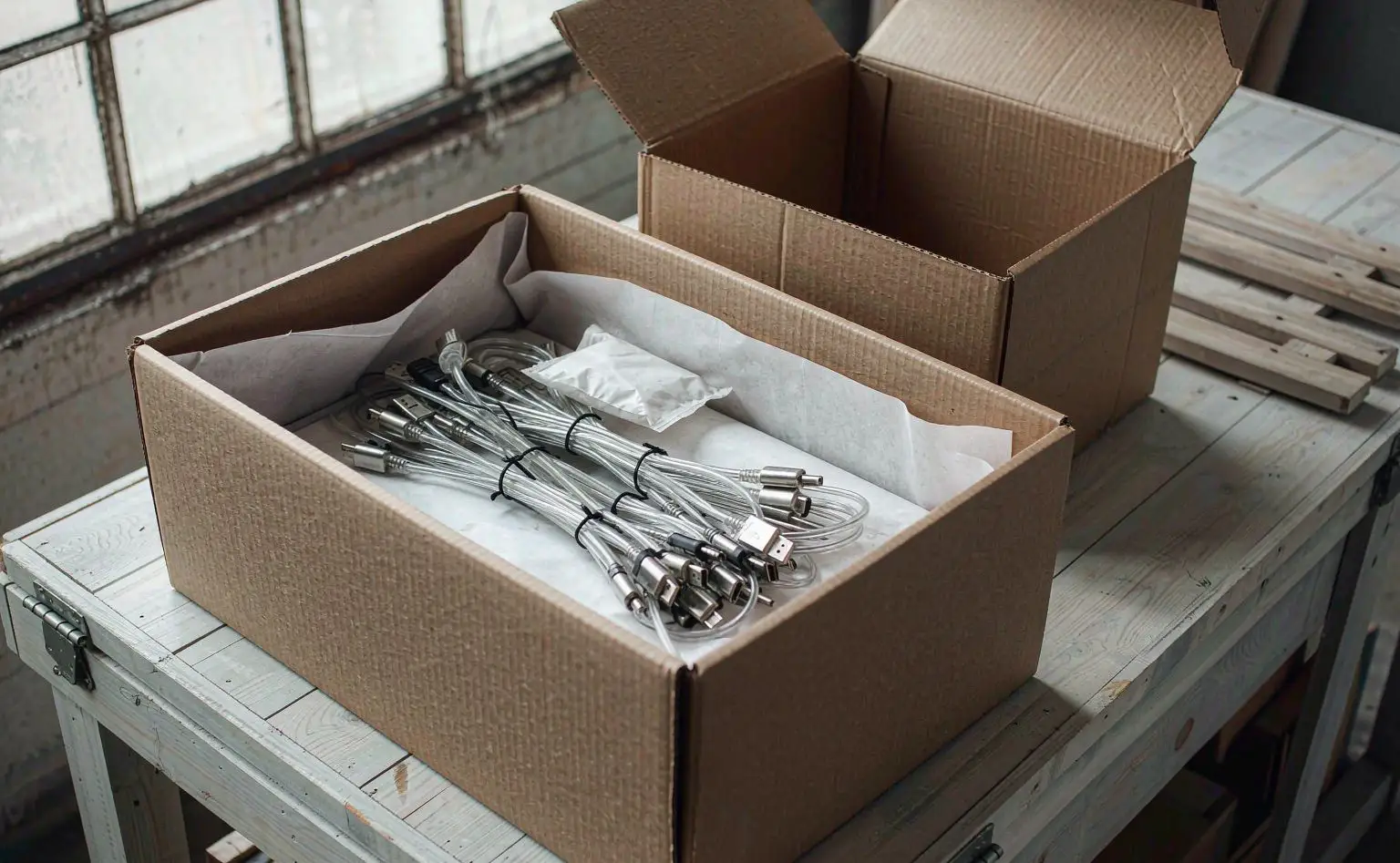
Coiling and packing dose nothing and rely on damp control and liner management. Hold the plant and the finished-goods store below 60% relative humidity, check the liner moisture before cartoning since reels and carton liners take up damp fastest, and let the bundles cool to room temperature before packing, because a hot bundle packed straight in condenses inside the carton.
For export, add desiccants by carton type, since a sea voyage is long and condensation in a container is harder to control than in a warehouse. Dry the reels before dispatch, because condensation after sealing is the ignition point for mould. The dosage and temperature conditions for cable antimicrobials are set out in antimicrobial dosage and temperature for cable housing.
6. Questions that come up: one figure for both, or a pass after packing
Can the sheath and the connector share one figure? No. The sheath is figured at 0.5%-1.0% on sheath weight and the connector at 0.5%-1.0% on finished weight; the numbers look alike but the compound and the base differ, so copying the basis mis-calculates the dose.
Can a pass after the cable is coiled and packed make up for it? No. With the coil airless inside, a spray reaches the outer wrap only, leaving the inner turns of the sheath and the cavity of the connector untouched, so both must be dosed on the line.
Can extra loading cover a long spell in store? No. Damp in storage is an environment problem, not a concentration problem, and extra loading only raises cost. Hold the plant and the store below 60% relative humidity, check the liner moisture before cartoning, and add desiccants by carton type.
Two points carry the dosing: the PVC sheath compound goes in at the extrusion blending stage (iHeir-ECO at 0.5%-1.0% on sheath weight) and the moulded connector goes in at the mixing and plasticising stage (iHeir-JS117 at 0.5%-1.0% on finished weight), while coiling and packing hold both results with damp control, liner management and desiccants. Samples and TDS sheets are available for a trial on your line.


