




 View Count:45
 Date:2026-10-09
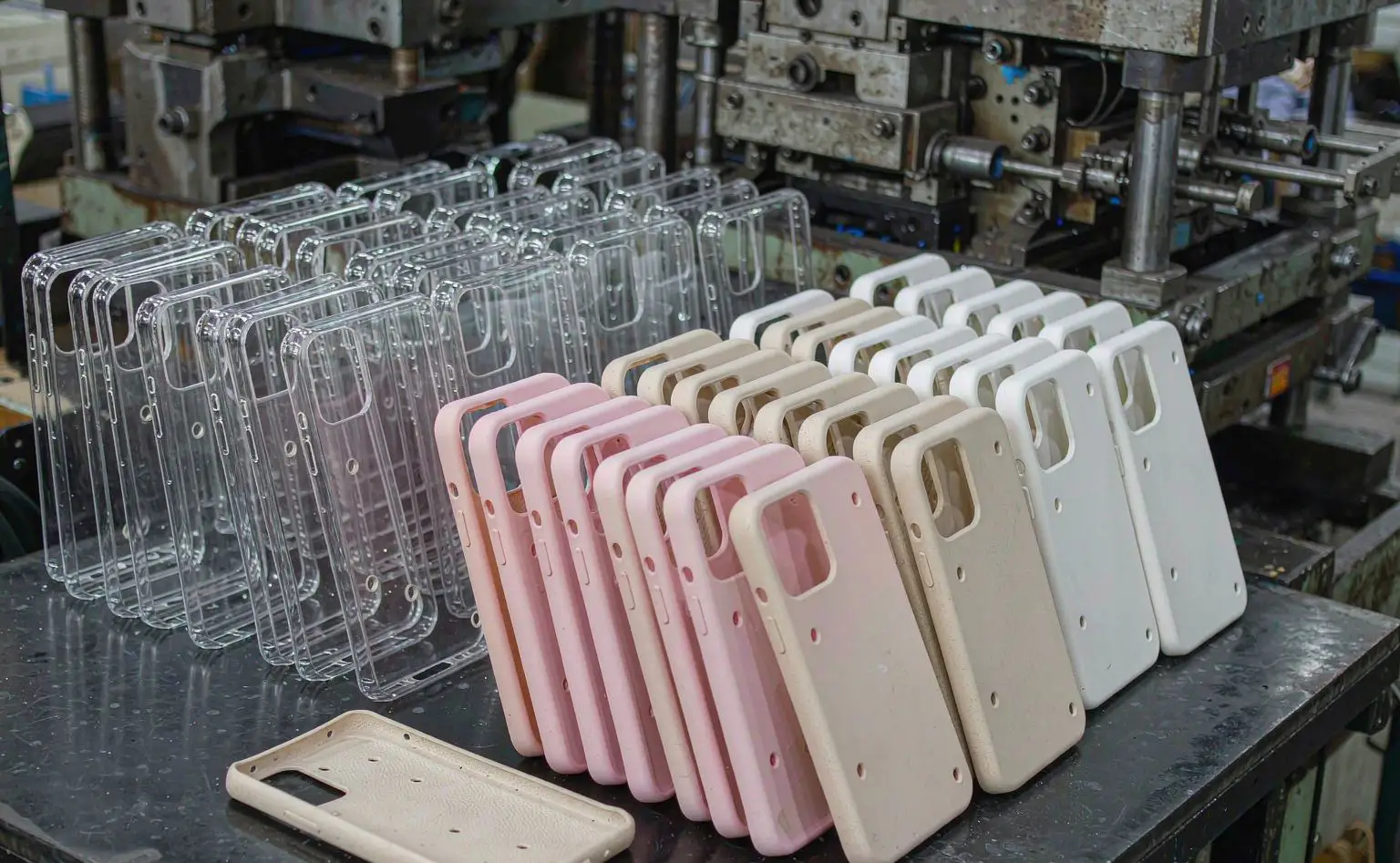
How should phone case mould be handled? A phone case is one of two compounds, TPU for the soft case and PC for the hard case, and the mould usually comes from the damp and impurities the compound carries in, not the surface. The TPU soft case takes iHeir-ECO plastic antimicrobial agent at 0.3%-1.0% on part weight, and the PC hard case runs ECO or iHeir-IPL inorganic plastic antimicrobial agent at 0.8%-1.0% by colour, with pale and clear shells preferring IPL. This article covers the dosing for both compounds and damp control at packing.
1. Where the mould comes from: the soft case and the hard case are two compounds
Mould on a phone case sits in the material and between the material and water, not on the surface. A TPU soft case is built on a PU elastomer whose pellets take up damp, so they must be dried before moulding; a PC hard case is polycarbonate, and a clear part is the most sensitive to impurities and shade, so once the masterbatch and regrind carry too much dirt the face clouds, yellows and picks up grey spots at the edges. The two compounds dampen at different rates, so the dosing cannot be copied from one to the other.
There are two stages to the damp. At moulding: undried pellets and a high regrind ratio leave release agent and oil on the part, which sits in an unventilated bin and grows grey spots within days. At assembly and packing: the case is worn against the phone and touched by hand, the finished case is bagged and the carton sealed so the damp is locked in, and the packing liner of papercard and PE foam takes up damp fastest, so a condensing container starts on that side.
So treat it as two jobs. The mould protection goes into the compound as a masterbatch that acts through the whole case, and the packing side relies on damp control and liner management. A surface pass on the finished case alone cannot reach the inner material and water, and assembly friction rubs it away, which is as good as not doing it.
2. The dosing for the two compounds at a glance
The table lines up the shell, the compound, the product, the figures and the points to watch, so it can serve as the first draft of a process card.
| Shell | Compound | Product | Figures | Points to watch |
|---|---|---|---|---|
| TPU soft case | PU elastomer | iHeir-ECO plastic antimicrobial agent | 0.3%-1.0% on part weight (PU 0.5%-1.0%) | Dry the pellets first; feed with the masterbatch or a premix; thermal stability 240 degrees |
| PC hard case (dark) | Polycarbonate | iHeir-ECO plastic antimicrobial agent | 0.3%-1.0% on part weight | Recalculate when the regrind ratio changes; clear of 320 degrees |
| PC hard case (pale or clear) | Polycarbonate | iHeir-IPL inorganic plastic antimicrobial agent | 0.8%-1.0% on part weight | Whiteness above 90 and 1-2 micron size; sample for light transmission and shade |
| Packing | Liner and papercard | Damp control only | Below 60% relative humidity | Check liner moisture before packing; gas-phase sheets by stack |
Four rows, one conclusion: the soft case and the hard case are two compounds both figured on part weight, but a pale or clear shell needs a non-yellowing grade, and the packing row doses no agent at all.
3. The TPU soft case: ECO dosed on part weight
The TPU soft case is built on a PU elastomer. It takes iHeir-ECO plastic antimicrobial agent at 0.3%-1.0% on part weight, with the PU system at 0.5%-1.0%, premixed with the PU compound or made up first as a masterbatch before the hopper. ECO bonds with the elastomer and is distributed through the whole case rather than sitting on the surface, so the pull, wipe and phone-on-phone friction at assembly will not rub it off; thermal stability reaches 240 degrees and the process temperature should stay clear of 320 degrees.
Three details. First, dry the pellets before the hopper, because a PU elastomer takes up damp noticeably and a wet shot causes silver streaks and carries water into the finished part. Second, the figure is on total part weight, regrind included, and soft cases use a lot of regrind, so any change in the ratio means recalculating and high-regrind batches belong at the top of the range. Third, the soft case is thin with a short cycle, so premix the additive evenly; powder fed straight in agglomerates and spoils the feel and the finish.
4. The PC hard case: ECO or IPL by colour
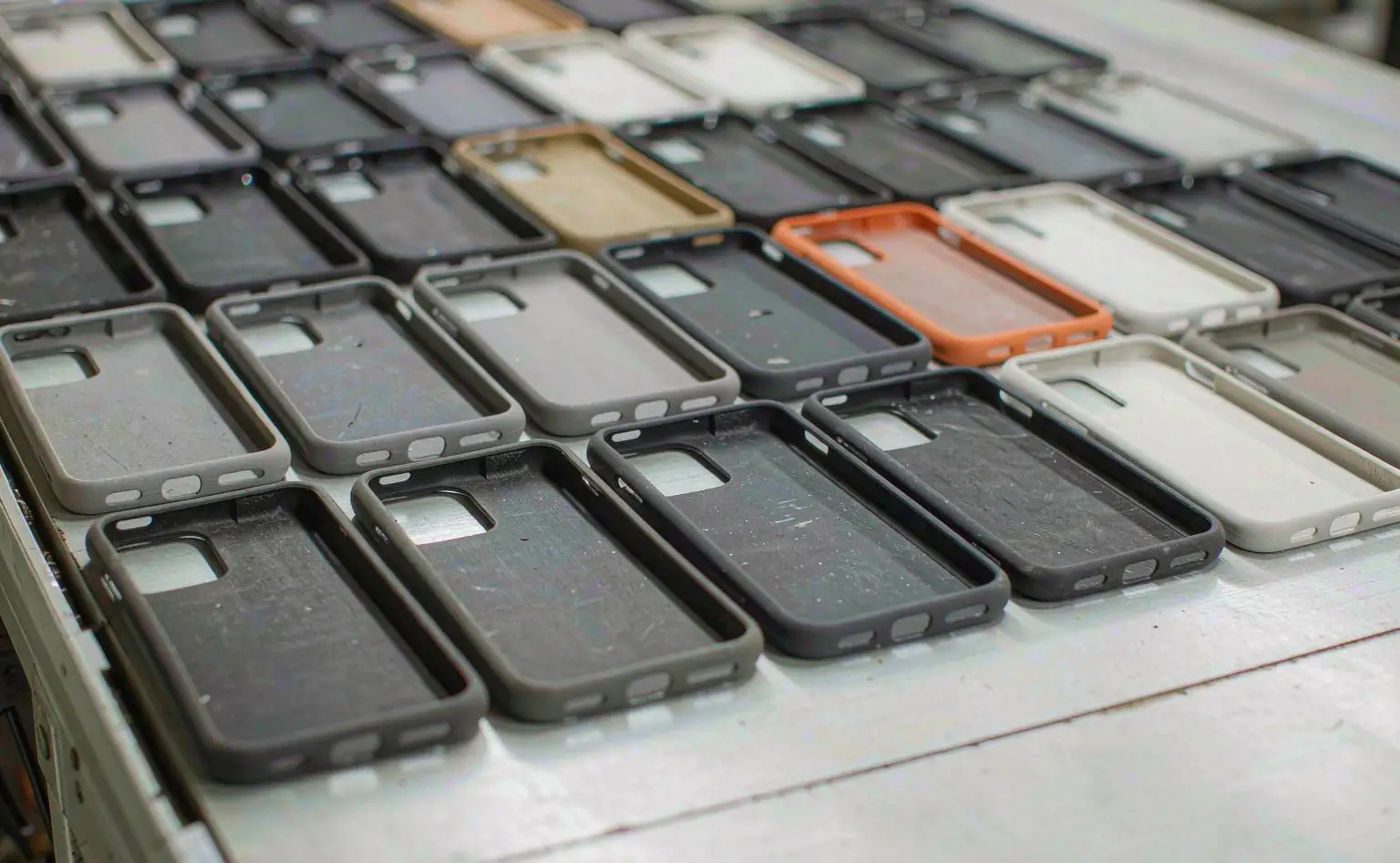
The PC hard case runs by colour. Dark and regular shells take iHeir-ECO plastic antimicrobial agent at 0.3%-1.0% on part weight, while pale and clear shells switch to iHeir-IPL inorganic plastic antimicrobial agent at 0.8%-1.0%. Its active core is a silver compound with whiteness above 90 and a 1-2 micron particle size, so it does not yellow or cloud in a clear part and holds to 300-320 degrees.
Three details. First, sample a clear shell for light transmission and shade before a full batch, and never run a dark-shell compound in a clear shell. Second, PC is sensitive to water and dirt, so both drying the pellets and screening the regrind have to be done properly, because too much dirt clouds the face. Third, clean the tool and the barrel when the compound or the colour changes, since mixed residue is the most common source of a shade fault.
5. Assembly and packing: the two steps no agent is dosed
A phone case is worn and handled, so assembly and packing matter because they must not undo the earlier work. Hold the assembly line below 60% relative humidity and clean the benches and tote boxes on a schedule so dust does not carry spores; check the moisture once before bagging and do not bag a hot part, because condensation forms inside the bag.
The packing side relies on liner management and gas-phase protection. Papercard and PE foam liners take up damp fastest, so dry the liner before cartoning; for export, add desiccants by carton type, since a sea voyage is long and condensation in a container is harder to control than in a warehouse. For choosing between a masterbatch and a powder, see masterbatch or powder for plastic antimicrobial.
6. Questions that come up: one product for both, and how to choose for a clear shell
Can the TPU soft case and the PC hard case share one product? Yes, but by band. Both are figured on part weight, the soft case PU system at 0.5%-1.0% and the hard case at 0.3%-1.0%, and a pale or clear shell has to move to a non-yellowing grade, so neither the figure nor the grade can be copied across.
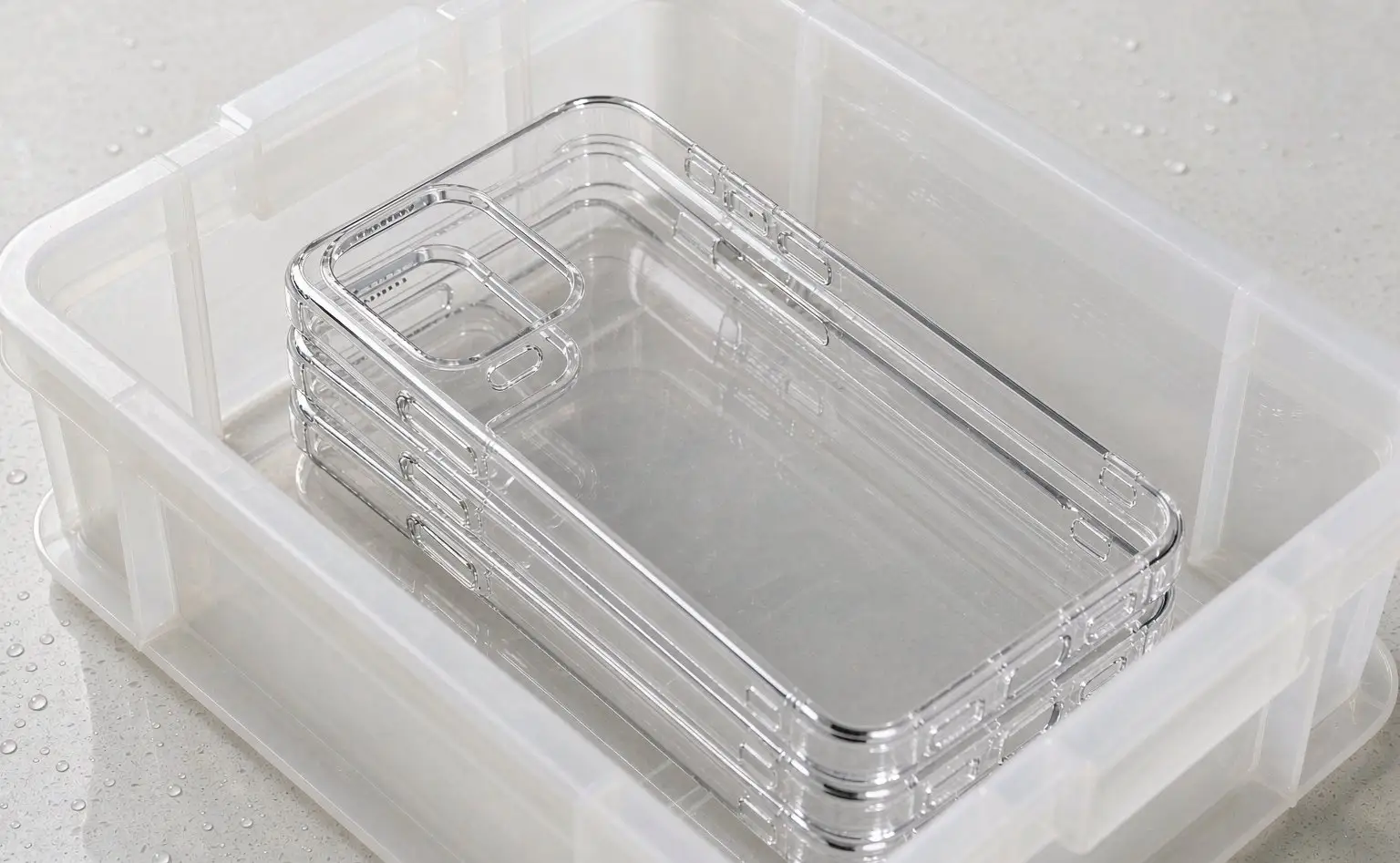
Which grade for a clear phone case? Look at whiteness and particle size and choose a non-yellowing, finely dispersed grade, then sample for shade and light transmission. A dark-shell compound cannot be used in a clear shell, and the two do not share figures.
Can extra loading fix a damp case after packing? No. Damp in the carton is an environment problem, not a concentration problem, and extra loading only raises cost. Hold the plant and the finished-goods store below 60% relative humidity, dry the liner first, and add desiccants by carton type.
Two points carry the dosing: the TPU soft case and the dark PC hard case go in at the mixing and plasticising stage (iHeir-ECO at 0.3%-1.0% on part weight, PU at 0.5%-1.0%), and the pale and clear PC hard case moves to iHeir-IPL at 0.8%-1.0% on part weight, while packing holds both results with damp control and gas-phase sheets. Samples and TDS sheets are available for a trial on your line.


