




 View Count:14
 Date:2026-10-29
Can mould on a smart lock be prevented? Sort the parts first: the die-cast zinc housing does not grow mould, and what does grow sits in the silicone keypad, the plastic panel seams and the tape under the keypad. The plastic parts take iHeir-IPI001 at 0.8%-1.0% of part weight, and the keypad compound takes iHeir-GGTK at 1%-2% at the compounding stage. This article covers both stages, the post-cure question and the whole-unit damp-heat release.
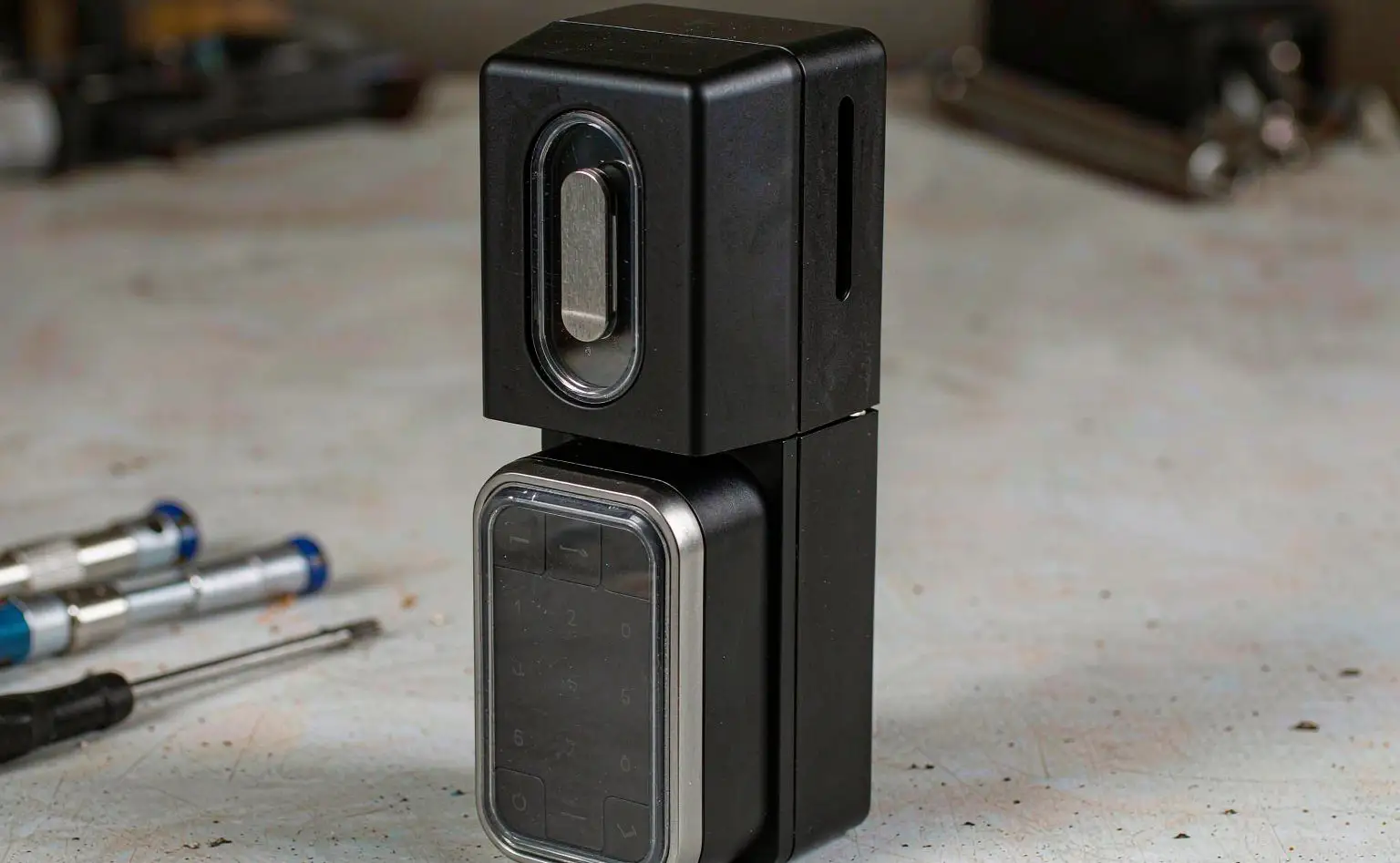
1. The mould sits in the keypad and the plastic seams
A smart lock is an assembly of materials: die-cast zinc housing, PC or ABS panel, silicone keypad, internal brackets and foam. Metal is dense and carries no carbon source, so mould landing on it cannot establish. The parts that fail are the silicone keypad and the plastic panel.
The keypad problem is in the compound. A silicone rubber carries fumed silica, silicone oil and curing agent, and its surface is soft and hydrophilic; sweat and skin oil left by fingers are food for micro-organisms. Add dust and water in the gap between keypad and panel, and two weeks in a damp-heat chamber puts a ring of white at the keypad edge. A keypad is touched every day, and a buyer will not accept a wiped-down part.
The panel problem is at the seams: where the panel meets the metal housing, in the clip grooves and around the fingerprint head, condensation collects and stays.
The second location is assembly and the finished-goods store: the keypad is taped to the panel, and if the adhesive has not dried the water is sealed underneath; the boxed unit does not breathe, condensation forms on the sea leg, and water creeps in at the keypad edge. Open the box, find a white ring, and the unit has to be stripped.
2. Plastic parts and keypad are dosed separately
The table lines up the panel, the keypad, the metal housing and packing. Plastic parts are dosed on part weight, silicone on compound weight, and the stages differ: mixing before moulding for one, compounding for the other.
| Part | Material | Product and level | Stage | Control point |
|---|---|---|---|---|
| Panel and inner bracket | PC/ABS pellets | iHeir-IPI001 0.8%-1.0% of part weight | Mixing, with the pellets | Dispersion, colour plaque on light parts |
| Silicone keypad | Silicone rubber compound | iHeir-GGTK 1%-2% of compound weight | Compounding, fully stirred | Added below 200℃ |
| Die-cast zinc housing | Zinc alloy | No additive, surface finishing only | — | Degrease before coating |
| Assembly and packing | Tape, foam, gift box | No additive, humidity control only | Assembly, boxing, loading | Adhesive dry, box not sealed wet |
Two boundaries. First, metal needs nothing: a zinc die-casting carries no nutrients, and the money is better spent on the plastic parts and the keypad. Second, spraying the keypad is not treatment: the additive sits on the skin, wears off with use, and the protection ends up discontinuous at the edge, which is exactly where mould starts.
3. Plastic panels: inorganic zinc antimicrobial at mixing
Panels and inner brackets use iHeir-IPI001 inorganic zinc-ion antimicrobial at 0.8%-1.0% of part weight. It is a white powder, whiteness above 90, active content (zinc ion plus carrier) at 99% or more, D90 under 3μm, bulk density 1.8-2.4 g/cm³, packed in 10kg units and stored sealed away from light.
It goes in at the mixing step, with pellets and colour masterbatch in the high-speed mixer for 5-8 minutes, then to the moulding machine; an antimicrobial masterbatch is the alternative for short runs. It controls the release rate of the metal ion, so the thermal history of moulding does not discolour a light panel — which matters on white and grey panels, not on black ones.
Three points. UV: one face of a panel looks into a corridor or a doorway and can see sunlight, and the inorganic zinc system holds up better than an organic agent over years of exposure. Dispersion: D90 under 3μm means a large surface area and a tendency to cluster, so pre-blend with a scoop of pellets. Dose: 0.8% is the starting point, and 1.0% for units exported to hot and humid regions.
One detail that gets missed: the plastic ring around the fingerprint head must use the same compound as the panel. Treat the panel and leave the ring on untreated material, and the ring becomes the weak link in the whole unit.
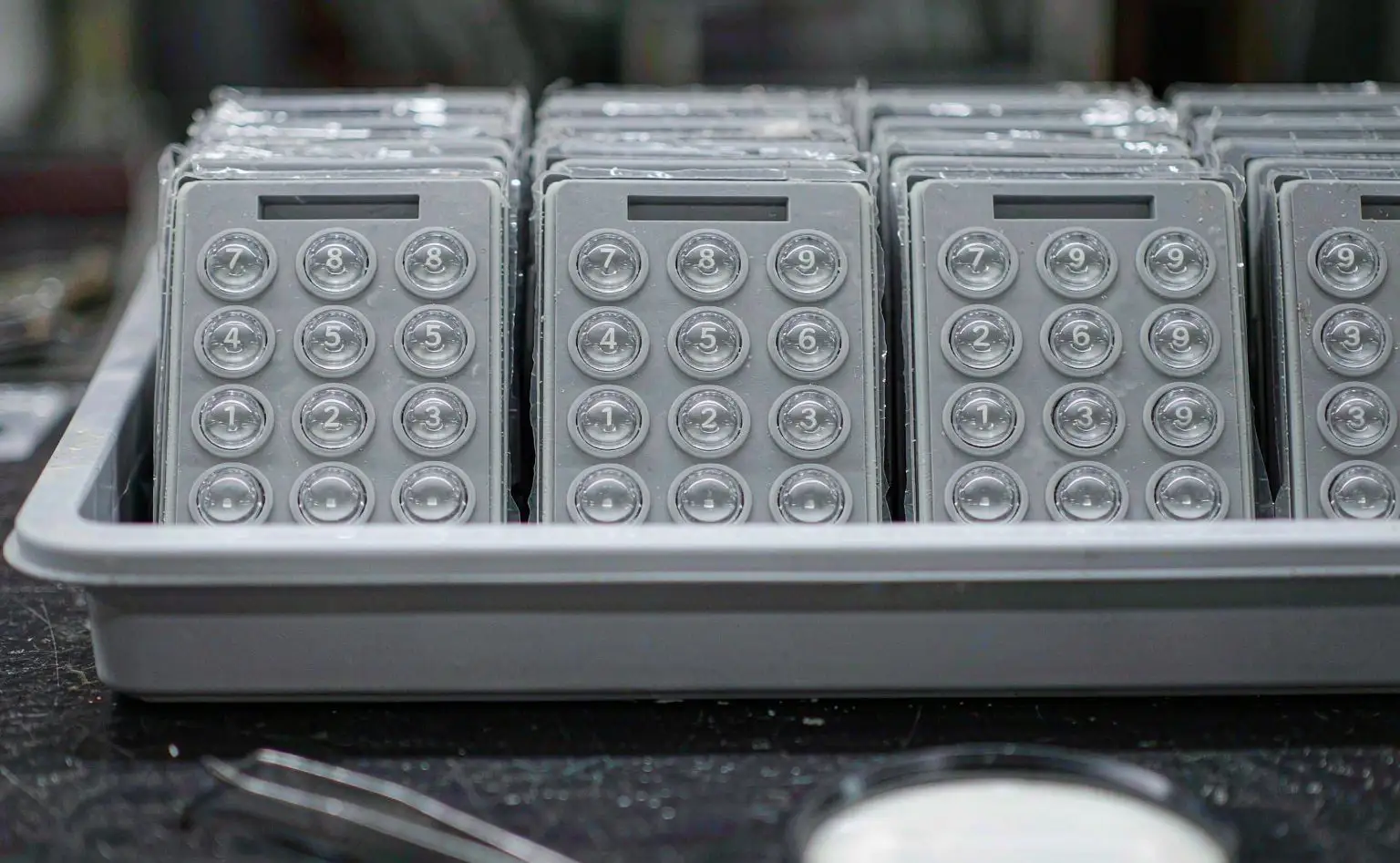
4. Silicone keypad: added at compounding, below 200℃
The keypad uses iHeir-GGTK silicone antimicrobial at 1%-2% of compound weight. It is a colourless to pale yellow liquid, active content 20% or more, 25kg per drum, one year shelf life. The method is direct: add 1%-2% to the compound and stir thoroughly, with the addition temperature kept at or below 200℃.
The stage is compounding, on the two-roll mill or in the internal mixer, dispersed together with the curing agent and the pigment. Do not try to add it after moulding: a keypad is compression or injection moulded, the surface is already crosslinked, and the additive cannot get in. Post-cure runs around 200℃, so the addition goes before post-cure and the temperature limit is respected.
Three operating points. Stirring: a liquid additive disperses by mechanical shear, and a few extra thin passes and end-roll cuts on the mill do more than a longer mixing time. Compatibility: GGTK is cationic, so an anionic release agent or antistatic will cancel it — run a small trial before changing anything else in the compound. Appearance: keypads are usually black or grey and colour drift is not an issue; for white or translucent keypads use a dedicated silicone paste instead.
Dose by service environment: 1% is enough for an indoor lock, and 2% for units exported to hot and humid regions or built with an outdoor rating. Below 1% the surface concentration cannot hold through two or three years of daily use.
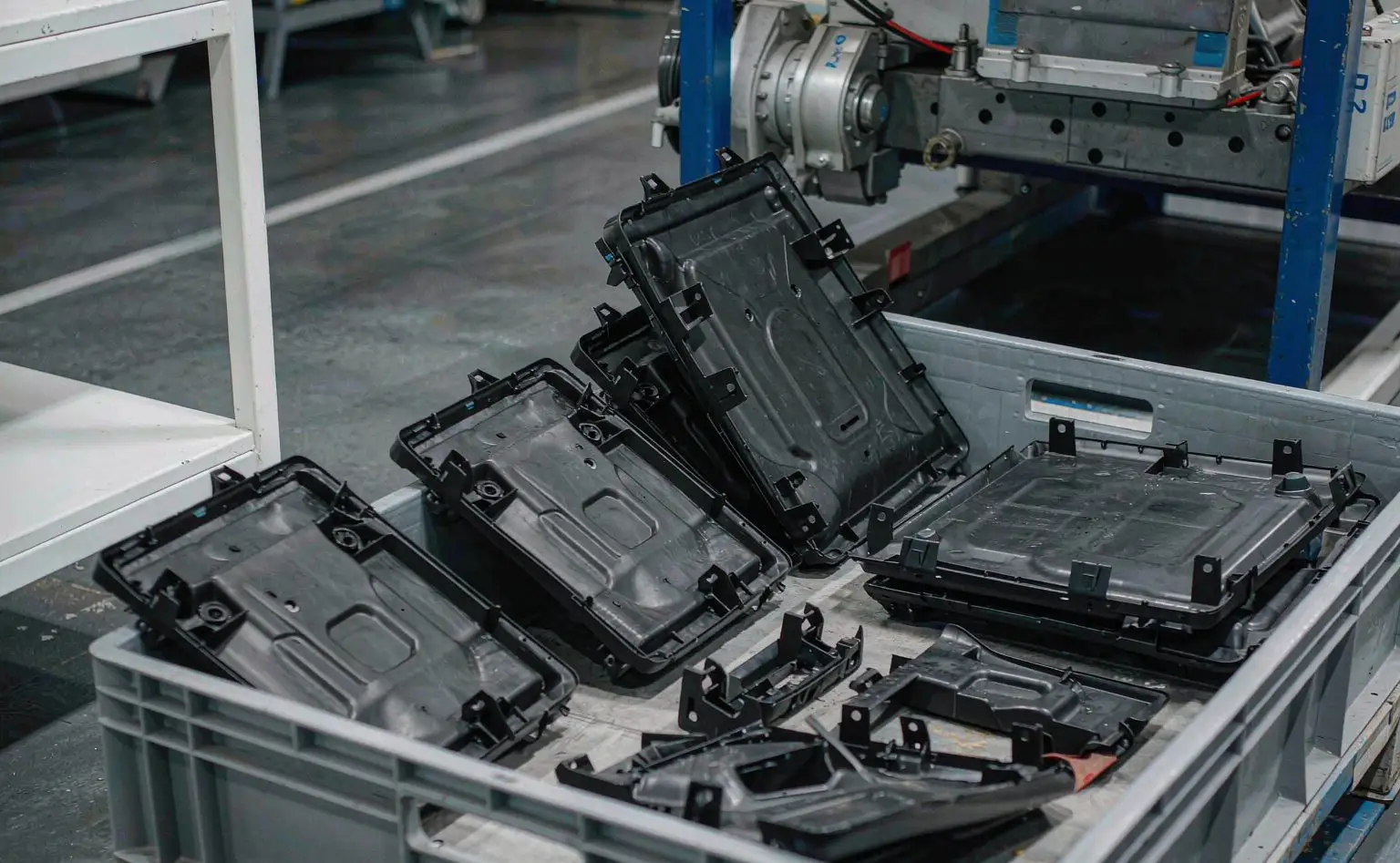
5. Assembly, finished-goods store and export
Three things at assembly: the adhesive must be dry, because taping a keypad onto a panel before the adhesive dries seals water underneath and that is the most common cause of an edge bloom; shop humidity at 60% RH or below; and the gap around keypad and fingerprint head blown out with dry air after assembly.
For the store and export: box the unit with absorbent material inside, seal the box but do not vacuum it flat, keep cartons off the floor and the wall, and hold the store below 60% RH. The moisture logic matches condensation in sea freight containers: water runs down the container wall, and the cartons against it fail first.
Release at three levels. Plastic parts: antibacterial rate to ISO 22196 or GB/T 20944.3, mould resistance to ASTM G21 or GB/T 1741. Keypad: mechanical properties to GB/T 528 and mould resistance to GB/T 1741, confirming hardness and rebound have not drifted after dosing. Whole unit: 30 days at 30℃/85% RH, then open and inspect the keypad edge, the panel seams and the ring around the fingerprint head.
6. Questions on tackiness, yellowing and mouldy units
Q: Why does a keypad feel tacky after dosing? Usually too much liquid additive or uneven stirring, so a local concentration interferes with curing. Check whether the dose passed 2% and whether the thin passes were done, then look at the post-cure curve. Do not ship a tacky keypad.
Q: A keypad yellows over time — is that the antimicrobial? Yellowing comes mainly from silicone ageing and curing-agent residue. To be sure, run a control: half the compound dosed, half not, both into a 70℃ oven, then compare colour.
Q: Can a unit that already has mould ship? Surface bloom on a keypad can be wiped and the feel and water resistance re-tested, but where mould has gone into the keypad-to-panel gap and a mark remains, the parts have to be replaced. Any reworked batch needs the compounding and assembly stages again; wipe only, and it returns within two weeks in the box.
Four points to take away: plastic panels and inner brackets dosed at mixing with iHeir-IPI001 0.8%-1.0% of part weight, pre-blended with pellets; silicone keypads dosed at compounding with iHeir-GGTK 1%-2% of compound weight, added below 200℃ and stirred in with extra thin passes, never with an anionic release agent; adhesive dry and gaps blown out at assembly; whole units released on 30 days at 30℃/85% RH.


