




 View Count:76
 Date:2026-09-28
Why does rainwear mould, and will washing it out actually work? The coating and the seam tape form a sealed structure, so once a carton takes on moisture in the store or in a sea container the spots appear on the back of the coating and on the lining, and by the time the buyer opens the carton the whole lot is a return. Pad iHeir-BJ at 2-3% o.w.f. on the fabric line, finish the repellency with iHeir-666 at 8-20 g/L for polyester, and add iHeir-ECO to the PVC compound at 0.5-1.0%. This article covers both the coating and the fabric side of mould control.
1. Why the coating goes first and the face fabric second
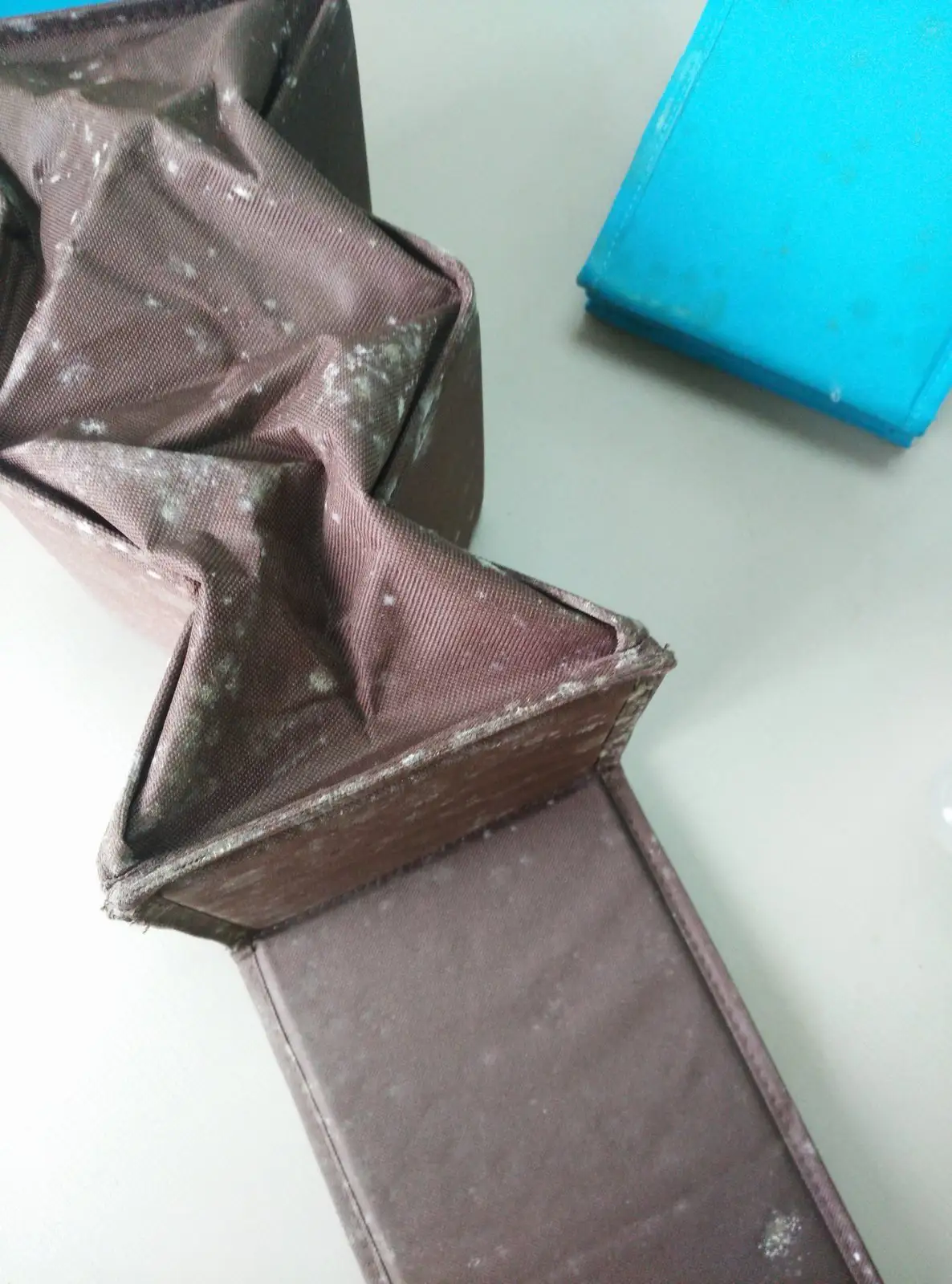
How a raincoat keeps water out decides how it fails. A PVC or PU coating holds the rain off and holds the moisture in, and because the film itself does not breathe, warehouse humidity and body vapour that get inside tend to stay inside; the back of the coating and the lining become the dampest part of the garment. The seam tape and the high-frequency welded seam are the second weak point: the coating is disrupted at the seam and moisture collects there first, so spots usually start either side of the seam and then spread.
That is why mould control on rainwear cannot stop at the fabric. The fabric pass deals with mould in the textile itself, the antimicrobial masterbatch in the coating compound deals with mould inside the film, and the store and the loading stage decide whether the work survives the trip. Three separate jobs.
2. Coating and fabric: the dosing points side by side
The table sets out the stage, what is treated, the product, the dosage figures and the points to watch, so process and purchasing can work down an existing order against it.
| Point | Treated part | Product | Figures | Points to watch |
|---|---|---|---|---|
| Fabric mould control (main line one) | Polyester and nylon fabric | iHeir-BJ textile mildew inhibitor | Padding at 2-3% o.w.f. | Bath 21-50 degrees, pH 4.5-8.5, pre-mix with 9-13 parts water, no anionic auxiliaries in the same bath |
| Fabric repellency (main line two) | Polyester and nylon fabric | iHeir-666 water-based repellent | 8-20 g/L on polyester, 5-20 g/L on nylon | Pre-dry 110-130 degrees, cure 170 degrees for 60 seconds |
| Top-up on finished goods | Outer face of the finished coat | iHeir-600 oil-based repellent | Two crossed passes, 10-12 grams per square foot | Even gun speed and spacing; keep clear of wet coating |
| PVC compound | Coating film and the compound itself | iHeir-ECO plastic antimicrobial | 0.5-1.0% on PVC | Stable at 240 degrees; avoid prolonged exposure above 320 degrees |
| Finished store and loading | Warehouse and the container | Dehumidifiers plus container desiccant sticks | Hold store humidity down; site the sticks by container size | The core of the stack and anything against a wall goes damp first |
Five rows, one conclusion: the fabric pass decides whether the textile carries protection, the repellency pass whether it sheds water, and the store and loading stage whether either survives to the first opening.
3. The fabric pass: how to run the BJ finish
The mould line on the fabric runs in the pad bath before the coating. Pad iHeir-BJ at 2-3% o.w.f., with the bath at 21-50 degrees Celsius and the working liquor at pH 4.5-8.5, in soft water, pre-mixed with 9-13 parts water before it goes into the bath. The rate sets the service life: 2% corresponds to roughly a year or more and 3% to two to three years, so pick the tier by the humidity of the destination.
Two prohibitions belong on the process card. The first is the bath itself: BJ is cationic and must not be run in the same bath as an anionic auxiliary, nor share a stage with anionic softeners or fixing agents, or the agent complexes, the finish is wasted, and marks can be left on the fabric. The second is water quality: soft water is compulsory, because calcium and magnesium in hard water react with the agent and floc forms in the bath.
Run the sequence as dyeing, rinse, mould finish, dewater and dry, repellency, then cure. Put the mould finish ahead of the repellency with a rinse in between, and check the wet pickup after the first pass before setting the mangle figures for the second. Run a comparison swatch from each of the first two batches before scaling up.
4. Water repellency: splitting 666 from 600
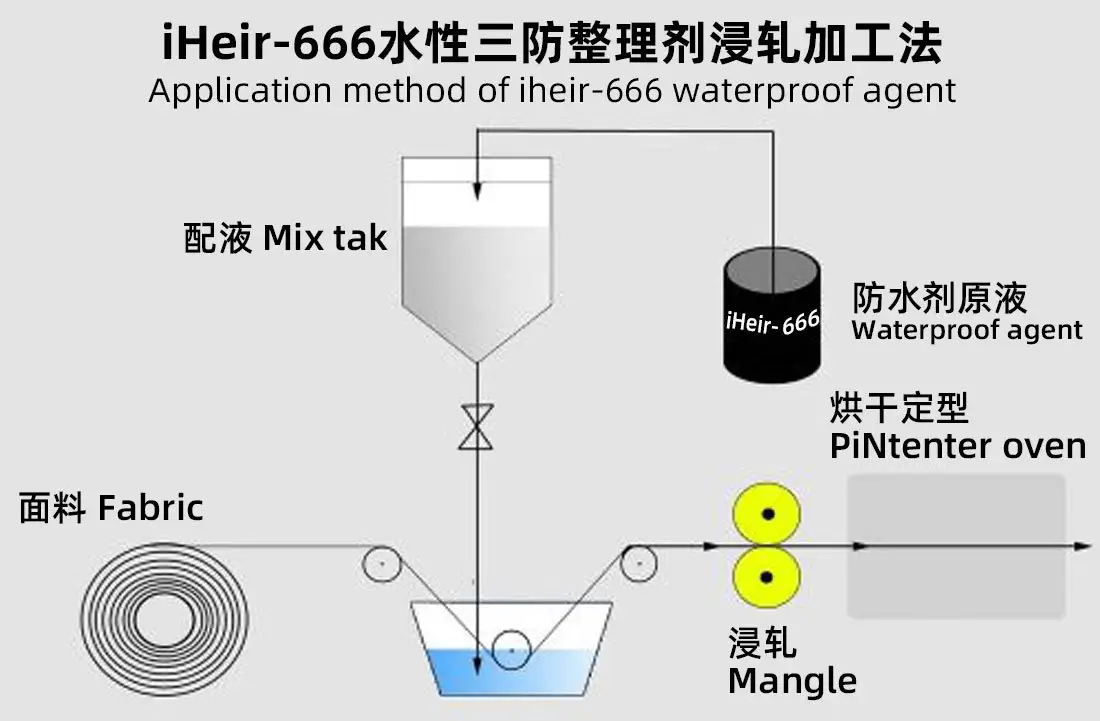
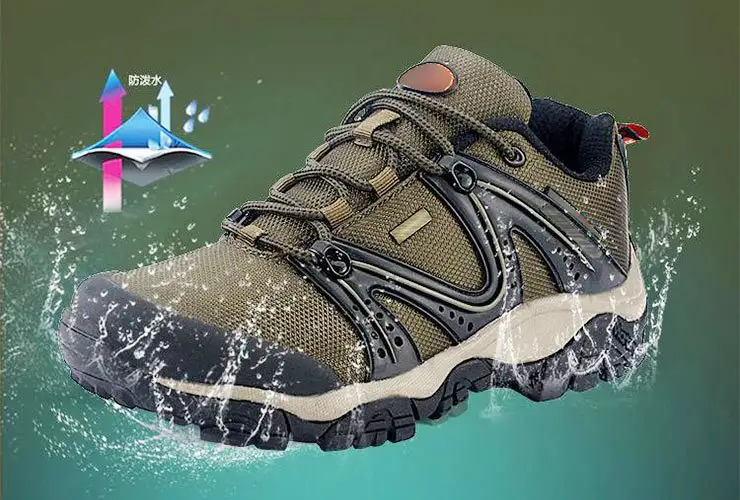
There are two routes, and which one to use depends on the equipment and the stage. The first is padding: iHeir-666 runs at 8-20 g/L on polyester and 5-20 g/L on nylon, followed by pre-drying at 110-130 degrees and curing at 170 degrees for 60 seconds, so the cross-linking has to reach temperature before the repellency is stable. It is free of PFOA, APEO and PFOS and works at pH 3-4, which suits a continuous line. The second is a top-up spray after coating and seam sealing: iHeir-600 goes on the outer face in two crossed passes at 10-12 grams per square foot, covering the seams and the thin spots in the coating. Store 600 between 0 and 50 degrees, so a cold workshop in winter needs attention.
The PVC route needs its own line. A coating film resists water but not mould, so dose iHeir-ECO into the compound at 0.5-1.0% on the PVC; it is stable at 240 degrees, which matches the coating process, but prolonged exposure above 320 degrees has to be avoided. Dosing the compound puts a line of defence inside the film itself, so spots no longer start on the back of the coating.
5. Finished store and container loading
Once the finishing is done the third front is storage. Confirm the moisture content is back within specification before the coats are cased, keep the warehouse ventilated, rack it off the floor and away from the wall, and run dehumidifiers through the wet season; coats stacked against an external wall are the first to go. At the casing stage, place anti-mould or vapour-phase sheets inside the bag with the garment rather than outside the carton.
The container is the layer most often forgotten. In a sea container the cargo is heated by day and cooled at night, so water condenses again and again and drips from the ceiling onto the cartons, wetting the top layer of rainwear first. Hang container desiccant sticks to match the unit, 8-10 for 20 ft and 10-12 for 40 ft, from the roof rails rather than laid on the cartons, so condensation forms on the sticks first. Leave the air path at the container roof clear instead of loading to the roof.
6. Common questions
Q: Can mould that has already appeared on rainwear be washed out? It depends. Where the spots sit on the surface and have not reached the coating, a neutral cleaner plus a fresh repellency pass recovers most pieces; where the growth has reached the back of the coating or the inside of the seam tape, it comes back after cleaning, and high-value orders should not be risked. For grading see wet pickup in textile padding.
Q: Can the mould finish and the repellency finish be run in one bath? Not advisable. BJ is a cationic system and most repellents are anionic or non-ionic, so the two complex in the same bath. Run them as two passes with a rinse in between, mould finish first and repellency second, then cure together.
Q: How do you choose between water-based 666 and oil-based 600? By stage. For continuous processing that goes through a dryer, pad 666; where the coating is already finished and only the seams and local spots need topping up, spray 600. The two do not conflict and one line can keep both. See finishing for outdoor fabrics for the wider context.
Closing note: mould on rainwear is the coating, the fabric and the store failing together. Put the protection into the textile with iHeir-BJ at the pad, add repellency with iHeir-666 or iHeir-600, dose the PVC compound with iHeir-ECO, and keep the moisture outside with dehumidifiers and desiccant sticks. Samples and minimum order details for all of these are available on request.


