




 View Count:32
 Date:2026-11-14
Where does football mould come from? Water carried in by the base fabric and sealed in by the wound yarn layer, which shows as spots on the cover within a fortnight of bonding and writes off a whole batch in the warehouse. Run the synthetic leather base fabric through the padding bath with iHeir-BJ textile mildew inhibitor at 2%-3% o.w.f. and 70% pick-up, and dry the wound bladder before bonding. This article gives the dosing arithmetic, the drying spec and the carton routine.
1. Three places football mould hides: base fabric, yarn layer, carton
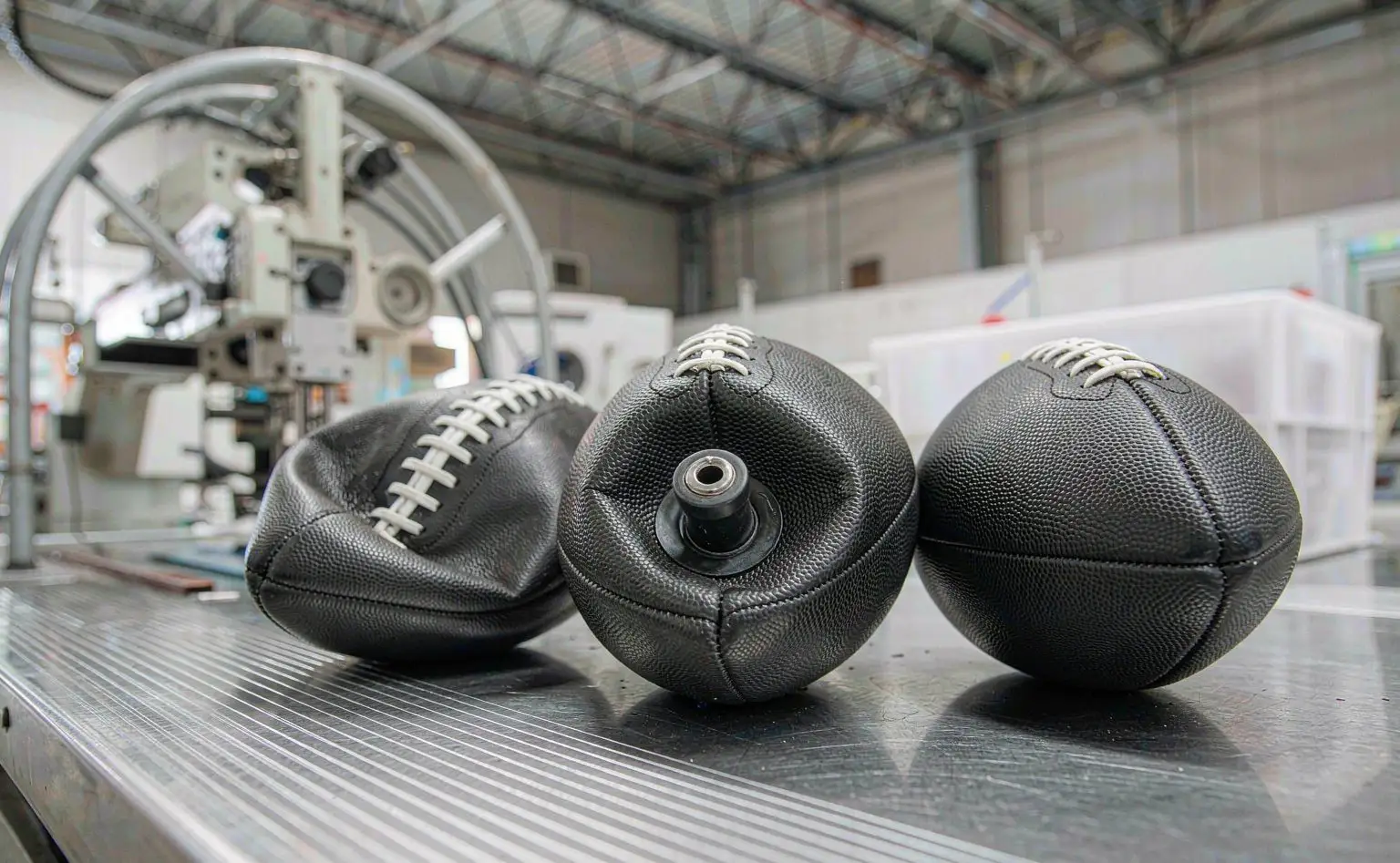
A football is a synthetic leather cover on a knitted base, a wound yarn layer, a butyl bladder and a valve; it reads as plastic and rubber, yet several parts take up water.
The base fabric is a sponge. The base of a PU synthetic leather is a knitted or non-woven cloth with large gaps between fibres, and it passes through a finishing trough before coating. If that pass only does softener and setting, the base goes into the coating bare, and spots on the cover have their root there.
The yarn layer is the hardest to dry. Yarn is wound over the bladder layer upon layer with almost no void, and both yarn and latex carry water; once wound it is a wet core under non-breathing leather.
The carton is the long tail. Footballs ship in three or five ply corrugated, which takes up moisture; in a container the air warms and cools, water condenses between ball surface and box wall, and growth starts at the bottom of the box. Of the three, the carton is the cheapest to fix and the one most often forgotten.
2. The cover: 2%-3% o.w.f. in the padding bath
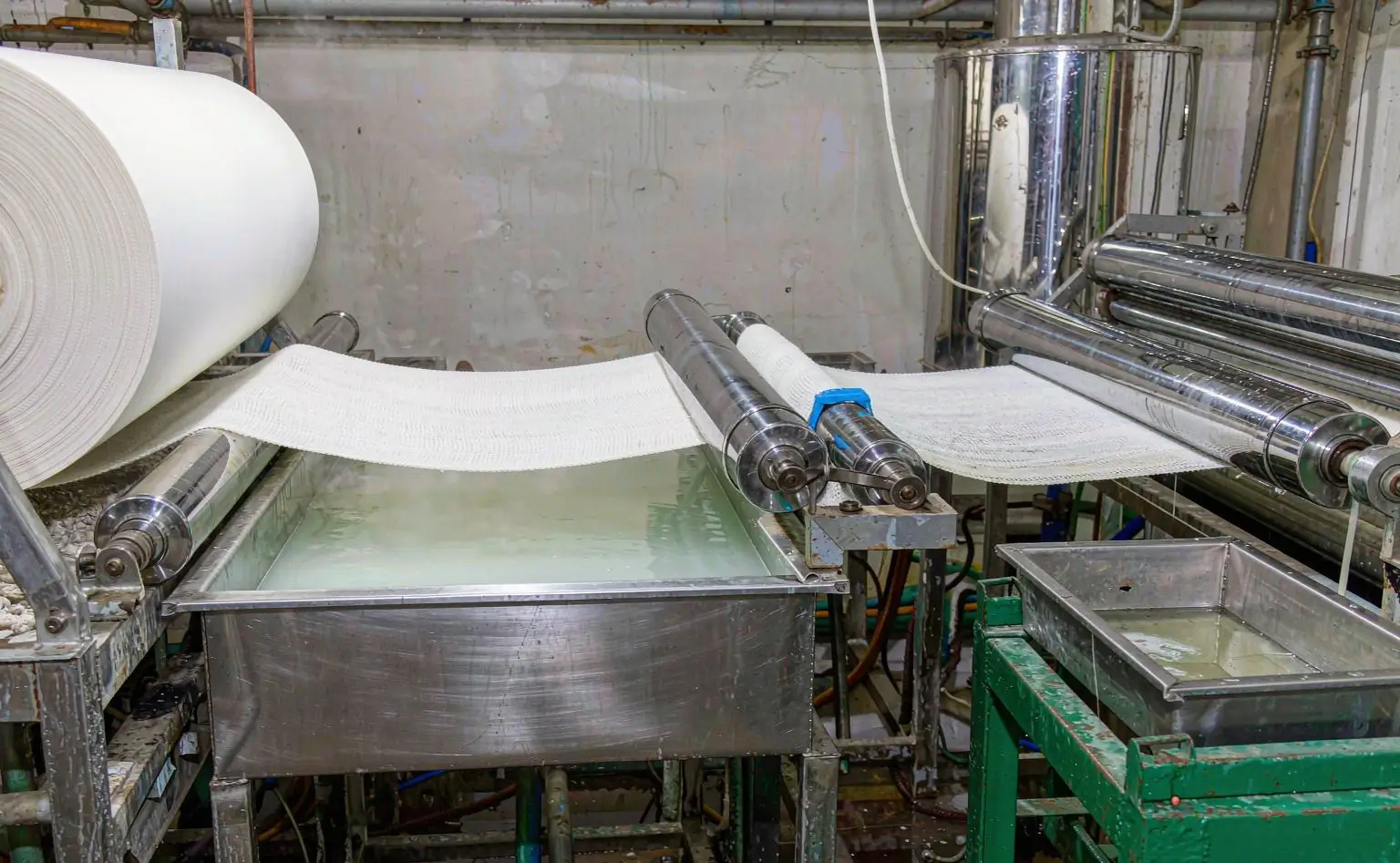
This stage uses iHeir-BJ textile mildew inhibitor, added to the finishing bath at the dyehouse while the base fabric is still cloth, which works far better than spraying after bonding.
Why in the bath. Once the base is coated it is sealed inside the leather and no liquor reaches the fibre; in the bath the agent is pressed into cloth and travels with the fibre.
Making it up. Premix with 9-13 parts of clear water and add to the trough in portions rather than pouring it in at once, which clumps on the surface and leaves patches on the cloth. Hold the bath at 21°C-50°C and pH 4.5-8.5, running at about 6.
Set pick-up at 70%. Set the mangle to 70% pick-up so the wet add-on is steady; when pick-up wanders the agent can vary by 30% inside one batch.
The cationic red line. iHeir-BJ is cationic and cannot share a bath with an anionic softener. Base fabric finishing usually includes a softener, so confirm the ionic type before buying: if it is anionic, run two passes or switch to a non-ionic grade. In one bath the effect drops, and at worst the face shows oil spots.
| Part | Material | Product and level | Stage | Control point |
|---|---|---|---|---|
| Cover base fabric | Knitted, non-woven | iHeir-BJ 2%-3% o.w.f. | Base fabric finishing bath | pH around 6, 70% pick-up |
| Skin | PU, PVC | Carried with the base | Coating or lamination | Base bone dry before coating |
| Yarn layer | Polyester yarn, latex | Counted on yarn weight | Drying after winding | Moisture on spec before bonding |
| Carton and ball bag | Corrugated, oxford | iHeir-D 0.1-0.2 g per sheet | Packing | Box dry, sheet off the ball |
One boundary. iHeir-BJ covers mould on the base fibre and keeps working once it is in; it does not touch the water inside the yarn layer, and it does not touch moisture in the carton. Three stages, one verdict each, and whichever is skipped is where the problem lands.
3. How much to add: on cloth weight, never on bath weight
o.w.f. means on the weight of cloth. On 100 kg of base fabric, 2% is 2 kg of iHeir-BJ and 3% is 3 kg. The datasheet figure is 3 kg of agent to 100 kg of cloth, which is the 3% case. Do not convert from total bath weight, because that error is out by an order of magnitude.
Choosing 2% or 3%. Domestic orders and short lead times run 2%; export containers and rainy-season production run 3%, with a retained sample. Do not change the level mid-order.
Topping up. In continuous running the cloth carries liquor out, so top up with water and agent together, not water alone. Check bath pH and temperature once a shift and correct below pH 4.5.
How to verify. Test finished base fabric to GB/T 24346 or AATCC 30 for mould rating and GB/T 20944.3 for antibacterial; also check moisture on the base before lamination, because both coating and bonding suffer when the cloth is damp.
4. Bladder and yarn: put the drying spec on the scale
The bladder is butyl rubber, and its air tightness is both the point and the problem: water inside cannot get out.
Blow the bladder dry first. A butyl bladder is inflated after forming to set its shape, so the air has to be dried and the line must be free of condensate; where possible purge the cavity with dry air before inflating, which costs very little.
Dry after winding. Yarn carries latex, so the wound core is at its wettest right after winding. Use a forced-air drying room, set the temperature to what the latex and yarn tolerate, and lengthen the time with core diameter; check moisture by batch and bond only on spec.
The check before bonding. Bonding is the last operation that can seal water in. Press the core by hand for any damp feel and weigh it against a core of the same spec; if it is over, send it back to the dryer.
The adhesive stage. The adhesive carries solvent or water of its own, so control the coat weight, because more adhesive is another layer of water; allow the flash-off time before closing the seam.
5. Bonding, packing and storage: closing the last stretch
Rest the finished ball. Let bonded balls rest at 45%-65%RH until the adhesive cures rather than pushing them into a damp store, and keep the rest area floor dry.
Sheet in the carton. Put one iHeir-D sheet at 0.1-0.2 g in each carton, tucked to one side or between balls rather than pressed against a cover; ball bags in oxford or mesh take one sheet too, mouth closed where possible.
Storage and export. Hold the store below 60%RH, keep cartons off the floor and wall, and stack only as high as the board allows. Line export containers, and in the rainy season hang desiccant sticks inside the door. The same base-fabric-plus-carton logic is in plush fabric pile and filling and mouldy PU synthetic leather.
6. Questions from the line
Q: The cover is treated, does the yarn layer still matter?
A: It does. The yarn layer is a wet core under a non-breathing cover, so if it is not dried the moisture comes back out through the ball.
Q: What is the difference between 2% and 3%?
A: Half again as much agent. Short cycles and domestic orders run 2%; export containers and long sea time run 3%, with a sample retained.
Q: Can the softener go in the same bath as the inhibitor?
A: Check the ionic type. An anionic softener cannot share a bath with iHeir-BJ: run two passes or switch to a non-ionic grade.
Q: A ball has already spotted, can it be saved?
A: The surface can be wiped, but the root is in the base fabric and it comes back; rework means stripping the ball.
Four closing points: run the base fabric through the finishing bath with iHeir-BJ at 2%-3% o.w.f., premixed with 9-13 parts water and added in portions, bath at 21-50°C, pH around 6, 70% pick-up, never with an anionic softener, then rate to GB/T 24346 or AATCC 30; purge and inflate the bladder dry, dry the wound core in a forced-air room to spec and weigh-check it before bonding; rest bonded balls at 45%-65%RH until the adhesive cures and hold the finished store below 60%RH; put one iHeir-D sheet at 0.1-0.2 g in every carton and ball bag, and line the export container. A one-kilogram sample can be sent ahead, and lead times are on the iHeir-BJ product page.


