




 View Count:42
 Date:2026-11-02
Can mould be prevented on playing cards, and why does a clean deck still spot at the edge first? A card is coated board on both faces, and the coating stops water while the die-cut edge leaves bare fibre ends, so moisture gets in from the side and mould starts there. For carton storage the fix is iHeir-D gas-phase anti-mould paper at 0.1-0.2g of active matter per sheet, laid on the carton floor, walls and between layers. This article covers the dosage calculation, humidity control and how to grade a carton.
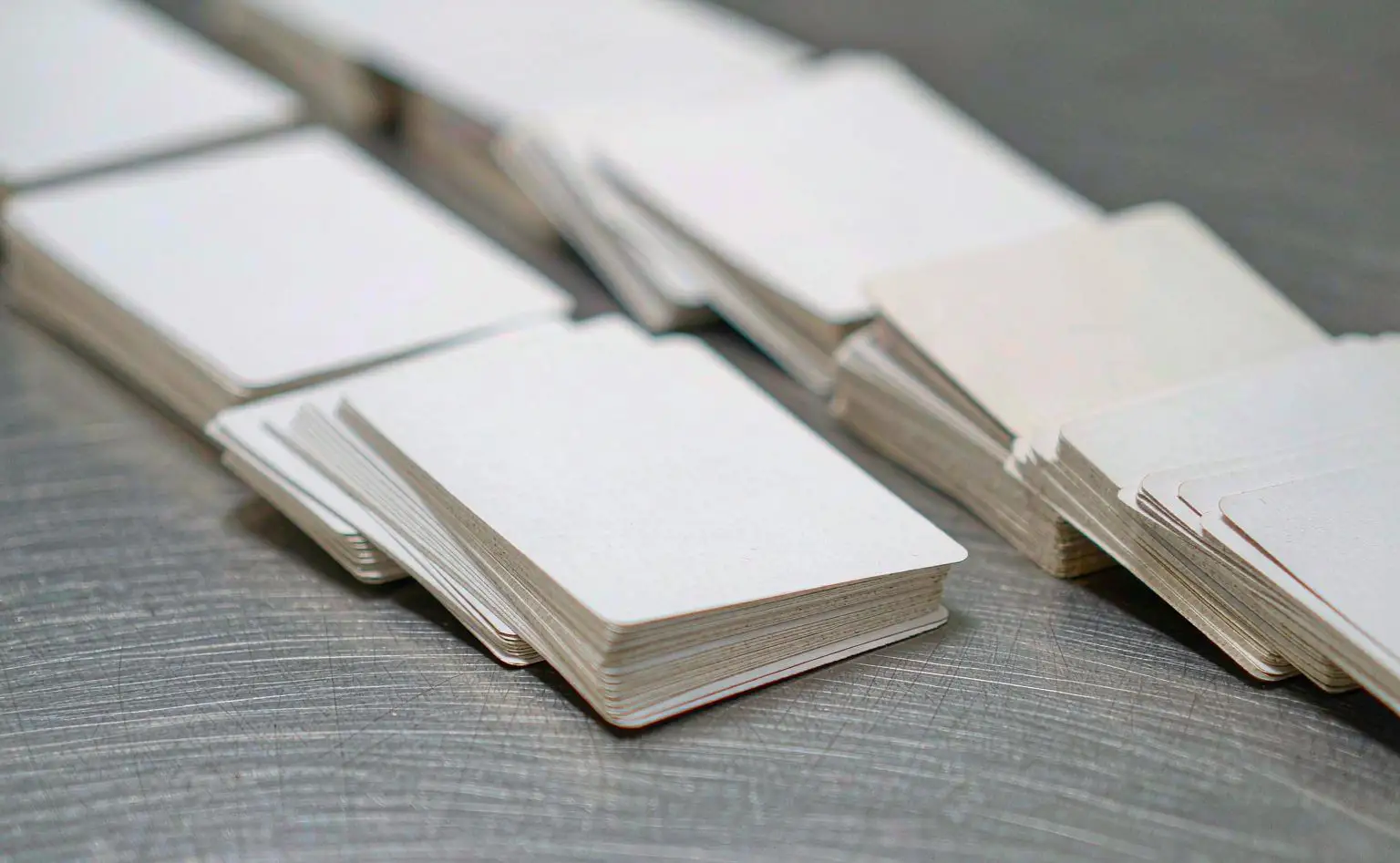
1. Mould enters at the cut edge, not the face
A deck is a simple build: coated white board on both faces, printing ink, an aqueous or solvent varnish, four die-cut edges, a box. Coating and varnish form a dense film that resists water; the die-cut edge exposes fibre ends, where there is no film, only fibre that absorbs.
Why the edge takes water first. Paper absorbs along the capillaries between fibres, and a cut edge opens all of them at once. In a stacked deck the cards touch each other edge to edge, so moisture travels in layer by layer; by the time the faces cockle, the fibre inside is already saturated and spots appear from the side inwards.
The box and carton are the second route. A deck box is board with a film or a paper wrap, and the shipping carton is corrugated. A carton holds a lot of paper and a lot of air, so once the board takes up moisture the relative humidity inside sits above 80% for days. Even a dry deck starts absorbing at the cut edge within a minute of opening, which is why so many plants only find the problem at inbound inspection.
2. Carton sheets and surface treatment are two different jobs
The table lines up the card face, the cut edge, the box and the carton. Surface treatment changes how the face resists water; carton sheets condition the air inside the box. They do not solve the same problem.
| Part | Material | Route | Stage | Control point |
|---|---|---|---|---|
| Card face | Coated board, both sides | Varnish or coating resists water | After printing | Even coat weight, no misses |
| Cut edge | Bare fibre ends | Covered by vapour inside the carton | Die-cutting, boxing | Clean cut, no damp re-entry |
| Box and carton | Board, corrugated | iHeir-D sheet at 0.1-0.2g each | Boxing, cartoning | Compatibility trial first |
| Storage and sea freight | Pallet, container | Humidity control, air path | Storage, loading | Store below 60% RH |
One boundary. A water-repellent varnish on the face stops splashes and does nothing about moisture circulating inside the carton, and sheets inside the carton do nothing about a humid shop floor. The cut edge, the air in the carton and the storage humidity are one problem with three parts.
3. Where the sheets go and how many
iHeir-D gas-phase anti-mould paper is a speciality ink carrying anti-mould particles, coated onto paper and sealed with the goods so the vapour diffuses into the gaps. The dose basis is 0.1-0.2g of active matter per sheet, calculated from the free volume in the carton, the weight of paper in it and the storage period, not from the number of decks.
How to calculate. Measure the free volume and the paper weight per carton, then band by storage: two sheets for a domestic carton held under three months; for an export container with six months or more, one on the floor, one on each of the four walls and one between layers every 20-30 boxes. Longer storage and larger cartons push the dose up, either by a heavier sheet or by more sheets, and what matters is that the vapour can reach every corner.
Placement beats count. Sheets belong against the wall and floor, never crushed under boxes. In a carton with a large void the upper air space works better. The lid has to close into a semi-sealed volume, so cartons with a wide flap gap get a stretch wrap or an inner liner before sealing.
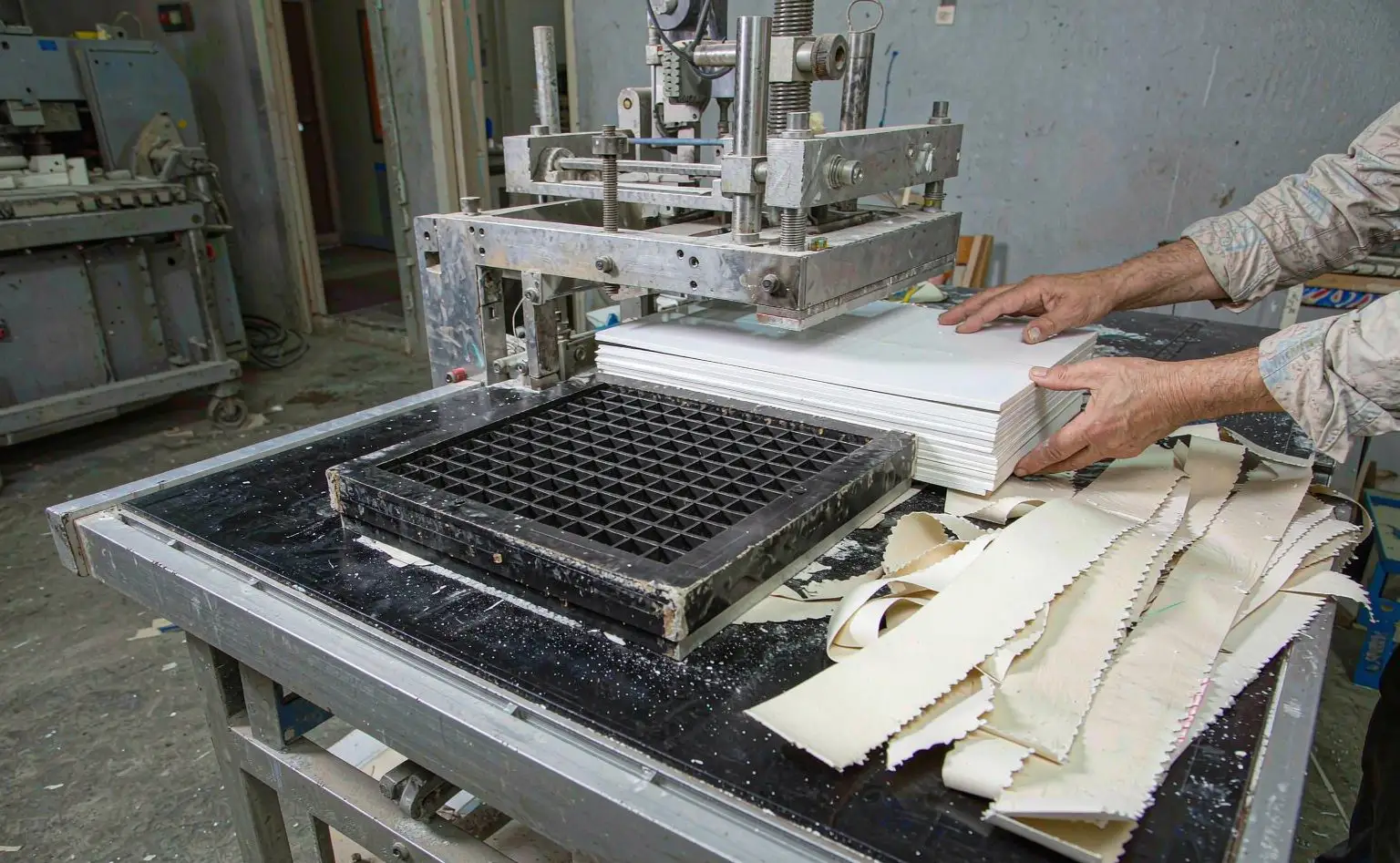
4. Storage and loading: hold the humidity inside the carton down
Card storage carries risk in two places, the finished-goods store and the container. In the store the three jobs are pallet height, wall clearance and humidity: 10cm off the floor, 10cm off the wall, below 60% RH, with dehumidifiers running in the wet season and ventilation moved to midday. The wider store routine is in mixed-cargo export moisture control.
Container condensation does more damage than shop humidity. The day-night swing forms water on the container ceiling, drips onto cartons, and the board takes it up before passing it on to the decks. Leave an air path, keep cartons off the container wall and hang desiccant sticks; the layout is in preventing container rain.
Order of inspection at opening. Check the four corners and floor of the carton for water marks, then the box walls, then open three decks and look at the cut edges. Slight cockling or a soft edge means absorption has started, so dehumidify the lot before it ships rather than waiting for spots on the faces.
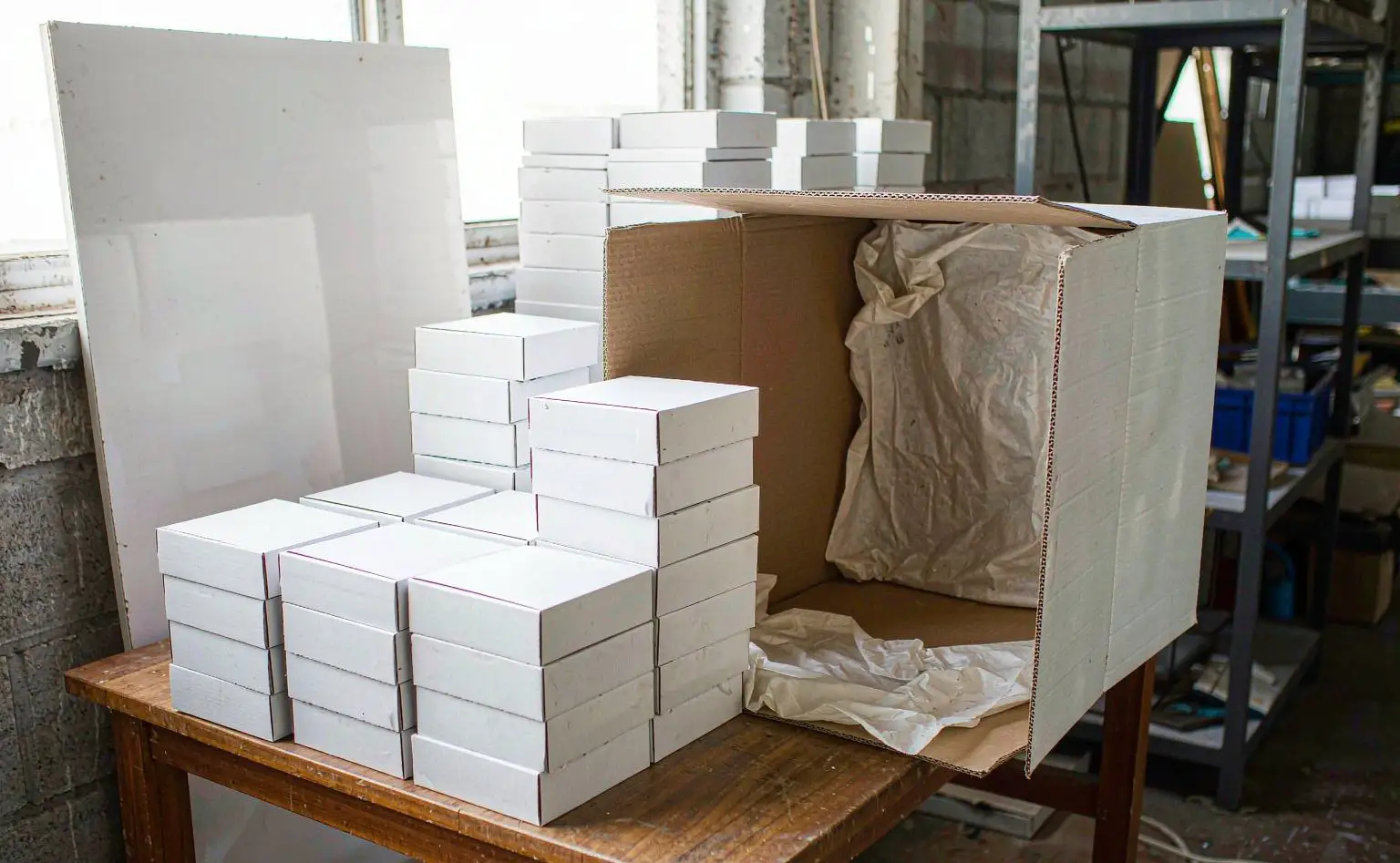
5. Release and grading: what each level checks
Level one is the paper itself: grade it to GB/T 24346-2009, sampling one piece at the cut edge and one from the face, and read the grade rather than looking for visible spots. Level two is the box: 30 days at 30℃/85% RH, then check edges, faces and box walls. Level three is the carton: same conditions, smell it, look for water marks on the walls, then open the decks.
The compatibility trial is not optional. Card faces are heavily printed and boxes often carry spot colour and foil. Put three times the normal dose into the box or carton under test, mist a little water, separate the sheet from the print with paper, close it and inspect after a few days for fading, yellowing or dulled metal. Poor dyes are faded by the vapour, and a trial is far cheaper than a reprint. Sheet selection itself is covered in choosing anti-mould packaging paper.
6. Questions on box-only sheets, fading and spotted decks
Q: Can we put one sheet in the deck box and skip the carton?
For short domestic runs, yes. For an export container, no: a box holds little paper and a single sheet cannot condition the carton air, and once the carton board takes up moisture the sheet saturates and stops showing any effect.
Q: Will the sheet fade or tack the card faces?
The vapour affects some poor dyes, so run the trial at three times the dose first. Tackiness is usually a varnish boxed before it is dry, which is a drying and curing time problem rather than a paper problem.
Q: The decks have light spots. Can we wipe them and ship?
Surface bloom wipes off, but the growth in the cut edge does not, and it returns within days of boxing. Light cases can be downgraded to a domestic or promotional pack; export orders are better replaced, because the risk lands at the destination port.
Four points to take away: sheet the carton with iHeir-D paper at 0.1-0.2g of active matter per sheet, one on the floor, one on each wall and one between layers every 20-30 boxes, more for storage beyond six months; keep sheets against wall and floor rather than under boxes, and add an inner liner where the flap gap is wide; store 10cm off floor and wall below 60% RH, and leave an air path in the container; release on GB/T 24346-2009 grading plus 30 days at 30℃/85% RH, after a trial at three times the dose. A pack of sheets can go out for a trial first; MOQ and lead time are on the iHeir-D product page.


