




 View Count:64
 Date:2026-10-07
Should PVC rain boot mould be handled in the boot compound or in the lining? A boot is a PVC body combined with a knit lining, and the mould usually starts at the lining and the inside wall of the shaft, so a spray on the outside of the boot never reaches the inside. The PVC boot takes iHeir-ECO plastic antimicrobial agent at 0.5%-1.0% on resin weight at the injection stage, and the knit lining takes iHeir-BJ textile mildew inhibitor at 2%-3% o.w.f. at the padding stage. This article covers the two lines.
1. Where the mould comes from: the PVC body and the lining are two materials
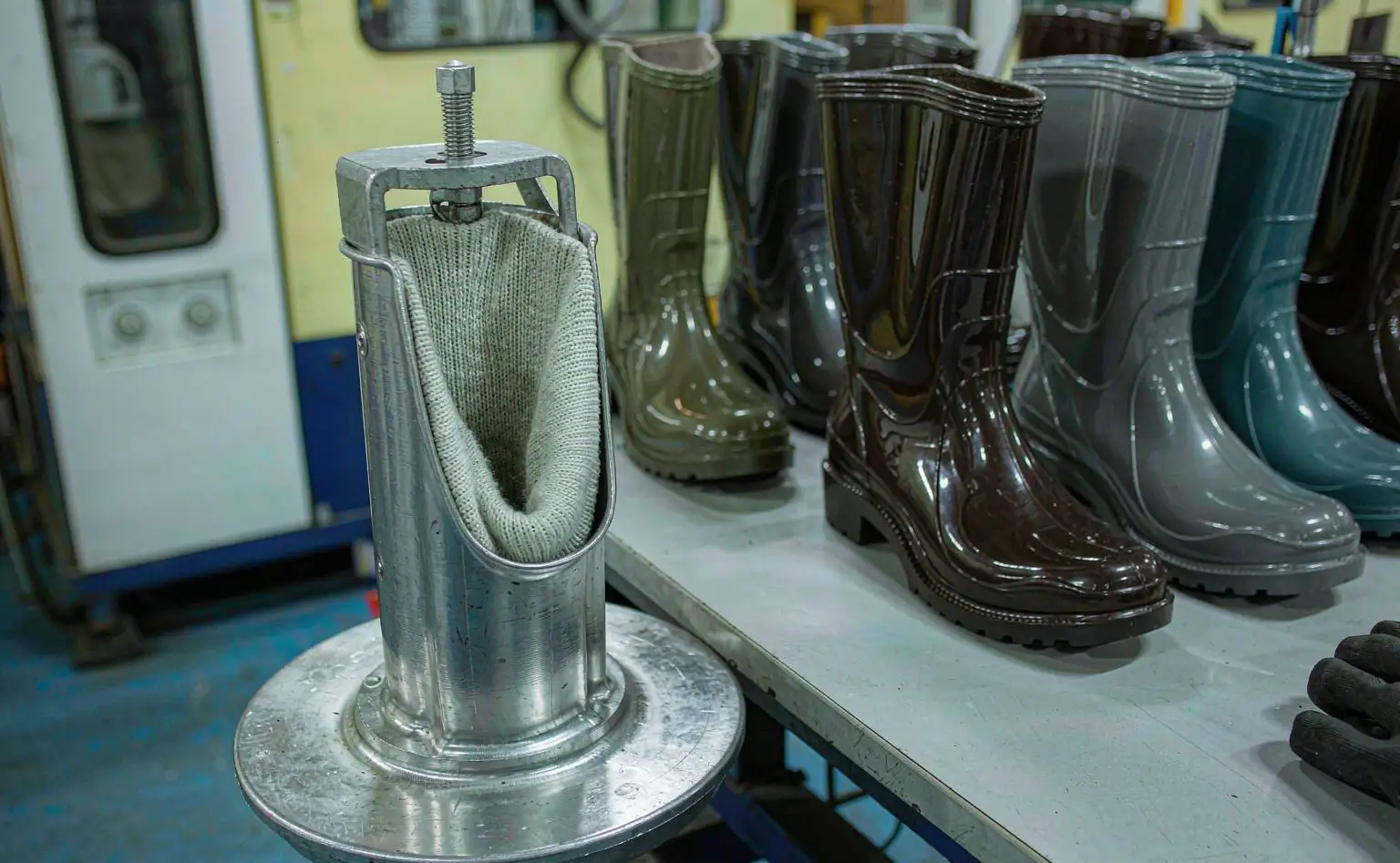
Take a boot apart and it is two materials. The PVC body is a moulded or dipped polymer part that does not absorb water itself, but its surface carries plasticiser and release aids, and once foot sweat and the damp of storage add up the inside wall of the shaft first turns tacky and then mouldy. The knit lining sits against the inside of the shaft, its fibres take up moisture, and foot sweat and vapour settle in it, so once moisture content runs high the mould grows inside the fibre.
The two are treated differently. The body takes the antimicrobial in the hopper with the masterbatch, distributed through the whole shell; the lining takes a bath at the padding or setting stage, where the agent bonds to the fibre surface. The denominators differ too, one on resin weight and one on dry cloth weight, so merging them into one figure means the body is overloaded and the lining falls short.
Order matters: both stages happen before the lining is fitted over the last. Spray the finished boot after boxing and only the outer face is reached, leaving the inside wall and the back of the lining untouched; do it before fitting and each material carries its own protection into the assembly.
2. The two lines at a glance: the PVC body and the knit lining
The table lines up the part, the stage, what is treated, the product, the figures and the points to watch, so it can serve as the first draft of a process card.
| Part | Stage | Treated item | Product | Figures | Points to watch |
|---|---|---|---|---|---|
| PVC body and shaft | Injection | PVC resin | iHeir-ECO plastic antimicrobial agent | 0.5%-1.0% on resin weight | Thermal stability 240 degrees, clear of 320 degrees; in with the masterbatch or a premix |
| Knit lining | Padding / setting | Textile fibre | iHeir-BJ textile mildew inhibitor | 2%-3% o.w.f. | Bath 21-50 degrees, pH 4.5-8.5; premix with 9-13 times its weight in water and add in portions |
| Bond between lining and shaft | Before fitting over the last | Seam | In-material protection (no extra dose) | By the two figures | The bond face holds water; protect it in the material, not with a spray |
| Boot box, cards and tags | Packing | Paper | Control only (not one of the two lines) | By the anti-mould packaging-paper figure | Paper takes up moisture fastest; prefer anti-mould packaging paper or a liner layer |
| Finished store and container | Stacking / full container | Air in the stack and the box | Humidity control only | Below 60% relative humidity | The inside wall barely airs; sheets by stack, and dry the goods before loading |
Five rows, one conclusion: the body is figured on PVC resin weight and the lining on dry cloth weight, so the denominators differ and the figures never swap; the box and the store take no agent and are held on humidity control, preserving what the two stages achieved.
3. The PVC body: ECO in the masterbatch at 0.5%-1.0%
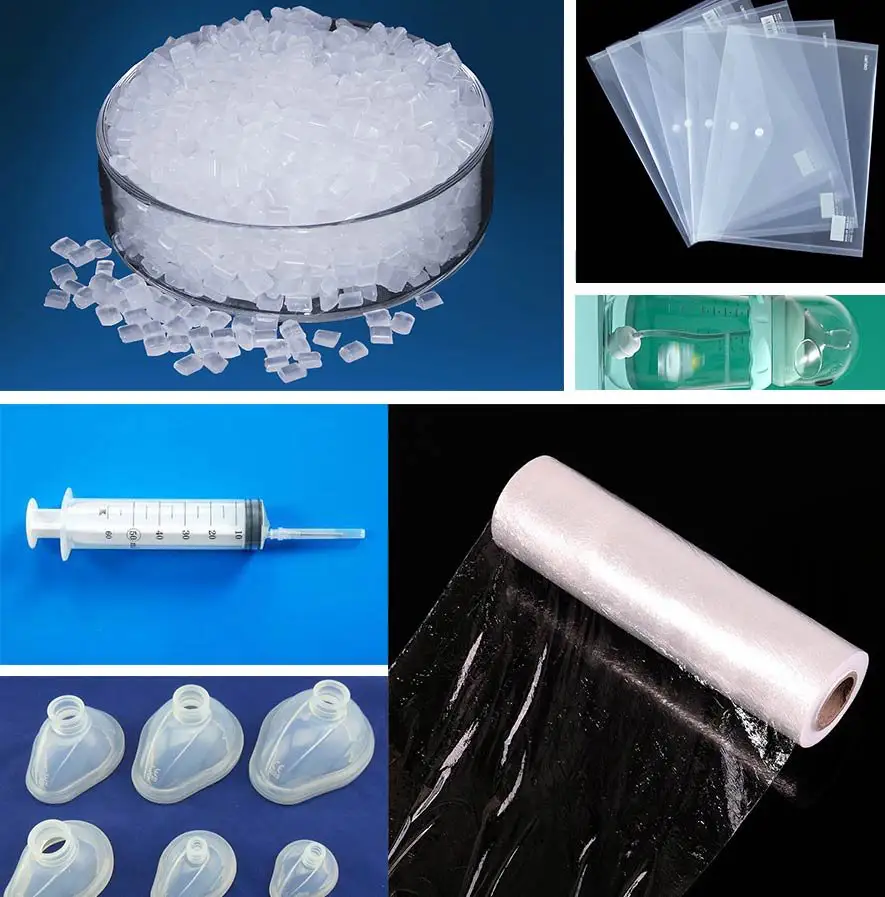
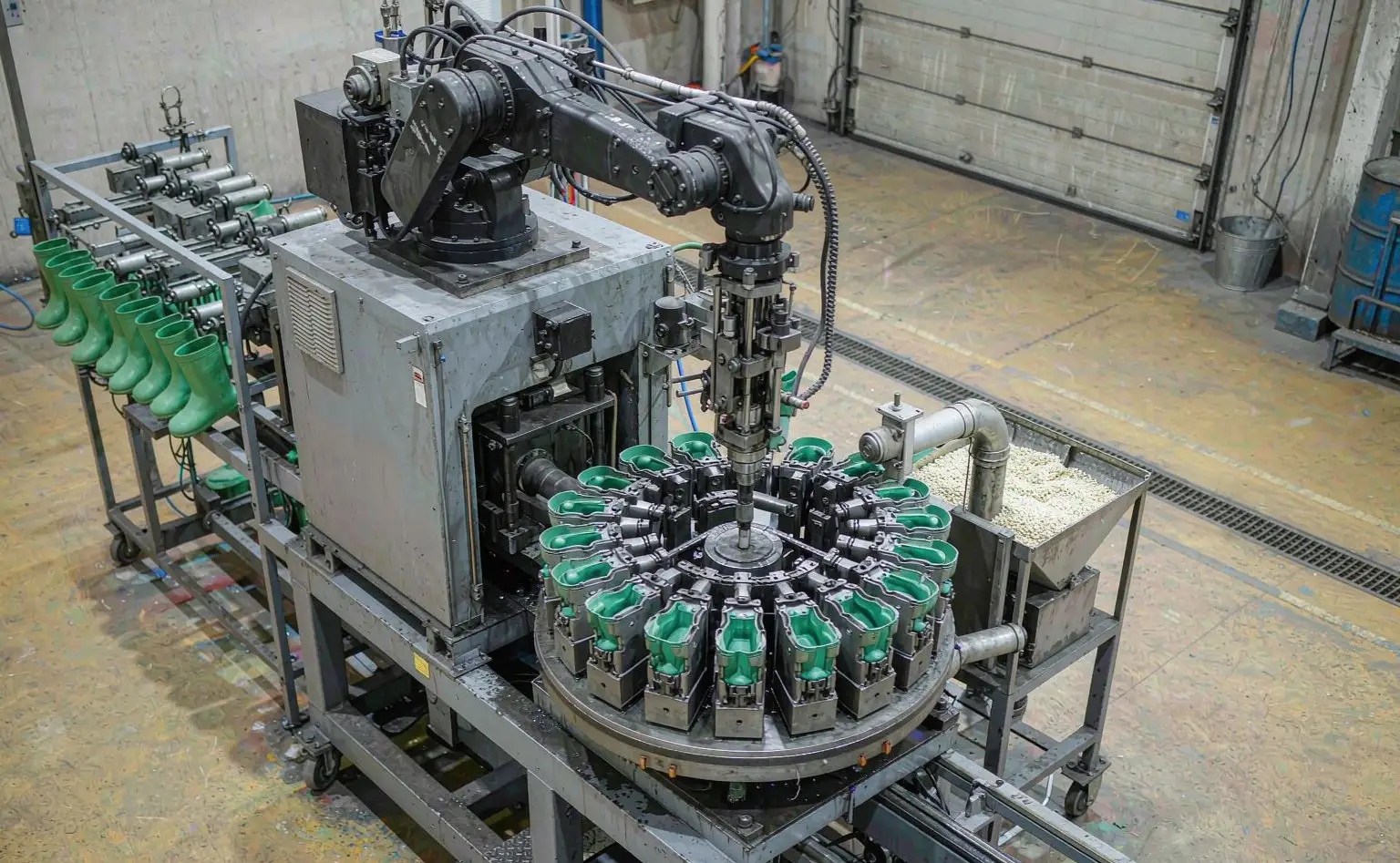
The body line is completed at injection. Add iHeir-ECO plastic antimicrobial agent at 0.5%-1.0% on PVC resin weight, made up first as a masterbatch in a matching carrier or premixed with the pellets before the hopper. The additive bonds with the material and is distributed through the whole shell rather than sitting on the surface, so bending, rubbing and washing will not rub it off. Thermal stability reaches 240 degrees, and the process temperature should stay clear of 320 degrees.
Three details. First, the figure is on total resin weight, regrind included, so any change in the ratio means recalculating, and high-regrind batches belong at the top of the range. Second, a PVC system carries plasticiser and the order of addition affects dispersion, so run a small trial to check appearance and dispersion before a full batch. Third, coloured and pale shells have to be watched for a shift caused by the additive, and pale parts are the more sensitive. See mould prevention for shoe materials and packing for the wider picture.
4. The knit lining: BJ in the padding bath at 2%-3% o.w.f.
The lining line is completed at the setting trough or the padding stage. Make up the liquor with iHeir-BJ textile mildew inhibitor at 2%-3% o.w.f. on the dry weight of the cloth, premixing it with 9-13 times its weight in water and adding it to the bath in portions; 0.1% of a wetting agent can go in first. Run the bath at 21-50 degrees and pH 4.5-8.5, with pick-up taken at 70%. The product bonds to the fibre surface to form an antimicrobial layer; it is a non-releasing type, so the layer lasts as long as the article.
Three details. First, BJ is cationic, so it must not share a bath with an anionic auxiliary, or the emulsion breaks and the treatment fails, which means softening and anti-mould treating belong in separate baths. Second, the figure is on the dry weight of the cloth, and a light knit lining varies in moisture, so measure it before the bath. Third, a lining usually carries elastane, so fix the drying temperature first to avoid heat damage to the stretch. See mould in rainwear for the coatings side.
5. Boot box, loading and the store: the finishing stretch with no dose
Boots ship in pairs in boxes on pallets, and the inside wall of the shaft barely airs, which is where the finished stage takes up damp most. Place gas-phase sheets by stack, keep them apart with liner paper, and hold the store below 60% relative humidity; boot boxes and liner cards take up moisture fastest, so prefer anti-mould packaging paper. Dry the boots and the carton before loading, because condensation inside the container on a long voyage is the ignition point, and container desiccant sticks stabilise the humidity inside.
6. Questions that come up: one figure for both, and spraying the finished boot
Can the body and the lining share one figure? No. The body takes 0.5%-1.0% on PVC resin weight and the lining 2%-3% o.w.f. on dry cloth weight; the denominators and the order of magnitude both differ, so copying the number either wastes material or falls short.
Can a spray over the finished boot make up for it? It reaches the outer face only, leaving the inside wall and the back of the lining untouched, and rubbing and wiping take the surface layer off, so the protection has to go in with the material at injection and at padding.
Can extra loading make up for damp in the store? No. Damp and condensation are an environment problem, not a concentration problem, and extra loading only raises cost. Hold the store on humidity control, place sheets by stack, and dry the goods before loading.
Two dosing points carry the work: the PVC body goes in with the masterbatch at injection (iHeir-ECO at 0.5%-1.0% on PVC resin weight, thermal stability 240 degrees, clear of 320 degrees), and the knit lining takes the bath at the padding stage (iHeir-BJ at 2%-3% o.w.f., bath 21-50 degrees, pH 4.5-8.5, premixed with 9-13 times its weight in water and added in portions, pick-up 70%, 0.1% wetting agent first). The boot box and the store preserve both by humidity control, gas-phase sheets and anti-mould packaging paper. Test the long-term growth by a method such as ASTM G21 and hold a complete sample per batch, since testing the body alone or the lining alone does not count. Samples and TDS sheets are available for a trial on your own line.


