




 View Count:53
 Date:2026-10-06
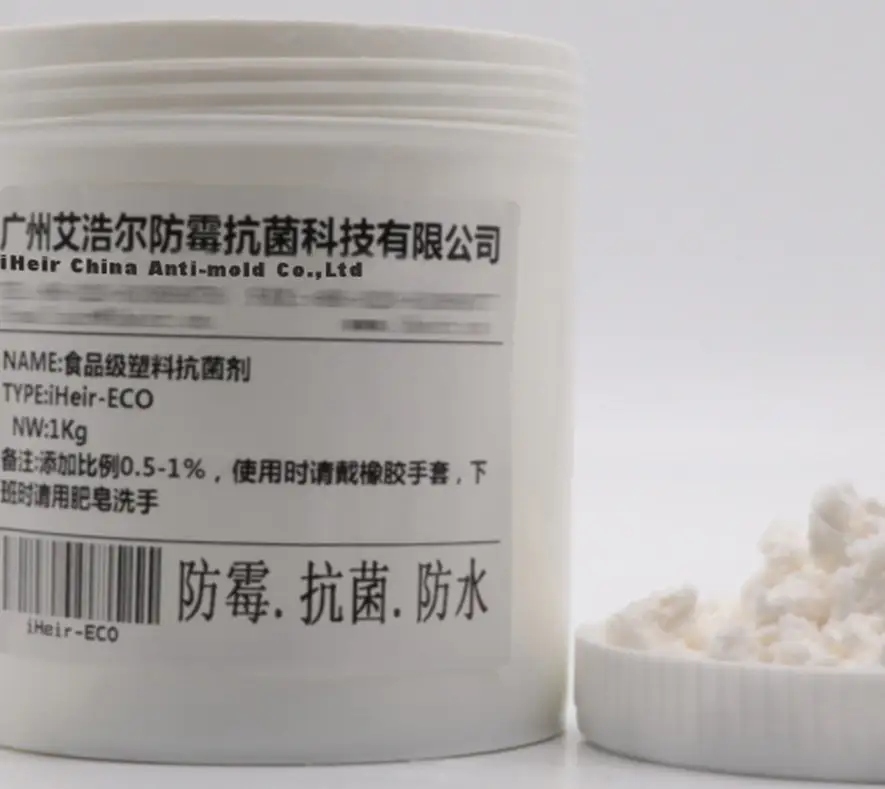
How should artificial turf mould and bacteria be controlled so that nothing needs reworking? Turf sits on a permanently damp drainage layer, and a roll that spots in the store is a roll downgraded; rework after laying costs far more than the additive. The yarn takes iHeir-ECO plastic antimicrobial agent at 0.3%-0.5% on PE/PP resin with the masterbatch; pale yarn takes iHeir-IPL inorganic grade at 0.8%-1%. This article covers the dosing points and the figures for the yarn extrusion, the backing finishing and the roll store.
1. Where the mould comes from: the yarn is an extrusion, the backing is a sponge
Mould on artificial turf does not grow out of the yarn itself but out of what collects on it. The yarn is a PE/PP extruded monofilament with no nutrient a mould can feed on, but an outdoor pitch keeps gathering dust, pollen, mud and oil, and the drainage layer underneath stays damp all year, so those deposits take up water and become a culture medium.
The real risk sits in the backing. Backing is usually PP woven fabric coated with SBR latex, and a latex system takes up moisture quickly and dries slowly, so once the roll is wound the inner layers get almost no air. In the wet season, or in a sealed container, the joint between the backing and the yarn is what fails first, and unrolling it shows patches of pale and grey-green growth.
So selection splits two ways: the yarn takes a plastic antimicrobial with the masterbatch at extrusion, the backing takes its protection at finishing, figured on the latex system weight. The two use different denominators and cannot be quoted as one number.
2. The two dosing points at a glance: yarn extrusion and backing finishing
The table lines up the part, the stage, what is treated, the product, the figures and the points to watch, so it can serve as the first draft of a process card.
| Part | Stage | Treated item | Product | Figures | Points to watch |
|---|---|---|---|---|---|
| Turf yarn (PE/PP monofilament) | Extrusion and tape line | Yarn resin | iHeir-ECO plastic antimicrobial agent | 0.3%-0.5% on resin weight | In with the masterbatch or a premix; run a small trial on dispersion and colour first |
| Pale and translucent yarn | Extrusion | Pale yarn | iHeir-IPL inorganic plastic antimicrobial agent | 0.8%-1% on resin weight | Whiteness above 90, mean particle size 1-2 micron, holds to 300-320 degrees |
| Backing coating (SBR latex) | Coating and finishing | Latex system | iHeir-ECO (same product, figured separately) | 0.5%-1.0% on system weight | Figured on the latex system alone, never merged with the yarn line |
| Extrusion and winding | Forming | Temperature control | Control only (no agent) | Read the agent’s heat ceiling | Above the agent’s ceiling, change the grade; set the ceiling before the line starts |
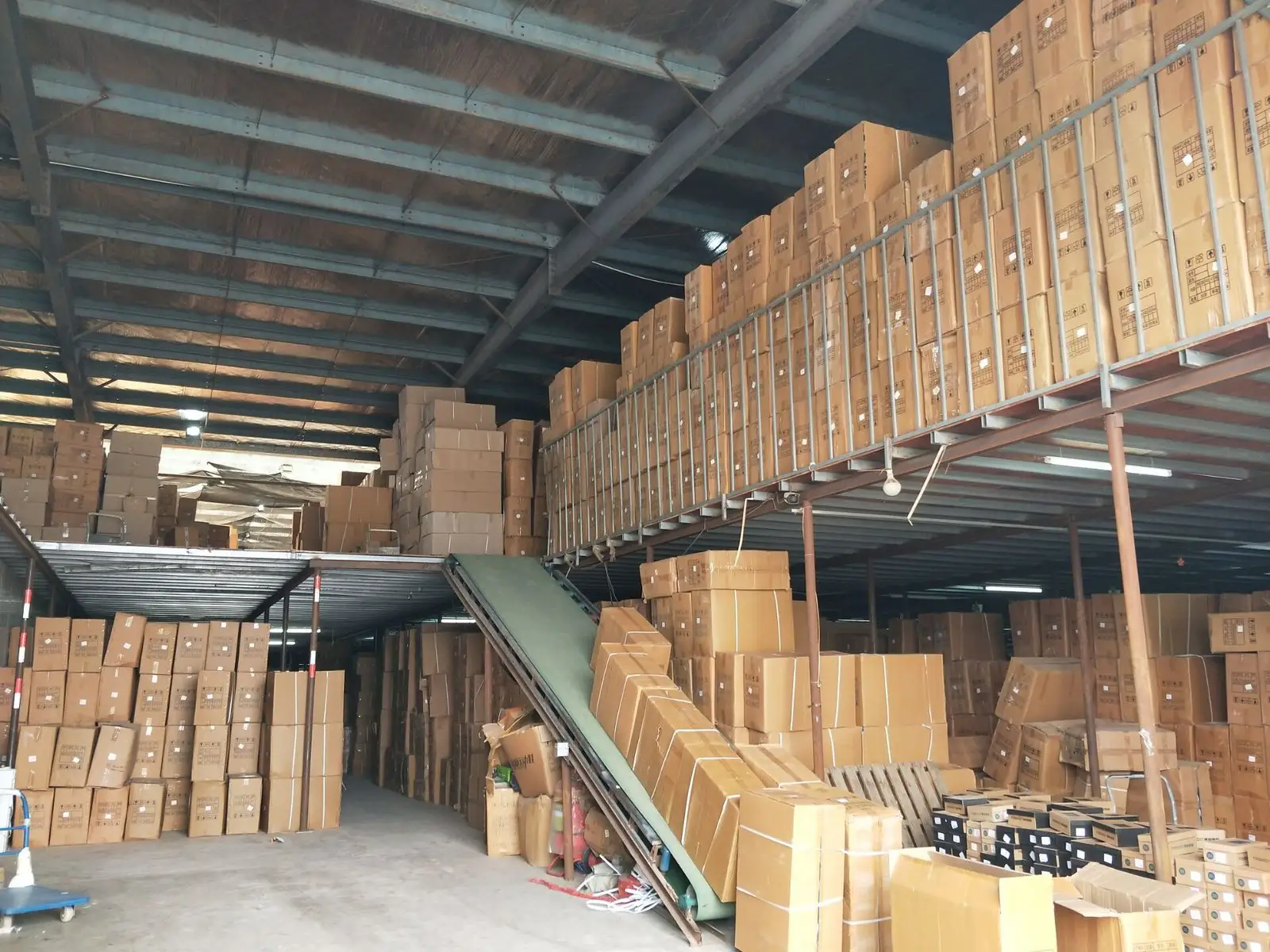
| Roll store | Stacking | Turf rolls | Humidity control only | Below 60% relative humidity | Stood upright, off the floor, clear of the wall, air gaps between stacks, first in first out |
| Installation and container | Pitch and full container | Pitch and in-container climate | Humidity control only | By box type and voyage | The drainage layer stays damp; air the rolls before laying, and condensation inside the box is the ignition point |
Six rows, one conclusion: the yarn takes its protection at extrusion, the backing adds a second line at finishing, the temperature row respects the agent’s ceiling, and the store and the installation preserve both.
3. The yarn extrusion stage: ECO into the hopper at 0.3%-0.5% on resin
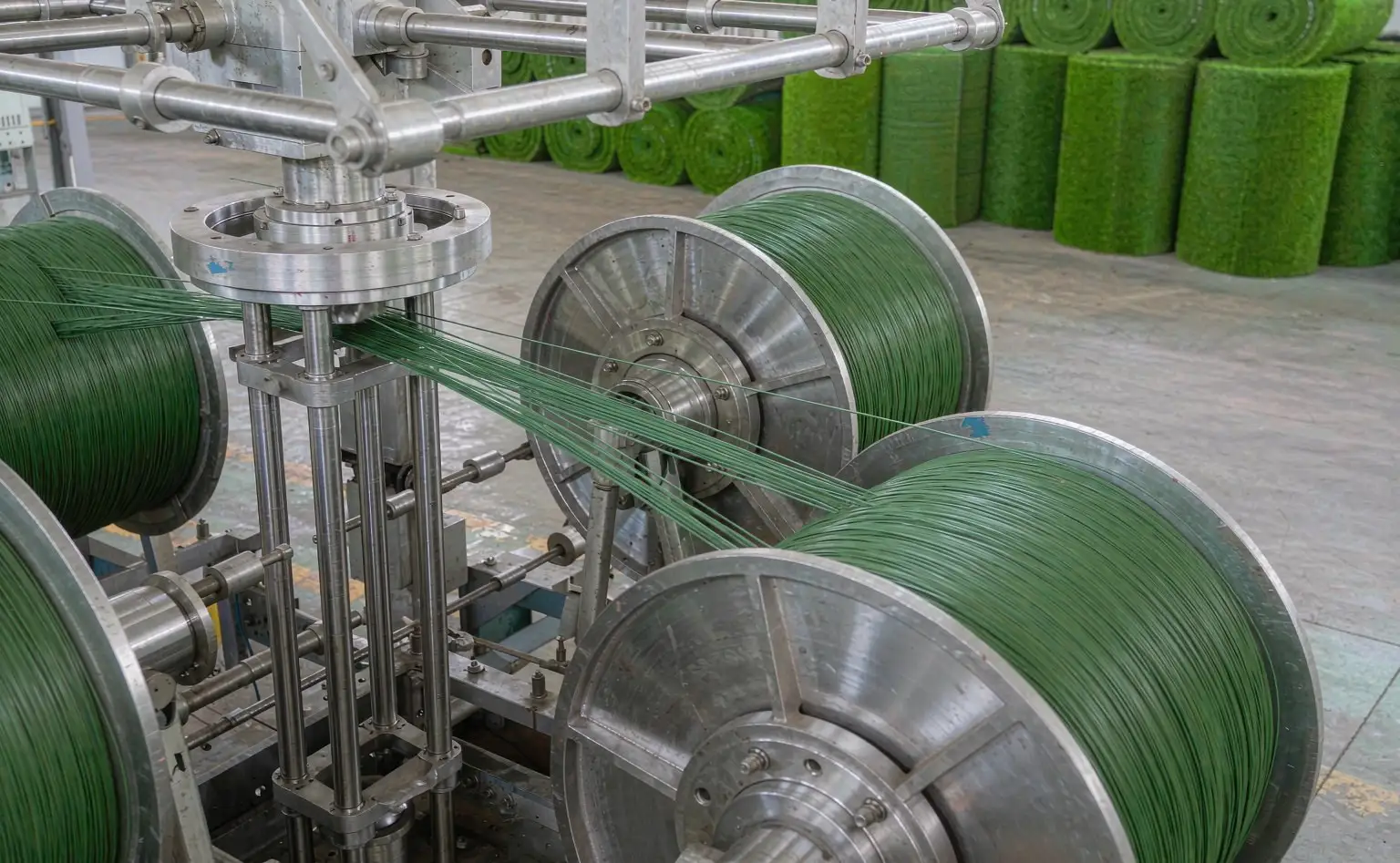
The yarn is protected as it is extruded. Add iHeir-ECO plastic antimicrobial agent at 0.3%-0.5% on PE/PP resin weight, made up first as a masterbatch in a matching carrier or premixed with the pellets before the extruder hopper. The additive bonds with the material and is distributed through the whole part rather than sitting on the surface, so tape drawing, twisting and the wear of a pitch will not rub it off. Thermal stability reaches 240 degrees, and the process temperature should stay clear of 320 degrees.
Three details decide the result. First, the figure is on total resin weight, regrind included, so any change in the regrind ratio means recalculating, and high-regrind batches belong at the top of the range because the residue and moisture they bring in feed mould. Second, a turf monofilament is very fine and can only be dispersed through a masterbatch or a premix; powder fed straight in agglomerates, and an agglomerate is a blank spot. Third, run a small trial on dispersion and colour before full production, watching pale yarn closely.
4. The backing and coating stage: 0.5%-1.0% on the latex system
The backing coating is the part of a turf roll that takes up moisture most readily, and it is protected at the coating or finishing stage, going in with the latex. The same iHeir-ECO plastic antimicrobial agent also works in a latex system, dosed at 0.5%-1.0% on system weight, inside the 0.3%-1.0% application range ECO allows, with a small trial on the actual latex recipe first. It is not water-soluble, sits dispersed evenly through the water-based system, and does not disturb film formation or bond strength.
Two figures have to hold. First, the denominator is the weight of the latex system, not the finished turf weight and not the yarn resin figure used at extrusion; the three numbers cannot be moved around. Second, the addition goes in after the latex is made up and before coating, stirred through until dispersed, and the coat weight itself has to stay even, because the backing layer is both the bond layer and the moisture-absorbing layer, so an uneven coat is where mould starts.
5. Weatherability and colour shift: pale yarn takes IPL at 0.8%-1%
Pale and translucent yarn is sensitive to colour shift, and a conventional organic antimicrobial yellows under heat and light, so these yarns run on an inorganic grade. Dose iHeir-IPL inorganic plastic antimicrobial agent at 0.8%-1% on resin weight, made up as a masterbatch or a dispersion first. Whiteness is above 90 and mean particle size 1-2 micron, compatibility with the resin is good, and it holds to 300-320 degrees without discolouring, which is what pale parts need; the inhibition rate against organisms such as E. coli and Staphylococcus aureus is above 99.99%.
The dividing line is easy to state: where the yarn sees no more than 240 degrees, run ECO; where the extrusion temperature is higher, or whiteness and colour shift are hard requirements, run IPL. Outdoor turf passes through compounding and extrusion in two passes, so settle the temperature question first, because finding out after a failed batch is too late. See masterbatch or powder for plastic antimicrobials for the form of the additive.
6. Roll storage, installation and questions that come up
Can a finished roll be sprayed to make up for a missed stage? It reaches the surface only. The agent cannot enter the monofilament or the backing latex, and rubbing, foot traffic and washing take it off. The protection has to go in with the material at extrusion and coating.
Can the yarn and the backing share one figure? No. The yarn is figured at 0.3%-0.5% on resin weight and the backing at 0.5%-1.0% on latex system weight; the denominators differ, so copying the number either overshoots or falls short.
Can extra loading make up for a high extrusion temperature? No. Temperature above the agent’s ceiling is a loss of activity, not a concentration problem, and extra loading only raises cost while affecting the mechanical properties and appearance of the yarn. Change to a more heat-tolerant grade or adjust the extrusion temperature.
Two dosing points carry the work: the yarn goes in with the masterbatch at extrusion (ECO at 0.3%-0.5%, or IPL at 0.8%-1% on pale yarn), the backing coating takes 0.5%-1.0% on the latex system at finishing, the temperature row respects the agent’s ceiling, and humidity control in the store and on site holds both. Test the long-term growth by a method such as ASTM G21 and hold a complete sample per batch for re-testing, because testing the yarn alone does not cover the backing. The dosage figures above are the ones we suggest as a starting point, and samples and TDS sheets are available for a trial on your own line.


