




 View Count:4
 Date:2026-09-27
Can mattress mould really be prevented at the source? A mattress takes on moisture from the sleeper every night, from humid season air, and again from condensation inside a shipping container. Three core materials respond differently. Dose iHeir-FP into foam before it is blown at 0.5-1.5% of the foam weight, iHeir-ECO into latex at 0.3-1.0% of the part weight, and finish the fabric layer with iHeir-F50. This article covers the dosing point for each core material and how to test the result.
1. Why mattresses grow mould: three sources of moisture
In humid regions and in export shipments, mould on a mattress is close to inevitable, and the reason is the number of moisture sources, not the quality of the material. The first is the user: moisture given off overnight is absorbed by the fabric and the core, so the surface still feels damp in the morning. The second is climate: during the humid season relative humidity stays above 85% for weeks, and any mattress in open storage sits in wet air. The third is transport: in an export container the cargo is heated by day and cooled at night, and water vapour condenses on the goods over and over.
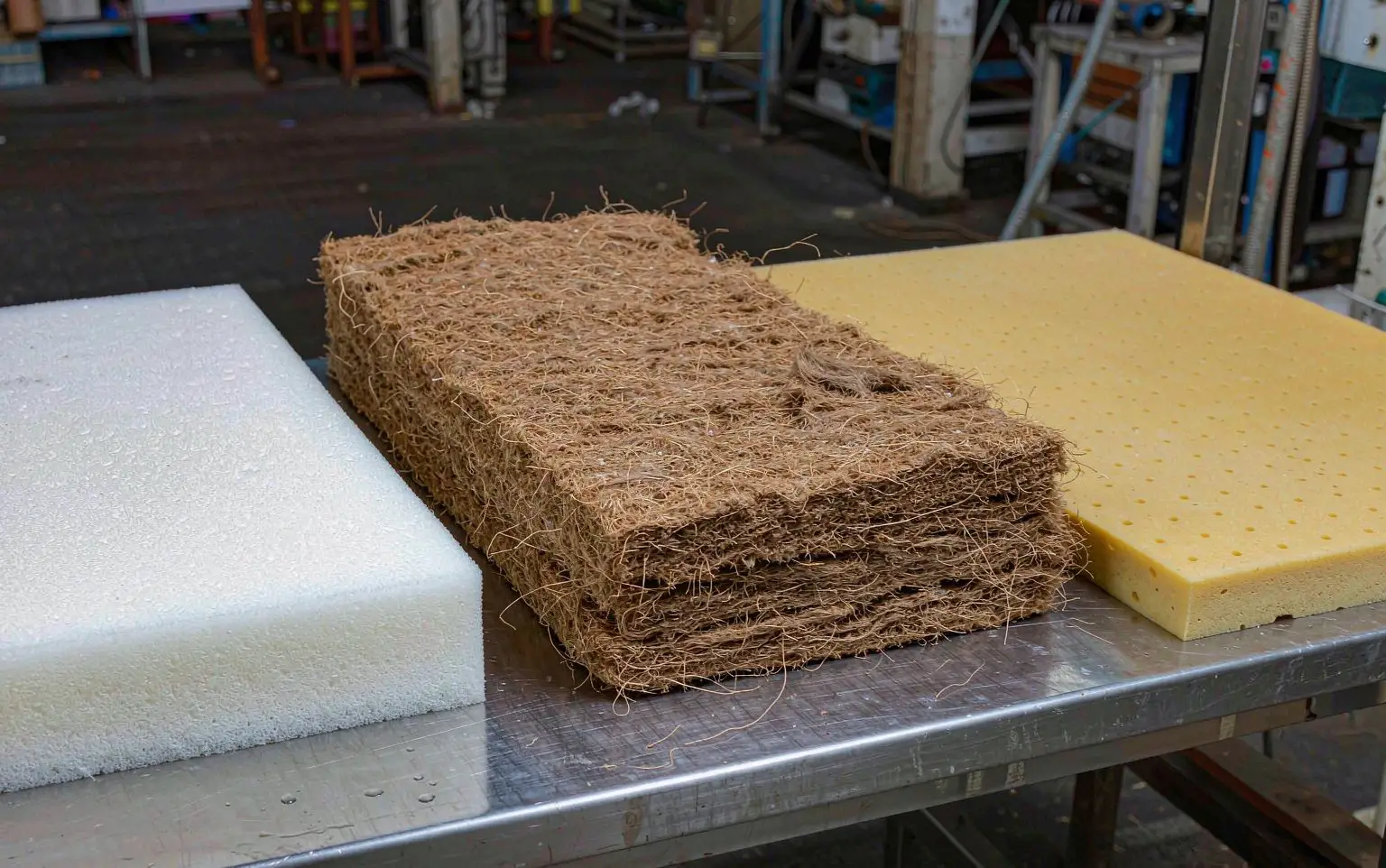
The three cores do not respond to moisture in the same way. Foam and memory foam are open-cell structures, so water vapour travels deep into the core, and once mould is inside, wiping the surface will not bring it back. Latex is denser, but its foam cells and natural protein content still feed mould. Coconut coir, jute and palm fibre contain sugars and starch, so they need protection against insects as well as mould. Treating all three with the same product at the same rate will always leave one of them short.

2. Dosing point by core material
The table below sets out the core or part, its material, which product to use, at what rate and at which process stage. It is written to be used as the first draft of a process card.
| Core / part | Material | Product | Rate | Added at |
|---|---|---|---|---|
| Foam mattresses and memory foam pillows | PU foam | iHeir-FP foam antimicrobial agent | 0.5-1.5% of foam weight | Mixing stage of foaming, with the colour paste |
| Latex pillows and latex mattresses | Natural and synthetic latex | iHeir-ECO plastic antimicrobial agent | 0.3-1.0% of part weight | Compounding stage, matched to the foaming temperature |
| Fabric layer and nonwoven liner | Knitted fabric, nonwoven | iHeir-PG fabric antimicrobial agent | Padding at 20-40 g/L (70% pickup, dry at 100-170°C) | Finishing; batch pieces can be immersed |
| Anti-mite set (finished mattress) | Fabric weaving and finishing | iHeir-F50 anti-mite agent | Active content 98% or above, pH 3-9 | Run separately from the mould finish, one set of four per mattress |
| Rolling and packing | Packaging layer | Power Pak anti-mildew tablets | Active within 72 hours of sealing; replace after 15 days if reopened | Placed before rolling, covering the whole pack space |
3. Foam and memory foam: dosing in the mix
For foam, memory foam and PU pillow cores the route is the most direct: put the agent into the foam mix. Add iHeir-FP at 0.5-1.5% of the total foam weight, at the mixing stage before foaming and together with the colour paste, so the agent is evenly dispersed before the material is blown. FP is cationic and works across pH 1-11, which covers PU systems.
Where in that band to sit depends on how the mattress is used and where it ships. Memory foam pillows used against the skin, and mattresses for humid regions, go to the upper end; cores destined for dry markets, or inner layers of a composite mattress, can sit at the lower end. Extra agent in the top layer does not protect the bottom layer, and it can disturb density and feel. One point is worth stressing: foam cannot be rescued by a surface treatment — a spray reaches the outer cells only, and the cells deeper in remain a route for mould. For a foam mattress the only test is whether the agent went into the mix at the foaming stage.
4. Latex, coir and the fabric layer
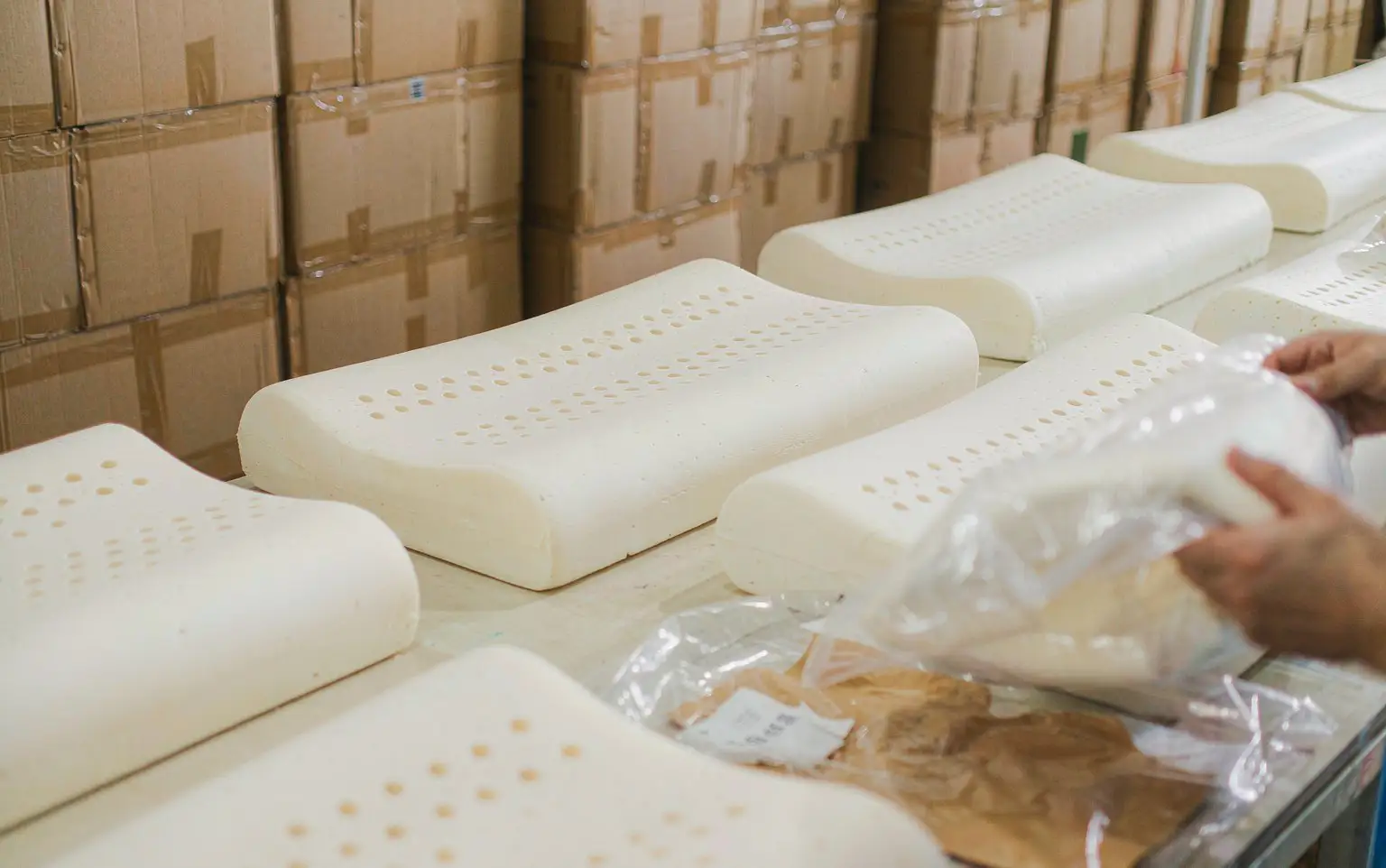
- Latex pillows and mattresses. Add iHeir-ECO at the compounding stage, calculated at 0.3-1.0% of the part weight. Latex foaming has its own temperature window, so confirm the temperature resistance of the agent against the actual process temperature, and do not leave the addition until the hot stage.
- Coconut coir, jute and palm fibre. These natural fibres carry sugars and starch, so insect protection is needed as well as mould protection. Handle the mould side through the fibre process and add a layer of Power Pak tablets at the packing stage.
- Fabric layer and nonwoven liner. Treat through finishing with iHeir-PG at 20-40 g/L on the padding line, 70% pickup, drying at 100-170 degrees Celsius. Smaller batches can be immersed instead: 2-4% o.w.f. at 50 degrees Celsius for 20-30 minutes.
- Anti-mite is a separate step, not a substitute. iHeir-F50 has an active content of 98% or above and works at pH 3-9, and it should run as its own pass rather than being folded into the mould finish. For a finished mattress the set is calculated as one set of four, covering the fabric face, the liner and the edges.
- Check moisture content before rolling. Rolling a mattress whose moisture content has not come back to specification seals the water inside the film. Place a vapour-phase product inside the film, and for full-container export stand mattresses on edge and match desiccant sticks to the container size: 8-10 for a 20 ft unit and 10-12 for a 40 ft unit.
5. Testing and common misjudgements
The most common mistake in this industry is to treat anti-mite and anti-mould as one result. They are measured differently: mould resistance is graded on growth on the sample, while anti-mite performance is a repellency rate, the proportion of mites that avoid the treated surface. A pass on one says nothing about the other, so the two belong on separate lines of the acceptance sheet. The second misjudgement is testing only fresh samples — performance has to hold over time, so samples should be stored under the specified conditions and then retested. The third is sampling position: foam must be cut open and sampled from the core.
Three checks are enough before despatch: cut a core sample and look at the section, grade the fabric against the textile mould resistance standard, and run a sealed-pack storage simulation with the vapour-phase product in place.
6. Common questions
Q: Can the same product be used for foam, latex and coir? Not recommended. Foam takes the agent in the foam mix, latex has to allow for the compounding temperature, and coir needs insect protection as well, so one product at one rate usually leaves one of the three below specification.
Q: How do you deal with latex that has already gone mouldy? Latex is fine-celled and dense, and once mould is inside, washing will not restore it. The causes and the treatment for this core alone are set out in mould on latex pillows and mattresses.
Q: A coir mattress has both mould and insects. How do you separate them? Mould and insects need two different treatments, so start by deciding whether the marks are mould growth or insect damage. The coir case is covered in mould and insects in coconut coir mattresses, and the choice of finish for the fabric layer is in antibacterial and anti-mite finishing agents.
Whether mattress mould can be prevented comes down to whether the dosing point is right for each core: foam and memory foam in the foam mix, latex at compounding, the fabric layer in finishing, anti-mite as its own pass, and a vapour-phase layer in the pack. Work through your current range against the table above, mark which stage each core goes through today, and only then look at rates. Samples and minimum order details for iHeir-FP, iHeir-ECO, iHeir-F50 and iHeir-PG are available on request.