




 View Count:3
 Date:2026-09-27
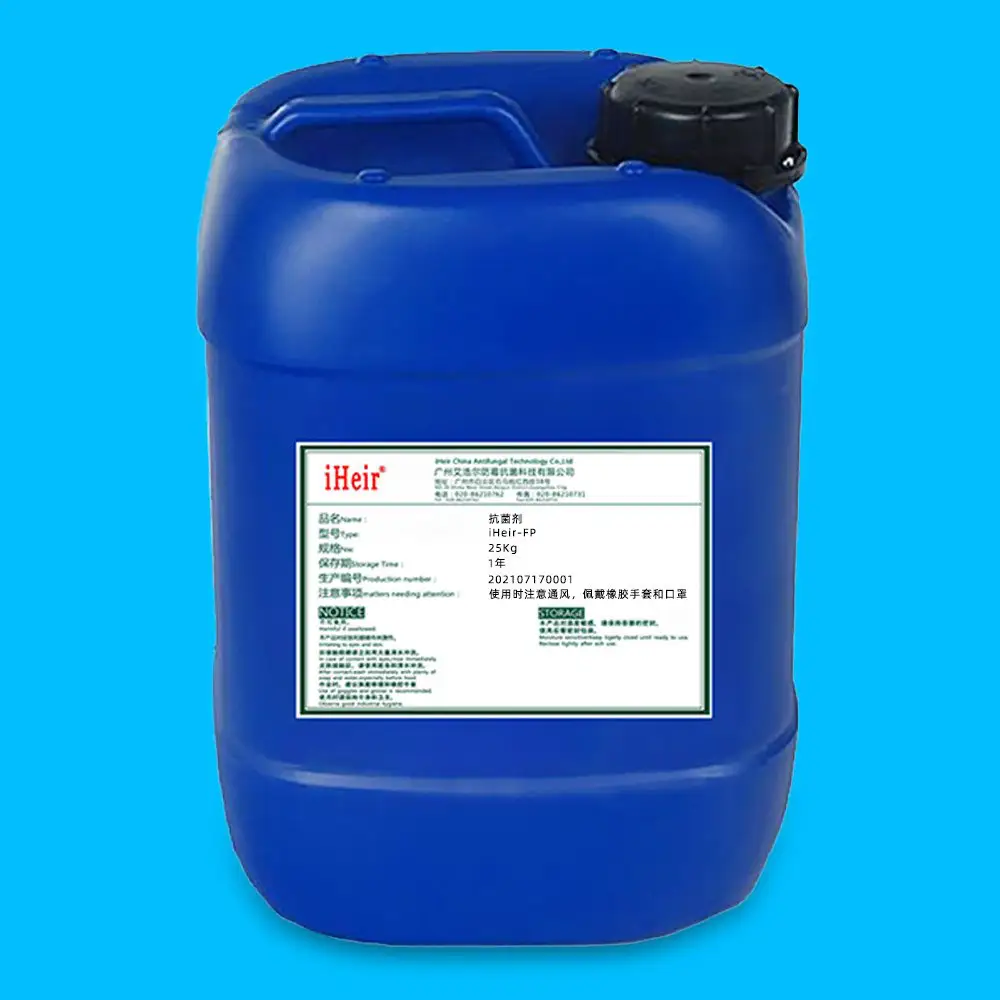
Which parts of a car interior mould problem can be fixed in the mix, and which can only be treated afterwards? A cabin is a sealed box that swings between baking sun and cold nights, so foam and fabric take on moisture and stay damp. Dose iHeir-FP into foam at 0.5-1.5% of the foam weight, iHeir-ECO into plastic parts at 0.3-1.0% of the part weight, and finish formed fabrics by padding. This article covers how to split the parts by material and where each dose belongs.
1. Why a cabin is a breeding ground for mould
A cabin is sealed, has a wide temperature swing and gets very little ventilation. Under summer sun the interior passes 60 degrees Celsius without difficulty, then falls away at night, and the water vapour in the air condenses on whichever surface is coldest. In winter the heated cabin and the cold outside air alternate, so glass and the inside of door panels bead with water over and over. Almost every interior material is organic and porous, whether PU foam, EVA, fabric, nonwoven or carpet, and once it takes on moisture it does not dry quickly.
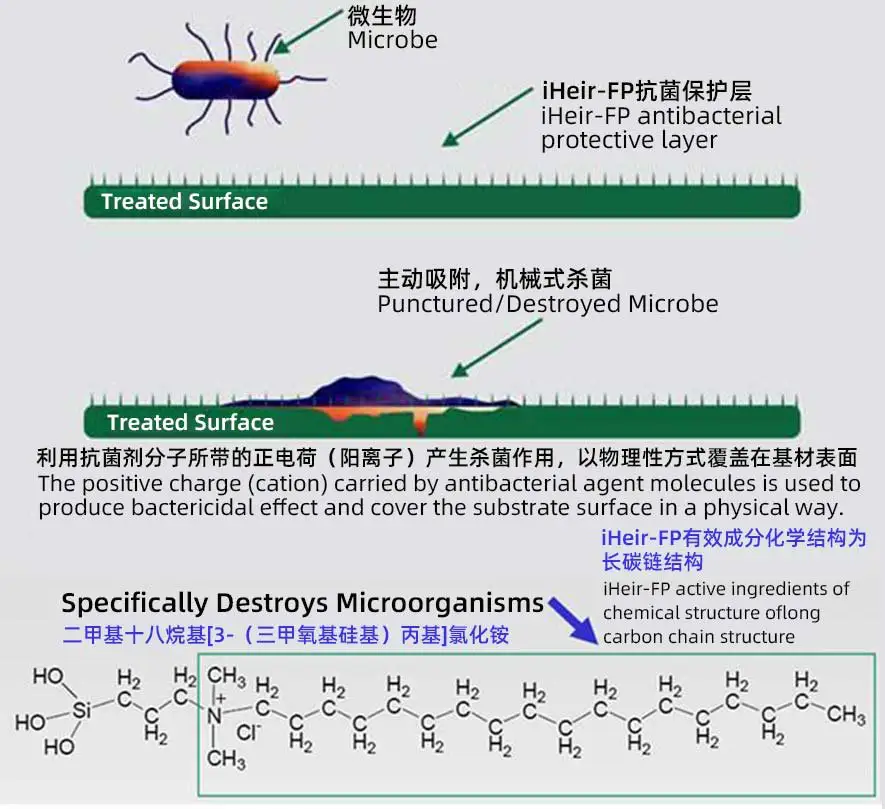
Put moisture, organic material and a workable temperature together and mould starts to grow. The difficult part is that foam cannot be wiped clean once mould is inside it: the growth has already moved into the cells, and the part has to be replaced. The dosing point therefore has to move upstream, into the foaming and injection moulding stages, because a formed part offers almost no route for a treatment to penetrate — a finished surface only suppresses spores outside and never reaches the material inside.
2. Split by material first: what can take the agent in
There is only one question to answer. Does the part pass through a stage where its material is still a liquid or a powder? If it does, the antimicrobial agent goes into the mix and ends up evenly distributed through the material, where it cannot be abraded or washed off. If it does not, the only option is a surface treatment or a finishing bath, and the effect is limited to the outer layer.
| Interior part | Material | Product | Rate | Added at |
|---|---|---|---|---|
| Seat, headrest and armrest foam | PU foam, EVA, EPP | iHeir-FP foam antimicrobial agent | 0.5-1.5% of foam weight | Mixing stage before foaming, with the colour paste |
| Instrument panel, door trim, decorative strips | PP / ABS / PC | iHeir-ECO plastic antimicrobial agent | 0.3-1.0% of part weight (PE/PP 0.3-0.5%, PVC 0.5-1.0%) | Mixing stage before injection moulding |
| Seat fabric and headliner | Knitted, woven, nonwoven | iHeir-PG fabric antimicrobial agent | Padding at 20-40 g/L (70% pickup, dry at 100-170°C) | Finishing, by padding or immersion |
| Floor mats and small car carpets | Tufted carpet, rubber-backed mats | iHeir-PG fabric antimicrobial agent | Immersion at 2-4% o.w.f. (50°C, 20-30 minutes) | Finishing; formed parts can also be sprayed |
Read the four rows and the dividing line is clear. Foam and plastic parts take the agent in the mix; fabric and carpet are treated in finishing. The line does not work in reverse: spraying an in-mix product onto formed foam does not get the agent into the cells, and putting a finishing product into a foam mix gambles on temperature resistance and dispersion.
3. Foam and plastic parts: dosage and process
Foam takes FP. Add iHeir-FP at 0.5-1.5% of the total foam weight, at the mixing stage before foaming, together with the colour paste. At that point every component is still flowable, so the agent disperses most evenly. FP is cationic and works across pH 1-11, so PP, PE, PVC, EVA, EPS, PU and silicone rubber systems are all in scope. Which end of the range to use depends on where the part sits: seat foam in contact with the body goes to the upper end, while armrest and headrest liners sit lower.
Plastic parts take ECO. For instrument panel carriers, door trim and decorative strips, add iHeir-ECO at 0.3-1.0% of the part weight in the mixing stage, with the band set by polymer: 0.3-0.5% for PE and PP, 0.5-1.0% for PVC. ECO is rated to 240 degrees Celsius, which covers normal injection moulding, but process temperatures should not go above 320 degrees Celsius or the active ingredient breaks down.
One trap worth avoiding. When the agent is fed with colour paste and other additives, run a small trial first, then cut a section and confirm the colour is even.
4. Fabrics, mats and assembly
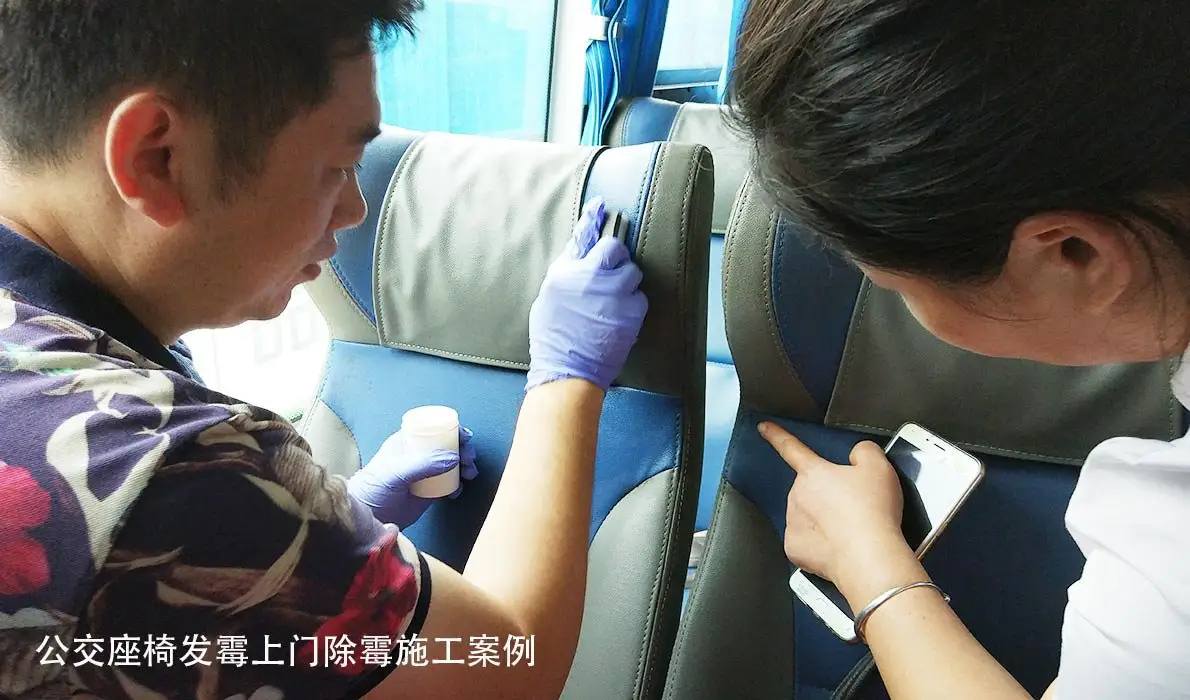
- Fabric and headliner go through finishing. Run iHeir-PG at 20-40 g/L on the padding line, at pH 6-8 with 70% pickup and drying at 100-170 degrees Celsius. Batch pieces can be immersed instead: 2-4% o.w.f. at 50 degrees Celsius for 20-30 minutes.
- Floor mats and small carpets. Spray formed parts with PG diluted 25-50 times, paying extra attention to folds, seams and bound edges, which are the places that hold water.
- No open storage before assembly. Parts should be used on the day they are unpacked, and unopened packs should carry a vapour-phase product so they do not take on moisture in a part-covered store.
- Prevent condensation where vehicles are parked. For vehicles held for long periods, place a deodorising product such as the iHeir-CW microcapsule odour-eliminating bag inside the cabin; once smell has soaked into foam, removing it costs far more than preventing the mould would have.
5. Testing and storage
At material level, write down in the process document exactly what protects each part: the FP addition rate and dosing stage for foam, the ECO band and mixing sequence for moulded parts, the PG concentration and drying conditions for fabric.
Test by material, and do not let one result stand in for another. Foam is tested for internal antimicrobial rate and mould growth grade; plastic parts for antimicrobial rate plus an appearance check after high temperature and high humidity; fabric is graded against the textile mould resistance standard. On the storage side, keep the parts store dehumidified with stock off the floor and away from walls, and match a drying product to the container size for humid-season and export shipments.
6. Common questions
Q: Can a foam part that has already been moulded be saved? Only at the surface. A treatment can suppress spores and odour outside, but it cannot reach mould growing inside the cells. The real fix is to go back to the foaming stage and dose FP into the mix.
Q: Is a masterbatch different from adding the agent as a powder? They are two forms of the same class of active ingredient. A masterbatch is easier to meter and disperse and suits automatic line dosing; powder or liquid is more flexible for small runs and trials. Convert the dose on active content rather than copying the masterbatch weight straight across.
Q: Is odour control at vehicle level the same job as mould control in the part? No. Cleaning and odour removal on finished vehicles is a service and storage issue, covered in our article on mould in car interiors, mats and seats. This article is about which process stage the agent goes into.
Q: How much difference is there between in-mix dosing and post-treatment for foam? The difference is where the agent sits and how long it lasts. The process comparison is in dosing versus post-treatment for foam, and the broader picture for foams and elastomers is in antimicrobial treatment for EVA, EPS, TPU and other foams.
Car interior mould control comes down to one rule: if a problem can be solved in the mixing stage, do not leave it until after assembly. Foam and plastic parts take the agent in the mix, fabric and carpet are treated in finishing, and each route has its own rate. Work through your parts list against the table above and only then talk about raising the dose. Samples and minimum order details for iHeir-FP and iHeir-ECO are available on request.