




 View Count:30
 Date:2026-11-14
How should camping lantern mould be handled? A container is opened at the customer’s warehouse, pale patches sit on the shells and the battery bays smell musty, and the lot is rejected with rework and air freight costing ten times the additive. The workable answer is iHeir-IPL inorganic plastic antimicrobial at 0.8%-1.0% of the compound before moulding, plus desiccant sticks in the battery bay. This article gives the sources, the moulding window and the dosing.
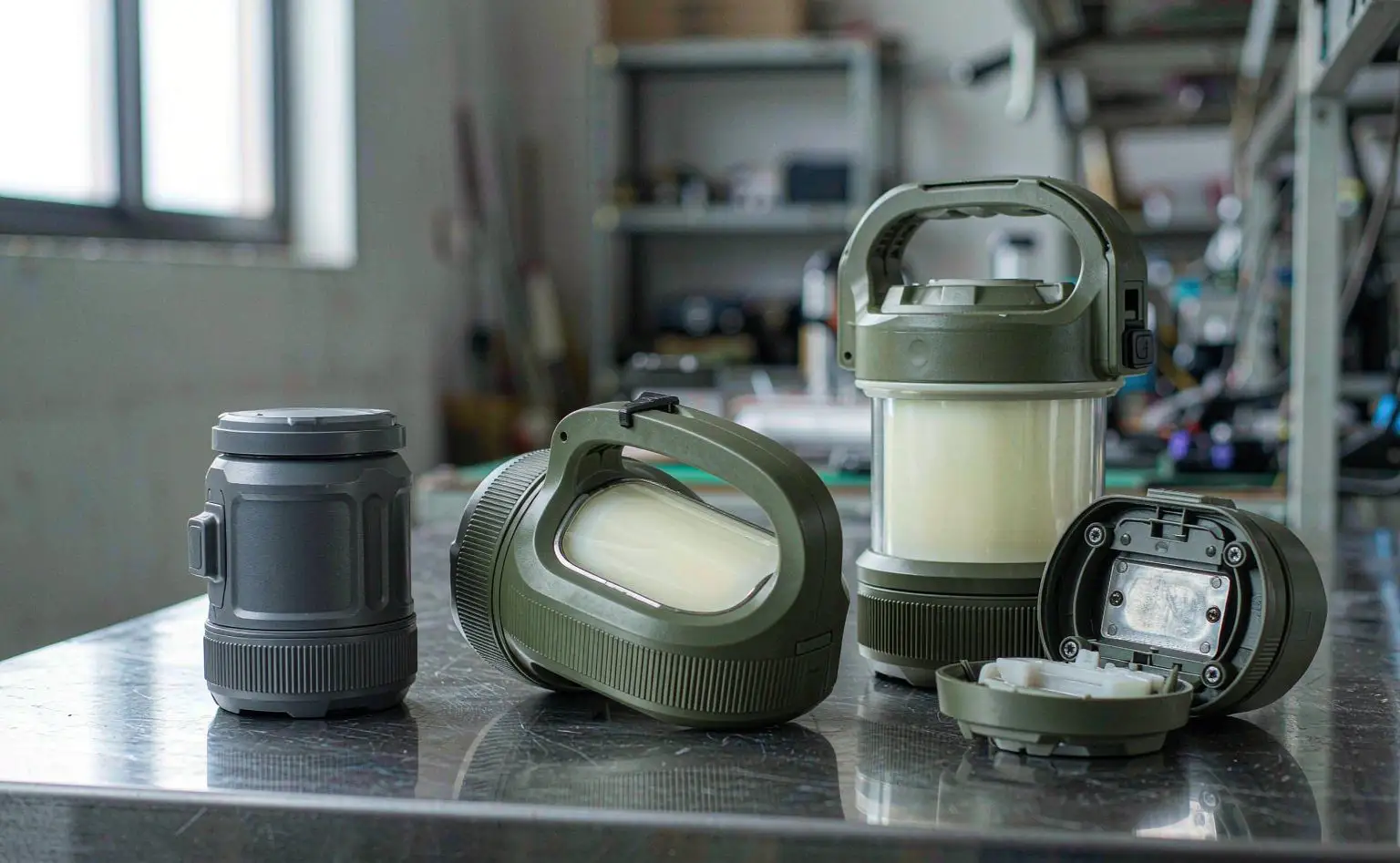
1. Where lantern mould comes from: shell, battery bay and carton liner
A lantern is an ABS or PC/ABS shell with a clear lens, a rubber gasket, metal contacts and a battery bay. Plastic offers no food, so growth needs three things: condensation on the surface, sweat and grease from handling, and moisture from the packing.
The shell spots before it blooms. Day and night swing the store temperature, a film of water forms on the housing, and spores settle in the parting line, the lens thread and the root of the handle. The rougher the surface and the more release agent left on it, the better it holds.
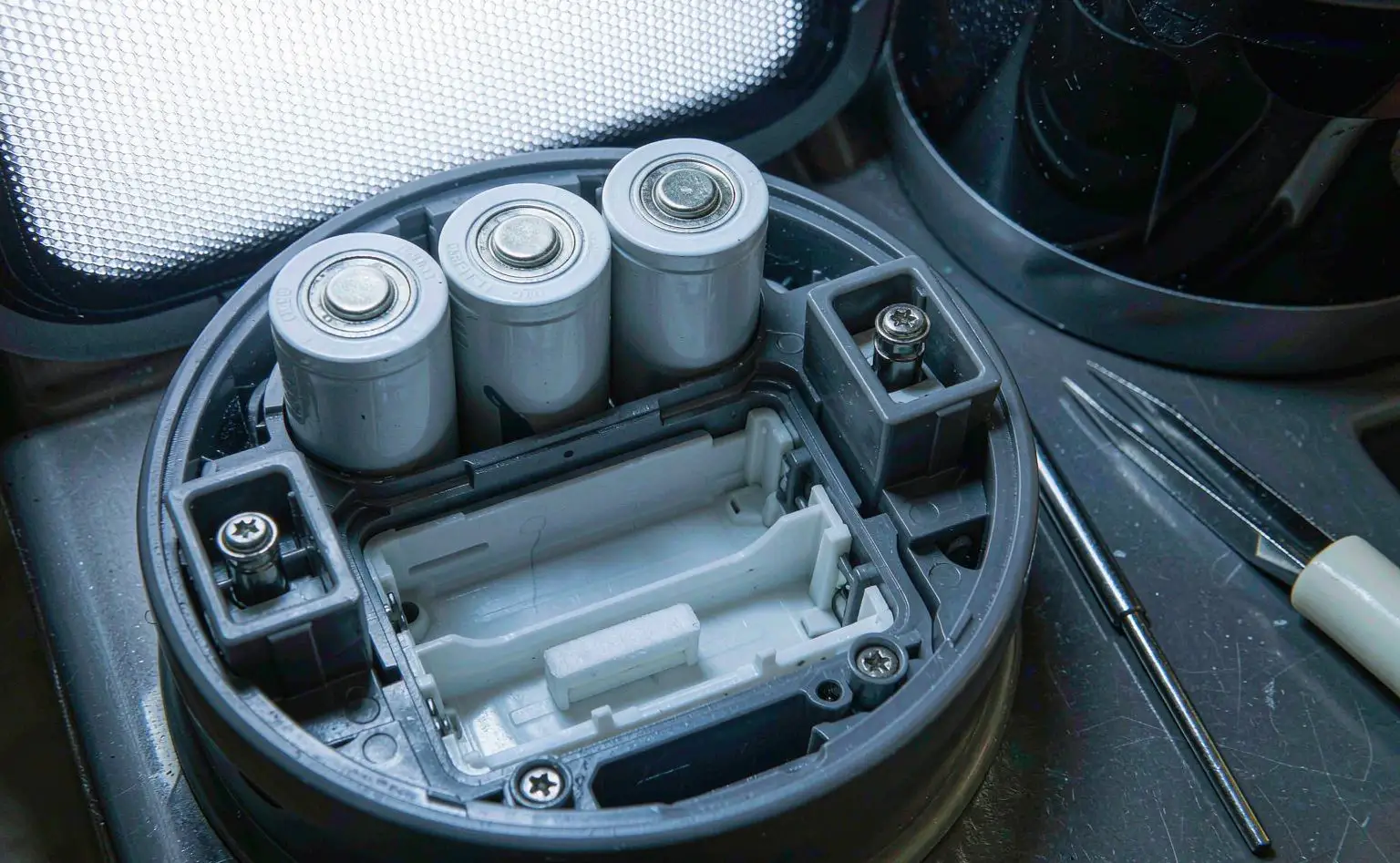
The battery bay goes first. The bay is a semi-closed cavity: clip the cover on and only a slit is left, so the air inside never turns over. 28°C in the assembly shop and 18°C in the store overnight condenses water on the bay wall, and cells release a little vapour as they sit. Green or black staining around the contacts almost always starts there.
The carton is a third water source. Corrugated board, white card and EVA foam follow the ambient humidity, and in the humid season board can sit above 12% moisture. Pack the lantern, stack the pallet, and that water migrates to the housing.
2. The shell stage: antimicrobial in the resin, coating only for looks
Shell protection has to go in at compounding and moulding, because the active has to sit inside the plastic to work for the life of the part. A sprayed antimicrobial film looks good on paper and rubs off after a few wipes.
Why iHeir-IPL. An inorganic silver antimicrobial, a white powder with whiteness above 90 and a mean particle size of 1-2μm, friendly to pale and translucent parts, so off-white, light grey and fluorescent colours do not shift. Lantern housings are usually pale or translucent, which makes it a better fit than grades built for dark compounds.
Is the heat window wide enough? IPL withstands 300-320°C while ABS runs at 200-240°C and PC/ABS at 240-270°C in the barrel, so there is margin. Watch residence time: leave the compound sitting beyond five minutes and local overheating agglomerates the powder, which shows as pitting on the shell.
How much and how. Dose at 0.8%-1.0% of the finished part weight, not as a fraction of masterbatch or of another additive. Either mix the powder with the pellets for 2-3 minutes, or make a 10%-20% masterbatch and let it down. With a specific surface of 10-15 m²/g, poor dispersion leaves white specks, the complaint we hear most.
| Part | Material | Product and level | Stage | Control point |
|---|---|---|---|---|
| Shell and handle | ABS, PC/ABS | iHeir-IPL 0.8%-1.0% of compound | Mix, then mould | 2-3 minutes mixing, no dwell |
| Clear lens | PC, PMMA | Same route at 0.8% | With the shell batch | Check transmission and colour first |
| Battery bay | Semi-closed cavity | T-1000 per pack format | Before packing | Off the contacts, not on the springs |
| Container export | 20 ft / 40 ft | T-1000 8-10 / 10-12 sticks | Loading | Hung at the door and amidships |
One boundary. The shell product covers the housing itself and keeps working at the customer’s site; the desiccant covers the closed space of the bay and the container and only works in transit. Compound alone still lets the contacts go green; desiccant alone still leaves spots on the housing.
3. Battery bay: how the desiccant should be placed
The bay is small and badly ventilated, which is exactly where a desiccant earns its cost; the discipline is fixing the number of sticks in the work instruction.
Count by pack format. A single-lantern retail box takes one short stick at the outer end of the bay, clear of the contacts; a multi-pack or a kit takes one per compartment. The basis is the air volume inside, not the weight of the lantern. Keep it off the springs: T-1000 contains no chlorides and is pH neutral, but a stick pressed on a spring deforms it, so tie the stick to a moulded clip or drop it into the recess provided.
Long cycles need more, and a sample kept. On a 30-45 day sea leg one stick will not carry a humid-season shipment, so double the count rather than run the minimum. Run antimicrobial performance to ISO 22196 and mould resistance to ASTM G21 or ISO 846 over 28 days, keeping a sample per shipment.
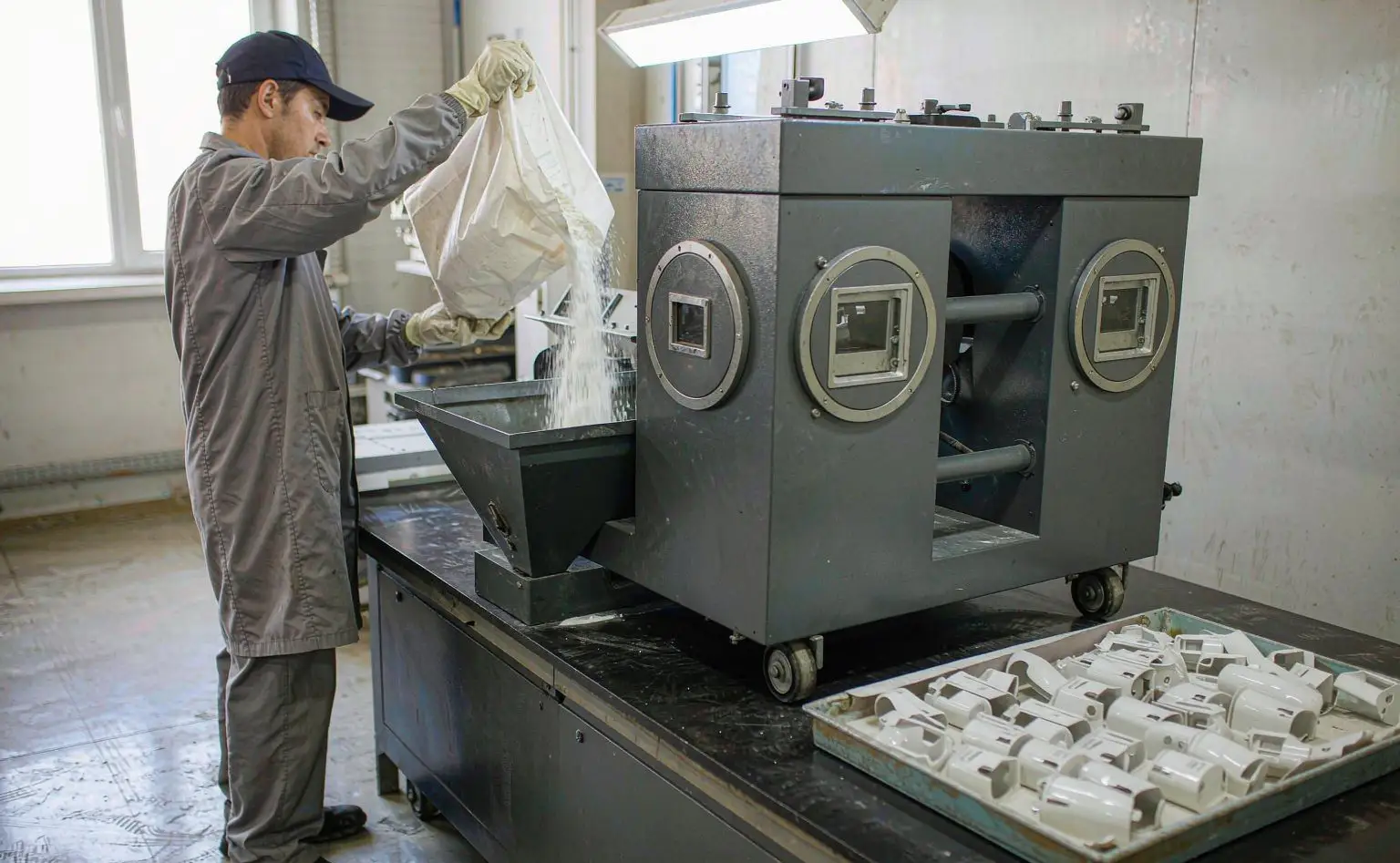
4. Moulding window and four common mistakes
Dry the compound. ABS that has taken up moisture produces silver streaking and bubbles, and that vapour is sealed into the shell as a starting point for growth. Dry at 80-90°C for 2-3 hours, PC at 100-120°C for four hours or more, and keep the dryer and hopper covered.
Mould temperature and cooling. At 50-70°C the surface comes out dense and releases cleanly; too cold and the surface is rough and holds dust, which is where spots appear first. Eject before the part is cool and residual stress stays in the shell, so the bay cover cracks later.
The four mistakes. First, treating 0.8%-1.0% as a masterbatch ratio and adding 0.1%, which is the same as adding nothing. Second, dosing in the same step as flame retardant or antistat, so the powders agglomerate. Third, running regrind above 30% and diluting the active. Fourth, testing appearance only, so batch drift surfaces as a complaint. Trial the clear lens separately: mould three samples, measure transmission, and if it drops more than two points move to a better-dispersed masterbatch.
5. Packing and export: sticks in the container, humidity under control
Follow the container standard. 8-10 sticks in a 20 ft container and 10-12 in a 40 ft, hung high inside the doors and amidships, at least 30 cm off the floor, never crushed against cargo or pressed to a condensing wall. On a container loaded to the roof, hang the sticks in the gaps between stacks.
Control the cartons first. Hold the finished store below 60%RH, keep pallets 10 cm off the floor and 30 cm off the wall, and let humid-season cartons equalise for two days before packing; a liner film in the container costs very little. Sample two cartons before loading: look for water marks and smell in the bay and feel the housing for tack, which means release agent and a higher spotting risk.
The same split between a treated housing and a desiccant in the cavity is set out in robot vacuum shell and roller brush, and the version with metal parts and a silicone keypad in smart lock housing and keypad.
6. Questions from the line
Q: The shell carries the antimicrobial, do we still need the stick?
A: Yes. The antimicrobial covers the housing, the stick covers the closed air in the bay, and each has its own job.
Q: 0.8% or 1.0%?
A: Standard styles and short cycles are covered at 0.8%. Container export, more than 30 days at sea, or a customer asking for an antimicrobial report goes to 1.0%, with a retention sample.
Q: Can we just spray an antimicrobial coating on the surface?
A: Not as the main route. Coating wear is limited and assembly, wiping and transport all remove it; the part that keeps working is the one modified through the compound.
Q: Will the stick corrode the contacts?
A: No. T-1000 contains no chlorides, is pH neutral and does not attack metal. Keeping it off the springs is about mechanical deformation.
Four closing points: dose the shell and handle at 0.8%-1.0% of compound with iHeir-IPL, mixing 2-3 minutes or going through masterbatch, dry at 80-90°C for 2-3 hours, mould at 50-70°C and keep regrind under 30%; drop one short T-1000 stick into each battery bay, tied to a clip and clear of the springs, and hang 8-10 sticks in a 20 ft and 10-12 in a 40 ft container while holding the store below 60%RH; verify to ISO 22196 and ASTM G21 or ISO 846, with a one-kilogram sample available ahead of the order and lead times on the iHeir-IPL product page.


