




 View Count:29
 Date:2026-11-13
Folding chair mould: how much mildew inhibitor goes into the Oxford fabric before coating, and why dry the aluminium tube before covering? Growth sits in the water film between cover and tube: the fabric is coated, so an inhibitor cannot get in later, and a damp tube sealed under a cover turns slippery in two weeks. Run the Oxford at 2%-3% o.w.f. with iHeir-BJ textile mildew inhibitor at 70% pick-up, wipe the tubes dry before covering, and put 1-2 sheets of iHeir-D in each carton. This article gives the finishing and packing parameters.
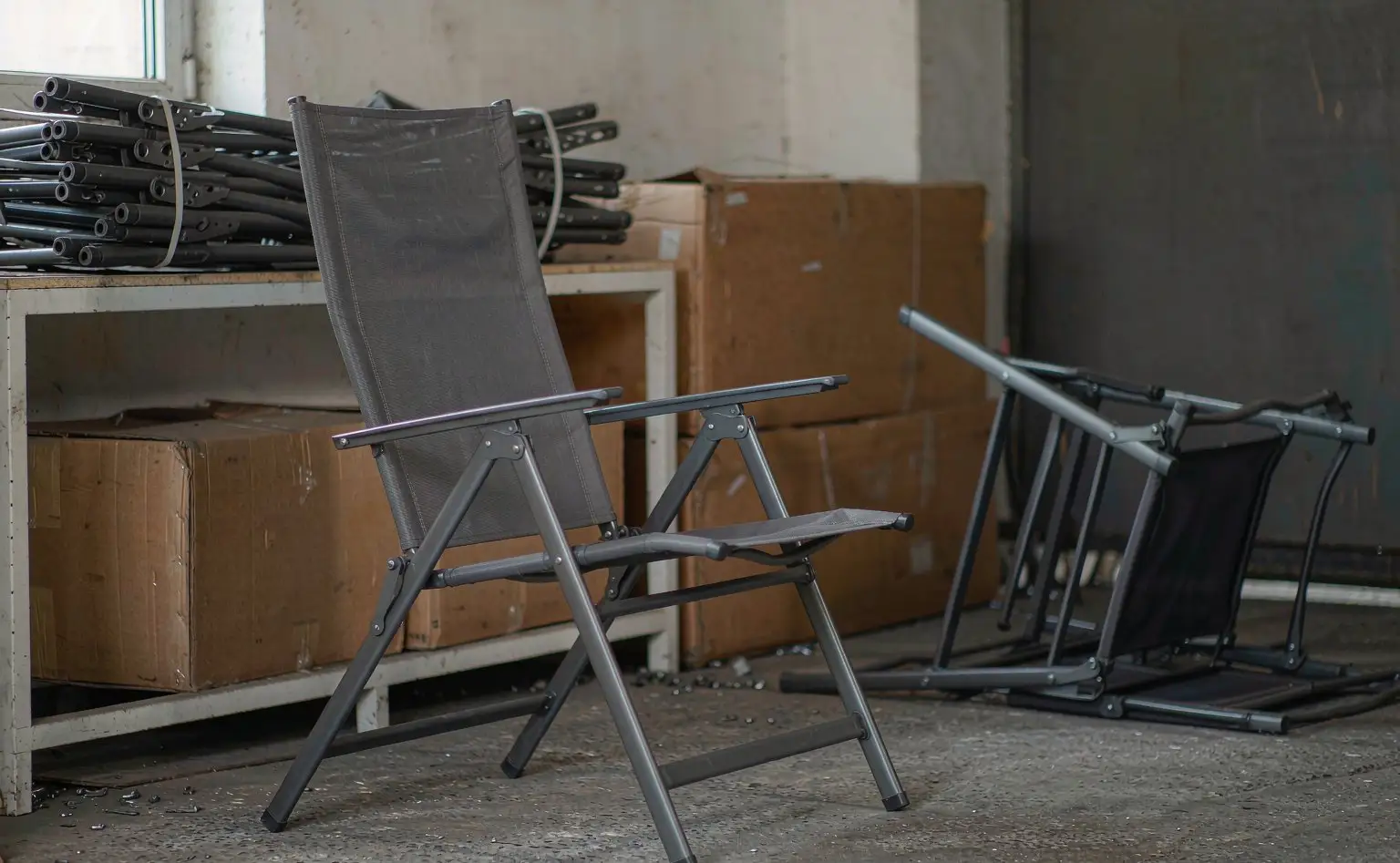
1. Three mould sources on a folding chair: cover inside, tube, carton
Take a chair apart: Oxford seat and back, aluminium frame, rivets and bolts, plastic connectors, carton. The face of the fabric sees sun and wind and rarely moulds; what fails is the side wrapped around the tube.
The inside of the cover is a dead corner. Cover a tube that still carries water and the cover seals it in, with no route for air. The back coating blocks water, so vapour can only leave slowly through stitch holes, and by then the tube surface has spotted.
Damp hides on aluminium. After cutting, drilling and washing, tubes carry residual water and are stacked together between stations so they never dry. Wet tubes hurt coating adhesion before anodising or painting, and any water left afterwards is sealed under the cover, so both ends lose.
The carton is the last gate. In a sea container the air inside the carton warms and cools, and moisture condenses on fabric and metal. Without any moisture control or inhibitor in the box, the whole carton smells at opening.
2. Why the Oxford has to be treated before coating
Outdoor folding chairs use polyester 600D plain weave with a PU or PA back coating, the weight set by the water-repellent grade. That coating is a continuous film, and it blocks water and blocks the inhibitor with it: dip or spray after coating and the active sits on the outside of the film, gone after one wash or one shower.
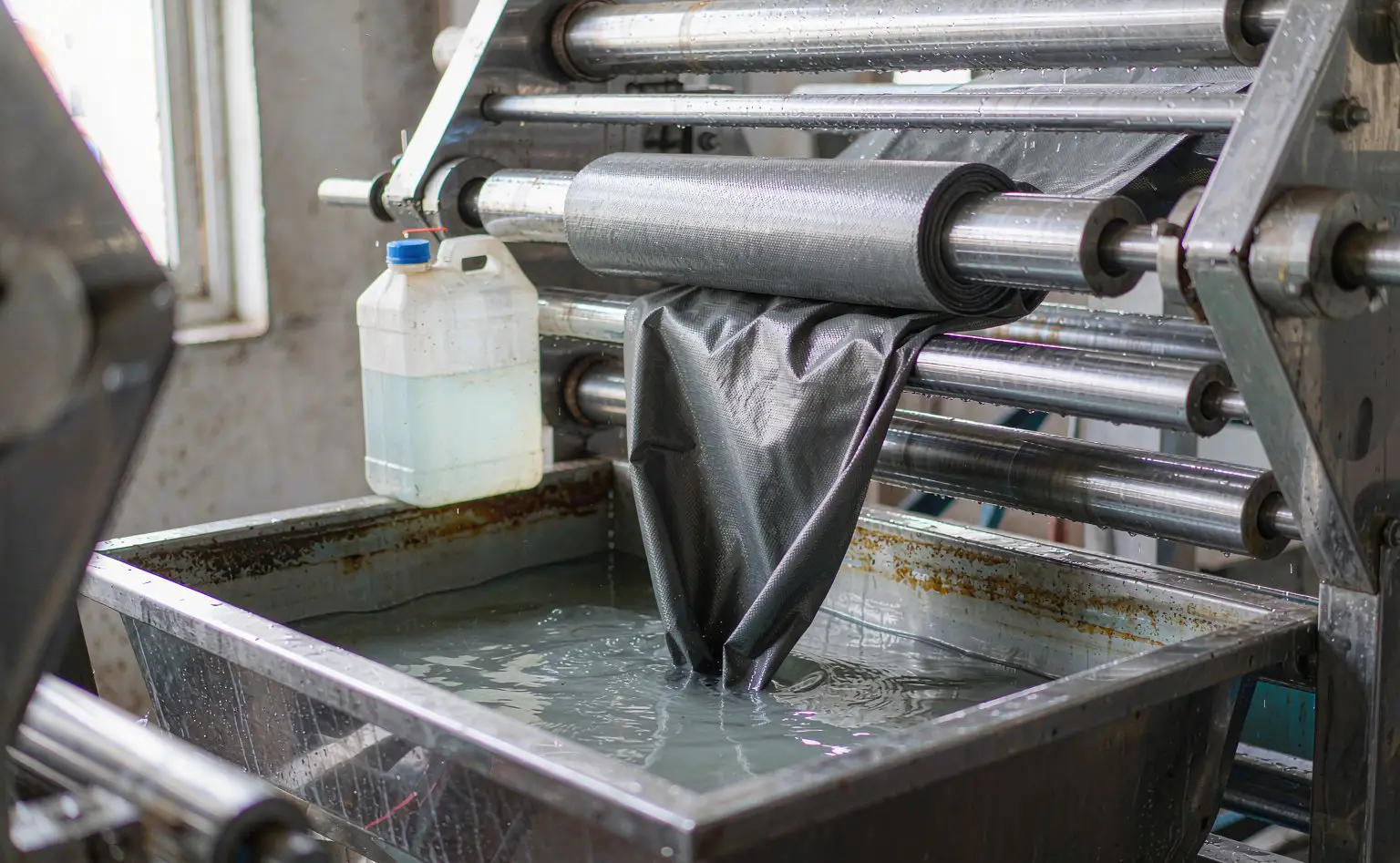
So the treatment belongs between dyeing and coating, while the fabric is still on the roll and the mangle can press the liquor into the fibre. When the dyehouse and the coater are different plants this has to go into the purchase order: the mill completes the anti-mould finish before coating and keeps a retention sample. Trying to add it at the chair factory is one step too late.
| Part | Material | Product and level | Stage | Control point |
|---|---|---|---|---|
| Oxford fabric | Polyester 600D plain | iHeir-BJ 2%-3% o.w.f. | After dyeing, before coating | 21-50°C, pH 6, soft water |
| Tube and frame | Aluminium, rivets | Washed and dried | Before covering | No water or oil on the surface |
| Covering station | Cover, tube | No further treatment | Assembly | Dry gloves, no misting |
| Carton | Five-ply corrugated | iHeir-D 0.1-0.2 g per sheet, 1-2 per carton | Packing | Sheet kept off metal parts |
One boundary. iHeir-BJ covers the face and the back of the fabric and stays in the fibre; iHeir-D covers the closed space inside the carton. With no fabric treatment the sheets only mask the smell; with the fabric treated but the carton uncontrolled, the box still smells at opening.
3. How 2%-3% o.w.f. lands on Oxford cloth
Dose on the weight of cloth. For 100 kg of Oxford, 2% is 2 kg of iHeir-BJ and 3% is 3 kg. Stir it into 9-13 times its volume of water first and feed the trough in portions; a drum tipped in whole creates a local hot spot and an uneven hand.
Bath temperature and pH. Hold the bath at 21-50°C and pH 4.5-8.5, with around 6 steadiest in production. Polyester tolerates heat, but a hot bath drives the active onto the surface too fast and the back of the cloth takes up less.
The cationic limit and pick-up. iHeir-BJ is cationic and must not run with anionic auxiliaries; water repellents and softeners are usually anionic, so run them as a separate pass. Set the mangle to 70% pick-up so the liquor load is steady and the add-on is reproducible.
Dry before coating. Fabric entering the coating line off moisture gives poor adhesion and blisters. Follow the mill’s drying sequence and do not skip it to save a day on delivery.
4. Tubes and frame: wash, wipe, then cover
This section carries no product, and it causes the most rework at chair plants.
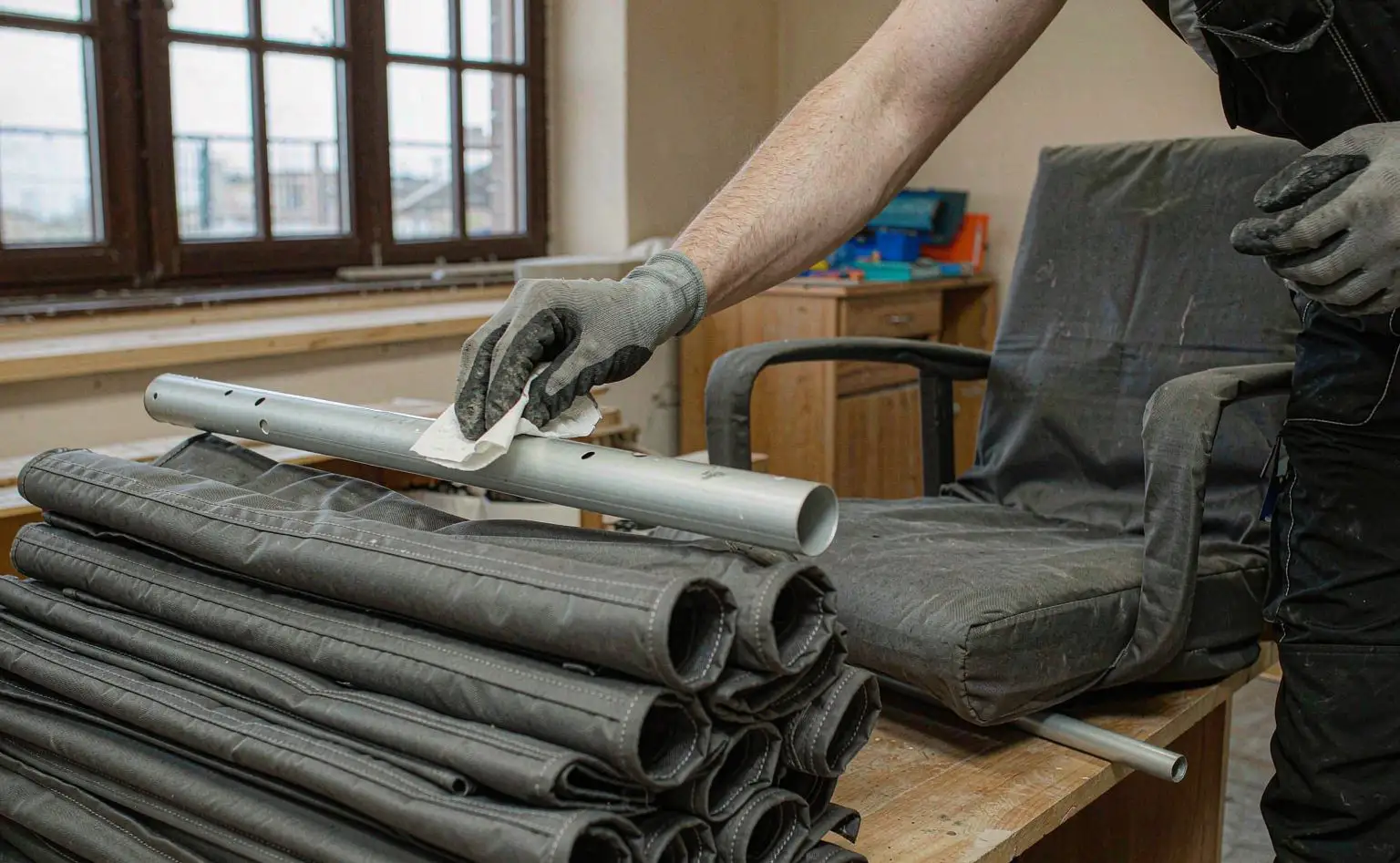
Wash, then dry through. Cutting and drilling leave swarf and cutting fluid, so wash and then dry by batch or wipe each tube. Tubes that feel dry outside often hold water inside, so blow a few out before covering.
No wet gloves at assembly. Wet gloves, or a basin of water beside the station for wiping hands, carry water straight into the cover. Keep gloves dry and the station dry; that costs less than any additive.
Rivets and bolts. Metal connectors oxidise in damp conditions and the corrosion products bleed into the cover as yellow stains. Confirm the holes are dry before riveting and wipe the joint afterwards.
5. Cartons and containers: where the sheets go and how to hold humidity
Packing uses iHeir-D gas-phase anti-mould paper, each sheet carrying 0.1-0.2 g of active. A standard five-ply carton holding one or two chairs takes 1-2 sheets, placed in the upper half of the box near the fabric rather than under the tubes.
Test the metal first. Under damp conditions iHeir-D can corrode poor-quality metal. Rivets, bolts and connecting plates are all metal, so test at three times the normal dose: seal sheet and hardware together for seven days and look for discolouration. If there is risk, put the sheet inside a card insert so it never touches metal.
Control the box. Check fabric moisture before packing and keep anything over spec out; never mix damp plastic parts into the carton. For full-container loads, line the container, avoid loading in rain and stop opening the doors to pull samples.
Finished store. Hold below 60%RH, stand chairs upright on pallets 10 cm off the floor and run a dehumidifier in the humid season. Container damage on outdoor furniture is covered in outdoor furniture treatment and arrival inspection, and fabric handling in cushion fill and shell fabric.
6. Questions from the line
Q: The fabric is already PU coated, can we add the inhibitor now?
A: Very little point. The coating is a continuous film and the active cannot reach the fibre. Treat before coating, or buy greige with the finish already in it.
Q: 2% or 3%?
A: Domestic and short-cycle orders at 2%; full-container export, long sea transit and fabric held in stock at 3%. Set it on the purchase order.
Q: Spots have appeared inside the cover, will washing remove them?
A: The spots clean up but the mycelium is in the seam and at the coating interface, and it returns. Downgrade the batch.
Q: Can we skip the sheets in the carton?
A: For short domestic runs, humidity control alone can carry it. For export containers, put them in: condensate inside a sealed carton does not ventilate away, and one sheet is far cheaper than rework at destination.
Four closing points: run the Oxford with iHeir-BJ at 2%-3% o.w.f. between dyeing and coating, pre-mixed into 9-13 times its volume of water, at 21-50°C and pH 6 in soft water, never with anionic auxiliaries, padded at 70% and dried before coating; wipe every tube dry after washing, check the bore, keep the covering station dry and confirm holes are dry before riveting; put 1-2 sheets of iHeir-D at 0.1-0.2 g in each carton, testing metal parts at three times the dose or keeping the sheet off them; hold the store below 60%RH and line the export container. Performance can be verified to GB/T 24346 or AATCC 30, a one-kilogram sample can be sent ahead, and lead times are on the iHeir-BJ product page.


