




 View Count:7
 Date:2026-11-10
How should denim mould be handled? Starch in the sizing paste feeds it, and a roll wound tight and left in a warehouse corner comes back from one sea freight as a downgraded lot. The routine is iHeir-BJ textile mildew inhibitor at 2%-3% o.w.f. on dry fabric weight in the sizing-stage trough, plus one iHeir-D vapour sheet per roll. This article gives the bath recipe, the moisture check and the roll packing figures.
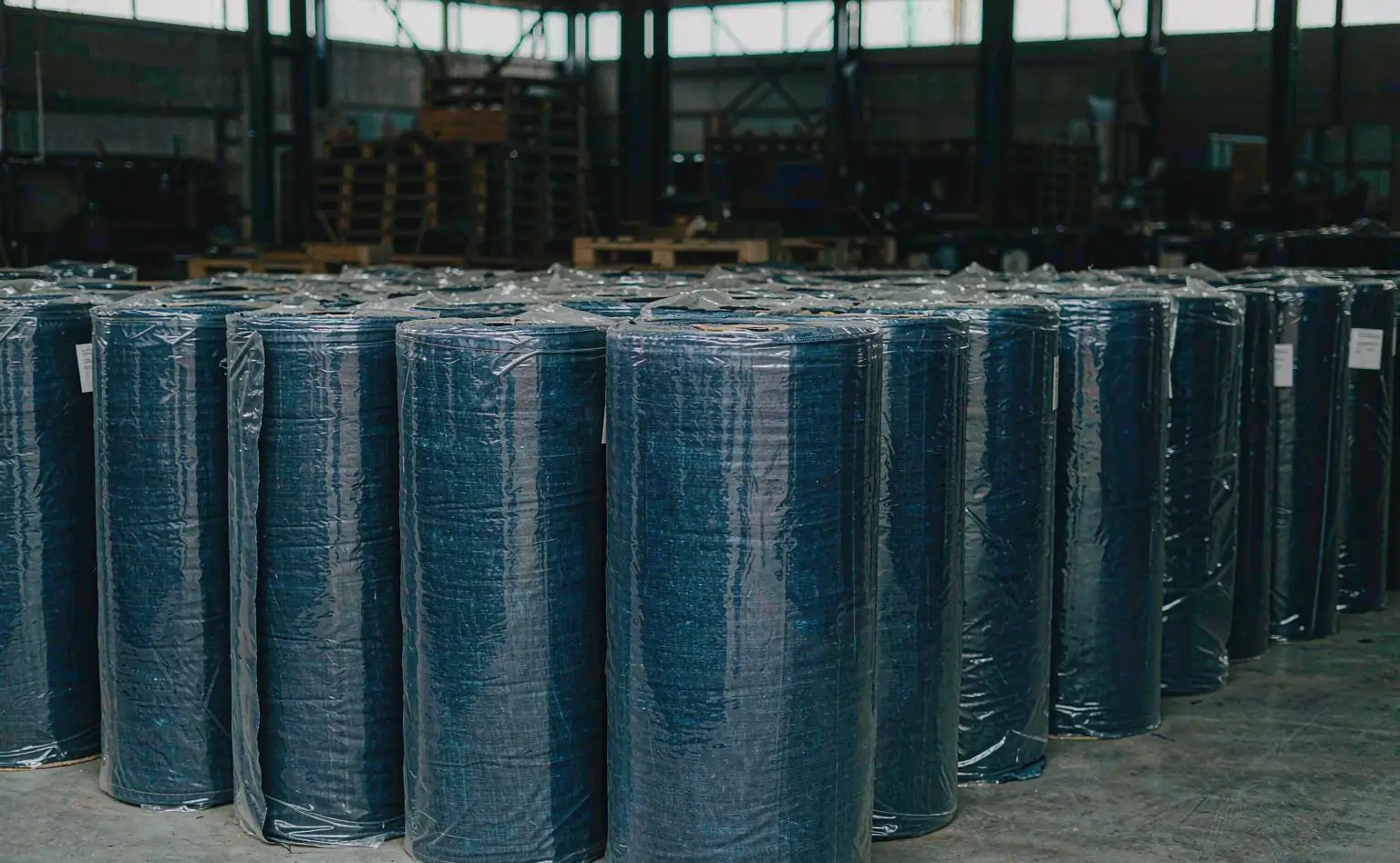
1. Mould starts in the size film and the roll core, not on the face
Open a roll of denim and you have warp yarn, weft yarn, size film and a paper core. Cotton itself does not feed mould; what feeds it is the size – modified starch, PVA and the like are a carbon source for micro-organisms.
The film stays on the yarn. Denim carries a higher size add-on than ordinary woven cloth because the warp has to survive abrasion. Part of that size is washed out after weaving, and whatever is not washed out sits in the gaps between yarn and fabric, waiting for damp.
The core is the most closed part. Winding runs at high tension, so dozens of layers press together with almost no air movement between them. Moisture carried in on the fabric cannot get out, mould grows from the core outwards, and a roll can look perfect until it is cut open and a grey-green patch shows on the inner layers.
Why rework is hard. Once the inner layers spot, the marks do not wash out; a white speck on indigo means the roll is downgraded or a length is cut away. The loss on one downgraded roll is an order of magnitude above the cost of a treatment pass.
2. Sizing stage and finished roll are counted separately
The table lines up the sizing trough, the finishing bath and the roll packing. The trough is counted as a percentage of dry fabric weight, the vapour sheet in sheets; the two are not convertible.
| Part | Material | Product and level | Stage | Control point |
|---|---|---|---|---|
| Sizing-stage trough | Denim warp, greige cloth | iHeir-BJ 2%-3% o.w.f. | Padding after sizing | Bath 21-50C, pH 4.5-8.5 |
| Finishing bath | Softener, resin | Check ionic type before sharing a bath | Before setting | Anionic aids need their own bath |
| Roll packing | Wound cloth, paper core | iHeir-D one sheet per roll, 0.1-0.2g | Winding, bagging | Only holds in a closed bag |
One boundary. The trough handles the cloth itself; the sheet handles the small closed volume inside the roll. A well-treated fabric still moulds inside when the roll carries water, and a sheet alone leaves the size on the yarn untouched. Do both and the roll opens clean.
3. Dosing the sizing-stage trough at 2%-3%
The level is 2%-3% o.w.f. on dry fabric weight. Domestic orders that ship out within two months take 2%, export orders on a long sea leg take 3%: 2% holds mould off for a year or more, 3% for two to three years.
Where it goes. Into the trough at the rear of the sizing machine, not straight into a size box at 90C. The bath window for iHeir-BJ is 21-50C, ideally below 48C; a hot size box is outside that window and lets the agent leave with the steam, while the rear trough is easy to hold.
Mixing the bath. Pre-mix with 9-13 times its volume of water, then add to the trough in portions while stirring. Poured neat it lands in patches and goes on unevenly. Hold pH 4.5-8.5, ideally around 6; desized denim often carries alkali, so wash or neutralise before the trough to knock that carry-over down.
Soft water only. Calcium and magnesium in hard water bind the agent, so the amount that actually reaches the cloth is discounted. Hold wet pickup at 70% by keeping mangle pressure and line speed steady; whatever the pickup drifts by, the real dose drifts by the same percentage.
Do not mix aids blindly. iHeir-BJ is cationic and runs with cationic or non-ionic softeners, but anionic aids cannot share the bath – the two precipitate and both are lost. Denim finishing usually adds softener and resin, so confirm the ionic type before mixing and push anionic products to a separate later pass.
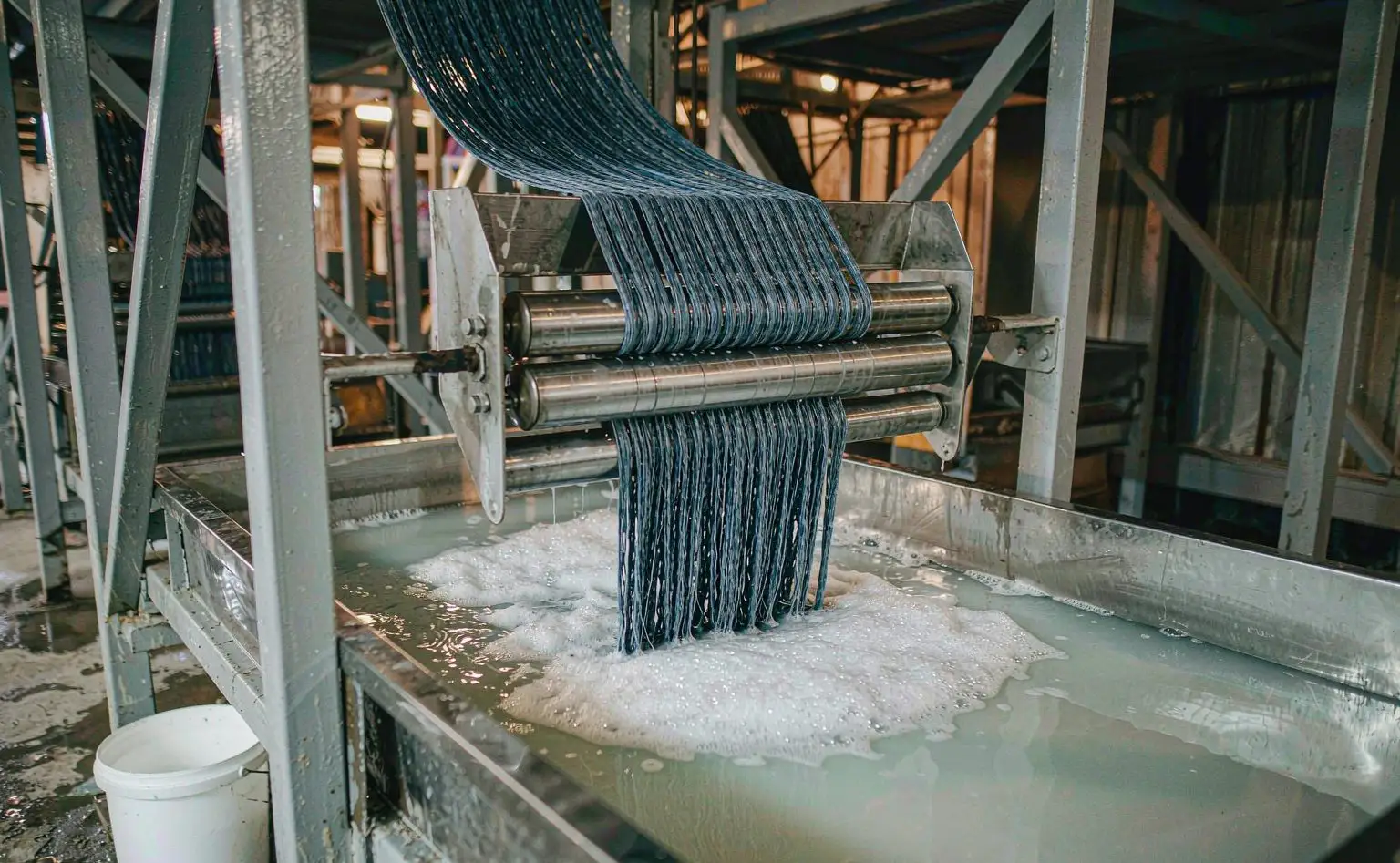
4. Check the regain after compressive shrinking
A finished treatment is not a safe roll; if the water has not left, the earlier work is wasted. Denim goes through compressive shrinking on a machine that applies steam, and the cloth feels dry at the surface while water still hangs inside it.
Work to the official regain. Cotton’s official moisture regain is 8.5%. Test denim by the oven method (GB/T 9995) and do not wind a roll above 10%. That figure is the last gate before winding.
Sample into the roll. The outer layers dry quickly, so an outer-layer reading always passes. Take the sample from near the core, or wind the roll, wait two hours and read again; a large gap between the two readings means the inside is still drying.
Do not bag it hot. A roll straight off the line is warmer than the room, and bagging it condenses water inside the bag, right onto the cloth. Let it cool to room temperature first; that step is worth more than another point of agent.
5. Roll packing and the container: one sheet per roll
Tuck one iHeir-D vapour sheet into the end face of each roll as it is wound, at 0.1-0.2g of active matter per sheet; for rolls over 80 metres, one at each end. Once bagged, the roll is a closed volume and the vapour stays put.
Trial compatibility first. Seal three times the normal dose with a cloth sample, mist a little water, separate them with paper and inspect after a few days for a shift in the indigo shade or a stiffened handle. iHeir-D carries 70%±5 solids and can corrode poor-quality metal when damp, so any metal tag or clip inside the roll gets the trial first.
Storage and loading. Stand rolls upright on timber bearers at least 10cm off the floor, keep store humidity below 60% RH, check every end face before loading, and line the container with moisture barrier film and hang desiccant sticks. Other routines sit in export warehouse control, and the upstream side is covered in textile dosing tiers.
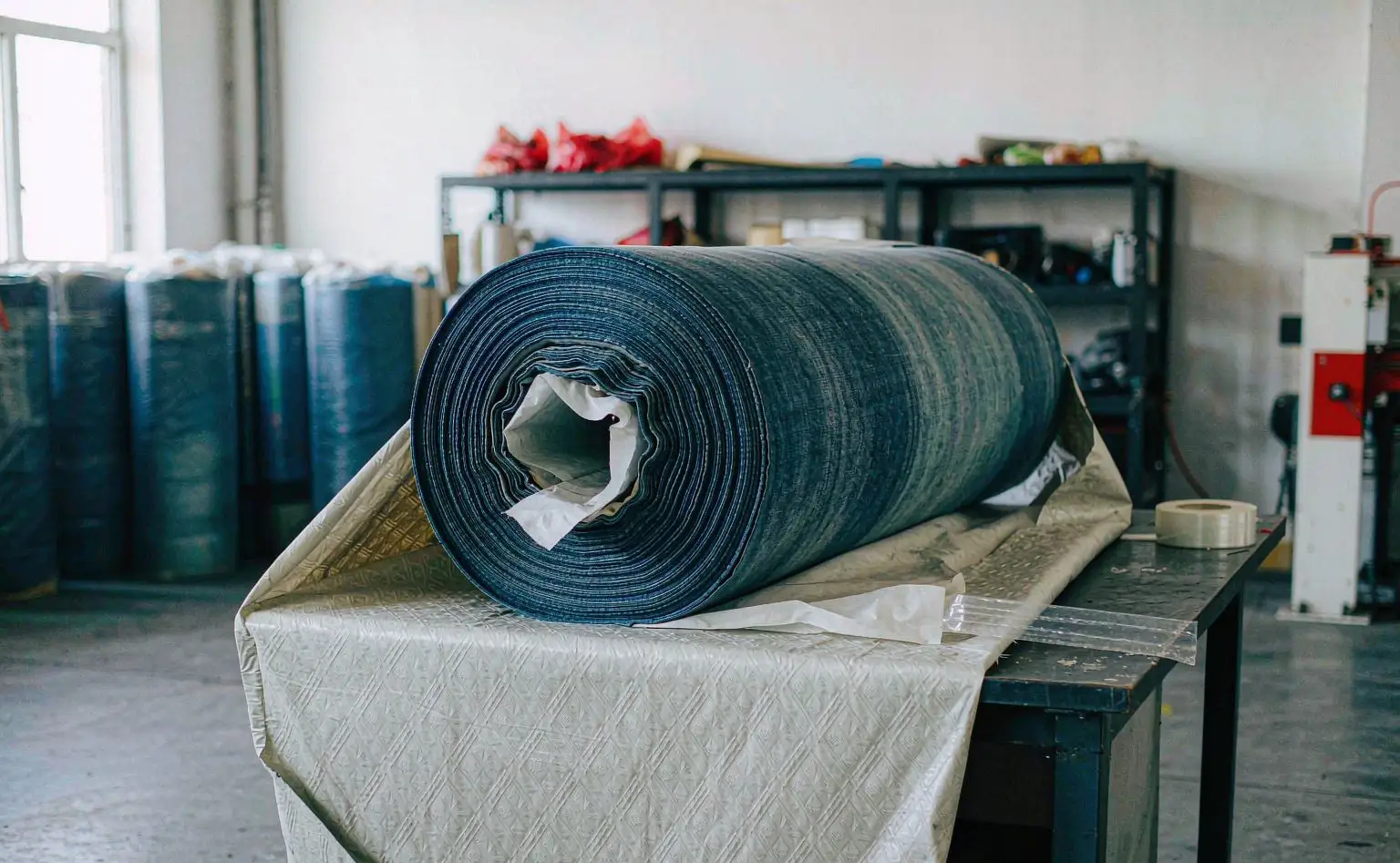
6. Questions on levels, timing and spotted rolls
Q: 2% or 3%, one point apart – which one?
Follow the service life you promise. Domestic stock cleared within two months takes 2% for a year or more; export containers on a long sea leg take 3% for two to three years. Both count on dry fabric weight, not on bath volume.
Q: Can we dose the size paste only and skip the rear trough?
Not advised. The size box runs hot, the agent is lost with the steam and the amount on the yarn is uncontrollable; and the film only wraps the warp, leaving weft and structure gaps uncovered. A trough with a controlled wet pickup is what actually pins the dose down.
Q: With a sheet in the roll, is the trough still needed?
Yes. The sheet covers the volume inside the roll and the transport period; it cannot touch the size on the yarn. Skip the cloth and the sheet only postpones the problem by days.
Q: Can a spotted roll be salvaged?
It depends on depth. Surface marks that sit on the face can be brushed with treatment liquor and the roll downgraded for a lower-end order; once mould has reached the inner layers and the core smells musty, downgrade the whole roll and keep it out of the good container.
Four points: dose iHeir-BJ at 2%-3% on dry fabric weight, pre-mixed with 9-13 times water and added in portions, at 21-50C and pH 4.5-8.5 with 70% wet pickup, soft water only and anionic aids in a separate bath; test regain by the oven method to GB/T 9995 after compressive shrinking and keep cotton below 10% before winding; tuck one iHeir-D sheet at 0.1-0.2g of active matter into each roll, sealed in its bag, after a three-times-dose compatibility trial; grade mould resistance to GB/T 24346-2009 and send antimicrobial claims to GB/T 20944.3 or AATCC 100. A kilo of agent and a pack of sheets go out for a trial, with MOQ on the iHeir-BJ product page.


