




 View Count:12
 Date:2026-11-21
How do you keep machine bed mould from coming back? Castings leave the shakeout damp and water sits in the way slots, so spots appear first where moulding sand remains and rust follows underneath. Spotted ways have to be reground, and rework on one bed costs many times the prevention. The routine is to dry the casting before oiling it, soak the crate skids in iHeir-M5 at 1:40 to a 15%-20% weight gain, and sheet the crate with iHeir-D at 0.1-0.2 g per sheet. This article covers drying, soaking and sheeting.
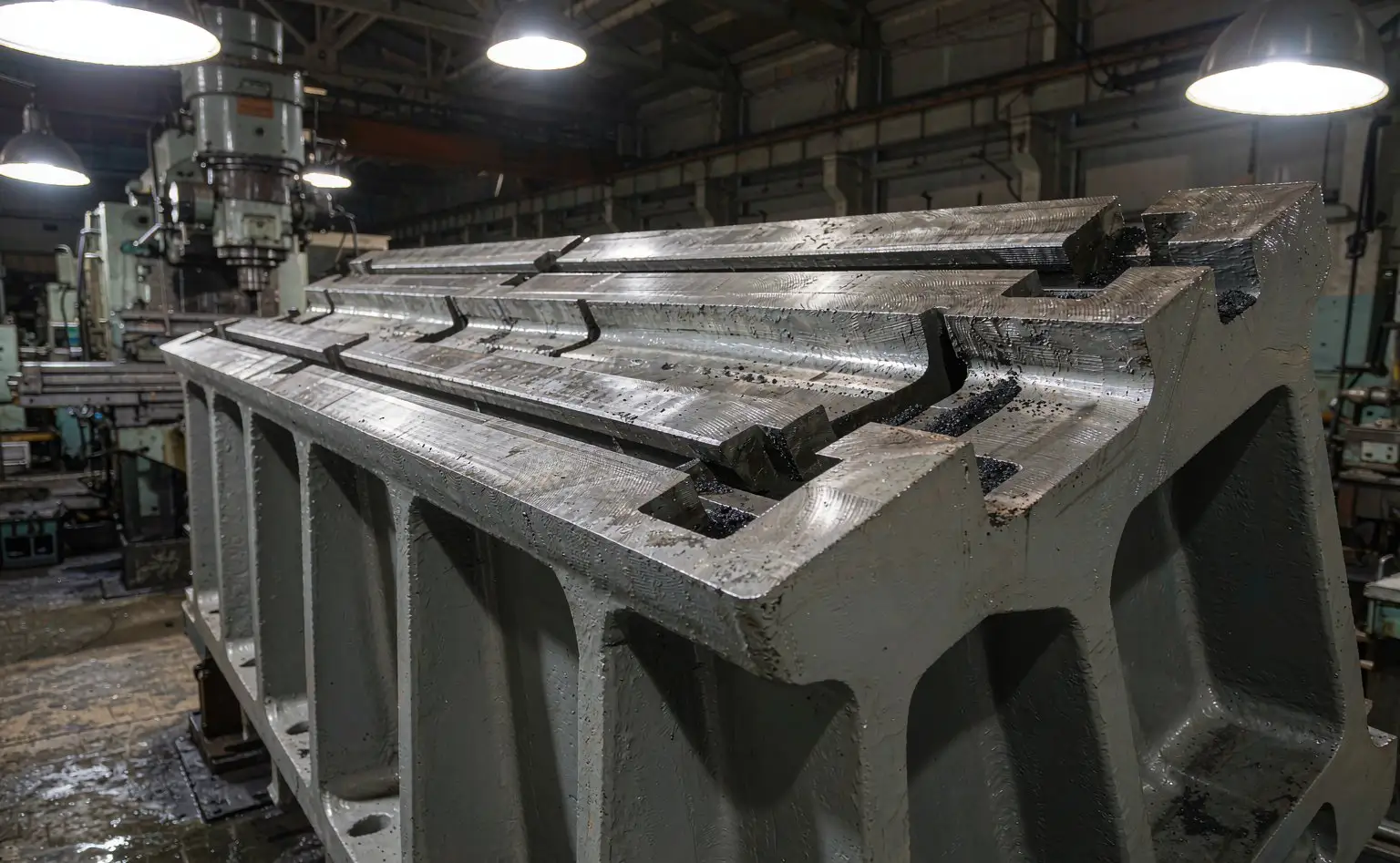
1. Where the growth comes from: sand, coating, water in the slots
Moulding sand is the sponge. Residual sand and coating on a casting are porous and take up far more water than a machined face. Clean-out that stops short leaves grains in the rib corners and T-slots, and they hold the water with them.
Stress relief out in the open. Ageing takes time and many plants park castings outside or under a lean-to. One rain shower fills the way slots and the T-slots, the water cannot drain, and both mould and rust start at the bottom of the slot.
Oiling over the dirt. Sand, water and dust get sealed under the oil film, and the thicker the film the tighter the seal. By the time the customer opens the crate it cannot be wiped off.
The crate brings its own water. Timber above 18% moisture content is a water source. Crates received in the wet season and never checked amount to fitting a humidifier to the machine.
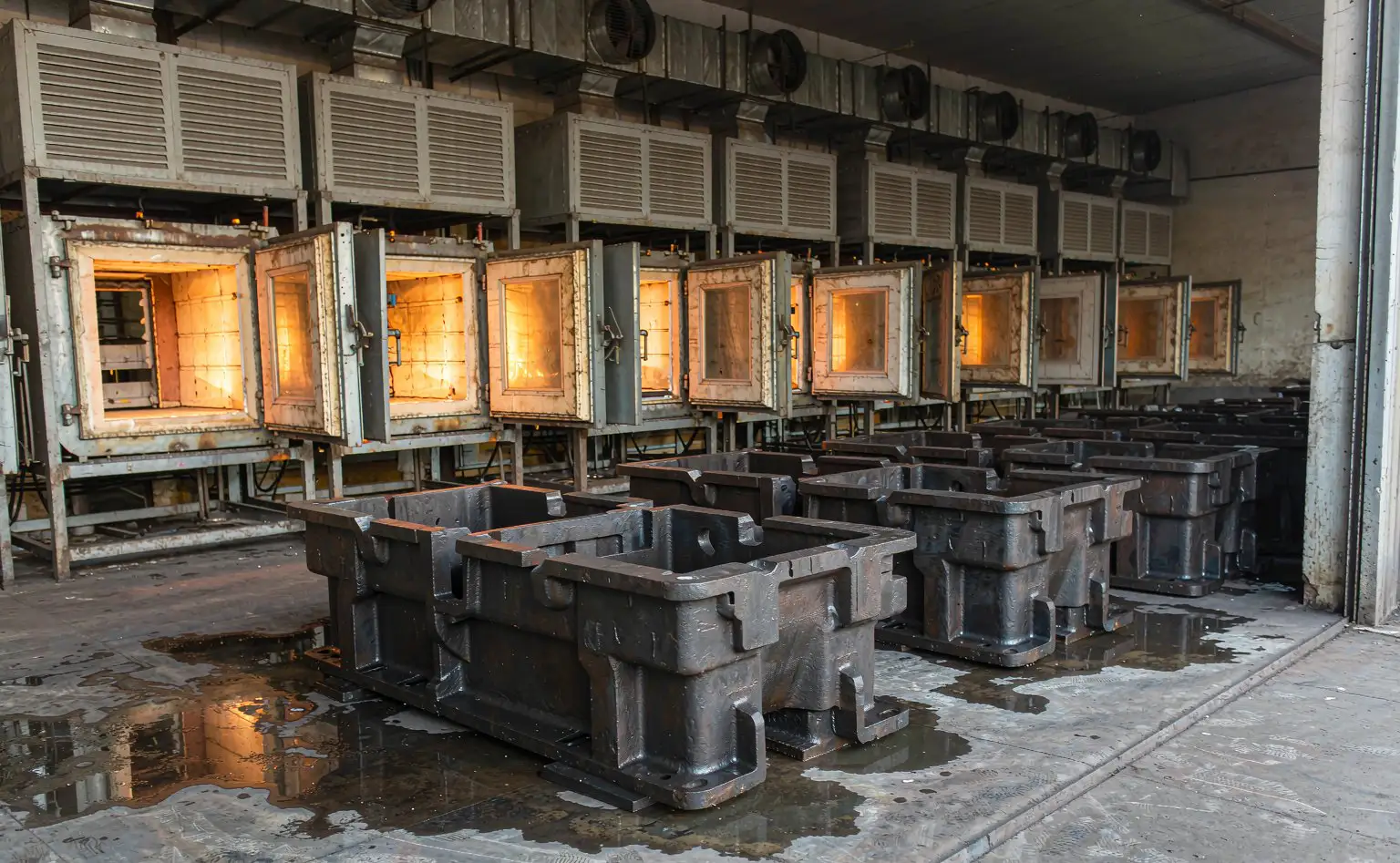
2. After the shakeout: drying comes before oiling
Clean out first, then dry. Blast or hand-clean the sand out of the rib corners, T-slots and bolt holes before the oven. Dry a casting with the sand still on and the water in that sand leaves far more slowly.
Temperature and time. 80-100°C for 2-4 hours, with the time set by section thickness. Thick sections ramp slowly to avoid cracking. Cool in the oven to below 50°C before the casting comes out.
Treat the way slots separately. After the oven, blow the T-slots and way slots out with dry compressed air and wipe with white paper. If the paper comes away damp, it is not dry, and no amount of oil will fix a slot with water in it.
Sequence ageing before drying. Ageing itself takes up moisture, so drying first simply means doing the job twice. Harden and slope the ageing bay floor.
3. Before oiling: wipe, touch up, control the film
Wipe until the cloth stays clean. Before oiling, wipe the ways and machined faces with a lint-free cloth and a cleaner until no black sand mark comes off. On rough-machined faces, work a brush along the tool marks to lift the grains out.
A continuous film, not a puddle. Dip or brush the rust preventive so the film is continuous and does not run. Touch up the T-slots and bolt holes separately; those are the places most often missed, and they hold water.
Do not forget the as-cast faces. Rib backs, undersides and raw cast surfaces need the same wipe and a thin coat. At sea for a month, a raw face absorbs faster than a machined one.
Inspect once more before packing. Light the ways and T-slots before the casting goes in the crate and look for spots, water marks and loose sand. A casting that fails does not get packed. Comparable packing practice is in transformer pressboard and wooden crates, and skid work in water pump seals and pallet sheets.
4. Crates and skids: soak the timber in M5 at 1:40
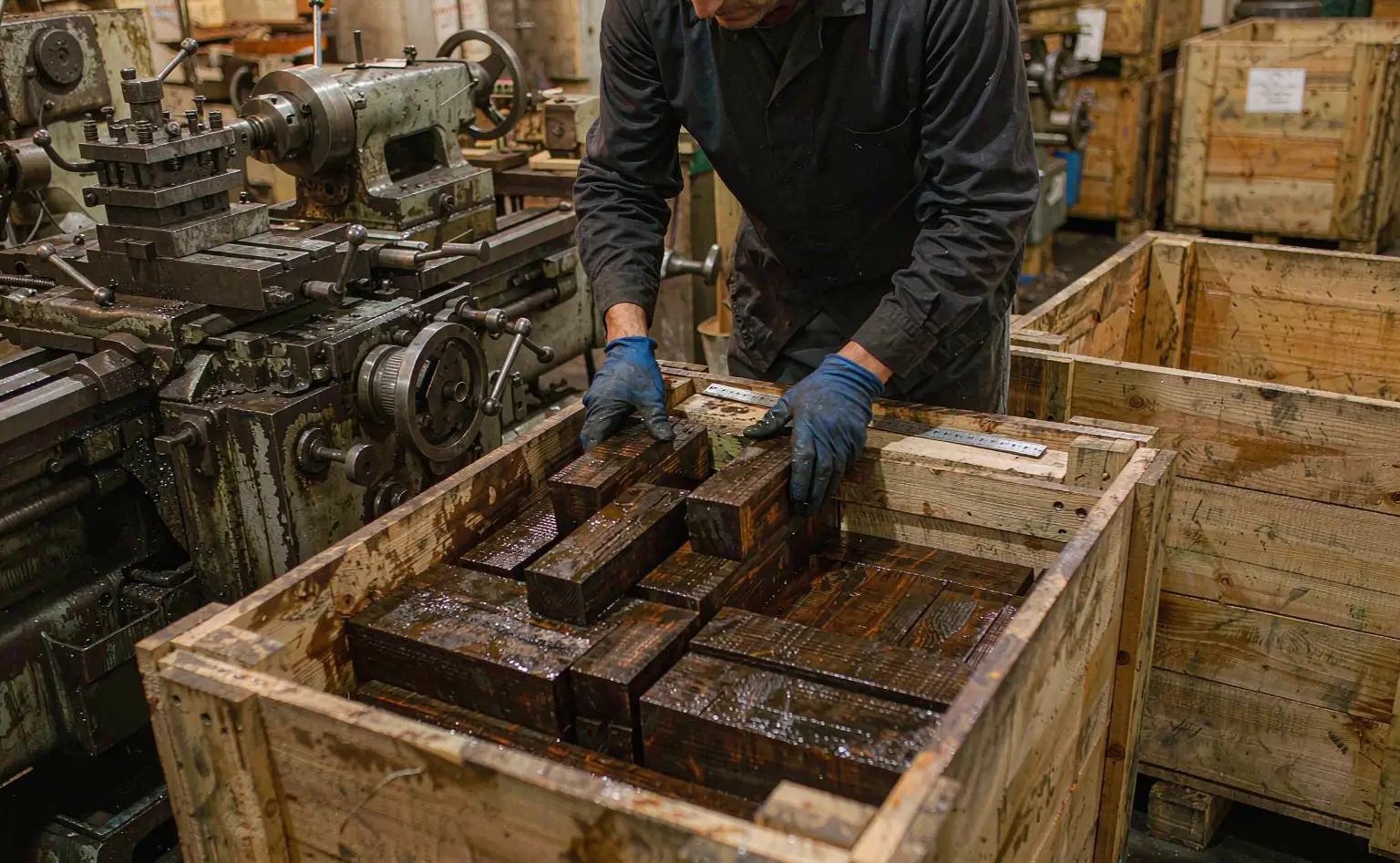
Dilution and dwell. Mix iHeir-M5 at 1:40, which is 5 kg of the concentrate to 100 kg of water. Immerse the skids and bearers completely with nothing above the surface, and hold until they gain 15%-20% in weight, which takes about 5-10 minutes.
They have to dry through. Lift, drain, then air-dry or sun-dry before the timber goes into the crate. Wet skids against the underside of a bed seal the water inside and dilute the effect of the treatment at the same time.
Acidic, so keep it off metal. The technical manual states that M5 is acidic and must not contact or be mixed with metal or alkaline materials. Put a neutral board between skid and bare machined face, and never lay a soaked skid against the ways.
Tank and leftover liquor. Use a plastic or concrete tank, never a steel one. Mix what the shift needs, and treat the remainder as waste liquor rather than topping it up the next day. The product ships in 25 kg drums, stores dry and dark, and keeps for one year.
| Stage | Material | Product and level | Process | Control point |
|---|---|---|---|---|
| Bed casting | Grey iron | No additive | Clean out, 80-100°C for 2-4 h | Slots blown out, white paper stays dry |
| Ways and machined faces | Machined metal | No additive | Wipe, then rust preventive | Continuous film, holes touched up |
| Skids and bearers | Pine, mixed hardwood | iHeir-M5 1:40, 15%-20% gain | 5-10 min dip, drain, dry | Dry before packing, board against metal |
| Crate volume | Sealed timber crate | iHeir-D 0.1-0.2 g per sheet, 1-2 per crate | Taped to walls and lid before closing | Not against the ways, film inside |
| Sea container | Container air | Desiccant sticks by container size | Hung after loading | Timber moisture checked on receipt |
One boundary. M5 handles the wood fibre in skids and crates, sheets handle the air inside a closed crate, drying and the oil film handle water on the casting itself. The step most often skipped is the skid: soaked and packed wet, and the other two are wasted.
5. Sheets and packing: count by volume
Count by internal volume. Each iHeir-D sheet carries 0.1-0.2 g of active. For a small to medium bed, one sheet on each side wall and one inside the lid makes 2-3 per crate. Double the crate length or height and add one sheet; do not scale by machine weight.
On the wall, not on the ways. Tape sheets to the walls and the inside of the lid so they work by diffusion. Pressed against a machined way, the product page warns of risk to metal in damp conditions.
Run a compatibility test. Three times the normal rate, sealed in a bag with a test piece, 3-5 days at room temperature, then check the ways for darkening or tackiness. On a bed with tight geometrical tolerance this test is not optional.
Prepare the crate itself. Line the inside with a moisture film and tape the seams. Skids are soaked and dried as above, and incoming crate boards are checked for moisture; anything above 18% is dried before use.
6. Questions from the plant
Q: Does a cast iron bed grow mould?
A: The iron does not. Growth sits on moulding sand, coating and oil residue; organic material plus water is all it needs. Sand clean-out and drying come first.
Q: Can rust preventive replace mould prevention?
A: No. An oil film keeps water out but residue under it still supports growth, and once the film breaks water goes straight in. The order is wipe, dry, oil, then sheet.
Q: Do the skids really need soaking?
A: For export, yes. Untreated skids grow first: crate humidity sits above 80% RH for a month at sea and growth spreads to the casting underside.
Q: Should the skids be rinsed after soaking?
A: No. Drain and dry them as they come out; rinsing washes the active out. Keep a neutral board between a treated skid and a bare machined face so no acidic residue sits against the metal.
Clean the sand out and dry the casting at 80-100°C for 2-4 hours, cooling in the oven to below 50°C; blow the T-slots out with dry air until white paper stays dry; wipe the ways until the cloth is clean, then oil with a continuous film and touch up the holes; soak crate skids in iHeir-M5 at 1:40 to a 15%-20% gain, drain and dry them, and put a neutral board between skid and metal; use 2-3 iHeir-D sheets at 0.1-0.2 g per crate on the walls and lid, never on the ways, after a three-times compatibility test. Dosing, levels and pack sizes are on the iHeir-M5 product page.


