




 View Count:14
 Date:2026-11-21
Why does steel pipe mould start inside the bore? Because that is where the water stays. A spotted bore cannot be reworked, only downgraded or scrapped, and a returned container costs more in freight than the goods are worth. The routine is to blow the bore dry and oil it after the pressure test, lay one iHeir-D sheet at 0.1-0.2 g in each end cap, and hang T-1000 sticks at 8-10 per 20 ft container. This article covers drying, capping and dosing.
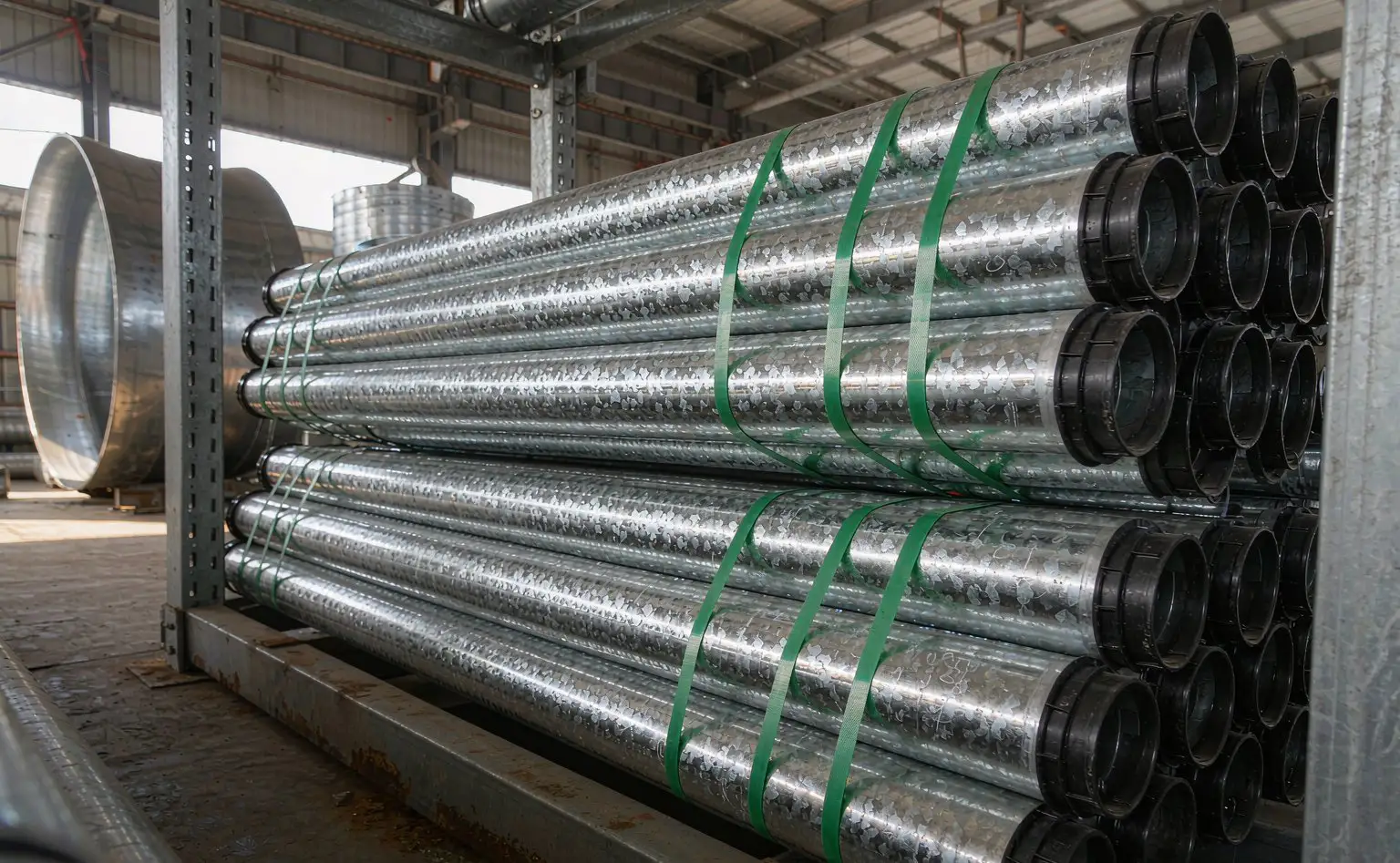
1. Where the growth comes from: test water, condensation, contact faces
Test water never fully drains. Every pipe is pressure tested, then tipped out. Unless the angle is steep, a film stays on the bore wall. On a 6 m pipe the internal area is several times the external area, and that film is where growth starts.
Condensation in the cap. A plastic cap pressed over the end makes a half-closed volume. A day-night temperature swing condenses water on the inside of the cap, and it runs down to the pipe mouth. Growth starts in the cap and then moves down the bore.
Bands cut off the air. Bundles are strapped with steel or composite banding, and the line where band meets pipe becomes a strip with no air movement. Water held there does not dry for days, and spotting always begins along that ring.
Zinc is not immunity. White rust is zinc corrosion product, not mould; mould spots are black or dark green and feel slippery. Both start with standing water, so treating them starts the same way.
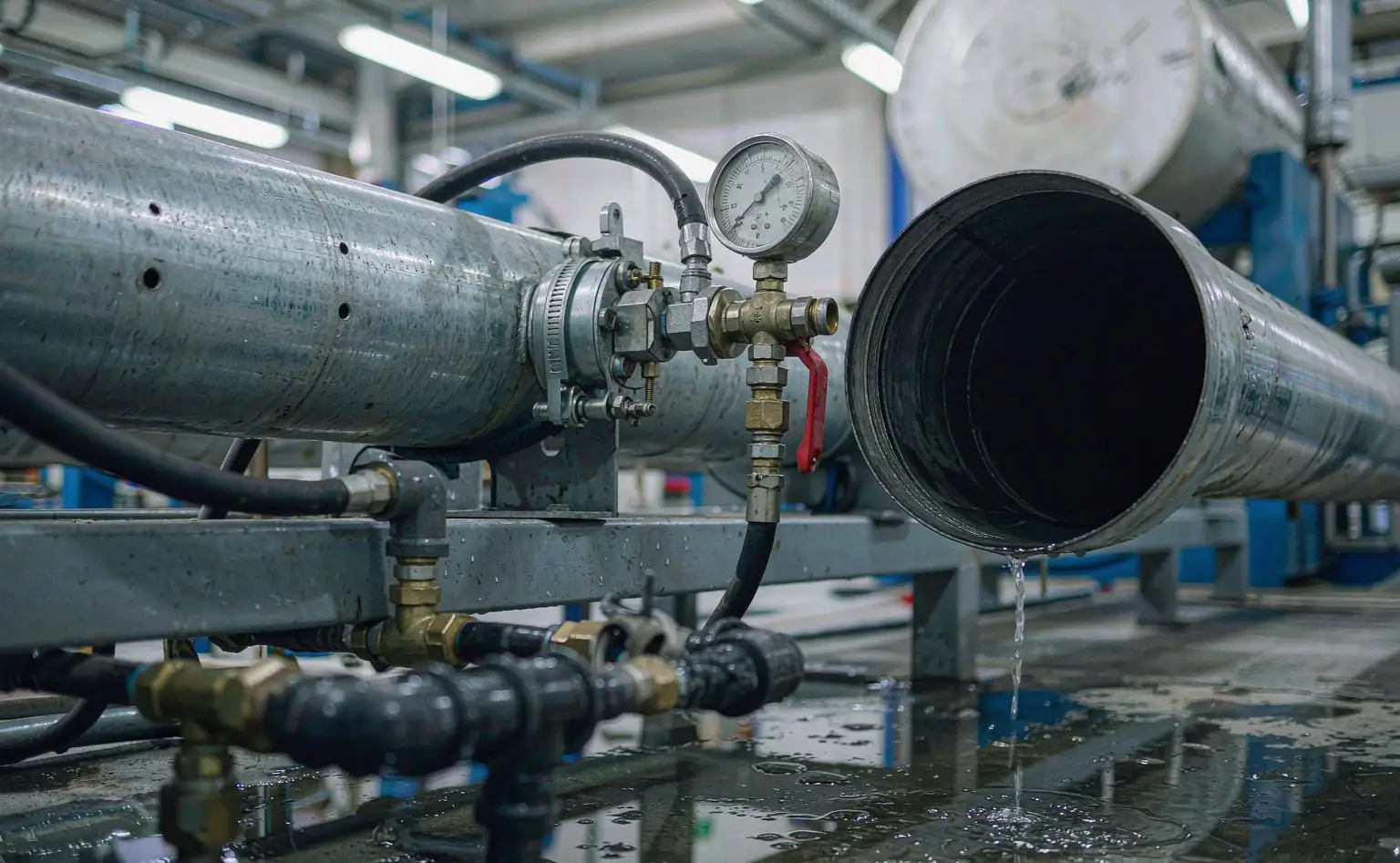
2. After the pressure test: dry the bore, then oil it
Drain on a slope. Raise one end 5-10 degrees after the test and let it run for 10-15 minutes. Drain a pipe lying flat and a slug of water always stays in the middle.
Blow the bore with dry air. Use dry compressed air at 0.4-0.6 MPa from one end, with a nozzle sized to the bore, until the air leaving the far end carries no mist. On a high-volume line, blow a row at a time.
A thin, complete oil film. Spray or flood the bore with rust preventive and hold the film to the process card. After flood coating, drain the excess out; oil pooling at the low end collects dust and water and becomes the collection point itself.
Cap only when the film is dry. Let the oil stop feeling tacky before the cap goes on. Cap a wet film and the volatiles cannot escape, condensation forms as the pipe cools, and the cap becomes a water trap by design.
3. End caps: when the sheet goes in and how
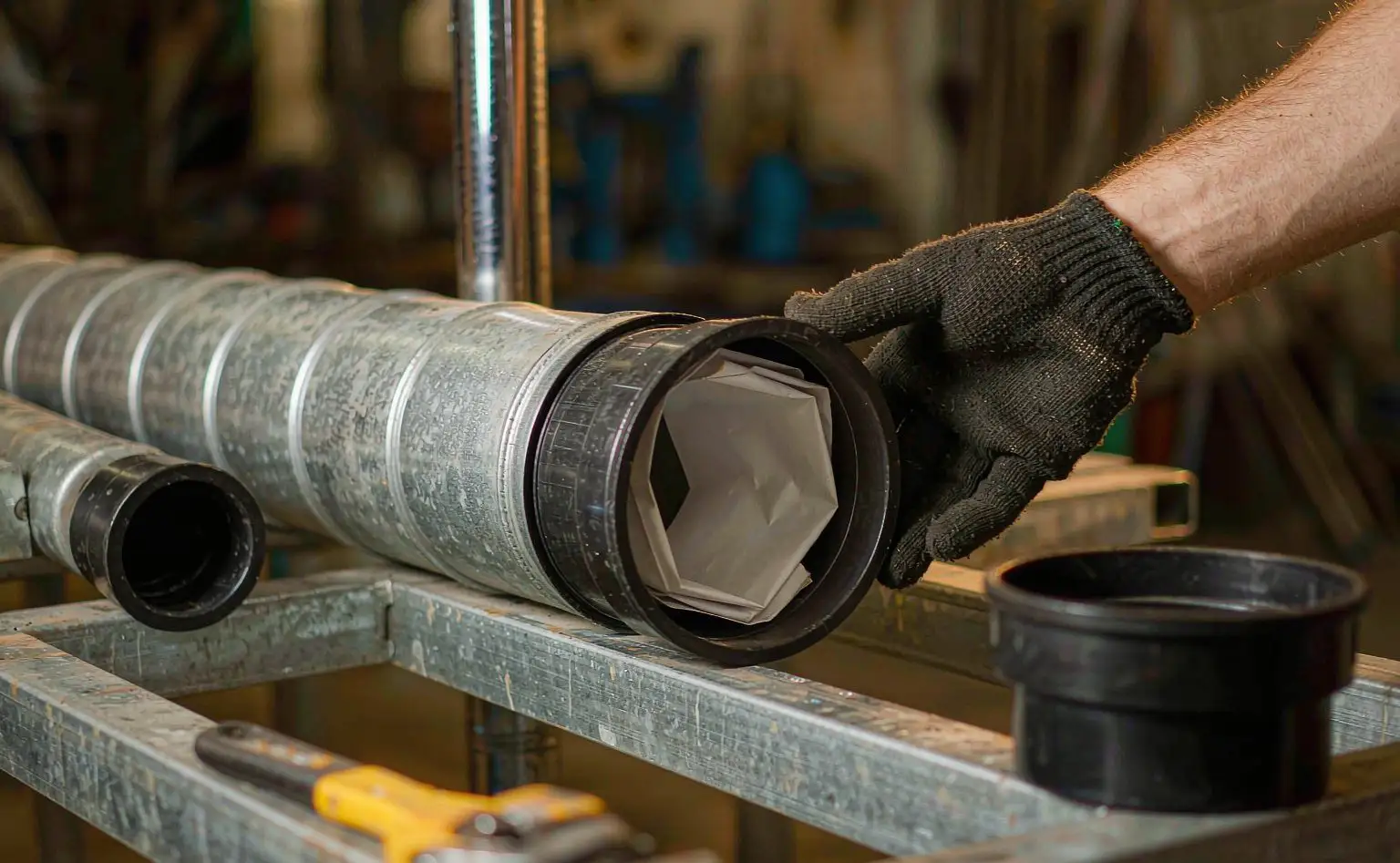
One sheet per end. Each iHeir-D sheet carries 0.1-0.2 g of active, so one sheet per end and two per pipe. Above DN200 the cap volume is larger and each end takes two; count by cap volume, not by pipe weight.
Inside the cap, against the cap wall. Cut the sheet to the cap diameter and press it between cap bottom and pipe mouth, off the cut face. Against the cap wall it works by diffusion, and it is far less likely to be pushed out in transit.
Press the cap home. Seat the cap to its design depth with no gap at the mouth, then run tape around the cap edge to keep it there. A cap that is not sealed makes the sheet pointless.
Run a compatibility test. Three times the normal sheet rate, sealed in a bag with a pipe sample, 3-5 days at room temperature, then check the bore for darkening or tackiness. Stainless and precision bores must have this test; the product page warns of corrosion risk to metal in damp conditions.
| Stage | Condition | Product and level | Process | Control point |
|---|---|---|---|---|
| Bore wall | Wet after pressure test | No additive | Slope drain, blow with dry air | No droplets or mist at the far end |
| Bore oil film | Dry bare steel | No additive | Spray or flood, then drain | Thin and even, no pool at the low end |
| End cap | Half-closed volume | iHeir-D 0.1-0.2 g per sheet, 1 per end | Sheet in the cap before pressing | Sheet off the cut face, cap home |
| Bundle and pallet | Contact faces, no air | As above, 1-2 sheets per bundle | Inserted during strapping | Sheet between pipes, not exposed |
| Sea container | Container air | T-1000 8-10 per 20 ft, 10-12 per 40 ft | Hung after loading | Spread along the length, not under cargo |
One boundary. Drying and the oil film handle water on the bore wall, sheets handle the air in a cap or a bundle, sticks handle humidity across a container. The step most often skipped is drying, and no amount of sheeting compensates for a bore that is still wet.
4. Bundles and pallets: treat the contact faces
Sheets inside the bundle. Insert 1-2 D sheets between pipes as the bundle is made up, and put them at mid-length rather than at the ends; the ends already have cap sheets, and mid-bundle is where moisture collects.
A pad under the banding. Steel banding pressed onto a pipe wall breaks the zinc where it bites, and a break is where both rust and growth start. Put a neutral board or a composite pad between band and pipe.
Dry pallets and bearers. Export pallets above 18% moisture content are a water source; check them on receipt and dry anything over the limit. Wooden crate and pallet practice is covered in transformer pressboard and wooden crates and water pump seals and pallet sheets.
Keep bundles off the ground. Pipes stacked outdoors on the ground draw damp up. Raise them 100 mm and cover with a rain sheet left open at the ends; wrapped tight it becomes a humidity chamber.
5. Loading and shipping: sticks by container size
Count by container. T-1000 is a mineral adsorbent with no chloride and a neutral pH, so it does not attack zinc or stainless. Use 8-10 sticks in a 20 ft and 10-12 in a 40 ft, and go to the top of the range for wet-season shipments or damp cargo.
Position matters more than count. Hang sticks evenly along both side walls on the lashing rings, staggered high and low so air reaches the far end. Piled behind the doors, they leave the last third of the container untreated.
Check before the doors close. Look for water in a bore, a cap pushed off or a loose strap; what is found at the door can still be fixed.
Measure the empty container. Air the container before loading and take a humidity reading; above 75% RH, ventilate first, then hang the sticks and close up. Comparable metal packing is in fasteners in cartons with drying rods and hardware tools with overmoulded handles.
6. Questions from the plant
Q: Steel is metal, so why does the bore grow mould?
A: The metal does not. Growth sits on oil, coolant and wash residue inside the bore. A half-closed tube holds humidity, and one film of residue plus one film of water is enough within days.
Q: Is white rust on galvanised pipe the same thing?
A: No. White rust is zinc corrosion product and looks like white powder; mould spots are black, dark green or brown and feel slippery. Both start with standing water, so drying comes first either way.
Q: Can we skip the oil and just dry the bore?
A: For short internal moves, perhaps, but not for a sea shipment. Drying removes today’s water; the oil film keeps the next lot out, and the excess must be drained.
Q: How many sticks does one container need?
A: 8-10 for a 20 ft and 10-12 for a 40 ft, adjusted for route and destination humidity. Even spacing along the length matters more than the total.
Drain on a 5-10 degree slope for 10-15 minutes, then blow the bore with dry air at 0.4-0.6 MPa until the far end shows no mist; spray or flood a thin rust-preventive film, drain the excess and cap only when it is not tacky; put one iHeir-D sheet at 0.1-0.2 g in each end cap, against the cap wall and off the cut face; add 1-2 sheets per bundle at mid-length and check pallet moisture; hang 8-10 T-1000 sticks in a 20 ft and 10-12 in a 40 ft along the container. Levels and pack sizes are on the iHeir-D product page.


